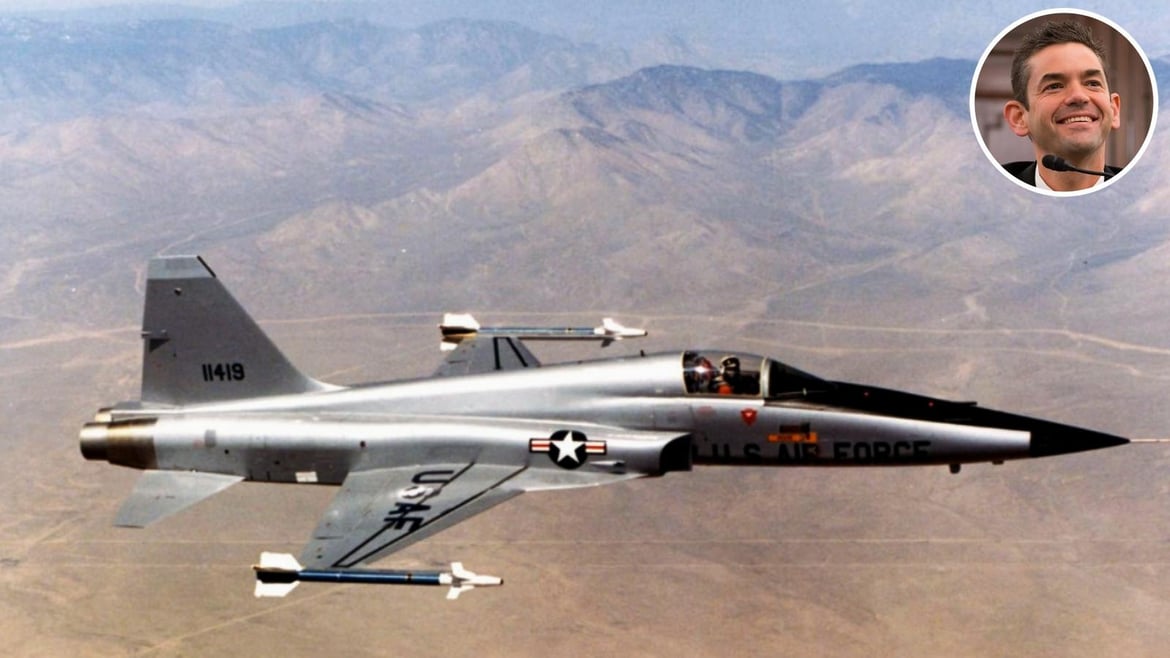
NASA used to reward exceptional people with plaques, handshakes, and the slow-burn satisfaction of being right about physics. The agency’s new billionaire chief Jared Isaacman is offering something louder. It’s a ride in his privately-owned fighter jet. The jet in question is the Northrop F-5 Tiger II, a lightweight twin-engine supersonic machine designed in the 1960s to be fast, nimble, and just intimidating enough to make grown adults rethink lunch.

And now the billionaire NASA chief is putting it on the table as part of “NASA workforce incentive flights” for staff who do “exceptional work,” along with flyovers at launches, Space Coast airshows, and events tied to America’s 250th birthday and STEM outreach, according to Bloomberg. In other words, if you’re a brilliant mind helping NASA run better, faster, cleaner, and more urgently, the administrator might literally take you for a spin at Mach 1.6.

This is the kind of headline that instantly splits the room. One side hears “motivational leadership,” the other hears “Top Gun cosplay.” But Isaacman isn’t posing. NASA’s own statement identifies the aircraft as an F-5, and Isaacman is qualified on an absurd lineup of jets: F-5, L-39, L-159, A-4, MB-339, T-33, T-38, and even the MiG-29UB. He still flies one of the very few privately owned MiG-29s in the United States. This isn’t a guy borrowing a helmet for the photo. This is a pilot with receipts.

The post that triggered the coverage does not look subtle either. One image shows Isaacman in the front seat of a two-seat jet in NASA livery, a visual that feels halfway between recruitment poster and political statement. Another set of photos shows Eric and Lara Trump flying over Kennedy Space Center in a similar jet. For a public agency that usually communicates in spreadsheets and solemn press conferences, this was pure afterburner.

NASA, predictably, raced to underline the part that matters most in Washington, which is money. The agency stressed that all costs are covered by Isaacman personally, with “zero burden to the taxpayer.” That line isn’t just reassurance. It’s armor. Because the moment you tell the public that government employees are getting fighter-jet rides, the first question isn’t about morale. It’s about who’s paying for fuel.

And here’s where Isaacman’s whole persona clicks into place. He’s made a career out of making expensive things feel efficient. As a teenager he dropped out of high school and started a payment-processing business from his parents’ basement, a company that would later become Shift4 Payments. It went public in 2020 and ballooned into a monster that processes hundreds of billions of dollars in payments and serves over 200,000 merchants. His stake in Shift4 is what makes him a billionaire, with recent estimates placing his net worth around $1.2 to $1.6 billion.

Then there’s Draken International, the private “air force” he co-founded in 2012. It’s a business built on buying surplus fighters and providing “red air” adversary training to the US military and NATO. Draken’s pitch is brutally simple: train like a warfighter without paying warfighter prices. He sold a majority stake to Blackstone in 2019, the kind of transaction that turns a rich aviation obsessive into a financially unbothered one.

That background matters because it explains the jet math. No NASA rate card exists for Isaacman’s aircraft, but adversary-air operators like Draken have cited tactical jets at roughly $7,000 per flight hour, versus $40,000 or more for front-line fighters like the F-16. That means a 45-to-60-minute morale flight in an F-5 likely burns $5,000 to $10,000 in direct operating costs, plus additional thousands if you include reserves, overhauls, crew, insurance, and hangar time. The point is: this is not cheap, but it’s not “government boondoggle” expensive either.

Isaacman is also donating his $221,900 NASA administrator salary to Space Camp in Huntsville, and pitching his entire tenure as a push to make NASA more “efficient” and “urgent.” He’s not the classic administrator who came up through the agency like a career astronaut manager. He’s an outside operator who believes momentum is a strategy. NASA will have to figure out what “exceptional work” means in a way that doesn’t look like favoritism with a flight suit. But the message is already clear. In the Isaacman era, brilliance doesn’t just get noticed. It gets altitude.