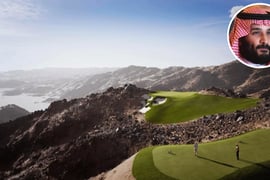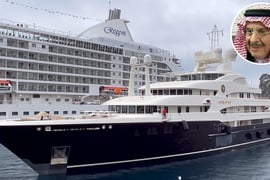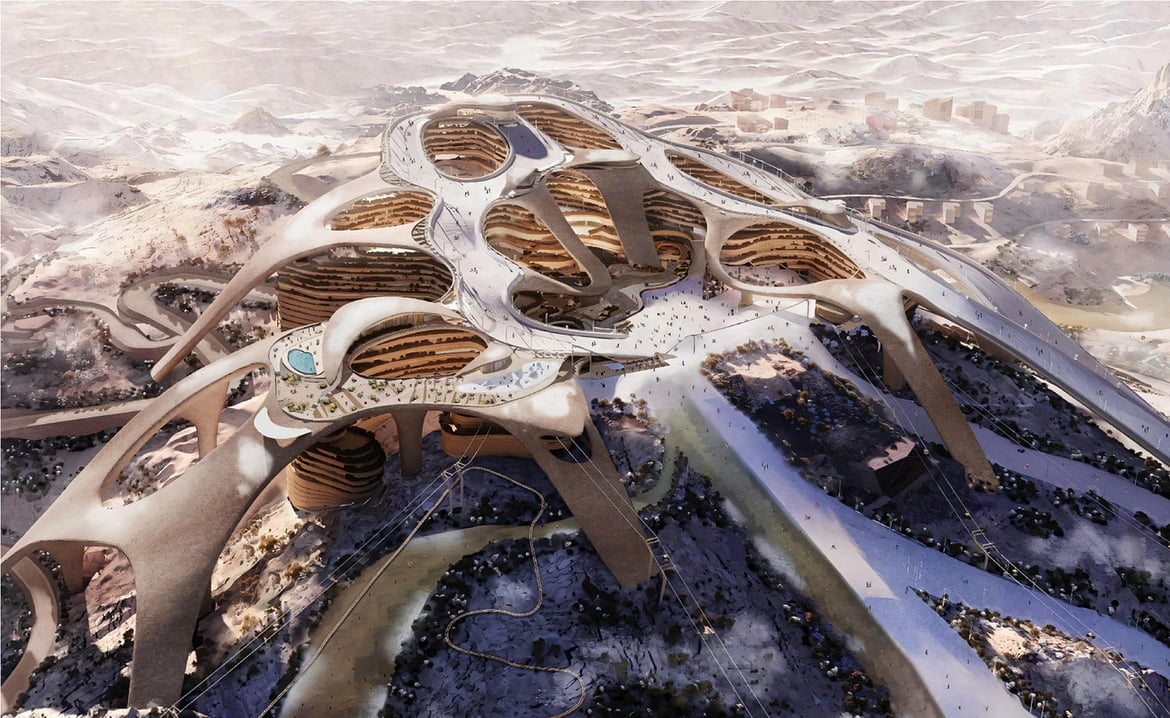
For a long time, Neom, the out-of-the-ordinary $1.5 trillion megacity envisioned by Saudi Crown Prince Mohammed bin Salman, felt real. Regular progress updates created the sense that this extraordinary creation would be witnessed, and marveled at, in our lifetime. Then reality caught up with ambition, and reviews followed. Neom houses a year-round ski resort called Trojena, which was touted as a headline attraction and the future host of major winter sports events. The flagship occasion meant to launch this improbable alpine wonder was the 2029 Asian Winter Games, which have now been postponed.

The decision stems from delays and incomplete construction at the $3.2 billion project (ballooned to $38 billion), which was originally slated to be ready by 2026 for the Games and other international events. Even today, the site is dominated by half-finished structures and dozens of cranes rather than a functioning resort. As a result, Saudi Arabia and the Olympic Council of Asia have agreed to postpone the 2029 Asian Winter Games to a later date, to be announced in due course. Nothing about Trojena was ever ordinary, much like the rest of Neom, shared Bloomberg.
The Gulf’s first outdoor ski area was envisioned as a 60-square-kilometer mountain destination in the Sarawat range, sitting between 1,500 and 2,600 meters above sea level. The destination, estimated at around $3.2 billion in its initial phase, was designed to unfold across six distinct districts, featuring roughly 450 slope-side residences and about 1,000 hotel rooms arranged into a dramatic vertical ski village.

With ultra-luxury family and wellness resorts, a central man-made lake, and year-round alpine and adventure experiences, Trojena was meant to be a luxury destination unlike anything the region had ever seen.

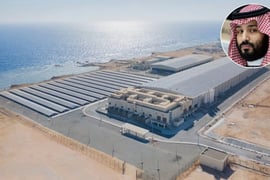
The ambition went further. The plan called for creating and maintaining artificial snow across nearly 30 kilometers of slopes in a region that receives less than 100 millimeters of rainfall annually. At the heart of the development sits a man-made high-altitude lake holding roughly 700 million gallons of water, positioned thousands of feet above sea level and supplied entirely by desalinated seawater pumped up from the Red Sea. On top of this, the resort would require tens of billions of liters of water for snowmaking over its lifetime, all of it desalinated, pumped uphill, and converted into artificial snow season after season.

What sounds magical and otherworldly on paper quickly becomes an ordeal in the real world. Building and filling a multi-billion-dollar artificial mountain lake at high altitude, pumping seawater up rugged terrain, and constructing complex structures in difficult topography have proven to be formidable challenges.

These hurdles have slowed progress and forced difficult reassessments. The broader vision was to shift Saudi Arabia’s dependence from oil to luxury tourism, but a wider reevaluation of large real estate projects by the Public Investment Fund is now steering the kingdom toward sectors such as artificial intelligence, logistics, mining, and religious tourism.

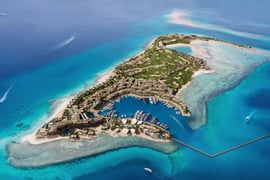
Trojena has followed an unpredictable path, much like other Neom projects, including The Line, Oxagon, and even Sindalah, which, despite its completion and launch has yet to set the kind of precedent initially promised. Back in October 2022, the Olympic Council of Asia unanimously awarded the 10th Asian Winter Games to Trojena, the only candidate at the time. It was a landmark moment, positioning the kingdom to host the first Winter Games in Saudi Arabia, the first on the Arabian Peninsula, and the first in any Arabic-speaking country. For now, that vision remains unrealized, unless it truly does snow in the desert.