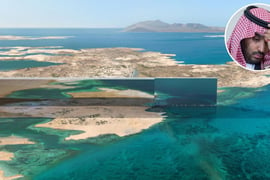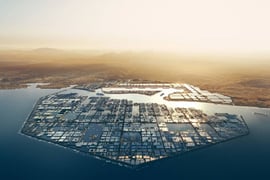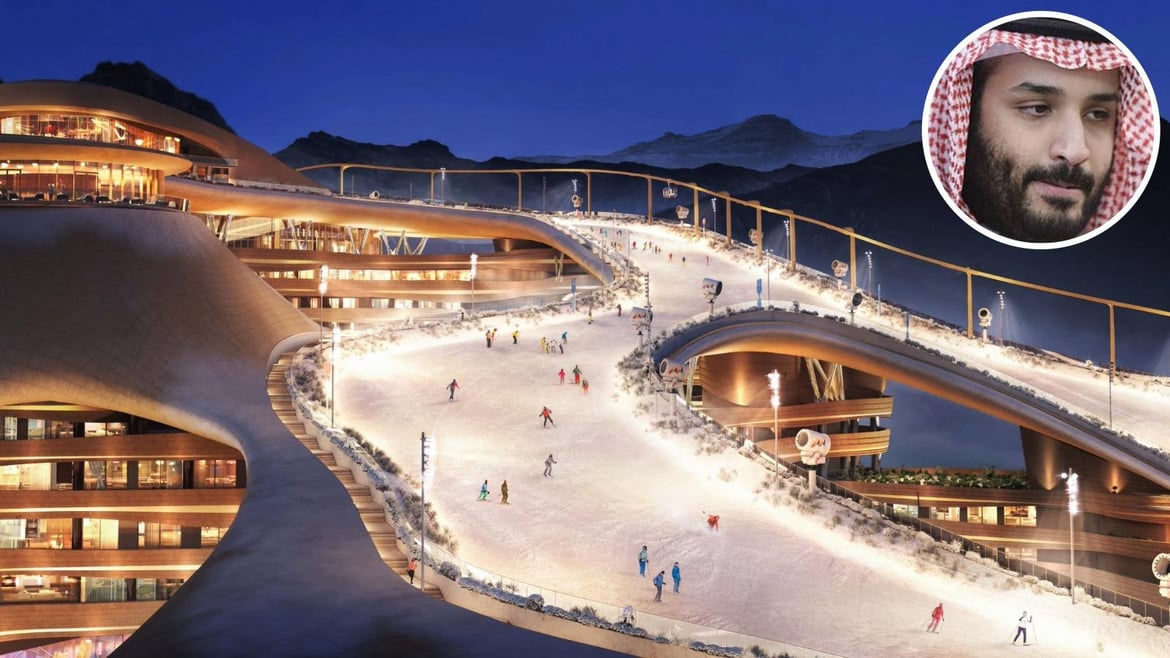
When Saudi Arabia won the right to host the 2029 Asian Winter Games, the decision was meant to crystallize Crown Prince Mohammed bin Salman’s audacious vision of transforming the desert into a global destination. The chosen venue, Trojena, is pitched as a snow-capped jewel within the $1.5 trillion Neom mega-project. But as deadlines approach, Riyadh has begun weighing a fallback plan that could move the Games to South Korea or China, as pointed out by the Financial Times. The conversations, still unofficial, underscore how fragile the grand promise has become.

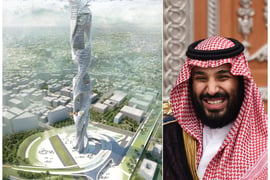
At the heart of the delays lies not just the snowmaking, not just the desalination plant that has yet to break ground, but something even more formidable: the Vault. Marketed as Trojena’s signature and its symbolic “gateway,” the Vault is no ordinary building. It is a vertical village carved into a mountain, envisioned as a fusion of hospitality, retail, residential, and digital experiences. Neom describes it as the “intellect of the mountain,” a place where reality and fantasy intertwine. On paper, it is the beating heart of the ski resort. In practice, it has become the clearest bottleneck in the entire project.

The Vault bottleneck
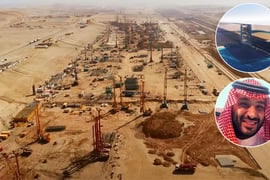
Constructing the Vault requires excavating millions of cubic meters of rock, roughly equal to filling 3,600 Olympic-sized swimming pools or blanketing New York’s Central Park under nine feet of rubble. Once the mountain has been hollowed, engineers must stabilize the carved walls with an astonishing 3,000 tension cables drilled into the rock. But progress is painfully slow. Contractors are managing to install just one cable per day. At that pace, the most basic structure of the Vault could take more than eight years to complete, overshooting the 2029 deadline by a wide margin.

This is more than just an engineering statistic. It is a vivid symbol of what happens when ambition collides with geology. Saudi Arabia promised the world a future-forward ski resort in the desert, but the very mountain that is supposed to host this dream is resisting. The Vault, imagined as the entry portal into Trojena, risks becoming its choke point. Without it, the project loses not only its architectural centerpiece but also its claim to being a seamlessly integrated “vertical village” that blurs the line between physical and digital living.

Former Neom workers have described Trojena as one of the better-managed parts of the wider mega-project, yet even here the constraints are glaring. Narrow, steep roads limit the movement of heavy vehicles. Excavation is proceeding slower than expected. The grand vision of a folded, vertical hub hosting digital labs, luxury apartments, and cognitive-reality theaters is trapped behind geological and logistical barriers.

A race against time
For Mohammed bin Salman, these setbacks pose a deeper challenge than merely hosting a sporting event. Trojena was designed to signal to the world that Saudi Arabia could not only diversify its economy but also rewrite what is possible in urban and recreational development. Instead, internal discussions about shifting the Games abroad expose the vulnerabilities of this vision.

The Olympic Council of Asia ultimately holds the authority to decide whether the Games remain in Saudi Arabia. Officials in Beijing and Seoul have publicly denied being approached, but sources familiar with the matter say contingency hosting has been discussed. If the Games were to be relocated, it would mark a symbolic retreat for Riyadh’s global branding effort. The kingdom would still host the event later, perhaps in 2033, but the aura of inevitability around Vision 2030 would be punctured.

Even the elements that once seemed secondary are now pressing headaches. Trojena’s artificial snow depends on water pumped from the Gulf of Aqaba, traveling 200 kilometers inland and climbing 2.6 kilometers in elevation before filling a 140-meter-deep man-made lake. Yet construction on the Sharma desalination plant, meant to power this system, has not begun. The schedule had called for filling to start in 2025. For now, water is being trucked in merely to support construction and basic consumption. The very lifeblood of the project is stuck in limbo.

The vision and its limits
None of this has diminished the Crown Prince’s determination. Supporters describe him as unwavering, committed to bending the future into reality even when precedent and geography say otherwise. But the Vault illustrates the limits of sheer willpower. To build a “gateway” that merges digital fantasy with physical experience, the project must first win a battle against stone, gravity, and time.

If the 2029 Games do move elsewhere, the Vault will stand as the metaphor for this era of Saudi ambition. It is a bold idea buried in a mountain, a dream designed to fuse luxury, technology, and spectacle. Yet its slow progress reminds the world that megaprojects cannot escape the realities of geology and engineering. For MBS, the struggle is no longer just about delivering a ski resort. It is about proving that his kingdom can transform vision into fact before the patience of both investors and the international community runs out.