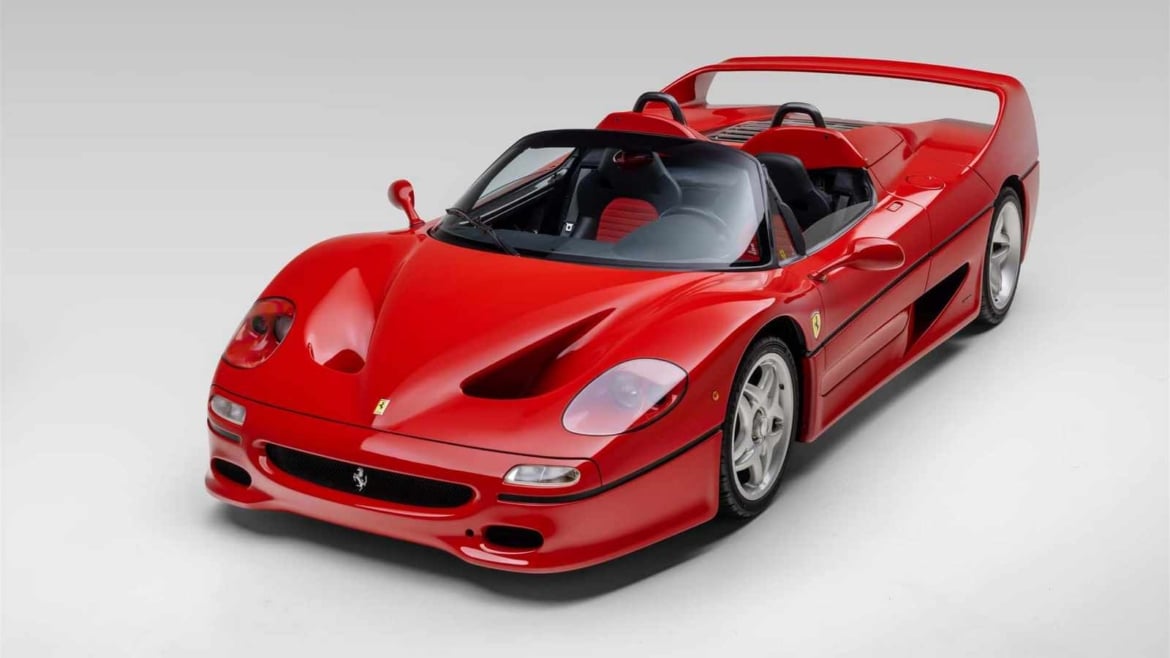
A Ferrari designed to bring the sensations of Formula 1 to the road is heading to auction with just 106 miles on its odometer, after nearly three decades in which successive collectors appear to have preserved it rather than driven it. The 1997 Ferrari F50, one of only 349 examples built, combines a naturally aspirated V12 derived from Ferrari’s Grand Prix engineering with a six-speed gated manual transmission, offering the sort of mechanical involvement that has become increasingly rare among modern supercars.
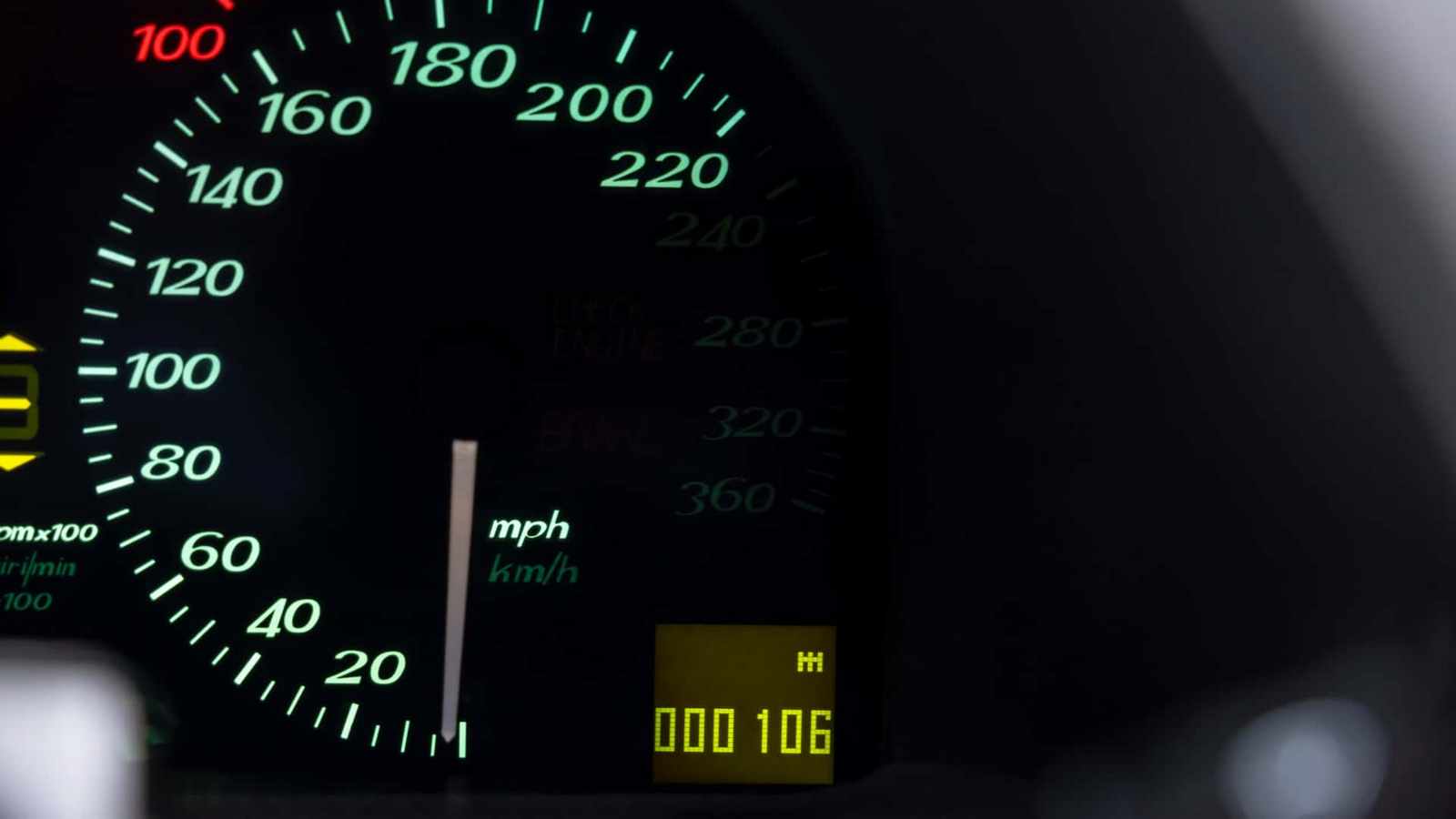
Yet the very experience that defines the F50 may be the one its previous owners have enjoyed least, turning an extraordinarily low mileage figure into one of its most compelling selling points. Chassis 107165 is now poised to test just how much collectors will pay for a car that has spent most of its life away from the open road.


Broad Arrow Auctions expects the Ferrari to fetch more than $20 million when it becomes the headline lot at its Las Vegas sale on October 31, 2026, held in partnership with Concours at Wynn Las Vegas. The car is the 334th of 349 F50s produced and was delivered new through Maranello Sales in Egham, Surrey, as one of approximately 25 examples originally supplied to Britain. Its documented history traces a journey through private collections in Japan and Germany before its recent importation into the United States, although the reasons its owners chose to preserve it with such extraordinary restraint remain unknown.


A Formula 1 experience that remained largely untouched
Ferrari conceived the F50 as a road-going expression of its racing expertise, giving it a 4.7-liter naturally aspirated V12 producing 513 horsepower. Developed from the architecture of Ferrari’s contemporary Formula 1 engine, the powerplant also serves as a structural component of the car, making the F50’s connection to motorsport more fundamental than a collection of racing-inspired design cues. There is no automatic gearbox or power steering to soften the experience, while the exposed shift gate and removable roof reinforce its distinctly analog character. In an era when performance cars increasingly rely on electronic systems to make extraordinary speed accessible, the F50 offers a more direct relationship between driver and machine.

The extraordinary preservation extends beyond the odometer. Finished in Rosso Corsa with black leather and red seat inserts, this example retains its removable hardtop and original flight case, alongside a three-piece Schedoni luggage set, J.P. Tod’s driving shoes, tools and other factory accessories. Together, these details lend the car the atmosphere of a time capsule, preserving not just the vehicle but much of the equipment supplied with it when new. Broad Arrow vice president Alexander Weaver has described the opportunity as “as close as anyone can get today to taking delivery of a brand new F50,” an appealing proposition for collectors who prize originality as much as performance.

Ferrari F50 and the rise of seven-figure legends
The estimate arrives after a remarkable run of auction results for the F50. Ralph Lauren’s yellow 1995 example sold for $9.245 million at RM Sotheby’s in August 2025, while a red car associated with Ian Poulter achieved $12.21 million at Mecum in January 2026. Another example formerly owned by Mike Tyson brought $12.105 million at RM Sotheby’s in August 2026, and a rare yellow 1996 F50 sold for $14.575 million at Mecum that same month. These results help explain the growing ambition surrounding the model, although they do not guarantee that the 106-mile car will cross the $20 million threshold.

The irony is difficult to ignore. The F50 was built to deliver an unusually visceral driving experience, yet its greatest appeal today may lie in the experiences its owners chose not to have. If the estimate proves realistic, the car will demonstrate how scarcity, provenance, and exceptional preservation can become as valuable as the engineering that made a Ferrari legendary in the first place.