Moving a Boeing 747 is never a routine operation, but plans being discussed for the proposed presidential library could turn the retirement of one of America’s most recognizable aircraft into one of the most ambitious engineering projects ever attempted for a museum. Rather than placing the aircraft in a conventional aviation pavilion, the vision calls for the retired VC-25A Air Force One to become part of the building itself, transforming the iconic jet into the centerpiece of the entire complex.

The concept came into focus during a recent interview of Eric Trump with the Palm Beach Post, who described the logistical challenge of incorporating the aircraft into the development. Drawing on his experience in large-scale construction projects, he said the team is fortunate that the waterfront site provides a practical route for transporting the aircraft by water before moving it onto the property. He also remarked that the project would essentially involve “building a skyscraper around a 747,” adding that the aircraft’s wings would likely have to be removed so it could be maneuvered into position.

A waterfront route for one of America’s most recognizable aircraft
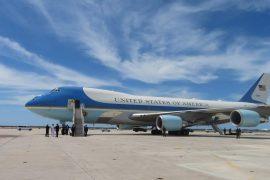
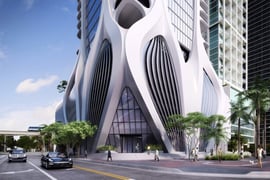
The proposed library is expected to showcase one of the retired VC-25A aircraft that served as Air Force One for decades. Unlike a traditional outdoor display, the aircraft would become an architectural feature embedded within the tower itself. That approach means decisions about the aircraft’s dimensions, structural requirements and installation would influence the building’s design from the earliest planning stages.
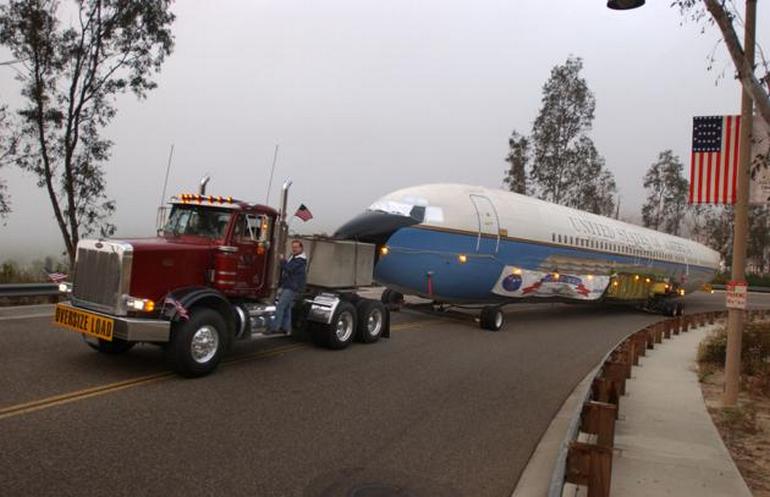
The waterfront location plays a critical role in making the idea possible. Instead of attempting to transport the aircraft entirely by road, the broad concept is to move the retired Boeing 747 to Miami aboard a barge before bringing it ashore close to the construction site. From there, the fuselage would be carefully positioned as construction progresses around it.
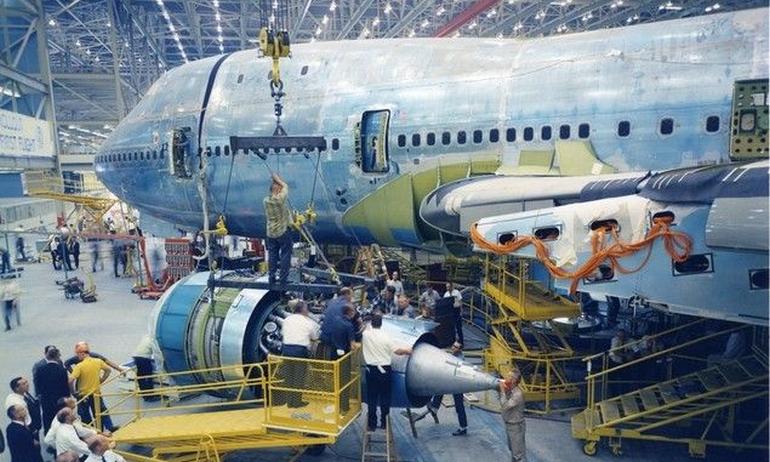
While Eric described the waterfront as a major advantage, such an operation would still be a significant engineering undertaking. Before transport, the aircraft would likely need to have its wings removed, along with other major external components, allowing the fuselage to navigate tight urban spaces. Heavy-lift cranes, specialized transport equipment and carefully coordinated road closures would almost certainly be required before the aircraft could be placed on a specially engineered foundation.

Rather than constructing a museum and later adding an airplane, the sequence would effectively be reversed. Much of the building would rise around the aircraft, making the retired Air Force One an integral part of the structure rather than simply another exhibit inside it.

Why the retired VC-25A is a fitting centerpiece
Choosing a retired VC-25A would also give the library a uniquely historic attraction. The aircraft entered presidential service in 1991 and served multiple administrations over more than three decades, carrying presidents on domestic trips, overseas state visits, diplomatic missions and other official travel. Its long service gives it a broader place in presidential history than a single administration alone.

The aircraft also represents the generation of Air Force One that many Americans immediately recognize. Finished in the classic blue-and-white livery introduced during the Kennedy era, the VC-25A became an enduring symbol of the presidency and remains one of the most recognizable government aircraft ever built.

If incorporated into the proposed library, visitors would not simply view the aircraft from a distance. They could experience a genuine piece of presidential history embedded within the architecture itself. Similar exhibits have proven immensely popular, with the Ronald Reagan Presidential Library’s Air Force One Pavilion becoming its defining attraction. A Boeing 747 integrated into a Miami skyscraper, however, would take that concept a step further, creating what could become one of the most distinctive presidential library displays ever attempted.

Should the plan move forward, transporting a retired Air Force One by barge through Biscayne Bay before constructing a skyscraper around it would stand out as one of the most unusual museum installation projects ever undertaken, combining large-scale engineering with presidential history in a way rarely seen before.