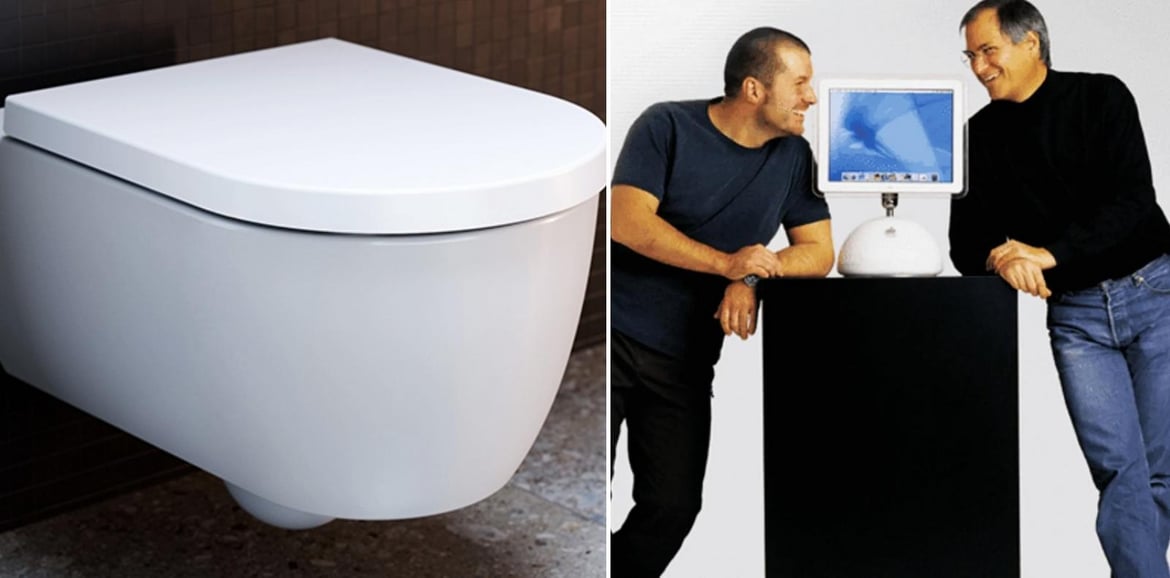
Before the iPhone, before glass rectangles and aluminum laptops redefined consumer technology, celebrated product designer Jony Ive designed a toilet. Not as a side project or a design-school experiment, but as a serious, commissioned product meant for mass production. It failed badly. The meeting where it collapsed was awkward, humiliating, and unforgettable. And it turned out to be one of the most important lessons of his career.

After graduating from Newcastle Polytechnic, Ive joined a small London design studio called Tangerine, as pointed out by Time. The work there was grounded and practical. Toothbrushes, microwaves, and everyday domestic objects. Tangerine had ambition, but it lived in the real world of manufacturing constraints and cautious clients. One of its biggest customers was Ideal Standard, the British bathroom giant. They asked the studio to design an entire bathroom suite from scratch: a toilet, a hand basin, a bidet, and accessories to match.

Ive approached the brief with an intensity that already felt out of place. The basin became the centerpiece of the project. He described it as a very simple bowl, with a thick rim that twisted and opened at the front. It was not flat or aggressively functional. It was sculptural and almost welcoming, an object that asked to be approached rather than tolerated. Plumbing, in his mind, could feel closer to furniture than hardware.

The intent behind the suite was ambitious. Ive wanted it to look minimal and elegant, built from carefully chosen materials with refined surfaces. He was thinking about how the objects would sit in a room, how people would move toward them, how they would feel to touch and use. This was not about styling for novelty. It was about improving the experience of everyday objects by rethinking their form entirely.

The moment of reckoning came in Hull. Ive drove there in the rain to present the toilet and basin to Ideal Standard’s executives. It happened to be BBC Comic Relief Red Nose Day. The senior boss leading the review wore a giant plastic red nose throughout the meeting. Ive walked them through months of work. The response was swift and dismissive. The designs were called too modern and too expensive to build. The tone crossed from critique into ridicule. The project was effectively killed in the room.

From Ideal Standard’s perspective, the decision was commercial. The suite pushed costs up and strayed too far from what their mainstream customers expected. This was not a company built to take risks on radical form language. The work was scrapped not because it lacked logic or care, but because it did not fit the business. Ive later described the episode as a breaking point. When the designer and the person paying for the work want different things, the person paying always wins.

What makes the story more interesting is what was happening in parallel. At Tangerine, Apple was already a client. Ive had worked on early portable computer concepts that would later feed into the first PowerBook designs. In the same period that Ideal Standard rejected his ceramic bowl as too radical, Apple was quietly absorbing the same minimalist instincts into computing hardware.

That contrast matters. One client saw risk and cost. Another saw a way forward. Apple spent nearly two years trying to recruit Ive. When he finally moved to California in 1992, the environment flipped completely. Instead of pitching design across a table, he worked alongside Steve Jobs, a single decision-maker who believed design should lead the company rather than serve it.

The toilet project also reveals a pattern that would repeat throughout Ive’s career. His designs were rarely cheap. Long before Apple became known for premium pricing, his work tended to push costs upward in pursuit of purity and refinement. The bathroom suite fits neatly alongside later projects that prioritized form and experience over manufacturing convenience. It was simply aimed at an industry unwilling to follow him there.

The Hull meeting also helps explain Apple’s famously closed design culture. After having his work mocked in a conference room, Ive later built an environment where prototypes were shielded behind locked doors, and decisions were made by a small, aligned team. You can read that as a direct inversion of the Ideal Standard experience. Before the iPhone, Jony Ive designed a toilet that no one wanted. However, it did not derail his career. It clarified it.