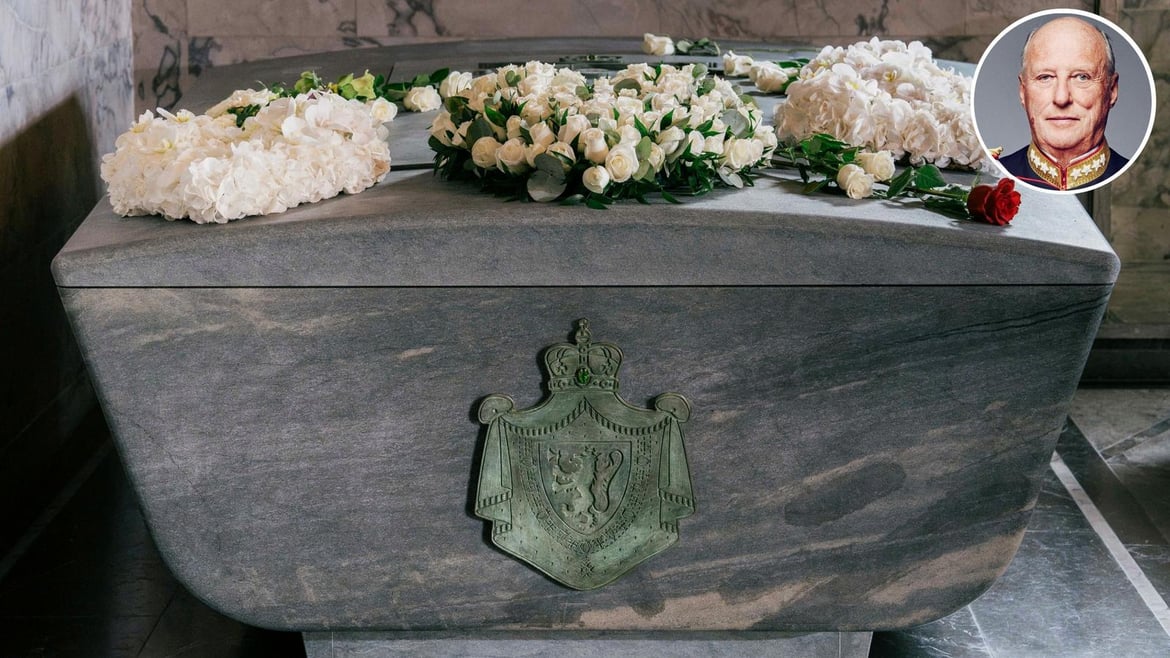
“I thank the authorities for the care in the afterlife. I hope it will be well-padded so the stay is comfortable. We will, after all, be lying there for a while,” these were the words of Norway’s King Harald V about his final resting place. Comfy or not, it sure is kingly, as the king with a famously self-deprecating sense of humor has found himself resting in peace on a piece of fortune, a $2.1 million sarcophagus. The sarcophagus was unveiled in the Royal Mausoleum at Akershus Fortress alongside his parents and grandparents, and is a joint sarcophagus for Harald and Queen Sonja. It pays tribute to both the royals and honors their lifelong passions.

King Harald V was a three-time Olympian and world-class competitive sailor who represented Norway in international regattas. That explains why the structure is shaped like a hull. Yes, it pays homage to the Scandinavian ship burials and the idea of a vessel carrying the deceased on a final journey. But for the king in particular, it pays homage to his lifelong maritime obsession. As for the material, the joint sarcophagus for Harald and Queen Sonja is carved from greenish olivine stone sourced specifically from Sunnmøre, the region where Queen Sonja spent countless hours hiking. The sea and the mountains both play a part in the afterlife, staying close to the two people who admired them most.

The olivine stone used to create the hull-shaped sarcophagus originated deep within the Earth and was lifted by tectonic forces approximately 400 million years ago. It carries the superpower-like ability to actively absorb and sequester CO2 as a modern nod to sustainability. Norway’s royal couple has always leaned into eco-luxury and rugged outdoor heritage.

According to Focus, the principal Norwegian royal regalia on the lid features a crown, orb, scepter, and imperial sword. The royal coat of arms is depicted at the foot with King Harald’s name, birth date, and death date inscribed in gilded brass letters. The project was led by Snøhetta co-founder Kjetil Trædal Thorsen and developed over approximately two years after the Royal Court commissioned it with state funding.