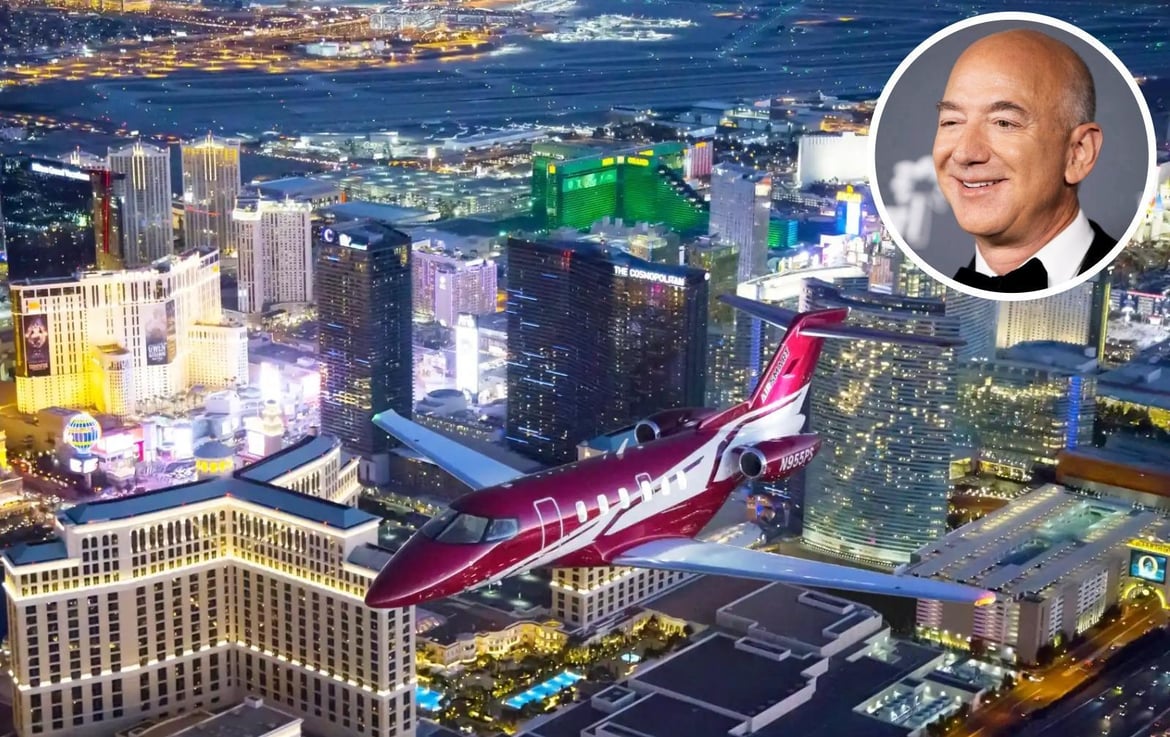
It’s absolutely mind-blowing that an investment of $10,000, casually placed into Nvidia’s IPO in 1999, could today buy the same private jet that Jeff Bezos owns, park a Bugatti Tourbillon hypercar beside it, and still leave $55 million sitting untouched in the bank. The scale of that transformation almost defies belief, yet it is rooted in one of the greatest wealth creation stories in modern corporate history, built quietly from graphics cards and video game dreams into the beating heart of artificial intelligence. What began as a bet on smoother pixels turned into a gateway to machine learning, self-driving cars, and generative models that rewrite what software can do. This is the extraordinary trajectory of Nvidia, and the unimaginable return early believers would be sitting on today.
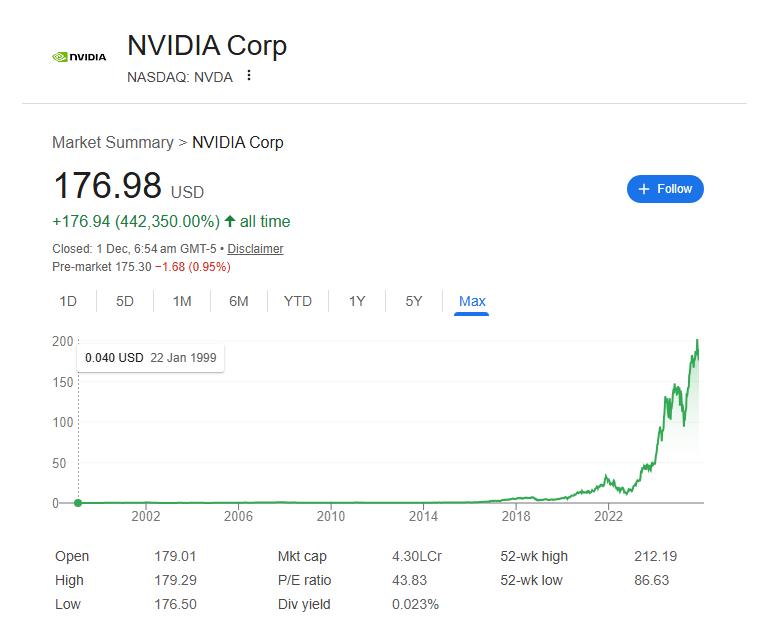
On January 22, 1999, Nvidia listed at $12 per share. A $10,000 investment bought 833 shares, a number that looked unremarkable in the shadow of larger tech names of the time. Then the company split its stock again and again as its chips grew more valuable. One original share from before June 27, 2000, has since become 430 shares. The original number of shares would now represent 399,840 shares in 2025. Multiply that by the current price of roughly $177 per share, and the investment lands at about $70.8 million. That is a 7077-fold multiplier, and an annualized return of almost 39% for nearly three decades, excluding dividends and taxes. You could place that money across the tarmac in hardware and horsepower and still be trying to spend it.

Nvidia did not rise through flashy marketing or mass consumer hype. It started in 1993 with an almost modest mission to make games smoother. In 1999, the company coined the term GPU with the GeForce 256, a chip that redefined real-time graphics. The pivotal moment arrived in 2006 when Nvidia introduced CUDA, software that allowed those gaming chips to perform general-purpose computation. In hindsight, CUDA became the spark that set off the AI revolution.

When large language models and generative AI exploded, Nvidia was already holding the keys to the only hardware infrastructure capable of training them at a global scale. By 2025, revenue surged from about $27 billion in 2022 to more than $60 billion in 2024 and beyond $100 billion in 2025. The company’s value brushed past $4 trillion, surpassing the GDP of most countries. Analysts estimated Nvidia held more than 90% of data center GPU supply for AI workloads, a near monopoly on the silicon that runs modern intelligence.
Even Wall Street voices sound awed. Jamie Dimon called Nvidia an unbelievable company. Goldman Sachs analyst Toshiya Hari declared that it will remain the gold standard for the foreseeable future. The world appears to agree.

Now, picture spending your returns. Jeff Bezos uses a Pilatus PC 24, an $11 million Swiss-built light jet known as the Super Versatile Jet. It can take off from short or even unpaved runways, lifting off where larger business aircraft would never dare. That flexibility makes it a favorite among owner pilots who value freedom more than runway length.

Inside, the cabin offers eight club seats that swivel, recline, and lie fully flat, allowing passengers to stretch out and sleep even on longer night segments. Soft lighting, whisper-quiet insulation, and polished finishing create a surprisingly luxurious space for a jet intended for rugged operation.

A spacious rear cargo bay can swallow bicycles, skis, photography gear, or bulky Bezos-sized travel crates, and the signature cargo door can be opened wide enough to load equipment that simply would not fit in traditional light jets. The cockpit is quiet and intuitive with Honeywell-based avionics designed to minimize workload so that a trained private owner could theoretically fly it themselves. It is a jet that blends capability with comfort, and you could buy it outright with a fraction of your Nvidia fortune.

And after that, you could take a flight directly to Molsheim, the cradle of Bugatti, and place an order for the Tourbillon hypercar. Priced around $5 million, the Tourbillon stands at the peak of combustion electric hybrid engineering. It succeeds the Chiron with a newly developed V16 hybrid powertrain that revs with a mechanical purity few modern cars attempt. The cabin is a sculpture of watchmaking-inspired dials, crystal-like gauges, and materials milled and assembled like haute horology rather than automotive mass production.

Every surface feels hand-shaped, from the curved carbon chassis to the intricate steering wheel that rotates without moving its central display. The exterior combines aerodynamic muscle with flowing symmetry, turning speed into design and design into drama. Even at idle, the car radiates intent. On the road, it delivers power with a cinematic violence that few hypercars in history have matched, a fusion of tradition, technology, and raw speed. You could own one without hesitation, and it would barely dent the mountain of wealth your original ten thousand dollars grew into.

Place the Pilatus in your private hangar, park the Bugatti beneath it like an accessory to excess, and your account would still hold more than $55 million untouched. That is the kind of wealth only the rarest compound returns can produce, a reminder that patience, time, and a company that evolved from gaming graphics to artificial intelligence can turn four digits into a number large enough to buy jets, hypercars, and a future limited only by imagination.