The United States is getting a new, interim Air Force One, and the timeline is now concrete. The Boeing 747-8 donated by Qatar, already accepted by the Pentagon and currently being converted for presidential use, is expected to be delivered “no later than summer 2026,” according to an Air Force statement, the WSJ reports. That deadline transforms the program into a sprint and places the jet close to America’s 250th anniversary celebrations on July 4.

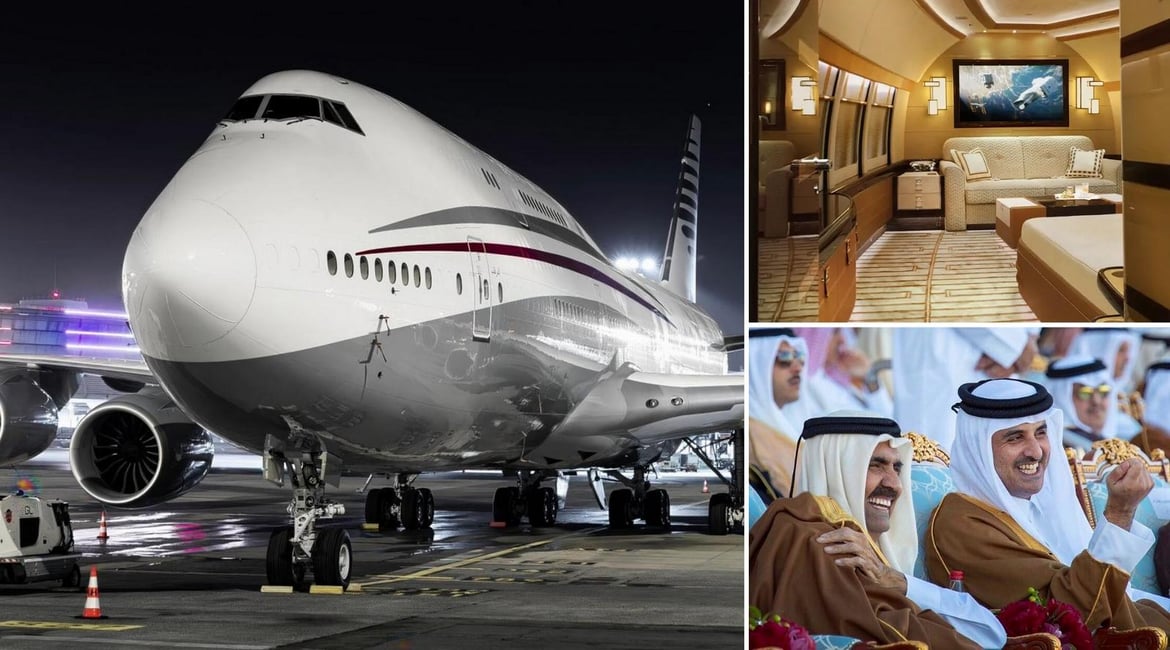
The aircraft itself is far from standard. It’s a Boeing 747-8KB business jet, the newest-generation 747 in VIP form, delivered in 2012 to the Qatar Royal family. Valued at around $400 million, it has roughly 4,500 square feet of VIP interior space and typically carries about 90 passengers rather than the 400-plus capacity a normal 747-8 can accommodate.

Inside, reports describe an ultra-premium fit-out with designer influence, exotic woods, custom finishes, and a layout built around rooms rather than rows, with five separate lounge areas linked by a grand spiral staircase, a large master bedroom, two full bathrooms with showers, around 40 televisions spread throughout the cabin, and even a dedicated kids’ playroom.

A bridge aircraft, not the final answer
The conversion work is being carried out by defense contractor L3Harris at its facility in Waco, Texas. This is intended as a bridge aircraft, something capable enough to serve quickly while a more ambitious replacement program continues in the background.

That background is the delayed Boeing project to deliver two next-generation Air Force One aircraft based on 747-8 airframes originally built for Transaero. The program has dragged on for years due to technical and supply chain issues. The first aircraft is now projected for mid-2028, making the bridge aircraft a practical requirement rather than a luxury. The recent delay to the project forced the Pentagon to expedite the conversion of Qatar’s donated 747.

The need for a bridge has been reinforced by the aging current fleet. The VC-25A aircraft, the iconic 747-200s introduced in the early 1990s, remain exceptionally capable with specialized communications and defensive systems. But they are aging assets, and maintenance complexity only rises with time. That reality became visible recently when the Air Force One aircraft headed toward Europe had to turn back over the Atlantic due to an electrical issue, requiring the president to continue on a backup plane.

Comfort has also been a recurring concern. Along with the President, even the White House staffers have complained that the current aircraft feel dated and undersized for modern long-haul travel, particularly noting that seats don’t lie flat and bathrooms are small. These are details that matter when the cabin serves as a mobile office and briefing room for extended periods.

The cost question
The cost of the conversion remains difficult to pin down. Air Force senior staff have stated that the renovation will cost less than $400 million, but critics and independent estimates suggest that the full bill will be closer to $900 million to $1 billion, taking into account mission systems, communications hardening, and security work.

Meanwhile, the Air Force is quietly building a broader 747-8 ecosystem. It has expanded training pathways using Atlas Air 747-8 aircraft and agreed to buy two former Lufthansa 747-8 aircraft for about $400 million to serve as trainers and parts donors. For now, the story is less about legacy than logistics. If the Air Force meets its stated deadline, a former royal 747 may soon enter service as America’s interim Air Force One, not as a replacement for the VC-25B program, but as the quickest path to modernizing a role where delays are no longer tolerable.