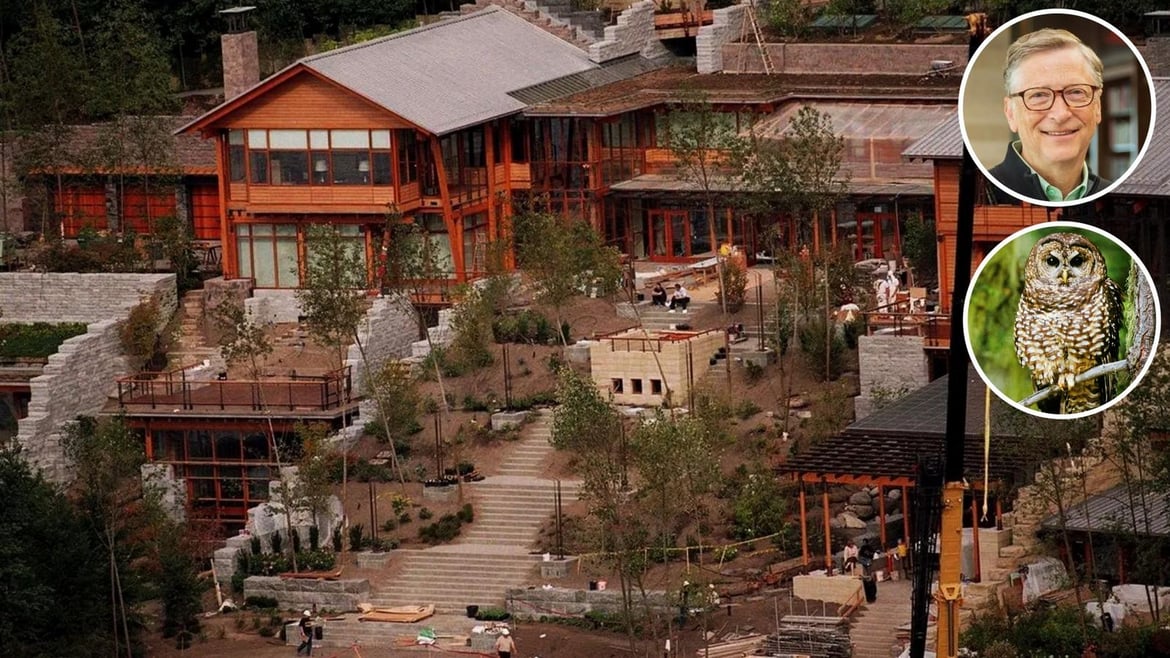
When you are a newly minted tech billionaire with an endless budget, the globe becomes a shopping mall, but even billionaires can’t buy it all. Microsoft co-founder Bill Gates, who was worth almost $4 billion in 1991, wished for a home that represented his status. In 1988, Gates bought the Medina land for $2 million, and to find a worthy architect in 1989, he ran an international architectural competition. When construction finally began on the Medina mansion in 1990 under architects James Cutler and Peter Bohlin, there was one roadblock, the northern spotted owl crisis.
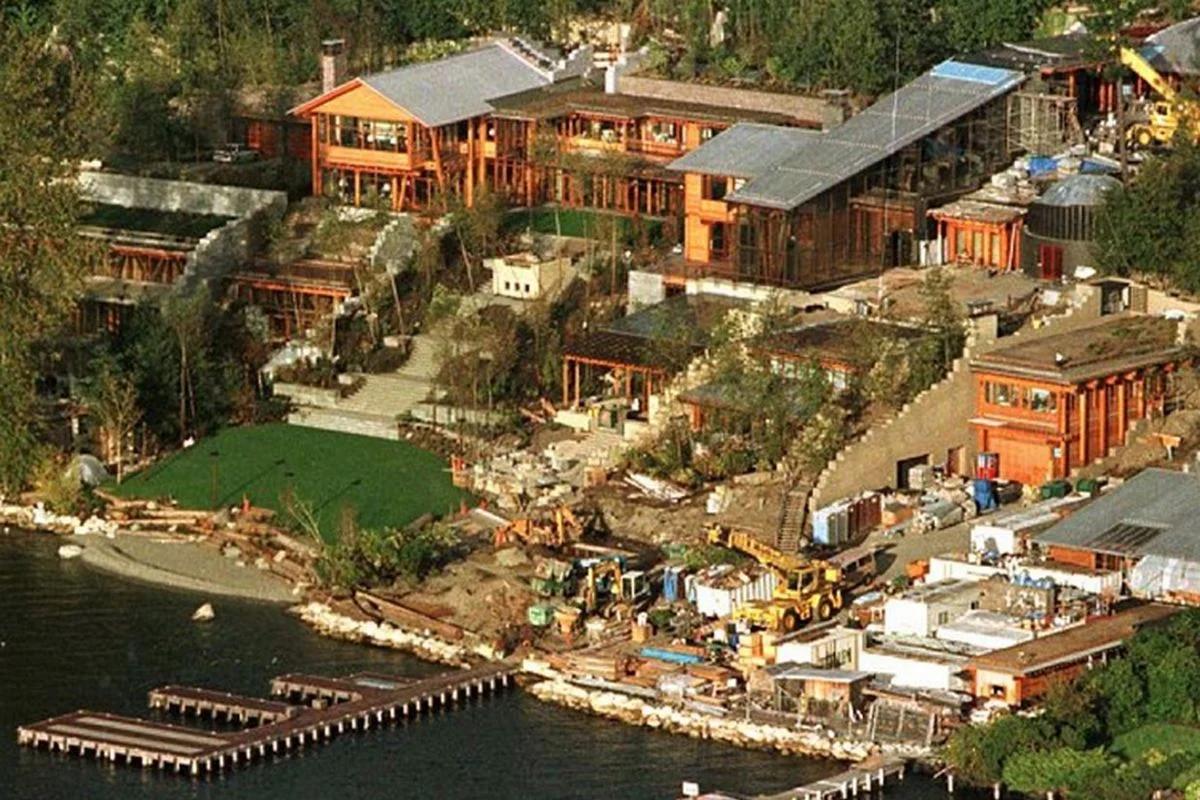
The enormous house required vast quantities of timber as the tech tycoon’s abode, a Pacific Lodge style spread across 66,000 square feet, was originally expected to use some of the finest living old-growth trees available. Owing to the spotting of the threatened species, around the same time, America decided nobody could have wood from old-growth habitat. Not only the nation but also Cutler, the most environmentally hardline architect in the region, was against the felling of living old-growth trees to build homes.

The spotted owl battle changed the mansion’s very bones
What followed was a revealing moment for a man with seemingly bottomless wealth, showing a sound mind and even gentler heart. Gates, who didn’t have to compromise, did just that, and Xanadu 2.0 not only set a new precedent but helped catalyze a new architectural market after Gates funded what Cutler described as the world’s first heavy-timber-recycling sawmill, according to a report on Architectural Record.

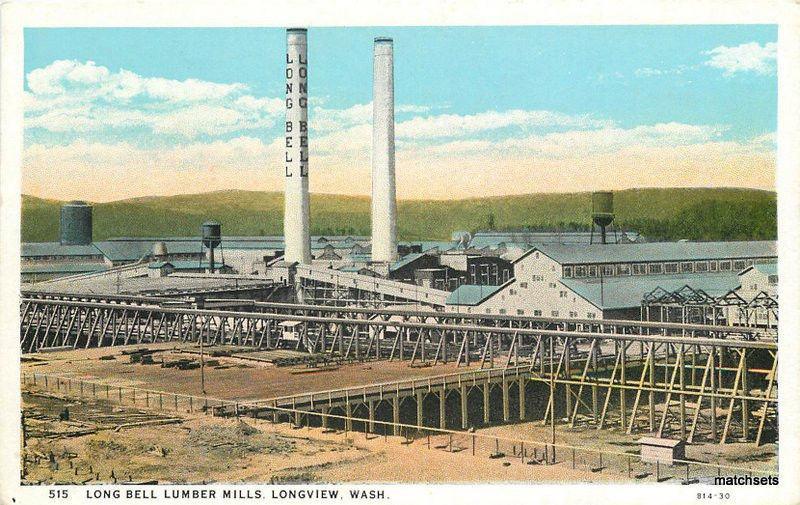
The architect had met with a salvaged-lumber dealer named Max Talbert, whom he described as being “out of Duluth” who suggested building the house from reclaimed wood instead. Gates not only agreed to build his $63 million Medina mansion with the material but also poured millions in a reclaimed-timber operation associated with Ferndale-based G.R. Plume & Company. Now, the architect who wore eco-conscious canvas shirts and rowed a shell to decompress, turned to wood reclaimed from the Long-Bell Lumber Company’s 1920s work sheds in Longview, Washington.
Half a million board feet of history went into Xanadu 2.0
The sheds that stood empty for almost four decades came down in 1996, and the beams went into Gates’s house. A whopping half a million board feet went to Medina, with some reclaimed Douglas fir beams running more than 75 feet. Such salvaged beams arrived studded with nails, bolts and spikes, weathered, inconsistently sized and carrying no grading stamp. Do not mistake this to be a cheap alternative.
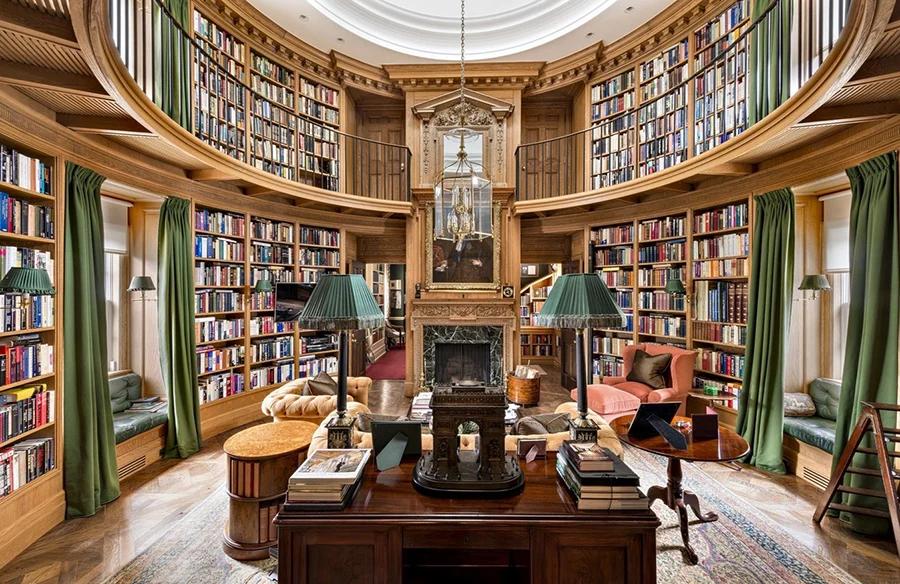
In fact, reclaimed wood is three times more expensive owing to the processes involved. From de-nailing, scanning for hidden metal, re-grading, and remanufacturing the timber into columns, beams and trusses to architectural tolerance, it required intense labor.

If anyone could afford this, it was Bill Gates. What was highly unusual at that scale then has since become an established architectural practice, and hotel groups, restaurant designers and high-end residential architects all trade on it. With one larger-than-life home, reclaimed structural timber became a premium architectural product. In retrospect, it was an early expression of the environmentalism that would later see Gates back scores of climate ventures through Breakthrough Energy Ventures, found advanced nuclear energy company TerraPower and commission Breakthrough, the world’s first hydrogen-powered superyacht. Gates’ $132 million Xanadu 2.0 stands on vintage timber as precious as a vintage watch movement. It is remarkable what the plight of one threatened owl species, scarcely larger than a house cat, can set in motion. If this is not the butterfly effect, then I do not know what is.