Ferrari spends hundreds of millions of dollars chasing tenths of a second in Formula 1. Yet one of its most meaningful “wins” happened nowhere near a podium, and almost nobody talks about it. In the late 1990s, Britain’s Great Ormond Street Hospital’s pediatric heart team quietly borrowed the most famous choreography in motorsport, the pit stop, and used it to redesign how fragile newborns are moved from operating theater to intensive care. It was not a charity stunt or a glossy corporate initiative. It was systems engineering, applied to medicine with ruthless seriousness, synchronizing roles, timing, checklists, data, and discipline. A shared language for calm execution. The result was not a nicer process, but a safer one, with handover errors dropping almost in half, and the blueprint spreading far beyond one London hospital.

At the center of this story is Professor Martin Elliott, a pediatric cardiothoracic surgeon at Great Ormond Street, and Dr Allan Goldman, the South African intensivist beside him when the spark hit. The moment was unglamorous. A punishing weekend of work, a rare pause, a Formula 1 race flickering on a television. On screen, a McLaren pit stop unfolded with that hypnotic precision F1 fans barely question anymore.

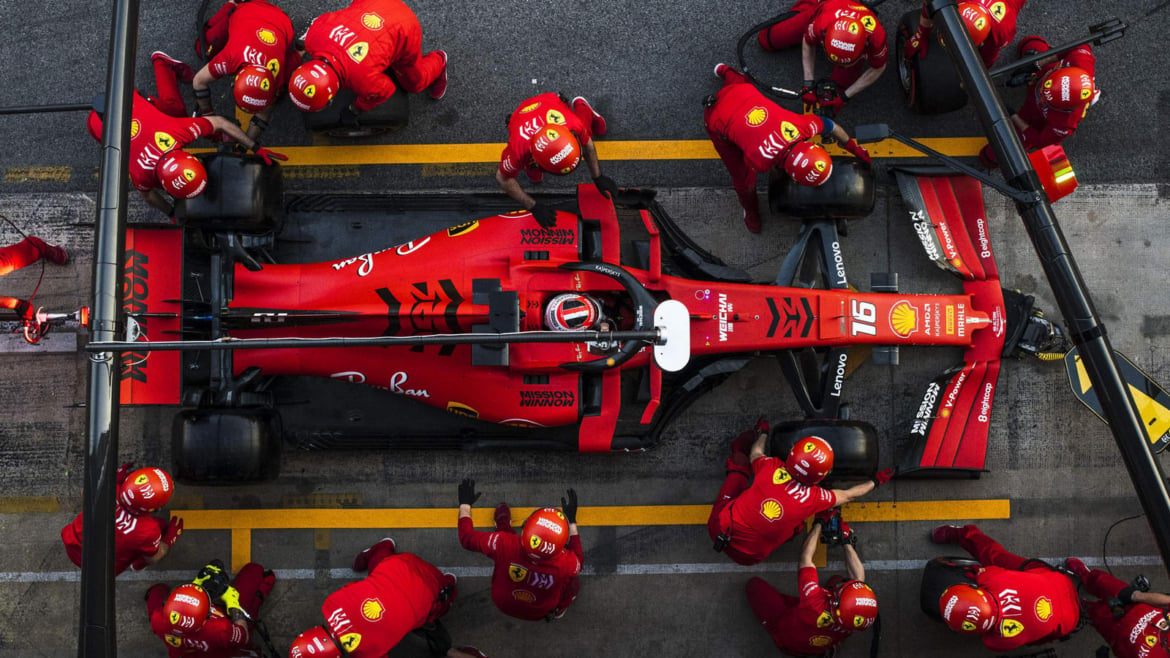
From above, it looked like a moving diagram. One valuable object in the middle, surrounded by specialists operating with almost military clarity. Elliott saw it instantly. A baby on a trolley, encircled by staff, looked the same. It involved same geometry, same pressure and more importantly same unforgiving lack of margin.

The day medicine met the pit wall
The intellectual groundwork had been laid earlier by Prof. Marc de Laval, Elliott’s predecessor, a Belgian surgeon whose work on “human factors” helped explain what clinicians often sensed but struggled to articulate, as pointed out by The Sunday Times. Modern care can fail not because the expertise is missing, but because humans under stress default to noise, overlap and improvisation. The messy part is not always the technical act. It’s the handoff. The transition. The moment where responsibility changes hands and attention splinters.

Elliott and Goldman decided to do something that still feels almost rebellious in a profession built on hierarchies. They asked outsiders for critique. McLaren was the first call. McLaren’s answer was brilliantly engineered and completely impractical for a public health system. They proposed a kind of “one-piece” solution, a multifunction platform that would serve as operating table, trolley, and ICU bed, so the patient never had to move. It was the right idea in the wrong world. Elite motorsport solves problems by spending. Hospitals solve problems by redesigning.

The breakthrough arrived through an unlikely connector – a Shell executive met at a management conference. Shell, Ferrari’s long-time partner, provided a contact route into Maranello and helped set the collaboration in motion with a research grant. Doctors went to Ferrari. Ferrari’s pit stop group, engineers, and crew leaders went to the videos. What they saw was not incompetence, but unstructured effort. Too many hands, along with too many voices and too many good intentions colliding at the worst time.
Elliott later summarized Ferrari’s verdict with disarming honesty: they thought the hospital team was useless. He meant it as a compliment. Ferrari wasn’t insulting the people. Ferrari was diagnosing the system.
What Ferrari changed, without touching a scalpel
Ferrari’s contribution was not some miracle gadget. It was something both less visible and more powerful, which was a process map. In F1, nothing “just happens.” Every action has an owner. Every risk has a response. Every stop is filmed, timed, dissected, and rehearsed again. Ferrari split its guidance into five headings that sound almost like a pit wall briefing, but mapped cleanly onto a clinical setting.

Leadership came first. In the pit lane, there is always a boss, the lollipop person or traffic light controller, the one who decides when the car is safe to be released. In the new protocol, a single senior clinician leads the transfer, not by doing tasks, but by owning the whole picture, calling stages, and stopping chaos before it starts.

Task sequence and allocation came next. Pit crews are not “helpful.” They are specialized. The wheel gun operator does not abandon their job to fix someone else’s problem. Great Ormond Street moved toward fixed roles in transit. One person owns the airway. Another owns ventilation. Another owns lines. Another owns monitoring. Another document. The leader coordinates. Nobody freelances.

Risk prediction was then formalized. Ferrari doesn’t wait for a mistake to appear. It anticipates failure and rehearses recovery. The hospital began structured briefings before movement, calling out likely vulnerabilities and contingency actions so the response was planned, not improvised. Discipline and composure were non-negotiable. This is where the pit stop metaphor stops being cute and becomes lethal in its seriousness. When something goes wrong, the instinct is for everyone to rush in. Ferrari taught the opposite. Only the assigned person moves. Everyone else holds their post. The leader’s eyes never leave the whole system.

Finally came practice and data. Ferrari lives on video and telemetry. Great Ormond Street started timing transfers, recording, debriefing, and refining with obsessive detail. The process became something you could teach, not just something you “knew.” Ross Brawn’s philosophy became the cultural north star. If you want to be the best team, everybody has to want to be world champion at their part of the job, even if their job feels small. That mindset, more than any checklist, is what turned this from a protocol into a standard.
After the changes, technical errors per handover fell by 42%, reports Motorpassion, while information omissions fell by 49%. And because this was a process rather than a device, it traveled. Other hospitals copied it. Others doubted it, repeated it, and saw the same thing happen.

Ferrari’s pit stop legacy is usually measured in championships and legends. But its quietest contribution may be the one that matters most: proving that speed is not the point. Precision is. And when precision becomes a habit, the benefits ripple outward for decades, long after the engines cool.