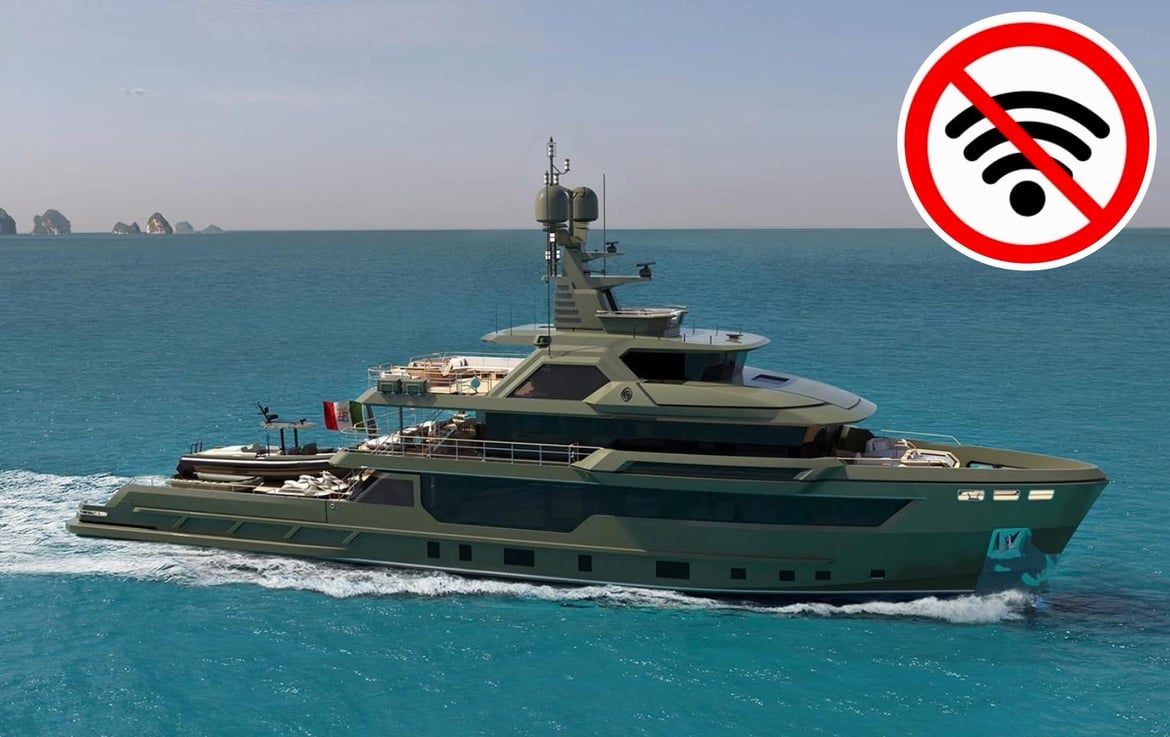
On most superyachts, the selling point is what you can add. Bigger screens, louder sound, and more connectivity. Nasiba was built around the opposite idea. A mystery billionaire wanted the ability to subtract something modern life never stops producing. Wireless signals. At night, a single command can shut down Wi-Fi in the sleeping areas of this 44.3-meter explorer yacht, delivered in October last year. The goal is simple and unusually specific. Radio-silent cabins, so the health-conscious owner and his family can sleep without the constant blanket of onboard transmission.

That request sounds niche until you remember how yachts actually operate today. Wi-Fi is no longer just “internet.” It quietly powers entertainment, device control, streaming, and even the way guests interact with basic systems. Most boats are designed assuming wireless will always be there. Remove it and the whole experience can start falling apart.

Videoworks, the Italian specialist behind Nasiba’s integrated IT and AV setup, treated the owner’s request like an engineering problem, not a quirky preference. The crew can kill Wi-Fi in all sleeping zones at night while keeping the rest of the yacht online. That last part matters, because this isn’t a weekend boat. It’s a long-range explorer designed to spend real time far from shore.

The bigger challenge was avoiding the obvious downside. Turning off Wi-Fi usually means turning off convenience. Videoworks solved it the hard, expensive way. It wired almost everything, as pointed out by Daily Nautica. Cabins have Ethernet ports so laptops can run over copper. Entertainment isn’t dependent on wireless streaming alone. TVs can be controlled with infrared. Audio can run through analog cabling. Even when Wi-Fi goes dark in the cabins, guests aren’t left stranded.
That is the part that very few yachts attempt. Wellness in yachting often stops at air filters, water purification, and spa lighting. On Nasiba, electromagnetic exposure is treated more like noise or vibration. Something you can reduce through design, infrastructure, and discipline.

And it isn’t as if Nasiba is anti-technology. If anything, it is a floating example of just how much modern owners expect to stay connected. The yacht’s global setup includes redundant satellite options, with parallel low-Earth-orbit networks. It is the kind of system you build when you want coverage in remote waters, and when work calls and remote schooling are part of the lifestyle. The irony is intentional. This owner wants maximum connectivity during the day, and a clean wireless shutdown at night.

The same practical thinking shows up in the audiovisual design. Nasiba’s Flexplorer layout keeps the superstructure forward, freeing up a huge aft utility deck for tenders and toys. Once cleared, that area flips into an outdoor cinema and party zone. Videoworks equipped it with five high-power active speakers with subwoofers and a 98-inch motorized rear-projection screen that drops from the overhang. A projector stored in a portable flight case keeps the deck flexible, so it can be cleared completely when needed.
The signal routing is equally purposeful. Audio and video run over balanced analog and pro-audio style outputs, which means external event-grade systems can be plugged in without rebuilding the yacht’s wiring every time someone wants a bigger party.

Then there is the surveillance layer that doubles as entertainment. Seven exterior PTZ cameras feed live video to cabin TVs. For the crew, it is situational awareness. For guests, it becomes a live window into wherever the yacht is anchored, especially in remote regions where the scenery is half the reason you came.
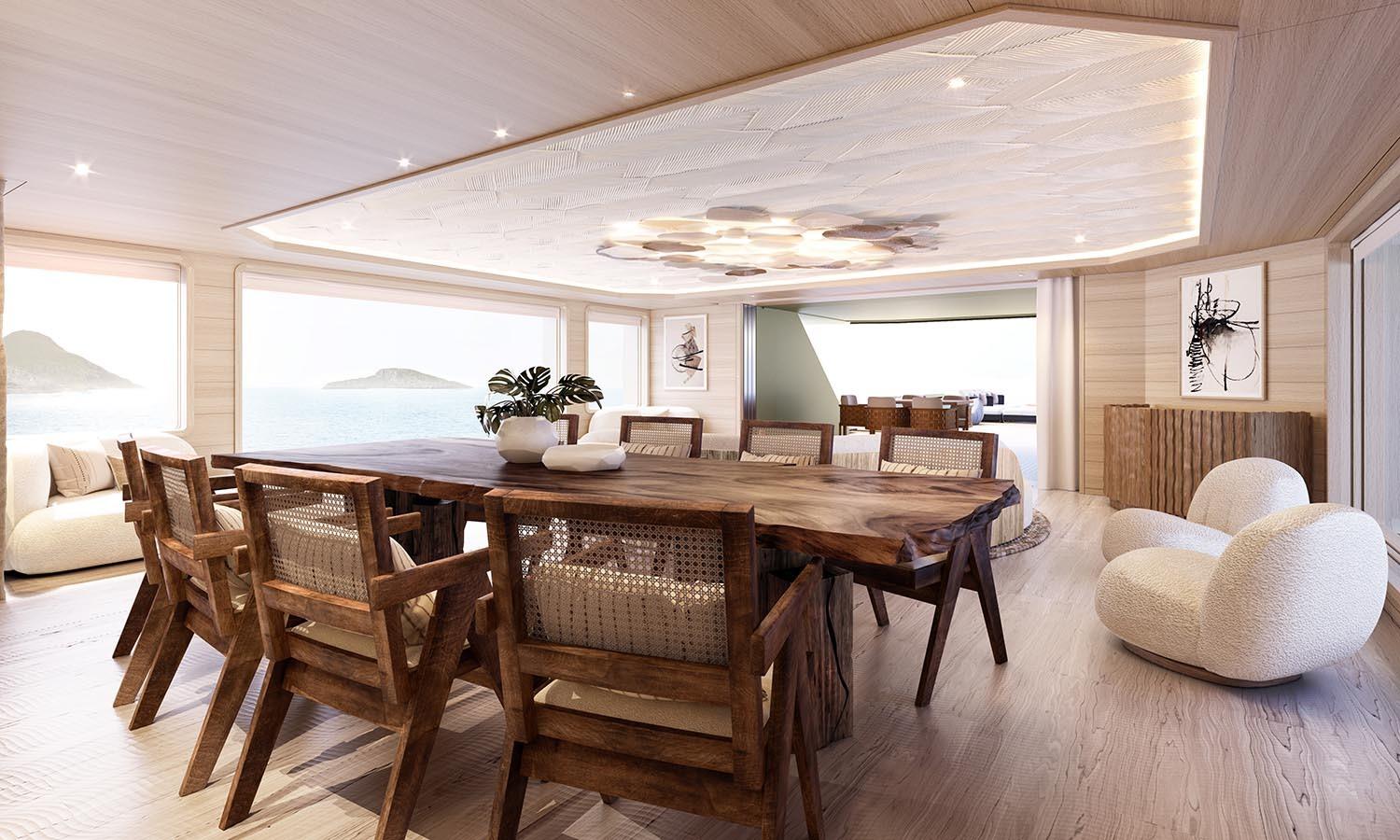
Nasiba’s onboard culture matches the system behind the walls. The interior, styled by Winch Design with EcoNest Architects, was built around a health-conscious brief that scrutinized materials, finishes, and overall air quality. Wellness hardware includes an infrared sauna and an ice plunge pool, turning the yacht into something closer to a travelling retreat.
Most yachts try to impress you with what they project. Nasiba impresses by what it can silence. And the fact that it takes serious money, planning, and wiring to do something as simple as turning Wi-Fi off at night is exactly why this boat feels so quietly radical.