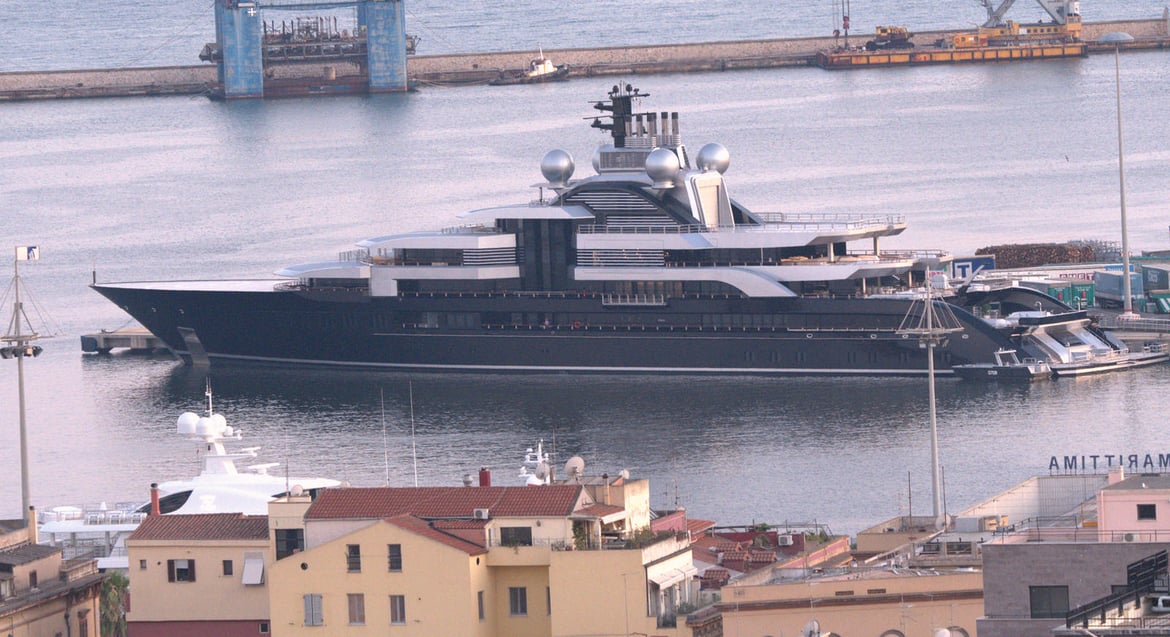
Russian seized superyachts have become some of the most expensive idle machines in the world. Designed as precision-engineered floating palaces, they depend on constant movement, engineering cycles, and obsessive upkeep to preserve their value. When that rhythm stops, depreciation accelerates in ways that are invisible from the dock but devastating on a balance sheet.

A recent Financial Times analysis built on research by brokerage Cecil Wright examined 15 Russia-linked yachts frozen in European marinas since 2022. If maintained and traded under normal conditions, the fleet would be worth about €3.5 billion (about $4.1 billion) today. Instead, their combined value is closer to €2.9 billion (less than $3.5 billion), implying roughly $700 million in lost value simply from being stuck, under-used, and deprived of proper care. The drop is not a reflection of collapsing demand for large yachts, as the broader market for well-kept vessels has remained firm, but rather a direct consequence of inactivity and deferred maintenance.
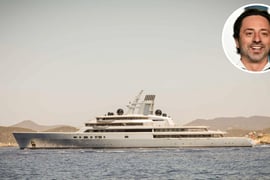
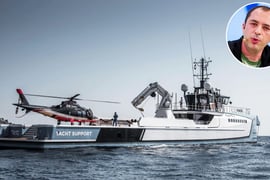
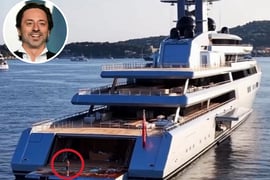
Among the most notable examples are Tango in Spain, Sailing Yacht A in Trieste, and Phi in London, each illustrating how quickly a modern yacht begins to look tired when it cannot leave the berth for yard periods or operate as designed.

When a superyacht is forced to stand still
A 60- to 140-meter superyacht is built to function continuously. Under normal ownership, it would haul out annually for antifouling, hull inspections, paint correction, and compliance checks, alongside deeper five-year classification surveys that examine structural integrity and systems. Missing these milestones can push a yacht out of class, which immediately dents resale value and requires a costly refit before insurers or serious buyers engage.

Main engines and generators are meant to run under load, not sit dormant. Without regular cycling, seals dry out, fuel systems degrade, and corrosion forms inside cooling circuits and pipework. Restarting after prolonged inactivity often demands overhauls rather than routine servicing. Additionally, climate control is equally critical. Even at rest, a yacht carries a heavy hotel load of air-conditioning, dehumidifiers, pumps, and electronics. If those systems are reduced to cut costs, humidity creeps into lacquered woods, leather panels, artworks, and sensitive navigation equipment.

Exterior finishes deteriorate in parallel. High-gloss paint systems dull under static sun exposure and pollution. Teak decks dry, seams open, and fasteners shift when months of heat replace the regular wash of seawater and hands-on crew attention. As Chris Cecil-Wright has noted, large yachts are living creatures that require constant use and maintenance, and the moment that cycle stops, condition and value begin to slide.

Millions to maintain, millions to repair
Crew continuity is central to preserving a yacht’s health. A vessel of this scale may carry dozens of specialists who understand its systems intimately. Once frozen, teams are often reduced to a skeleton presence, increasing the risk that minor issues evolve into major technical failures.

Industry rules of thumb suggest annual operating costs of 10 to 20 percent of a yacht’s value, meaning a $100 million vessel can require $10 to $20 million per year simply to remain in peak condition. Even tied to a quay, dockage, insurance, security, and baseline engineering support continue to generate substantial bills.

Crucially, the $700 million estimate does not even include Dilbar, the 156-meter Lürssen superyacht held in Germany. On paper, she remains a $600 to $800 million work of naval engineering. In reality, she represents a vast, stationary asset that can cost tens of millions annually just to preserve.
The picture that emerges is not of a market collapse but of sophisticated machines deprived of motion. From a distance, they still project scale and glamour. Beneath the surface, however, systems age, certifications lapse, and repair lists grow longer, proving that in the superyacht world, value depends as much on continuous care as on size and pedigree