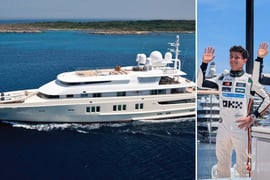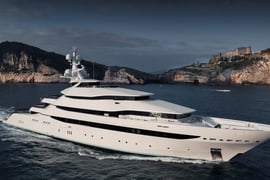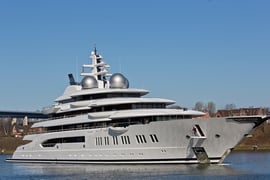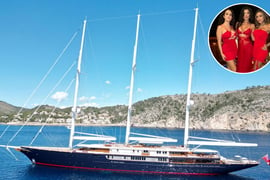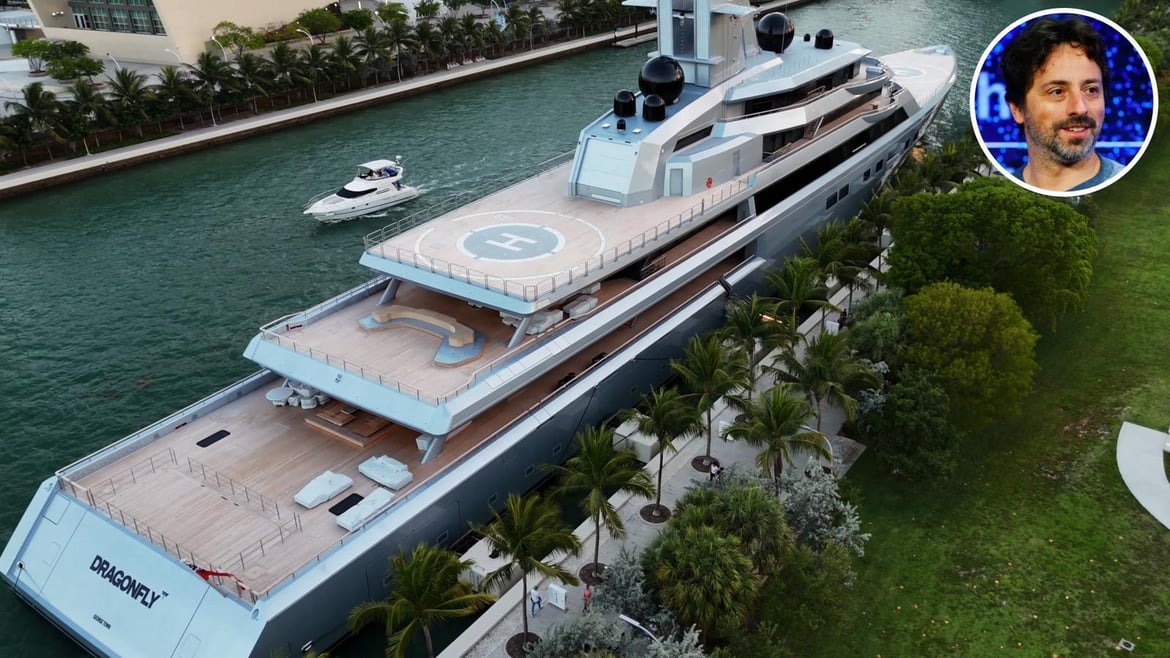
Google co-founder Sergey Brin is the world’s third-richest man, who owns Lurssen Dragonfly, the largest superyacht in the United States. At 466 feet long, the vessel stretches farther than five blue whales laid end to end, and at roughly $450 million, it carries not just staggering scale but some of the most scrutinized materials ever used on a private yacht. For decades, a yacht of this stature would almost automatically have been decked in teak, the dense tropical hardwood prized for its rot resistance, salt tolerance, and its almost mythic status within yachting. After all, Jeff Bezos’ $500 million Koru, the world’s largest sailing yacht, famously relied on teak sourced from Myanmar, a supply chain now mired in sanctions, scrutiny, and legal gray areas. With wealth of this magnitude, the assumption is often that prestige outweighs practicality or responsibility.

Dragonfly quietly challenges that assumption. According to the BBC, Brin opted for Tesumo instead of teak, a next-generation engineered wood developed to replicate teak’s look and performance without relying on endangered or legally contentious forests.The aim is not to deprive owners of the classic yachting aesthetic but to deliver it without the environmental and regulatory baggage teak now carries. Tesumo is the result of a collaboration between German shipyard Lürssen and the University of Göttingen, sparked by Lürssen’s own difficulty in sourcing a credible alternative to old-growth teak.

The yard, best known for delivering giants such as Dilbar, Eclipse, Solaris, and Deep Blue, tested more than 50 timber species and a wide range of treatments before settling on a process that could convincingly match teak’s performance. The final material begins as a fast-growing hardwood from African forests, which is then thermally modified, pressure-impregnated with resin at a cellular level, and cured and stabilized over a two-week period.

The result is a deck material engineered to behave like teak, not just resemble it. Thermal conditioning improves durability, resin impregnation limits water ingress and cracking, and the final curing phase stabilizes the wood for long-term marine use. Each Tesumo board is barcoded throughout production, making its origin and treatment traceable, an important step for compliance with both the EU Timber Regulation and the US Lacey Act.

On Dragonfly, Tesumo has been installed on one of the helipads, covering roughly 300 square meters. This is no token gesture. The helideck functions as a multi-season test zone, allowing engineers and crew to study how the material weathers, how it is maintained, and how micro-cracks behave over time under real operational conditions. Beyond propulsion systems and hybrid engines, this represents a different kind of sustainability shift in yachting.

Google billionaire Sergey Brin, the unseen climate champion-
Not one for the spotlight or public accolades, Brin has been quietly channeling serious money into health and climate action through two philanthropic vehicles, the Sergey Brin Family Foundation and Catalyst4, a nonprofit he also set up in 2021 and funded largely by selling his Tesla stock. The billionaire, driven by a clear mission, has donated more than $400 million toward climate initiatives through his family foundation. Catalyst4, on the other hand, focuses on delivering practical climate solutions and has directed a further $22 million into climate advocacy. And this appears to be only the beginning. As of 2025, the tech tycoon holds over $1.1 billion in Alphabet stock, with roughly $1 billion committed to Catalyst4 and explicitly earmarked for both climate change and CNS research.

While he has quietly become one of the world’s largest climate funders with almost no public-facing brand, Brin has also taken a first step toward changing how luxury yachts look and are built. And even though Tesumo’s presence on Dragonfly covers only a fraction of her vast footprint, it signals something larger. If materials like this prove successful at the very top of the market, teak’s grip on superyacht design may finally loosen, not through sacrifice, but through substitution.