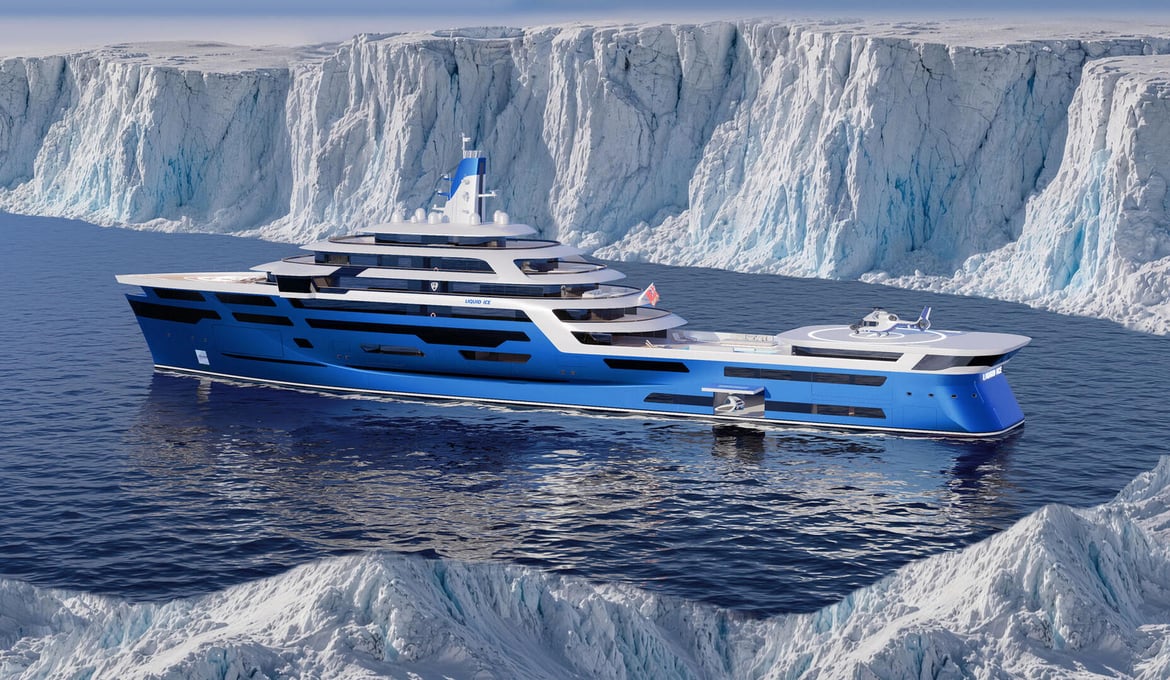
The next great leap in superyacht engineering might not involve a bigger swimming pool, a more extravagant interior, or another helicopter landing pad. Instead, it could involve carrying enough liquid hydrogen to power a 487-foot floating expedition base across thousands of nautical miles, potentially without relying on conventional fossil-fuel propulsion. That is the ambition behind Liquid Ice, a remarkable explorer yacht concept unveiled by Poland’s Aria Yacht Design and Germany’s Janthina Naval Architects. Designed for remote expeditions, the enormous vessel combines an ice-class hull, hydrogen-electric propulsion and extensive scientific facilities with the sort of luxury normally associated with the world’s most extravagant superyachts.

What makes Liquid Ice particularly interesting is the scale of its proposed energy system. The yacht is designed to carry 150 metric tons of usable liquid hydrogen, supplied by two storage tanks developed by SHZ Advanced Technologies, alongside a 13-megawatt-hour battery bank. According to SuperYachtTimes, its fuel cells and battery system are intended to power both propulsion and onboard systems, with a projected range of 7,000 nautical miles. That is a considerably more ambitious proposition than simply using hydrogen to operate a handful of onboard amenities.


Liquid Ice carries 38 times more hydrogen than Breakthrough
The comparison with Feadship’s 390-foot (118-meter) Breakthrough makes the numbers even more extraordinary. Originally commissioned by Microsoft co-founder Bill Gates, the approximately $650 million superyacht became one of the most talked-about examples of hydrogen technology entering the superyacht industry. However, Breakthrough carries approximately four metric tons of usable hydrogen, whereas Liquid Ice is designed for 150 metric tons. Despite being only around 25% longer, Liquid Ice would therefore carry roughly 38 times as much hydrogen, while its 13,500 GT gross tonnage would be nearly 1.9 times Breakthrough’s.

The distinction lies in what the hydrogen is expected to accomplish. Breakthrough uses hydrogen primarily for onboard amenities and shorter periods of operation, whereas Liquid Ice is designed around hydrogen-electric propulsion for extended expeditions. Its fuel cells would work alongside the substantial battery bank, which absorbs fluctuations in electricity demand and allows individual fuel-cell units to be taken offline for maintenance without interrupting the wider system. The designers also claim that the arrangement eliminates the need for a conventional ballast-water system through its weight distribution and volume characteristics.

A floating research station with extraordinary luxuries
Beyond its propulsion technology, Liquid Ice is conceived as a fully equipped expedition platform. Its facilities include dedicated scientific laboratories, a mission control room, and accommodation for up to 12 researchers alongside guests and crew. Two deep-sea submersibles, two helicopters, three guest tenders and six personal watercraft provide the equipment needed to explore environments far beyond conventional cruising routes.


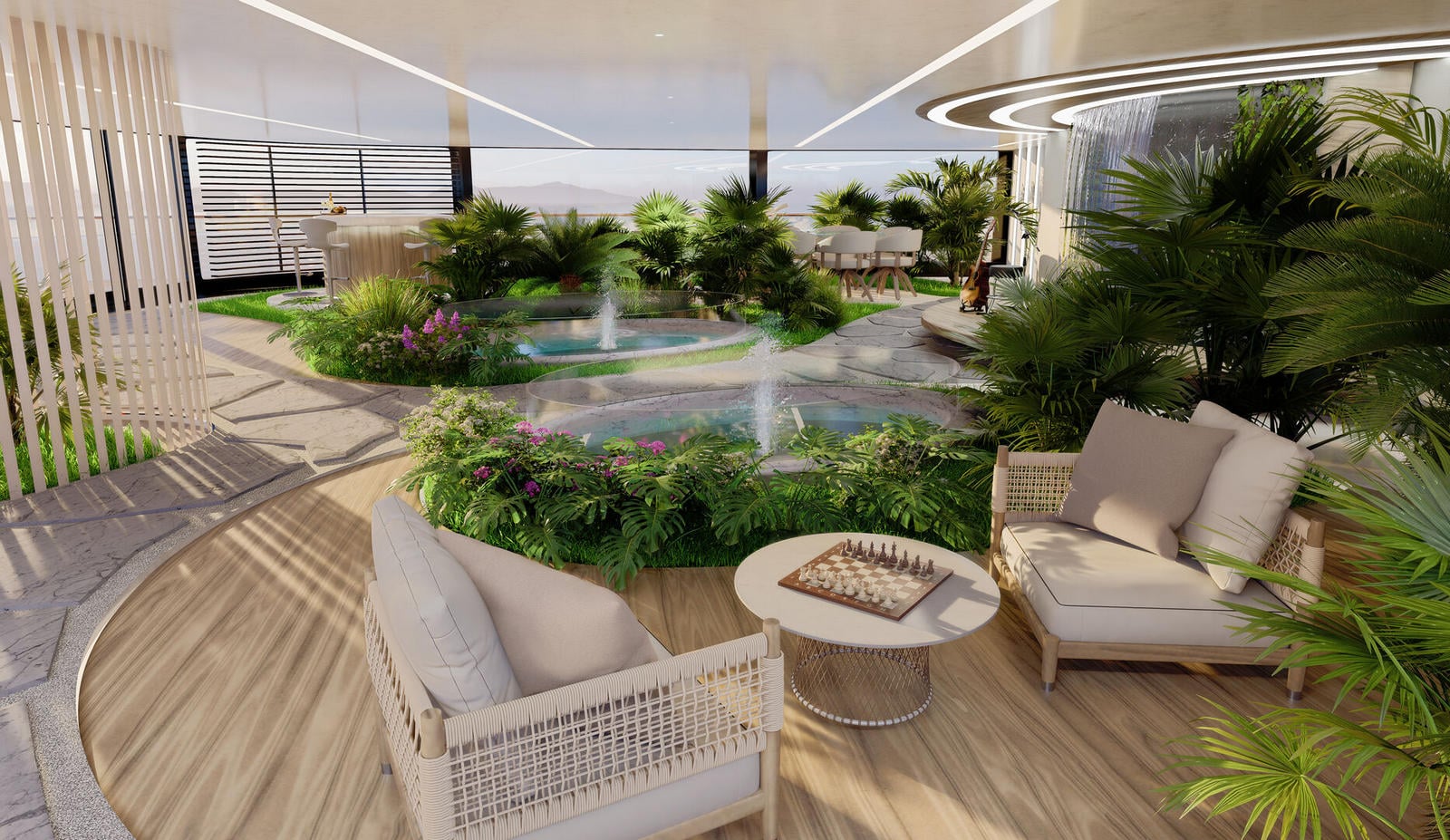
The luxury arrangements are equally ambitious, with a double-height salon, panoramic aft lounge, swimming pool and a 270-degree observation lounge at the bow. A raised aft deck can become a tennis court or outdoor cinema when the helicopter is stored in its below-deck hangar, while a spa, gym, beach club and toy center occupy almost 1,000 square meters. An upper-deck winter garden with opening glass doors and a separate skylounge complete the arrangement.


With a proposed maximum speed of 21 knots, a cruising speed of 12 knots and a range of 7,000 nautical miles, Liquid Ice certainly has ambitious specifications. A fully fitted build could cost an estimated $500 million to $750 million, although no official budget, commissioning owner, shipyard or delivery date has been disclosed. For now, it remains a concept, but one that suggests the future of hydrogen-powered superyachts could be considerably more ambitious than even Breakthrough initially made us imagine.