For the ultrawealthy, the ultimate luxury is not simply owning a mansion or flying by private jet, but having a floating palace that can cross oceans while offering every comfort of a five-star resort. Yet the environmental cost of maintaining such extraordinary indulgence can be staggering, particularly when the vessels consume fuel even while sitting motionless at anchor. Few examples illustrate this contradiction more clearly than the superyachts associated with the Walton family, heirs to the Walmart retail fortune.

The superyachts associated with Walmart’s billionaire heirs traveled approximately 56,000 nautical miles in a single year, producing enough carbon emissions to match the annual footprint of more than 1,700 Walmart workers. Their carbon footprint comes not only from crossing oceans at enormous fuel consumption rates, but also from keeping swimming pools, private cinemas, sprawling suites, and elaborate wellness facilities running while anchored. Although these yachts were linked to members of the Walton family in research published in 2024, one of them, Seanna, was sold in July 2025.

An October 2024 study by Oxfam, cited in The Guardian, examined the environmental impact of superyachts owned by some of the world’s richest people, identifying 23 vessels associated with 18 billionaires. The study estimated that each yacht generated an average annual carbon footprint of 5,672 tonnes, an amount that would take an average person around 860 years to produce.


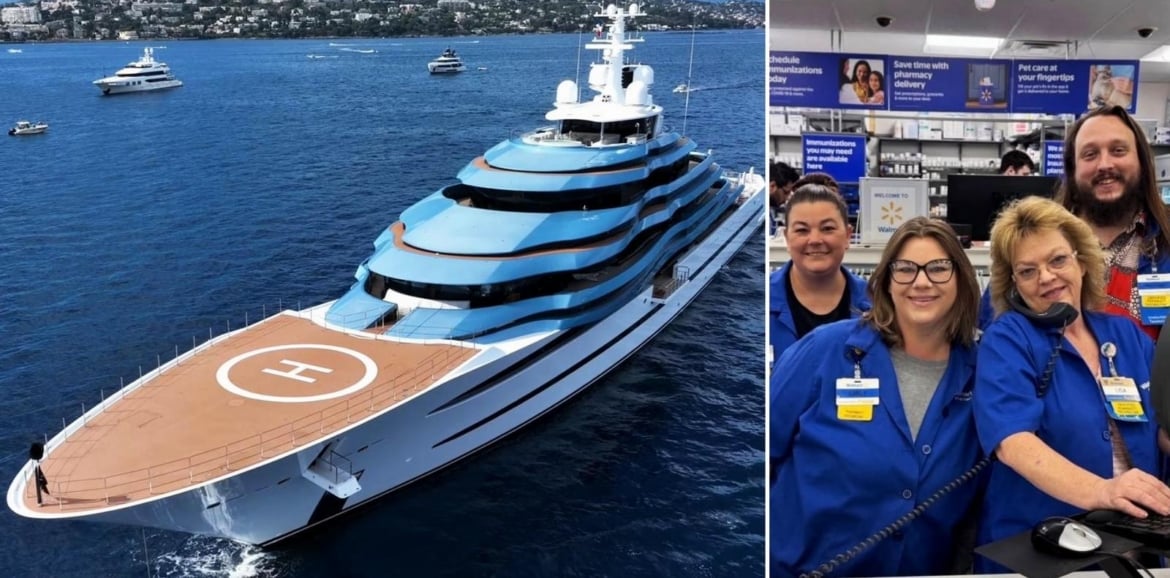
Oxfam also examined three yachts associated with the Walton family, the heirs to the Walmart retail fortune, estimating their combined annual emissions at approximately 18,000 tonnes. Its more precise calculation put the figure at 17,769 metric tonnes of carbon dioxide equivalent, comparable to the annual emissions of approximately 1,714 Walmart workers.

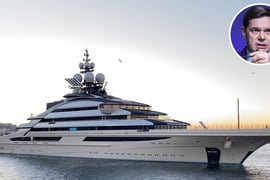
The vessels examined in Oxfam’s research were Kaos, Aquila, and Seanna, historically valued at a combined $510 million. Kaos, attributed to Nancy Walton Laurie, measures 361 feet and was valued at $300 million. Originally delivered as Jubilee, it features an 8.5-meter swimming pool integrated with an aquarium, a beach club, a hammam, a gym, a helideck, and a secluded owner’s retreat, while its cleverly designed superstructure creates the illusion of additional decks.

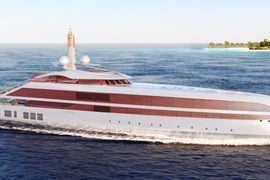
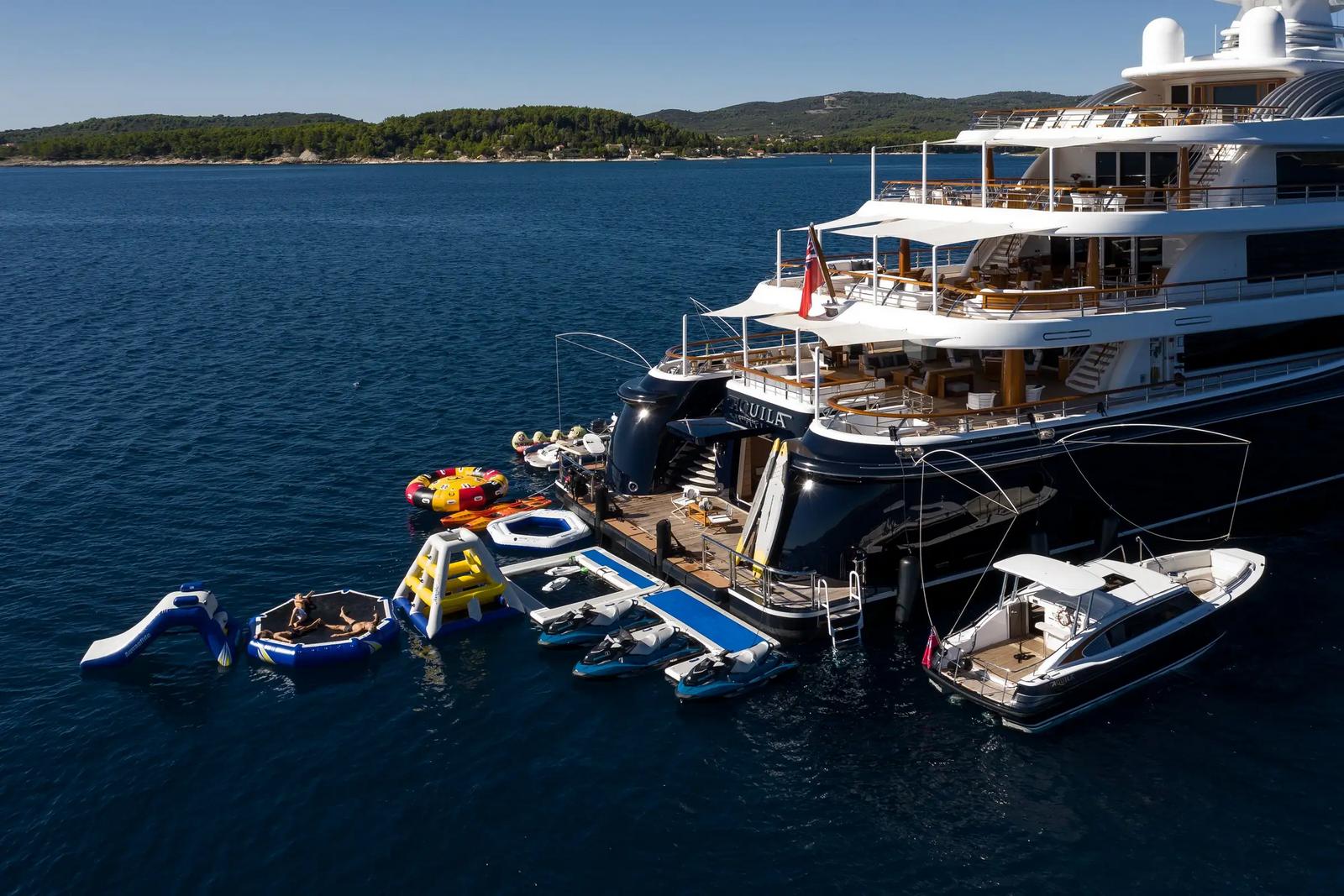
Aquila, attributed to Ann Walton Kroenke, measures 281 feet and was valued at $150 million. Its amenities include a party deck with a DJ booth, an 11.2-meter chandelier spanning four decks, a cinema, a private owner’s deck, massage rooms, a hair salon, and an extensive collection of water toys.

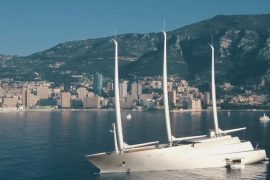
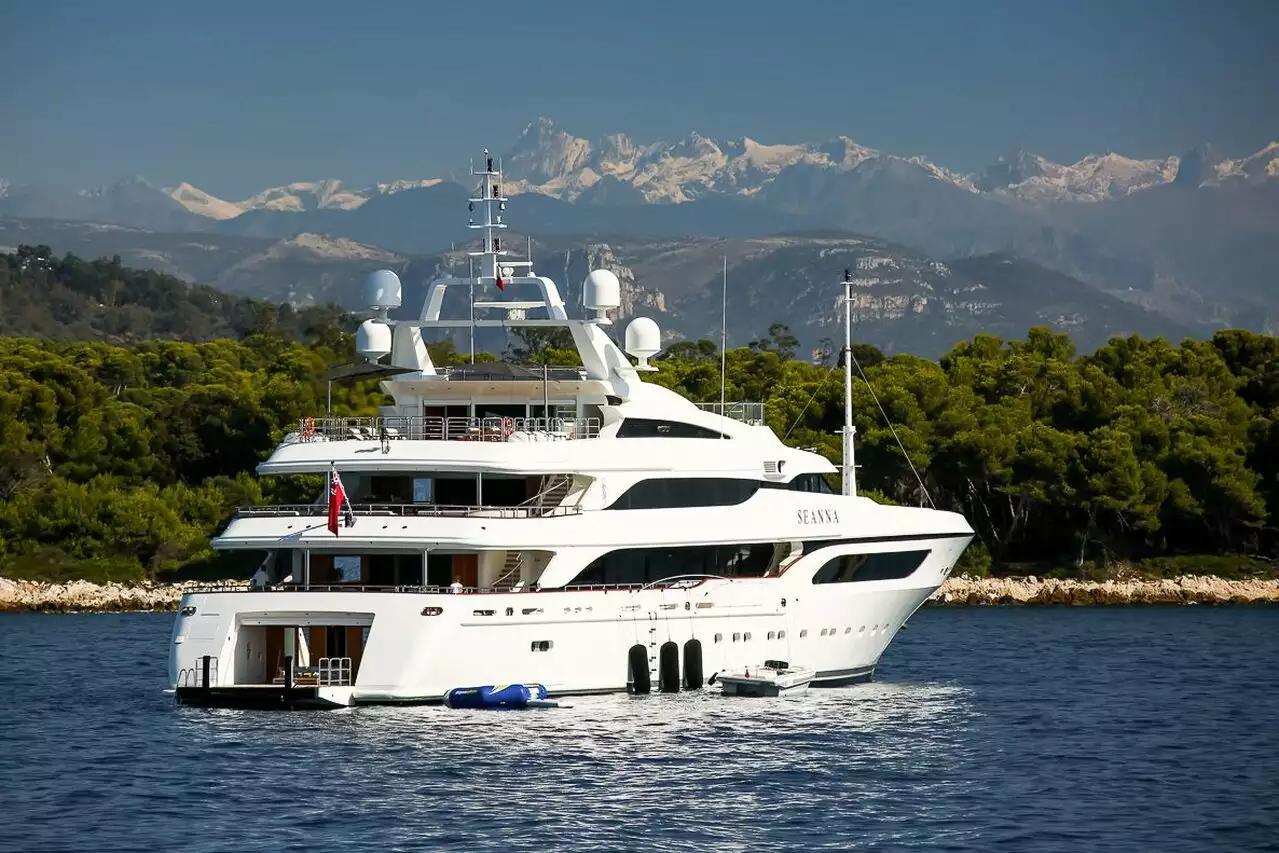
Seanna, linked to Ann’s husband, Stan Kroenke, measures approximately 213 feet and was valued at $60 million. Its residential-style interiors include a full-beam owner’s suite, a library with an electric fireplace, a sea-level gym with a fold-down terrace, two massage rooms, and a sun deck with a raised Jacuzzi.
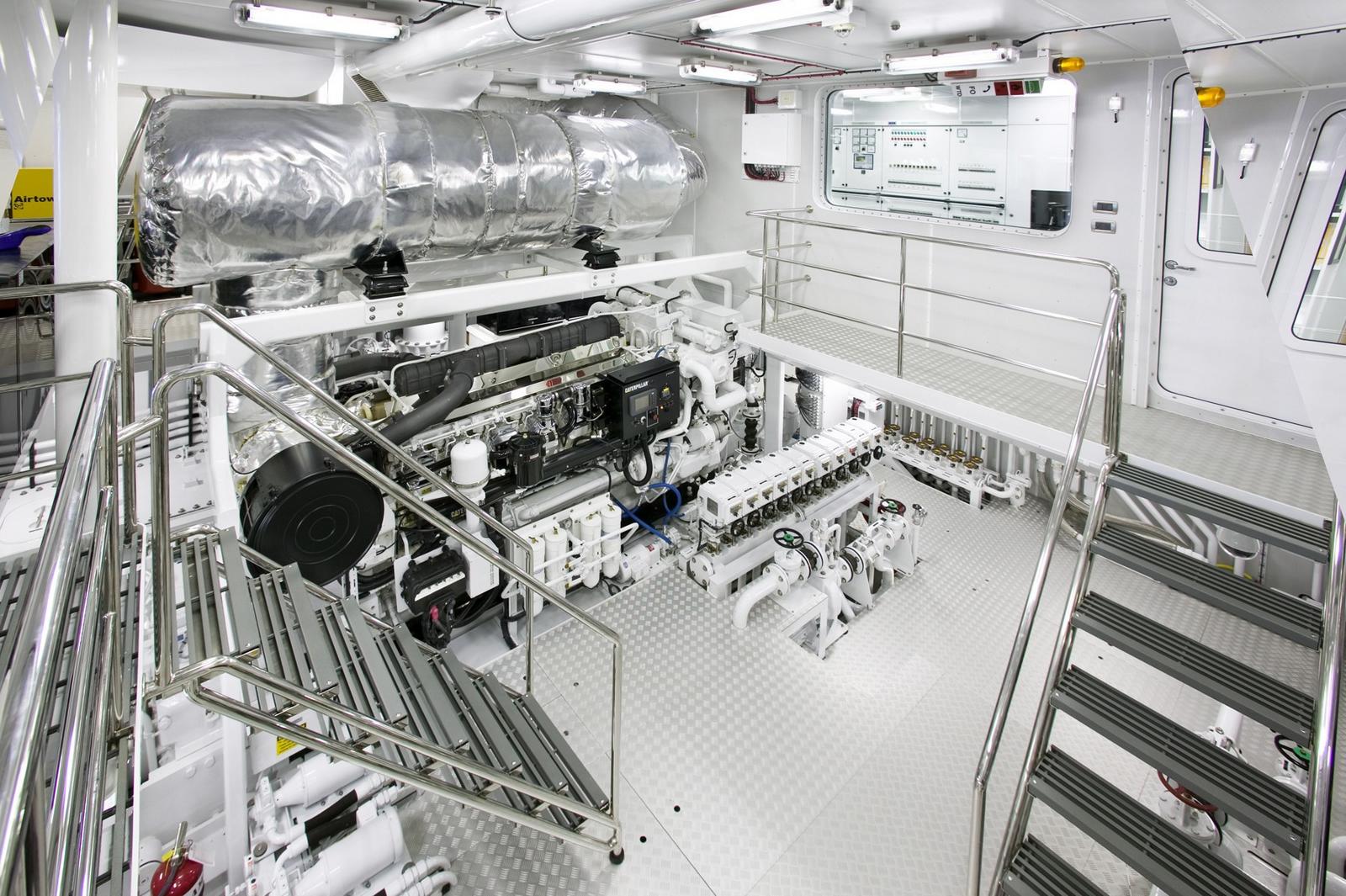
Its machinery includes two 200-kW Caterpillar generators and one 350-kW generator, in addition to an emergency generator. Aquila’s four MTU generators and published cruising fuel consumption of approximately 209 gallons per hour offer another indication of the energy demands involved, although that figure applies to cruising rather than stationary operation.

Nancy Walton Laurie and Ann Walton Kroenke are daughters of Bud Walton, who helped his brother Sam build Walmart and whose daughters inherited Walmart shares following his death in 1995. Stan Kroenke is also a prominent figure in professional sports, with interests that include the Los Angeles Rams and Arsenal.

Why superyachts keep burning diesel when they are not moving
Switching off a yacht’s propulsion engines does not eliminate its need for energy. At anchor, generators can continue burning diesel to power air-conditioning, refrigeration, lighting, freshwater production, kitchens, laundry equipment, elevators, entertainment systems, swimming-pool filtration, and other onboard services. These demands, collectively known as hotel load, keep the yacht habitable and operational even when it remains stationary. Watermakers, hot-water systems, Jacuzzis, spa facilities, and stabilizers can add to the demand, depending on how the vessel is being used.


Air-conditioning is often among the largest electrical consumers aboard a luxury yacht because it must cool the interior while controlling humidity in warm, moisture-laden sea air. Some systems cool incoming air sufficiently to remove moisture before reheating it to the desired temperature, adding to the energy required. Water Revolution Foundation’s 2022–23 research estimated that hotel load accounts for approximately 70 to 80 percent of annual yacht energy use, while Feadship has cited YETI findings of around 70 to 78 percent. These are industry-wide findings, not measured percentages for Kaos, Aquila, or Seanna, but they help explain why stationary operation can make such a substantial contribution to annual emissions.
Conventional motor yachts typically rely on separate diesel generator sets when their main engines are switched off. An onboard power-management system determines how many generators are needed to meet demand, meaning that a yacht with several installed generators does not necessarily operate all of them simultaneously. Oxfam’s calculation modeled stationary operation using a 300-kW diesel-generator load alongside vessel movement data and engine specifications, rather than relying solely on distances traveled. The estimate should be taken as a modeled annual footprint rather than a direct measurement of every aspect of their environmental impact.

The environmental cost extends beyond carbon emissions
Some large superyachts can consume more than 1000 liters of diesel per hour while operating, releasing carbon dioxide alongside air pollutants such as nitrogen oxides and sulfur dioxide. The wider recreational boating sector, including yachts, has been estimated in the supplied research to produce approximately 16 million tonnes of CO₂ annually.

Yet the damage does not end with the fuel burned, because large anchors and chains can scrape across Posidonia seagrass meadows on the Mediterranean seabed. These underwater ecosystems provide habitat for marine life and contribute to oxygen production and carbon storage, making their destruction another environmental consequence of superyacht use.

Oxfam’s findings place the Walton family’s yachts within a much broader debate about the unequal distribution of emissions. Three vessels traveling approximately 56,000 nautical miles and generating 17,769 tonnes of CO₂-equivalent annually demonstrate how a small number of luxury assets can produce a carbon footprint comparable to that of a large workforce. Their elaborate onboard facilities also reveal why the environmental cost continues long after the engines stop driving them forward.