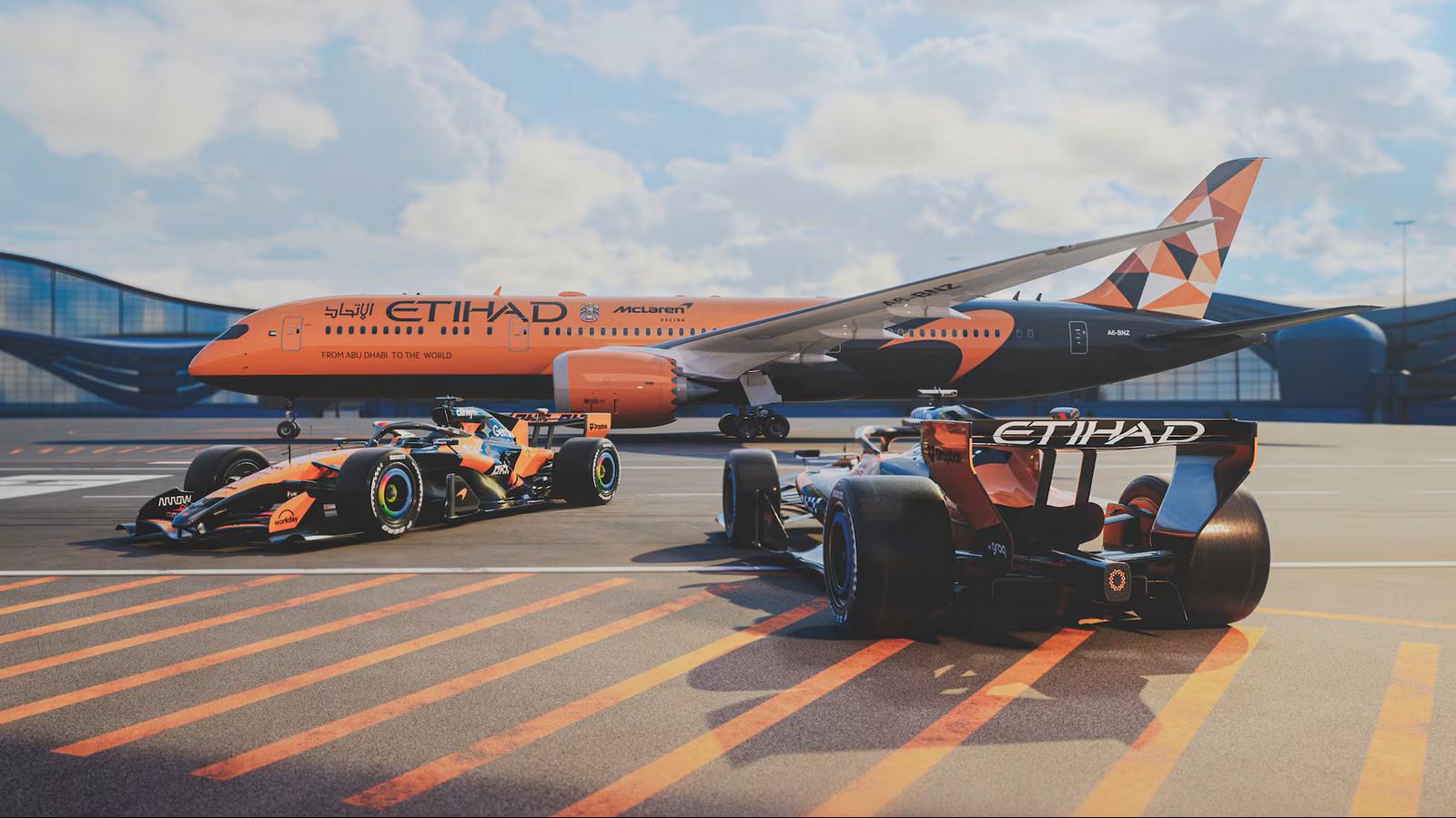
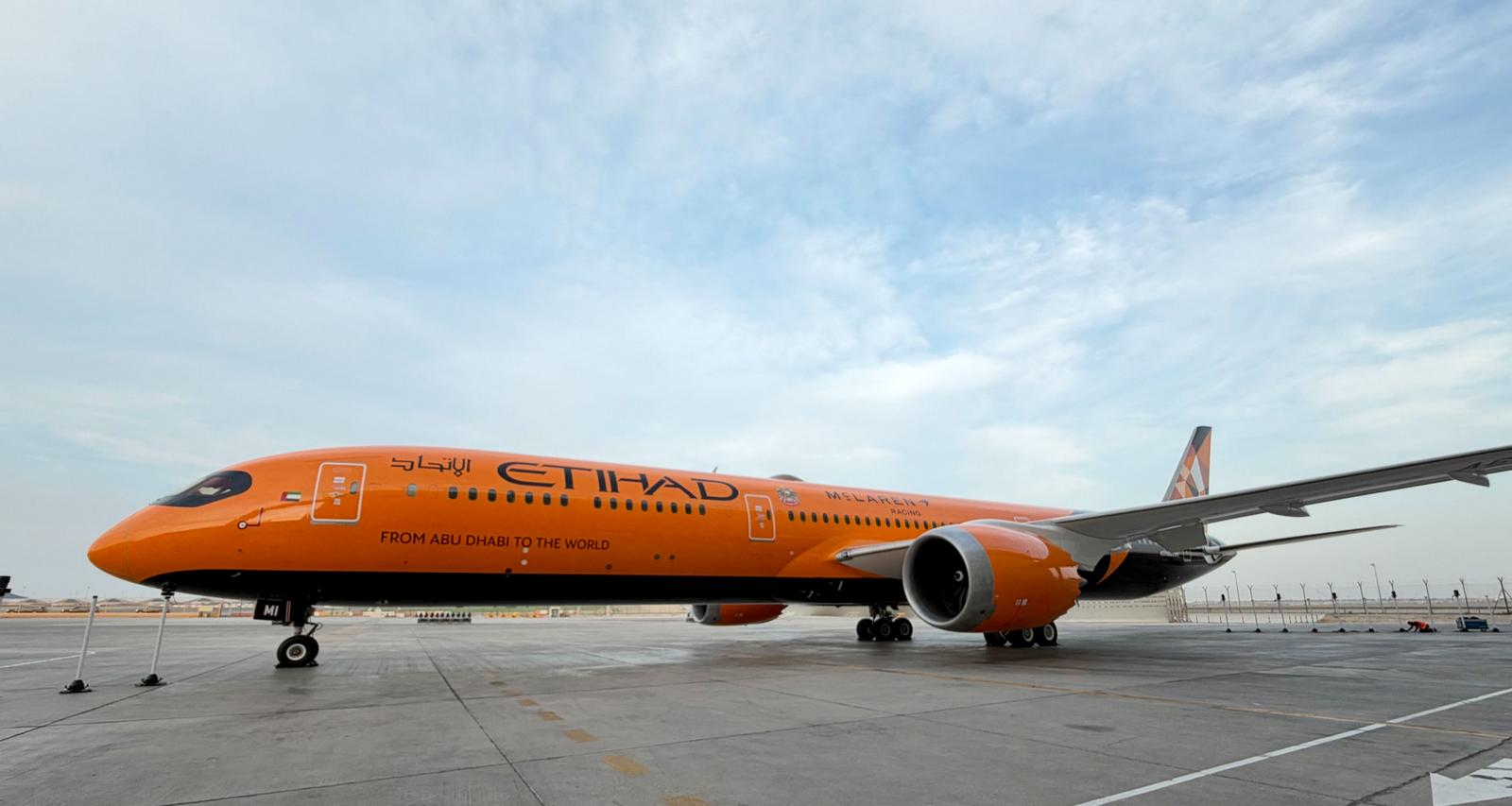
McLaren’s famous papaya orange color scheme has escaped the racetrack and found itself a rather enormous new home. Etihad Airways has unveiled a Boeing 787-10 Dreamliner wearing the unmistakable hues of the British racing team, turning one of its long-haul passenger aircraft into a flying tribute to Formula 1. Revealed at Etihad Engineering’s facility in Abu Dhabi, the aircraft is part of the airline’s partnership with McLaren Racing, announced earlier this year. It is also considerably more interesting than another promotional aircraft wearing a special paint job, particularly when you discover what this particular Dreamliner was doing before joining Etihad’s fleet.
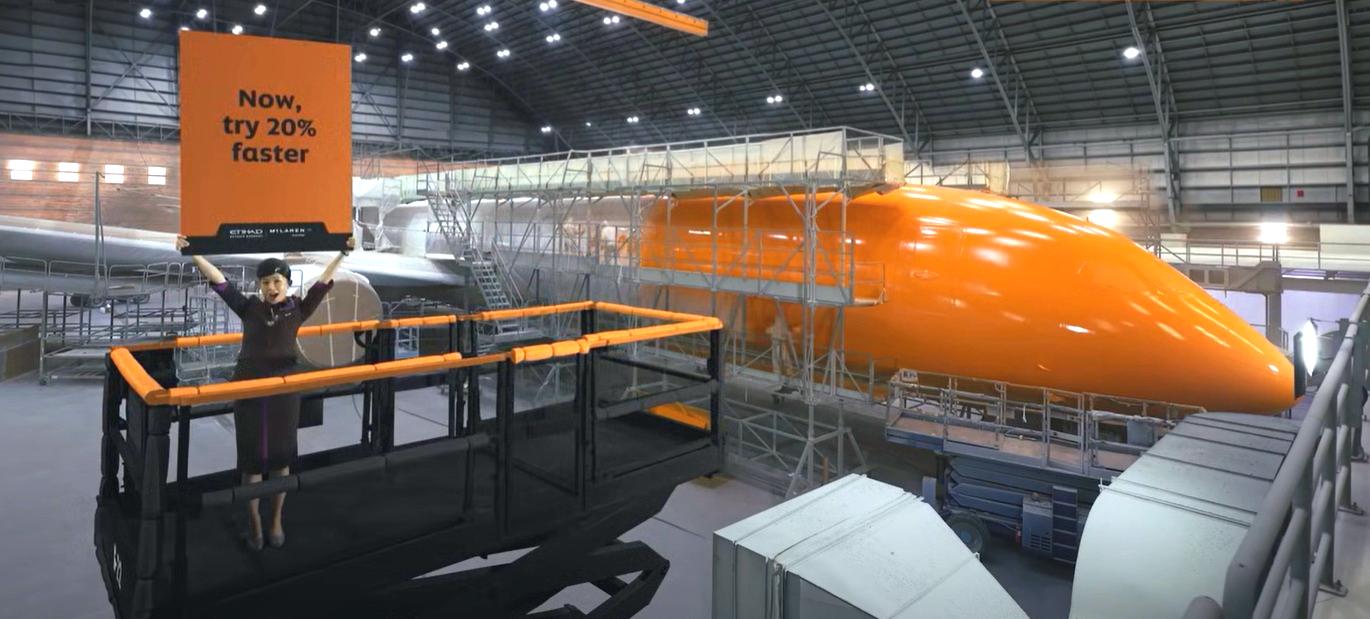
The unveiling also came with a Guinness World Records title for the largest single-piece Kabuki reveal, a theatrical presentation in which a massive curtain drops to expose the object underneath. According to Gulf News, the aircraft’s first scheduled flight in its new colors was from Abu Dhabi to Madrid on November 1. Madrid is an especially fitting destination because it is close to the Jarama circuit, where McLaren’s papaya-orange identity made its Formula 1 World Championship debut in 1968.
From a NASA flying laboratory to a McLaren Dreamliner
The aircraft in question is registered A6-BMI and is a Boeing 787-10, the longest member of the Dreamliner family. Measuring 224 feet and one inch in length, with a wingspan of 197 feet and three inches, it is 18 feet longer than the 787-9. Etihad took delivery of the aircraft in October 2020, but before that it had a rather unusual career as Boeing’s ecoDemonstrator, flying under the test registration N8572C.

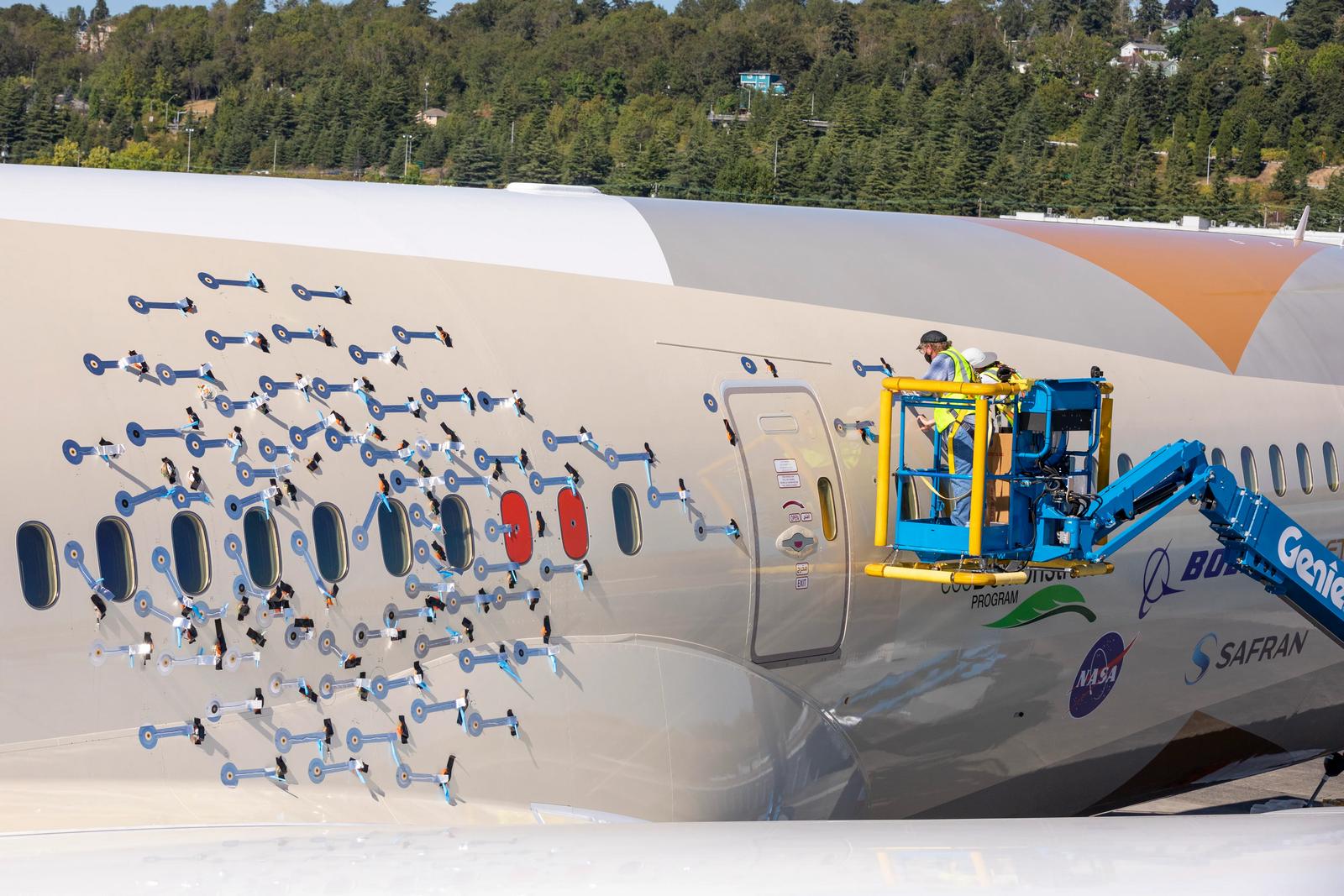
In 2020, the aircraft participated in a noise research program involving NASA and Boeing, which turned the Dreamliner into something resembling a flying laboratory. Researchers attached 214 microphones to its exterior and installed another 960 on the ground near Glasgow, Montana, with additional microphones positioned farther away. The aircraft subsequently performed dozens of low-altitude passes over the microphone arrays, allowing researchers to study how its engines and airframe interacted to produce noise. NASA even published photographs of the Dreamliner flying over the enormous microphone installation, making it quite amusing that the same aircraft now wears a livery designed to attract attention wherever it flies.
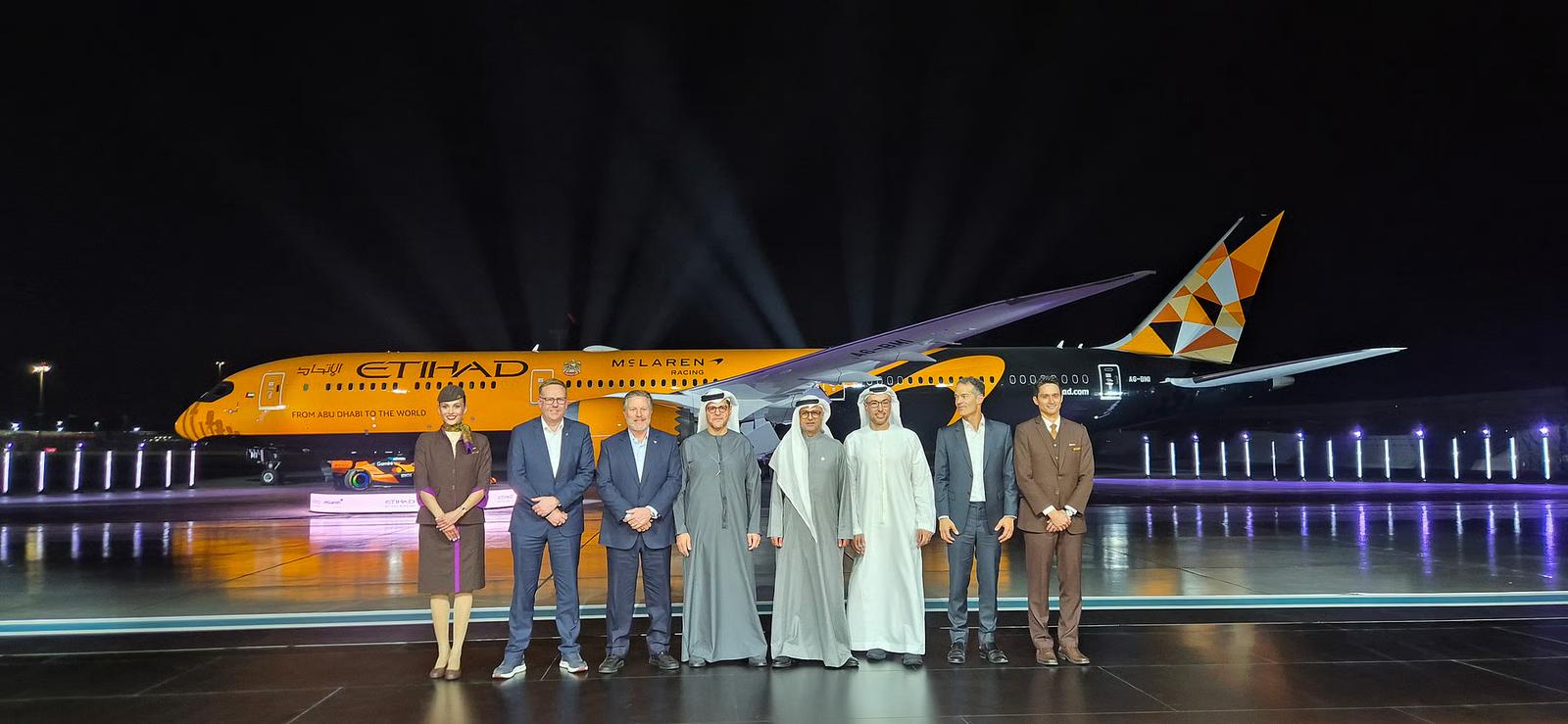
Its new appearance is considerably more flamboyant. Most of the fuselage is covered in McLaren’s signature papaya orange, complemented by a black underside and a distinctive black mask surrounding the cockpit windows. The orange treatment extends to the engine nacelles, while the aircraft retains Etihad’s geometric tail design. Photographs from the unveiling also show the Dreamliner parked alongside a McLaren Formula 1 car, offering a rather striking comparison between a racing machine and a passenger aircraft that is several times its size.
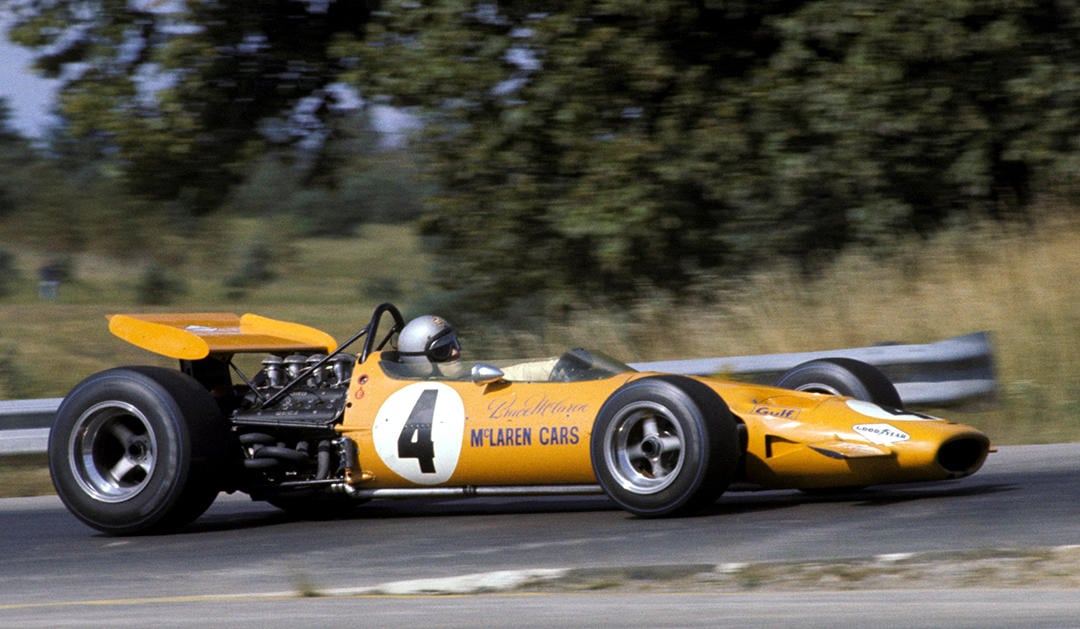
Madrid’s connection with the livery goes beyond geography. McLaren introduced papaya orange on its M7A Formula 1 car in 1968, initially appearing at the non-championship Race of Champions before making its World Championship debut at the Spanish Grand Prix at Jarama. Denny Hulme finished second in that race, securing McLaren’s first Formula 1 podium.
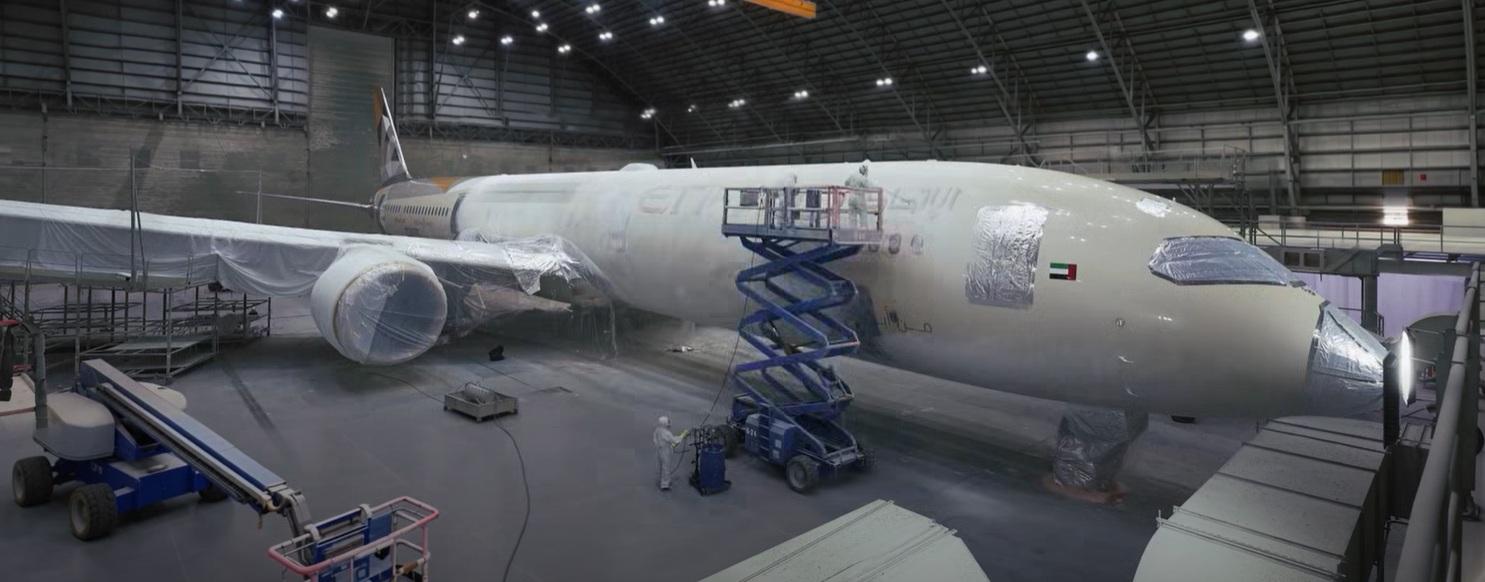
Painting a Dreamliner is no small job
Etihad has not disclosed how much paint was used on A6-BMI or how long the aircraft spent in the paint hangar, but previous Dreamliner paint jobs offer an idea of the scale involved. Qantas used approximately 250 liters of paint (about 66 US gallons), for its first Boeing 787-9, completing the job in four days. Air New Zealand required around 92.5 gallons, and 12 painters working over five days to finish its first 787-9 in its distinctive black fern livery.
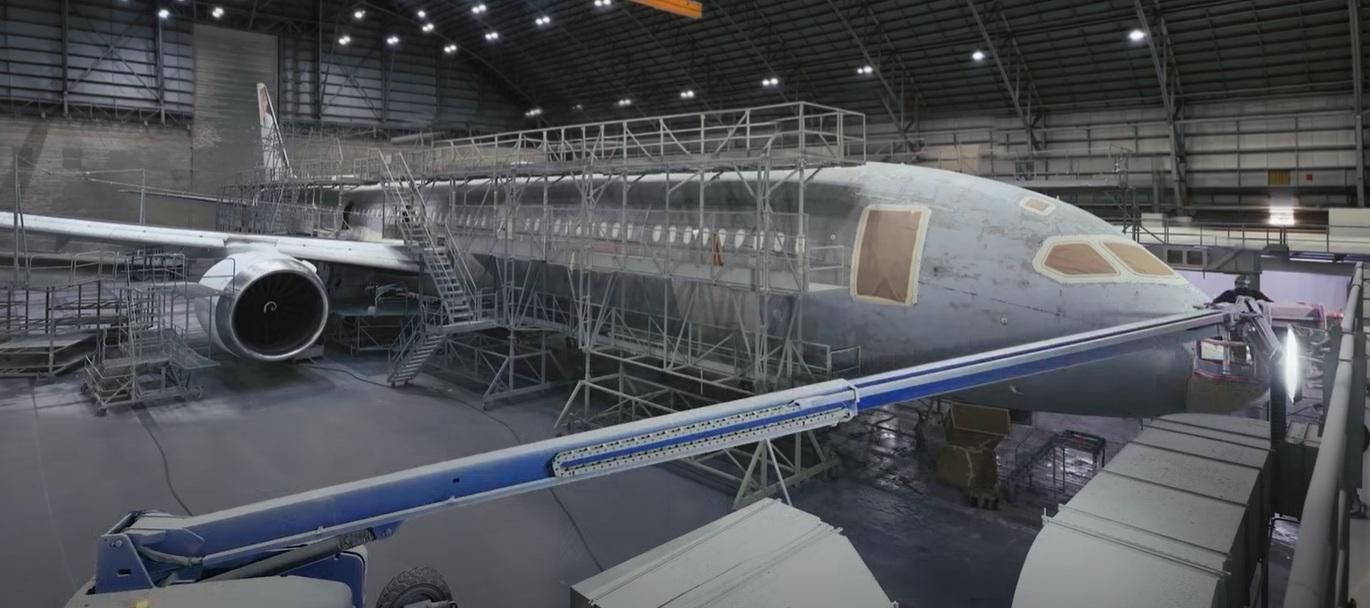
Etihad Engineering has two dedicated paint hangars and manufactures large-format aircraft decals in-house. It has also completed the first full stripping and repainting of a Boeing 787 outside Boeing’s facilities, for LATAM Airlines. For comparison, McLaren once revealed that finishing its 2016 MP4-31 Formula 1 chassis required approximately nine liters of primer, color and lacquer, alongside 96 hours of labor.
The Dreamliner will continue carrying passengers across Etihad’s international network, with announced destinations including Dublin, Milan, Vienna, Bali, Bangkok and Delhi. The aircraft is part of a wider partnership covering McLaren’s Formula 1 and WEC Hypercar teams, with Etihad branding also appearing on racing cars and driver helmets. For now, however, the most entertaining part of the arrangement is that a Dreamliner once used to investigate aircraft noise is about to become one of the most recognizable aircraft in the sky, carrying McLaren’s papaya colors far beyond the racetrack.