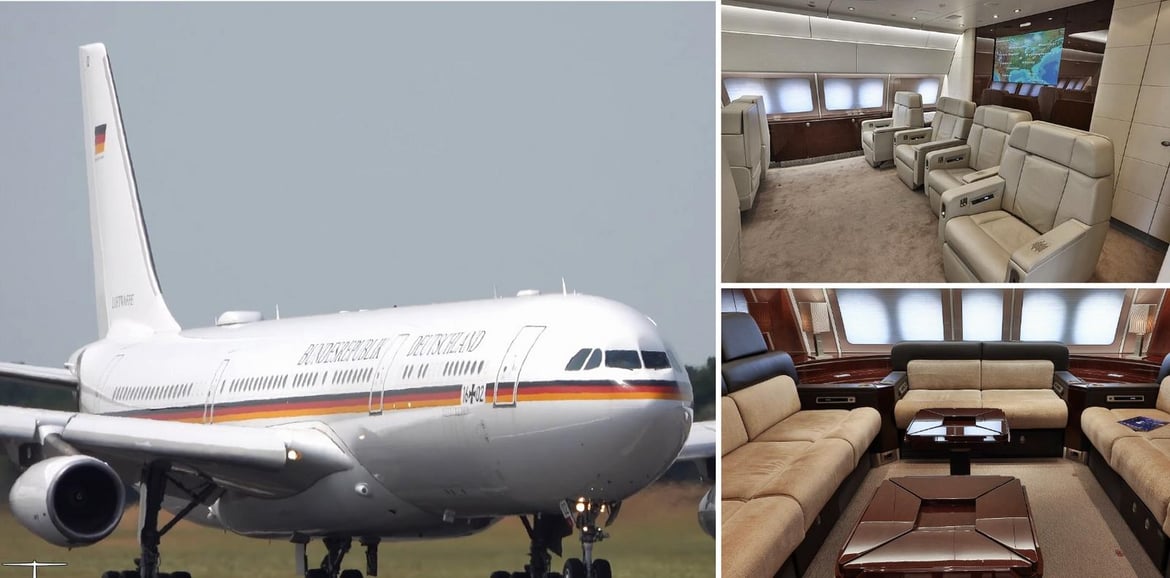
Germany’s former state aircraft is back on the market, but this time the buyer will not be a chancellor, president, or visiting dignitary. The Airbus A340-300 once known as “Theodor Heuss” is being offered for sale by aircraft dealer Jetcraft for around $8 million, giving a private owner the unusual opportunity to acquire a wide-body jet that spent years carrying Germany’s political elite around the world. Built in 2000, the aircraft has logged more than 50,700 flight hours and 8,768 landings, yet its age is perhaps less remarkable than what has been installed inside it. What was once a commercial airliner has been transformed into a 145-passenger VVIP aircraft with an executive suite, conference room, lounge, shower, sleeping berths, business-class seating, and long-haul capability.
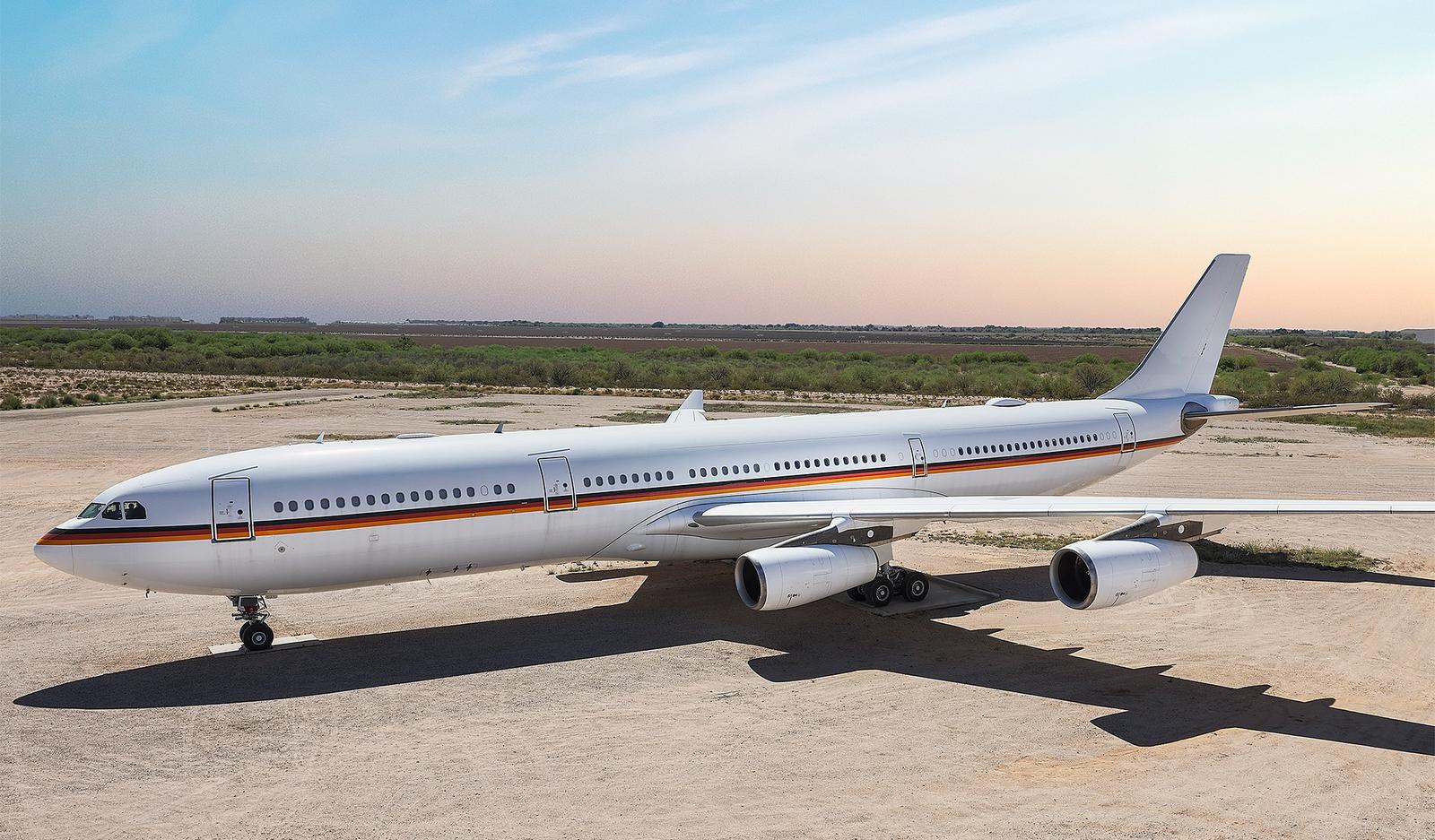
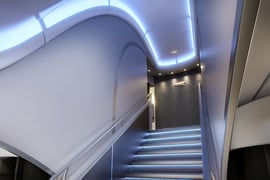
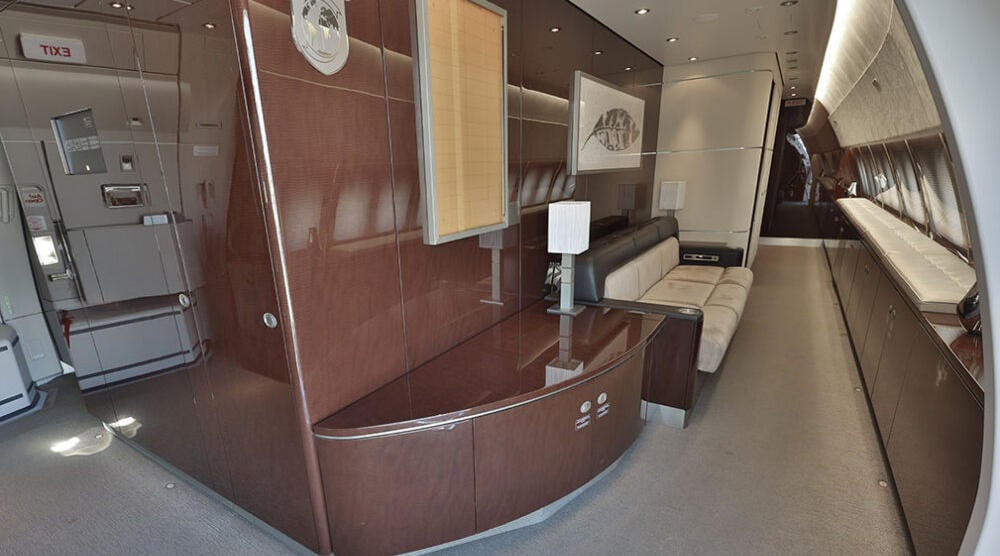
Business Insider‘s recent look inside the aircraft offers a glimpse of just how unusual it is, noting that the jet carried figures including Angela Merkel, German ministers, state guests, and the country’s president during its government career. The forward cabin is effectively a flying government headquarters, complete with a seven-seat executive suite, a 12-person conference room, a communications center, and an eight-seat lounge.
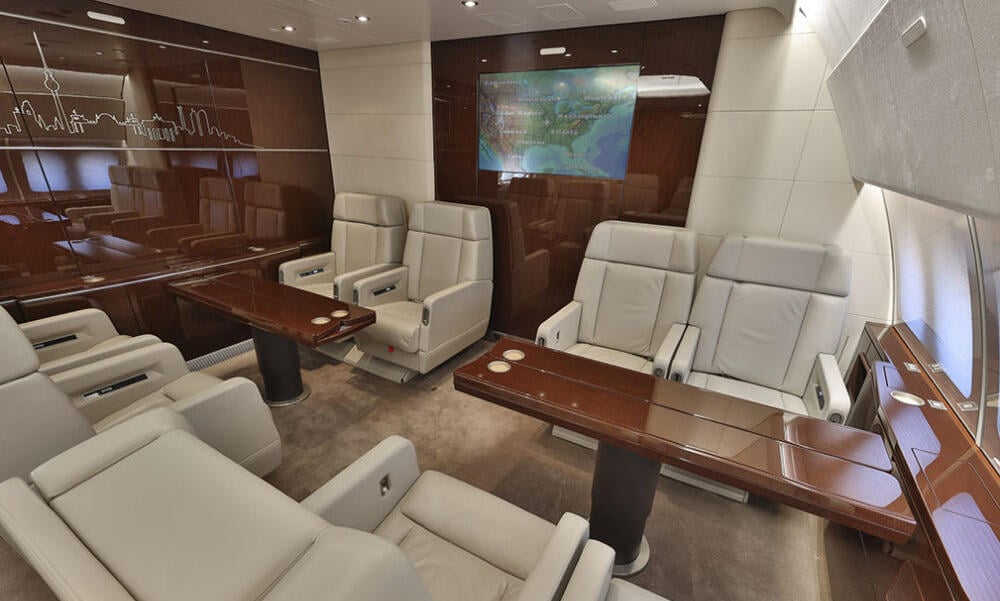
Beige leather seating, pale carpeting, and glossy reddish-brown wood veneer give the space a distinctly traditional executive character, while a Berlin skyline incorporated into the conference-room wall provides a reminder of whom the aircraft was built to serve. For a private buyer, it is an extraordinary combination of presidential history and wide-body scale.

Inside a flying government headquarters
The most private part of the aircraft is the executive suite at the front, where facing sofas can be converted into two substantial sleeping berths. The arrangement is designed for genuine overnight use rather than simply providing a more comfortable reclining seat, with sales photographs showing the berths prepared with pillows and duvets.
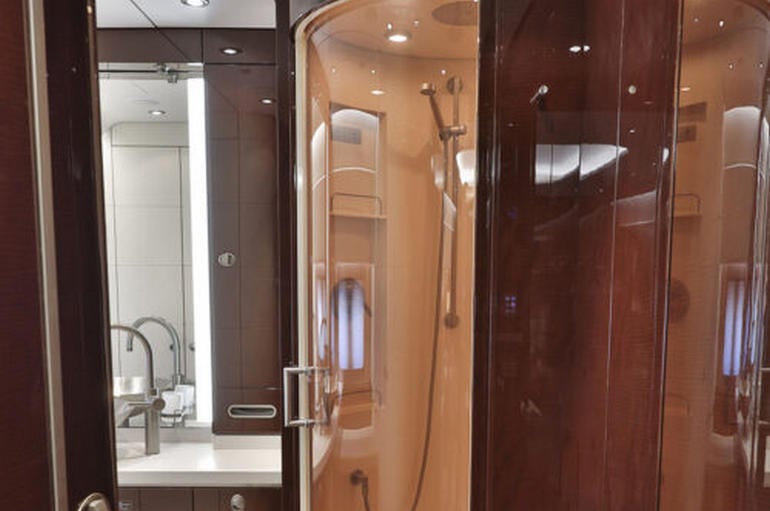
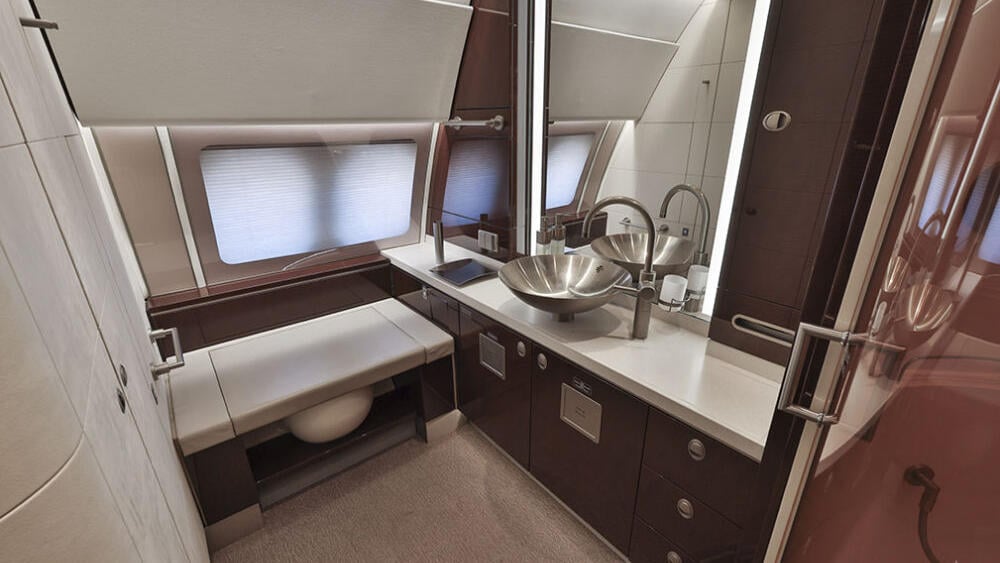
The suite also has access to a private bathroom equipped with multiple washbasins, separate toilets, and one of the aircraft’s most distinctive features, a full-height circular shower. It is the sort of amenity that makes the aircraft feel closer to a flying residence than an ordinary government transport.

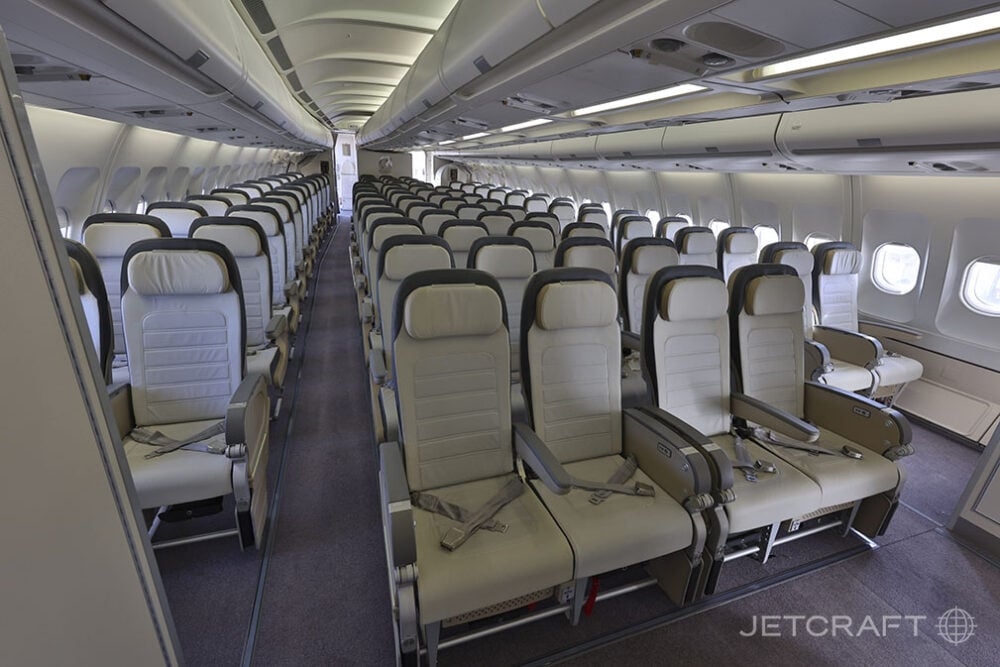
The rest of the cabin reveals why this was never intended to be a conventional private jet. Behind the executive area are 24 business-class seats and 94 economy seats, allowing the aircraft to carry advisers, officials, journalists, security personnel, and other members of a government delegation alongside its principal.

Forward and rear galleys support long missions, while eight lavatories and dedicated crew-rest facilities make the aircraft suitable for extended intercontinental flights.
Its range is advertised at more than 7,000 nautical miles and its maximum takeoff weight is 597,500 pounds. During government service, the aircraft could also accommodate up to four intensive-care patient-transport units, giving it a medical evacuation role when required.

The aircraft was originally acquired from Lufthansa by the German government and converted for VIP service, with the VVIP interior completed in 2011. The conversion was done at a reported cost of $195 million. It served alongside the similarly configured “Konrad Adenauer” as one of the flagships of the German Air Force’s VIP transport fleet.
Secure communications and self-protection equipment were reportedly installed during its government career, although those sensitive systems were removed before the aircraft was sold. Germany’s Defence Ministry said the aircraft had been completely demilitarized, meaning the new owner is buying the extraordinary cabin and airframe rather than its former government security capabilities.

The problem with Germany’s A340s
Yet beneath all that presidential luxury lies a far less glamorous chapter in the aircraft’s history. Germany’s A340 fleet developed a reputation for technical problems, and the aircraft’s final years in government service were marked by several embarrassing failures.

In August 2023, Foreign Minister Annalena Baerbock attempted twice to fly from Abu Dhabi to Australia aboard a government A340, only for a recurring flap-retraction problem to force the aircraft back to the airport. During the first incident, the fully fueled aircraft had to dump roughly 80 tons of kerosene before landing, while the second attempt failed again after takeoff, as reported by Tagesspiegel.

Other German officials had suffered their own A340 mishaps. In 2018, an aircraft carrying Angela Merkel and then-Finance Minister Olaf Scholz to the G20 summit in Buenos Aires turned back after a radio malfunction, forcing both politicians to continue their journey on commercial flights. A separate incident involved rodents damaging important cables aboard the “Konrad Adenauer,” while a computer problem stranded then-Defense Minister Ursula von der Leyen in Nigeria in 2016. Germany ultimately accelerated the retirement of its A340s and shifted long-range government missions to newer A350s.
The “Theodor Heuss” was sold by the German government in September 2023 and subsequently moved to the United States, where it has remained intact rather than being dismantled for parts. Now, its history cuts both ways. Few private aircraft on the market can offer a presidential-style suite, conference room, shower, sleeping accommodation, and genuine long-haul capacity for a fraction of its original price, but few arrive with a reputation quite as complicated either.