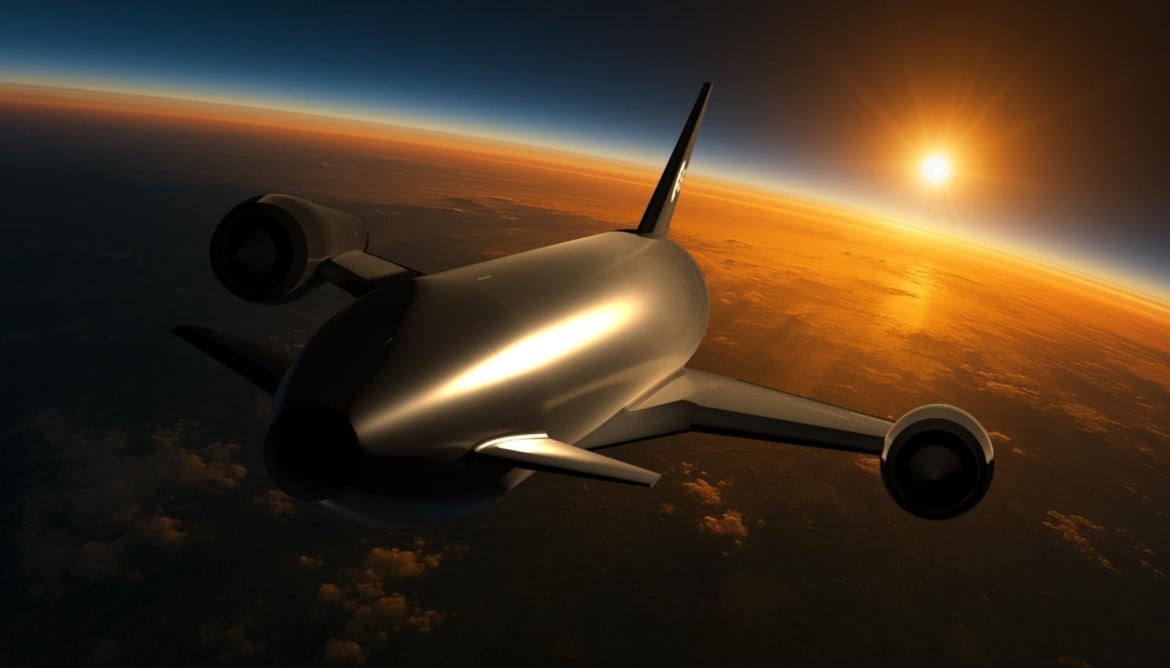
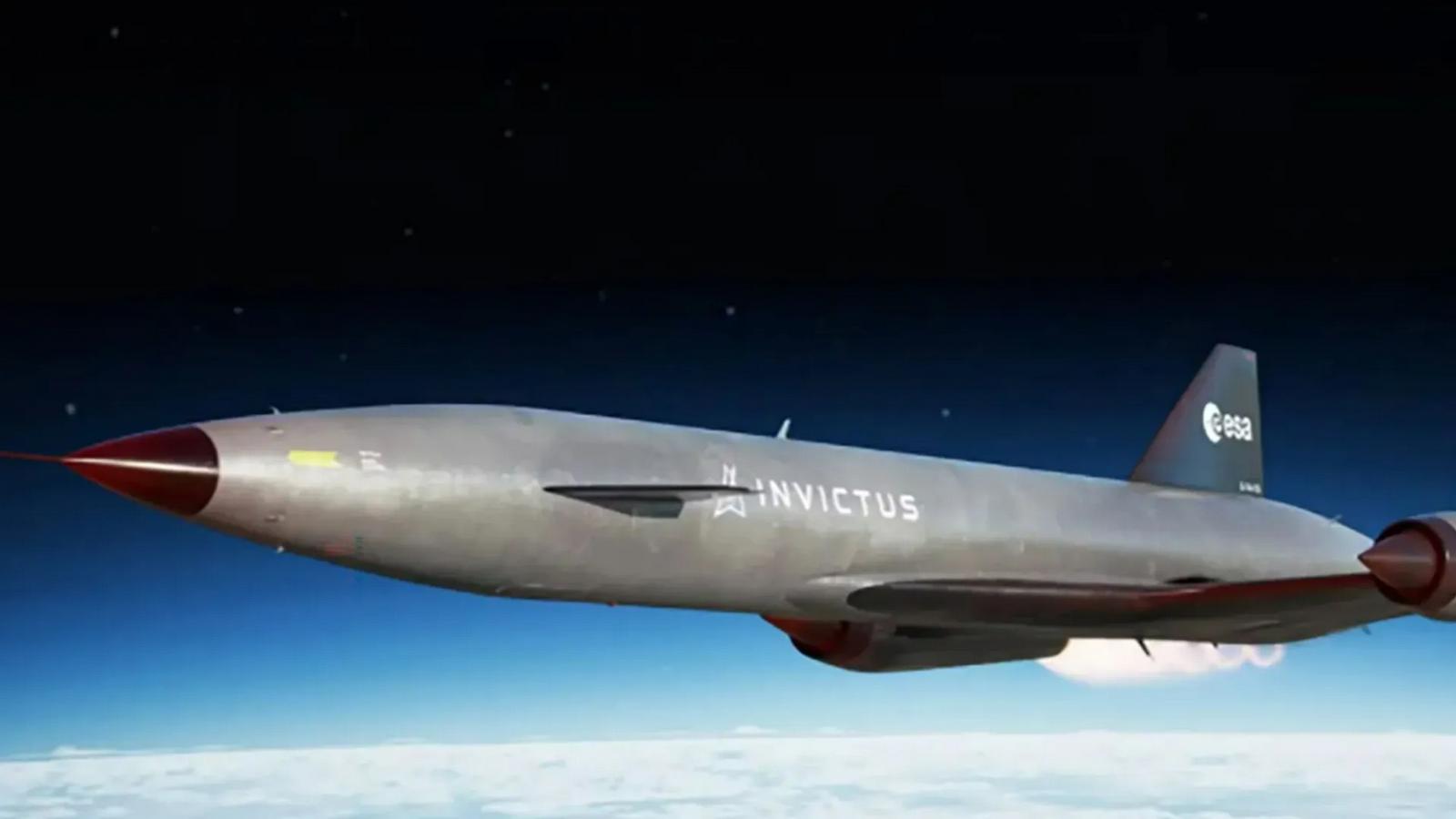
Europe’s answer to America’s supersonic ambitions may not be another Concorde. Instead, 57 years after Concorde first took flight in 1969, it could be betting on something even more radical: a hydrogen-powered hypersonic spaceplane capable of flying higher and faster than anything currently on the horizon. Backed by the European Space Agency and the UK Space Agency, the Invictus program aims to demonstrate technologies that could eventually transform both space access and long-haul air travel, pushing Europe back into the race for high-speed aerospace leadership.

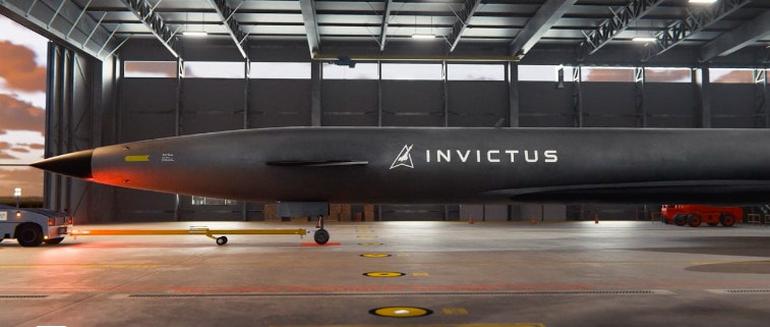
One of the most striking details from the project is its planned operating profile. Unlike conventional airliners, Invictus is designed to take off horizontally from a runway before climbing to around 80,000 feet, close to the edge of the atmosphere, as pointed out by The Telegraph. Flying at speeds of up to Mach 5, or more than 3,800 mph, the aircraft could theoretically enable journeys such as London to Sydney in around 3 hours. More dramatically, a future passenger aircraft derived from Invictus technology could cover the roughly 3,450-mile trip from New York to London in about 71 minutes. By comparison, Boom Supersonic’s Overture, which is targeting speeds of around Mach 1.7 or roughly 1,300 mph, would in that same span cover only about 1,400 miles, or roughly the distance from JFK to Houston. The first test flights are expected to launch from either Spaceport Cornwall or Spaceport Machrihanish in Scotland, with the latter highlighting its remote airspace as an ideal environment for hypersonic testing.

Europe’s challenger to America’s Boom Supersonic
The emergence of Invictus comes at a time when the United States is leading the revival of supersonic passenger travel through Boom Supersonic’s Overture airliner. However, while Boom is targeting cruise speeds of around Mach 1.7, Invictus operates in an entirely different category. At Mach 5, it would travel nearly 3 times faster than Overture and more than twice as fast as Concorde.

The comparison becomes even more dramatic when looking at route times. A future passenger aircraft derived from Invictus technology could theoretically fly from New York to London in approximately 71 minutes. In that same amount of time, Boom’s Overture would cover a much shorter journey, roughly equivalent to flying from New York to Houston. While Boom is focused on bringing back practical supersonic travel, Europe’s Invictus project is aiming to prove the technologies needed for true hypersonic flight.

For Europe, the project represents an opportunity to establish leadership in an area increasingly dominated by American and Chinese aerospace investments. ESA officials have described Invictus as a cornerstone for future runway-based access to space, helping Europe remain competitive in advanced aerospace technologies while strengthening collaboration among member states.
The technology behind Mach 5
Achieving hypersonic speeds presents challenges far beyond those faced by Concorde. At Mach 5, air entering an engine can exceed temperatures of 1,000 degrees Celsius. Managing that heat is one of the biggest obstacles standing between concept and reality.

To address this problem, Invictus draws upon technologies developed by the British aerospace company Reaction Engines. The company spent years developing the Sabre propulsion concept, which relied on a revolutionary precooler system capable of cooling incoming air from more than 1,000 degrees Celsius to around minus 150 degrees Celsius in less than one-twentieth of a second. The system effectively takes air hotter than a pizza oven and chills it to arctic temperatures almost instantly.

Although Reaction Engines entered administration in 2024, its thermal management expertise had already found an unlikely proving ground in Formula 1. Mercedes utilized cooling technology derived from the company’s advanced heat exchanger designs, helping create exceptionally compact intercoolers that improved packaging efficiency. In a sport where thermal management often determines aerodynamic freedom, the technology became a valuable competitive advantage and demonstrated that Reaction Engines’ innovations had practical applications far beyond aerospace.
From satellites today to passengers tomorrow
Despite the excitement surrounding future passenger travel, Invictus is not being developed as a commercial airliner. Its primary mission is to demonstrate reusable horizontal-launch technologies that could enable runway-based satellite deployment and future spaceplane operations. The aircraft will also provide a platform for testing advanced propulsion systems, materials, and control technologies at extreme speeds.

The current development roadmap calls for the design phase to conclude this year, followed by testing of hydrogen systems and smaller-scale engines. Initial flight demonstrations could occur around 2034, with full hypersonic testing targeted for 2036. If successful, Invictus would surpass the legendary Lockheed SR-71 Blackbird as the fastest and highest-flying operational manned aircraft ever built.
For now, Invictus remains an ambitious technology demonstrator rather than a passenger aircraft. Yet its significance extends far beyond satellite launches. While America’s Boom Supersonic is working to bring back faster commercial travel, Europe is pursuing something even more ambitious. It is working on the technologies that could one day shrink journeys to Australia to just three hours and reduce transatlantic crossings to little more than an hour. If Invictus succeeds, it could mark the beginning of a new era in aviation, one that finally moves beyond the limits of Concorde.