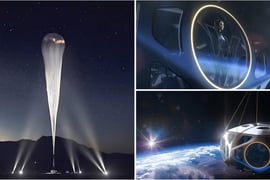
A ticket to space is becoming significantly more expensive, with Virgin Galactic reopening limited sales at $750,000 per seat as it prepares for a new phase of operations. The revised pricing marks a sharp escalation from earlier public offerings and signals that the company is leaning into exclusivity at a moment when its next-generation spacecraft are still on the horizon, even as its financial performance continues to lag expectations.

The increase reframes the entire proposition. What was once positioned as an aspirational frontier experience is now being recast as a rarefied luxury product, priced and packaged with the logic of scarcity rather than scale, as pointed out by Bloomberg. The jump from roughly $450,000 in early 2023 to today’s figure is not just inflationary drift; it is a deliberate repositioning of space travel as something closer to a private-membership experience than a ticketed adventure, and it arrives alongside a balance sheet that tells a more cautious story.

The financial logic driving space tourism’s next phase
The justification for that price becomes clearer when viewed through the lens of the upcoming Delta-class spacecraft. Virgin says each Delta ship will be capable of flying up to eight missions per month, a dramatic increase that is roughly twelve times the monthly capacity of its earlier Unity vehicle. Each flight can be configured either for six mission specialists or for a hybrid layout that swaps two seats for payload racks, effectively turning the cabin into a flexible research environment.

This is where the story shifts from tourism to infrastructure. Delta is not simply a replacement spacecraft; it is designed as a revenue engine that can toggle between high-paying passengers and scientific payloads depending on demand. The higher ticket price begins to look less like a stretch and more like a bridge to a system that is meant to operate far more frequently and with greater commercial versatility. For now, however, the financials underline how early the business still is, with quarterly revenue reported at just $312,000, a figure that falls short of expectations and highlights how limited current operations remain.

From space tourism to a hybrid research business
There is also a quieter evolution underway that has received less attention. Virgin Galactic is increasingly positioning itself as a microgravity research platform as much as a luxury operator. Its first commercial mission in 2023 was flown for the Italian Air Force and Italy’s National Research Council, and subsequent flights have carried researchers and experiments tied to institutions including NASA and leading universities. Even its final Unity mission blended passengers with scientific work, suggesting that the company has already begun testing a dual identity.

At the same time, the customer experience is being shaped to feel less like aerospace and more like ultra-premium travel. The company emphasizes a runway takeoff and landing rather than a vertical rocket launch, a week-long astronaut preparation program, and a carefully staged journey through Spaceport America that mirrors high-end hospitality. The result is a product that feels curated and immersive, built as much around anticipation and narrative as around the minutes spent in microgravity.

That framing helps explain why the price has moved so aggressively. Virgin is not chasing volume yet. It is cultivating perception, even as losses continue to mount. The company reported a loss of 98 cents per share for the quarter, wider than forecasts, and it continues to burn tens of millions of dollars as it develops its next-generation fleet. The pricing strategy, in that sense, is doing double duty, reinforcing exclusivity while also helping to offset a business that is not yet operating at a meaningful scale.
Richard Branson has long leaned on a simple description of the experience, noting that nothing had prepared him for the view of Earth from space. That sentiment still sits at the center of the offering, even as the economics behind it remain a work in progress. What emerges is a company trying to define its future while managing its present, where a higher ticket price is as much about sustaining momentum as it is about selling the dream.