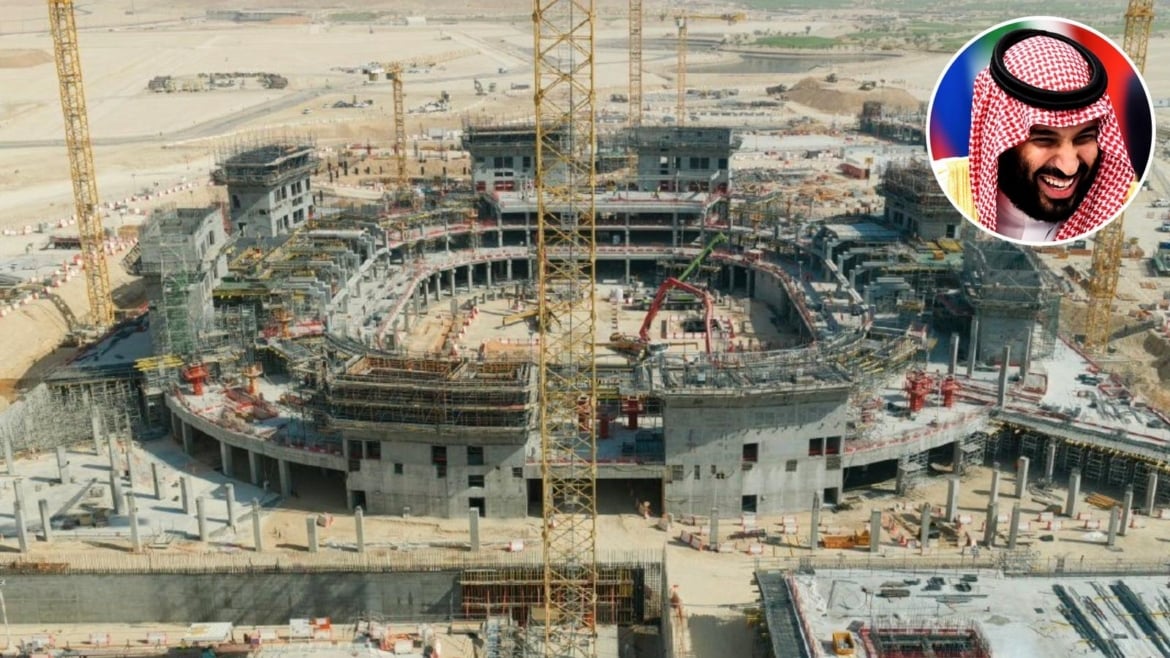
Saudi Crown Prince Mohammed bin Salman may have put some of his grandest tourism and sporting dreams on the back burner, from the $2.5 billion Neom stadium planned 1,150 feet above ground for the 2034 FIFA World Cup, now reportedly shelved, to Trojena, which lost the 2029 Asian Winter Games and saw its lake and ski village construction contracts scrapped. But Saudi Arabia’s “Wimbledon of the desert” is still moving ahead. Providing concrete proof is Turki AlQahtani, chief executive of Alliance Investment Holding, who shared an update on the progress of Qiddiya’s National Tennis Centre on LinkedIn.
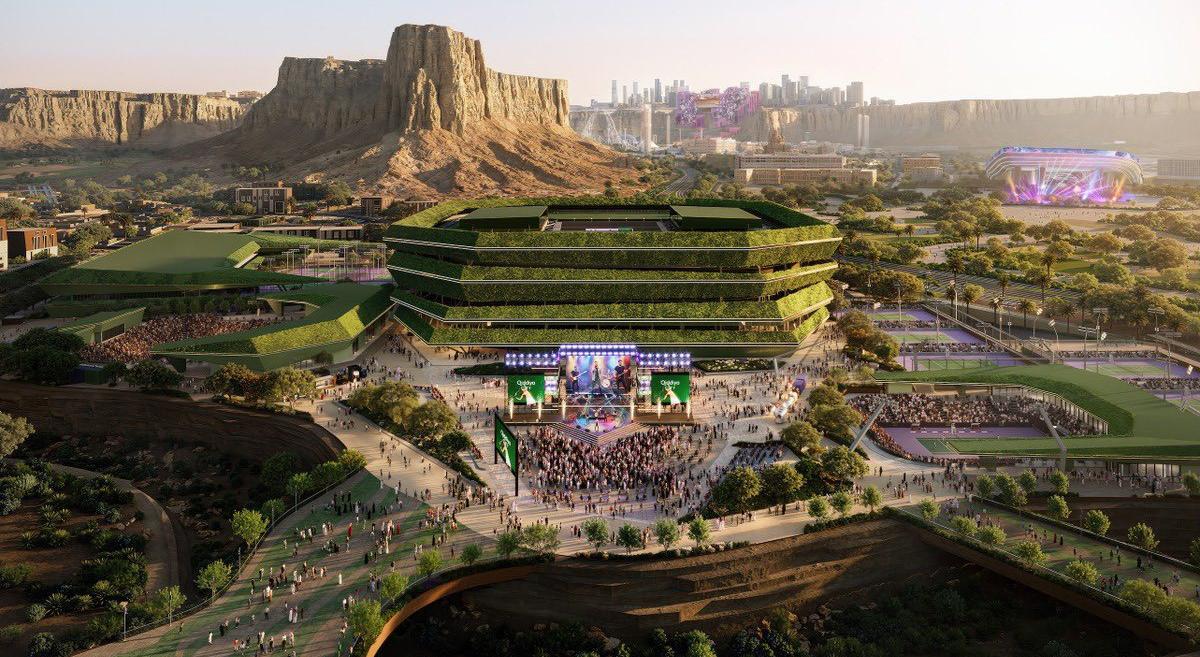
The National Tennis Centre at Qiddiya City, approximately 28 miles west of Riyadh, will come with an infrastructure investment of close to $2 billion, according to ATP chairman Andrea Gaudenzi. It is a tennis landmark that will put Saudi Arabia on the map alongside Melbourne’s Rod Laver Arena and Paris’s Roland-Garros, raising the bar by creating one of the world’s great tennis destinations. So far, what can clearly be seen is a recognizable concrete skeleton that matches the rendered plans to perfection.
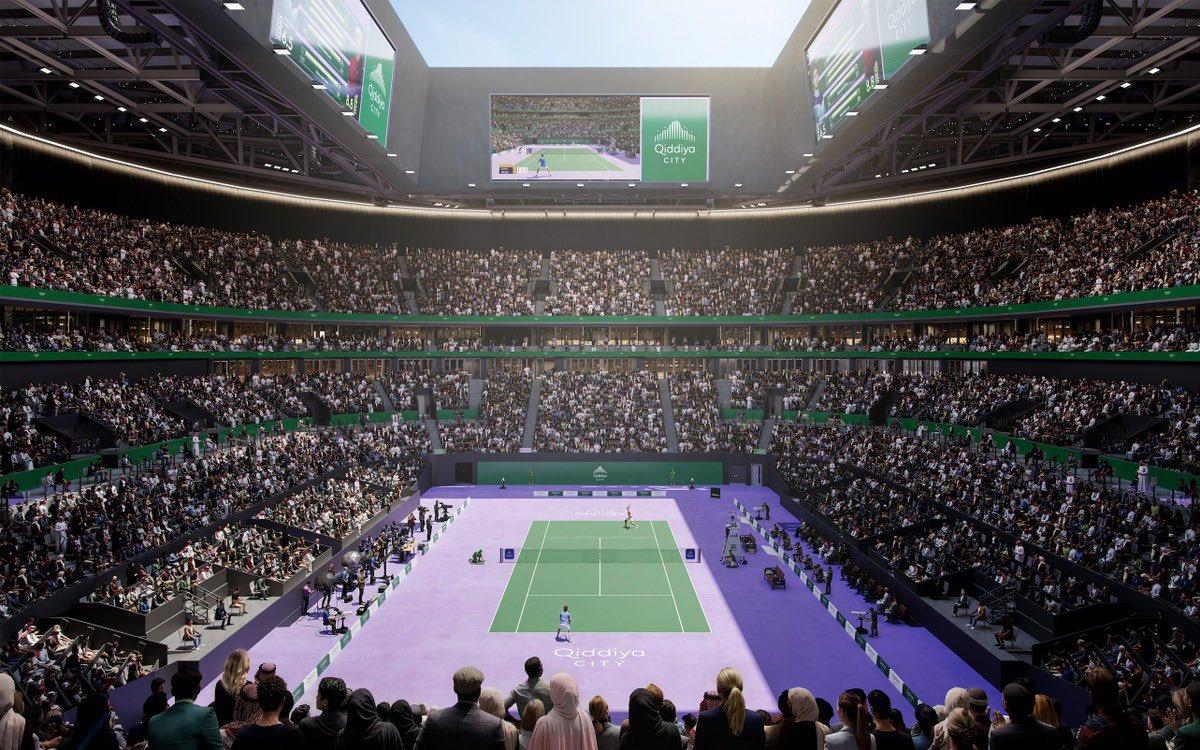
The Wimbledon-lookalike court and arena will be joined by several other additions, including a second retractable-roof arena, 30 courts, a total capacity of 33,000 spectators, elite recovery facilities, and year-round entertainment programming. The Centre Court alone seats 15,000 spectators and boasts a retractable roof. Making this a holistic sporting destination are six outdoor match courts seating 450 each, six indoor courts, and 14 practice courts. In total, there are 28 hard courts and two clay courts.
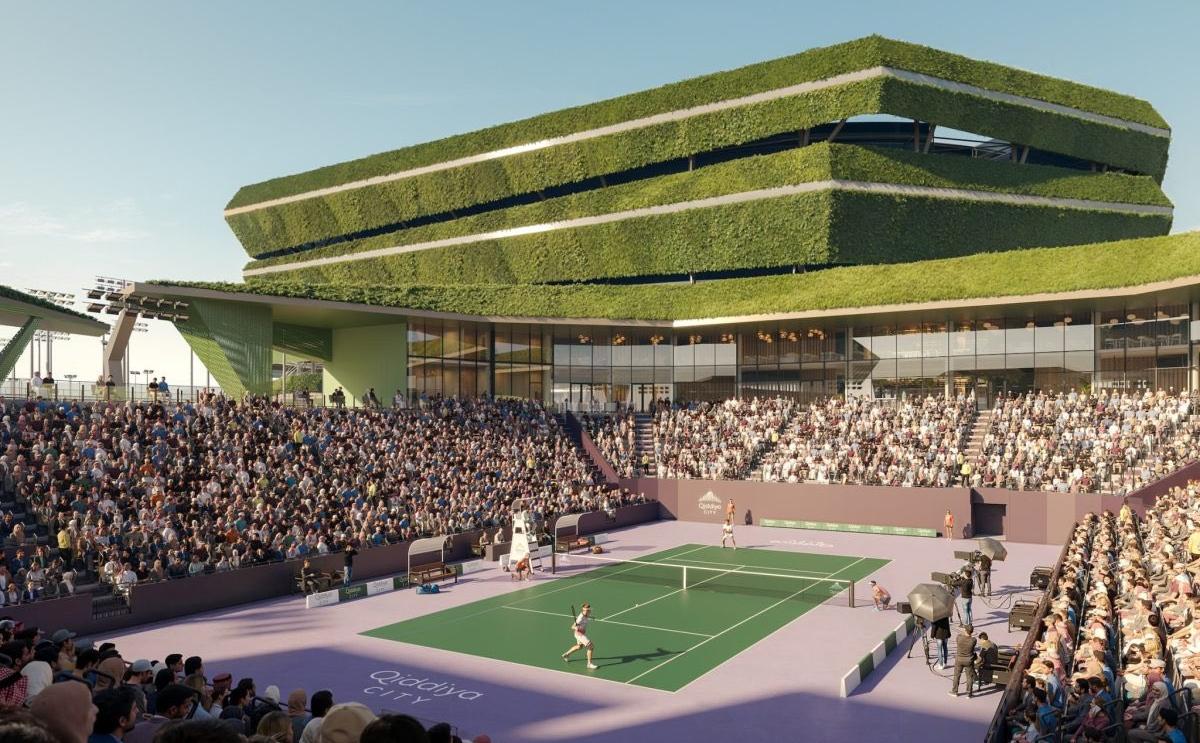
The companies behind the construction are Bouygues Bâtiment International and Saudi contractor Almabani. A significant progress update came in October, when Saudi company Zamil Steel secured a SAR 308.17 million ($82 million) contract to manufacture, supply, and install the structural steelwork and external façades. Populous, Qiddiya’s lead architect, interior designer, and master planner, also designed Wimbledon Centre Court’s retractable roof and redevelopment.
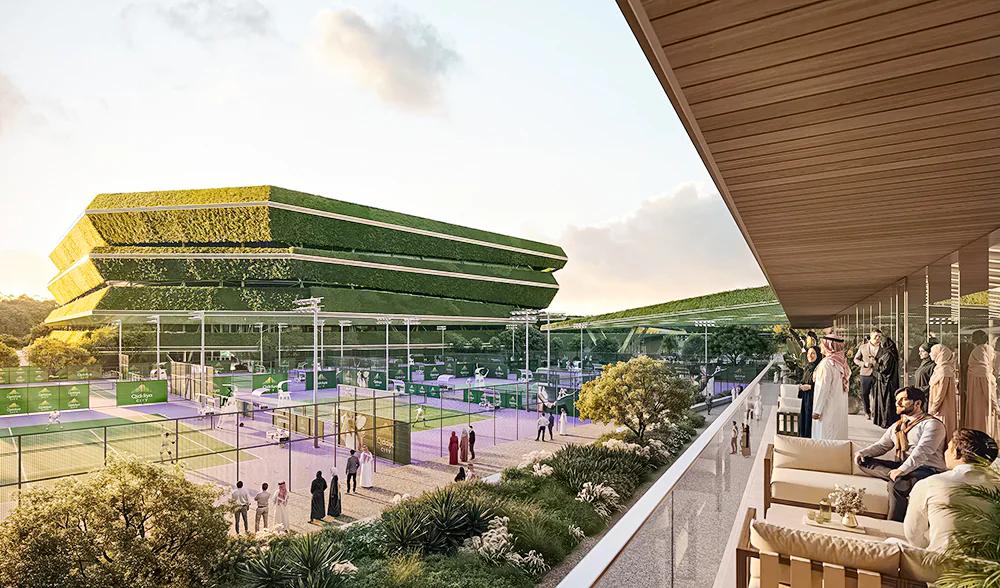
One cannot help but notice the similarities. At Qiddiya’s National Tennis Centre, the buildings feature a lush, refreshing, terraced appearance that seamlessly connects them to the surrounding Tuwaiq landscape. Inside, the main court features a green playing surface with purple surrounds, echoing the familiar Wimbledon palette. As for the courts with retractable roofs, there are two, Centre Court and the 8,000-seat arena.
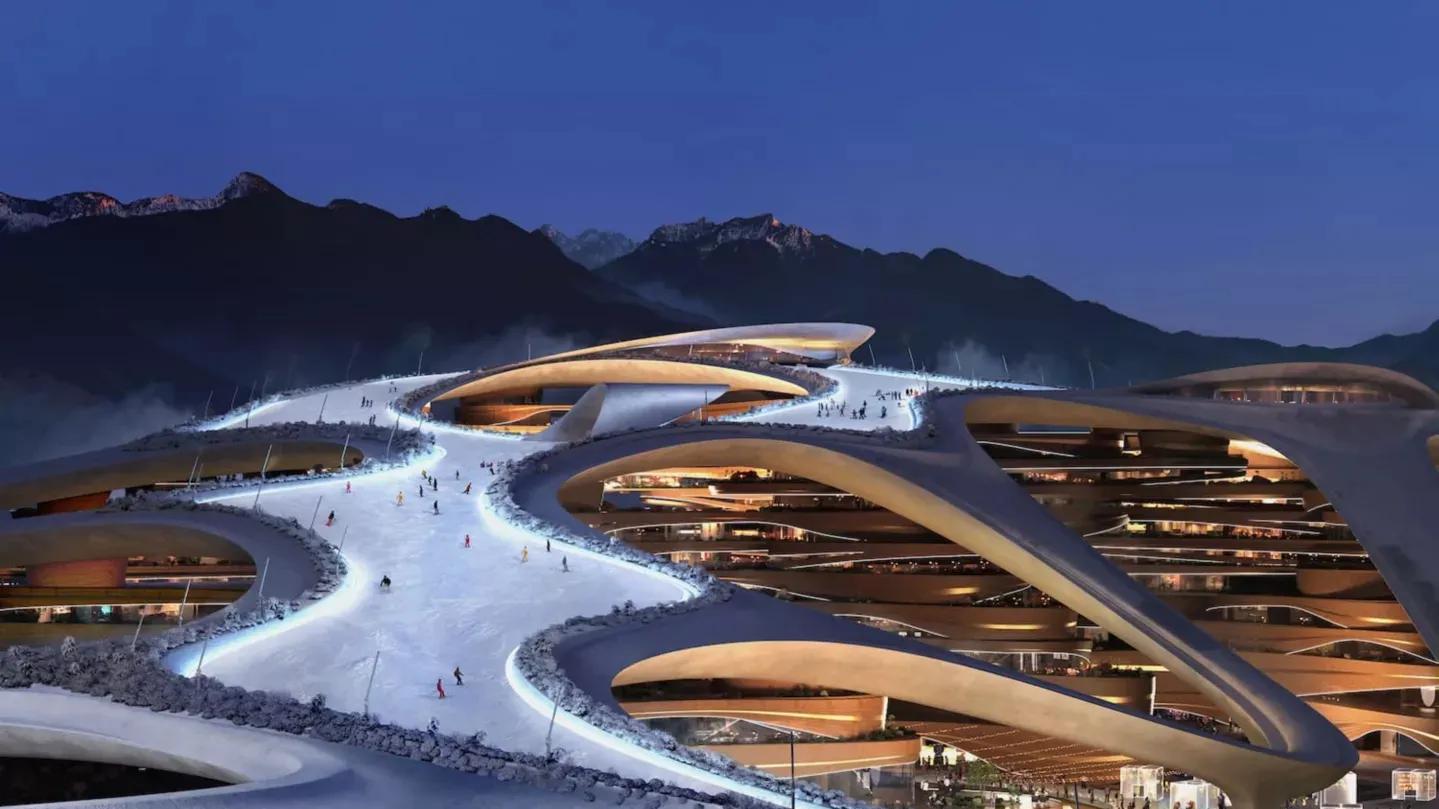
The National Tennis Centre will indeed improve the way Saudi players compete in the kingdom, as well as how the sport is experienced and enjoyed. In addition to sports, the spectacular development will include fan plazas, community spaces, and smooth circulation between courts, making the venue a campus rather than an isolated stadium. While these images show there is hope in the face of it all, no official completion date or opening timetable has been announced. It is still a silver lining amid a series of heartbreaking cancellations, starting with the futuristic ski resort Trojena, which was gearing up to host the 2029 Asian Winter Games, and followed by the world-class $2.5 billion football stadium that would have set a new sporting benchmark by hosting the 2034 FIFA World Cup finals.