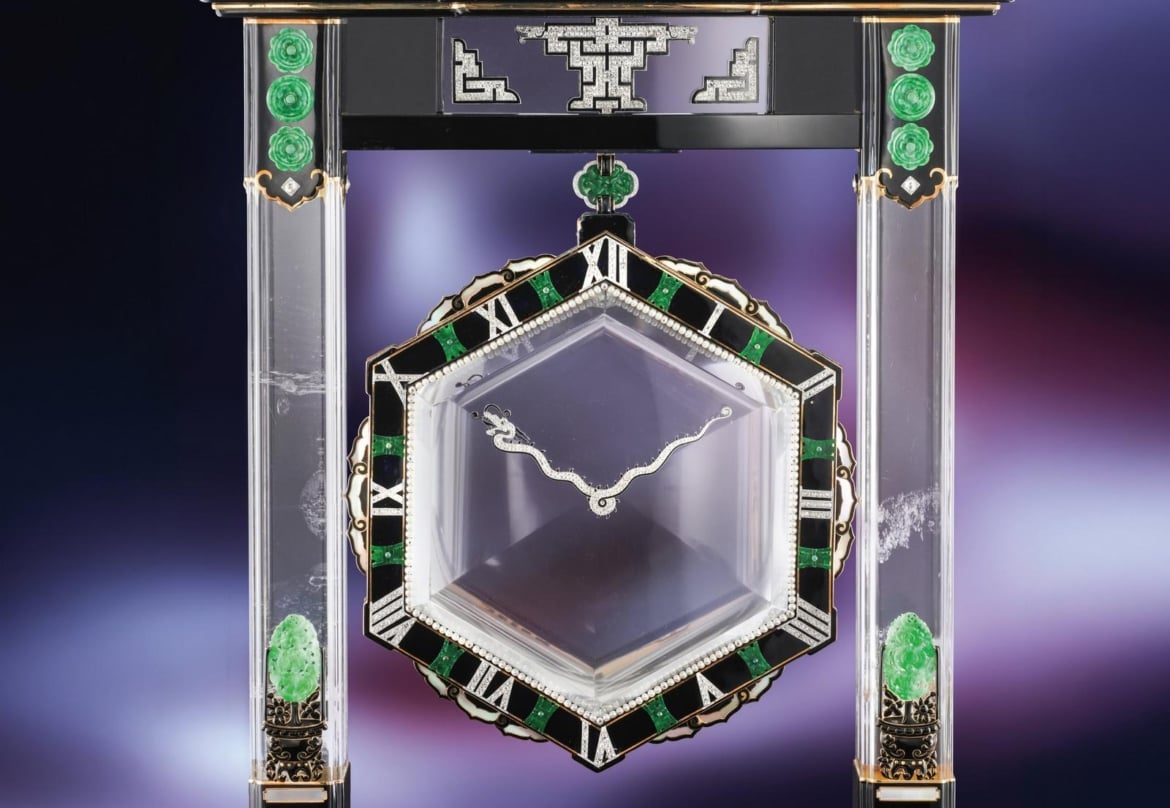
What’s 102 years old, has six sides, stands over 15 inches tall, and belongs to a family of six? It is the rare Cartier Portico Mystery Clock No. 4, heading for sale at an upcoming Phillips watch auction. With ultra-rare objects come multi-million-dollar estimates, and the Cartier Portico No. 4 boasts an upper estimate of CHF 3.2 million ($4 million). Just as every individual carves out their own identity even within a family unit, the Mystery Clock No. 4 stands out by being the only one with a hexagonal dial; the other five have 12-sided faces. Beautiful to the core, the 1924 timepiece that was once in the possession of Alain Cartier will be on offer at the Geneva Watch Auction: XXIV, which will take place in association with Bacs & Russo on November 7 and 8. After nearly 30 years in a private collection, it will return to the auction block.
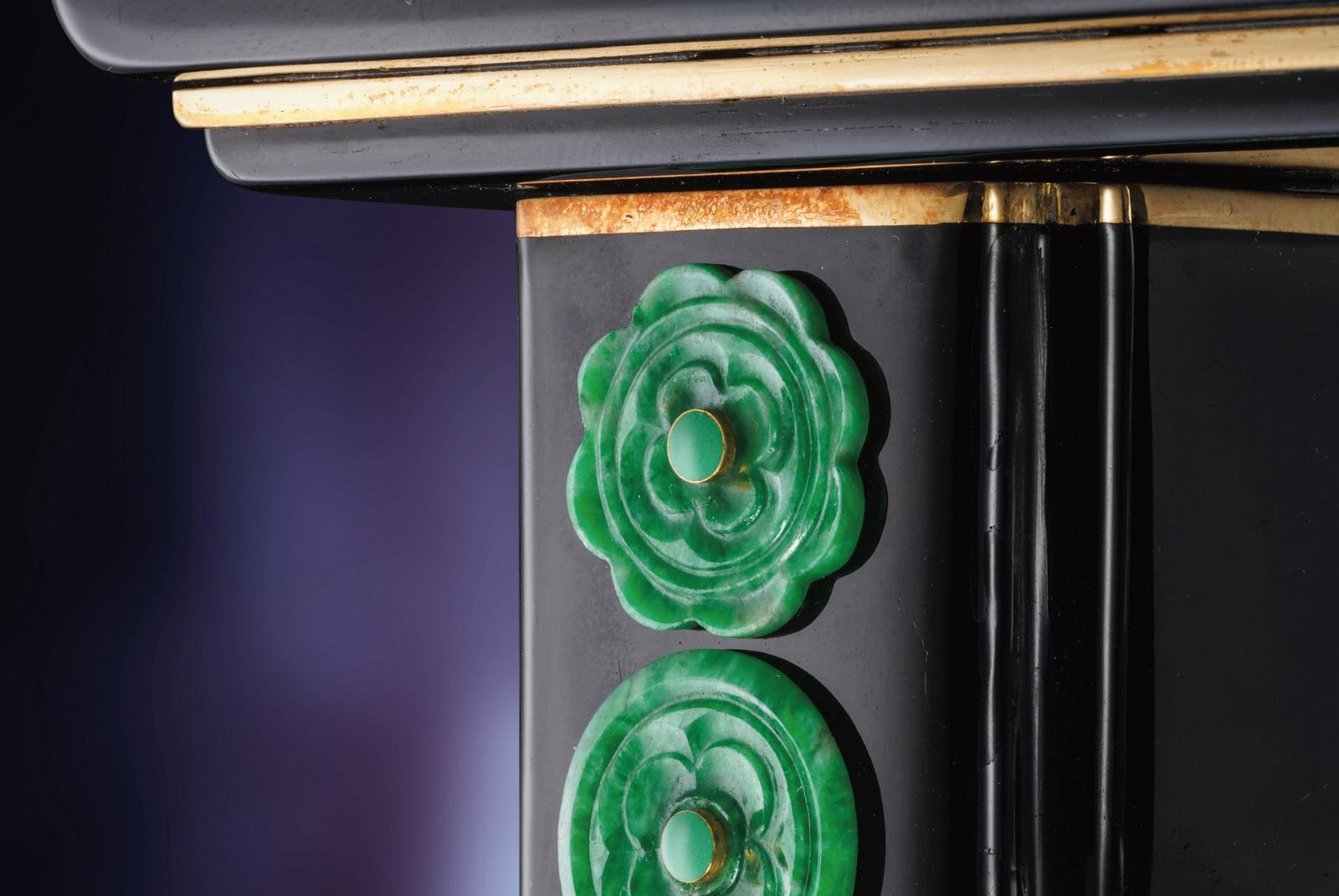
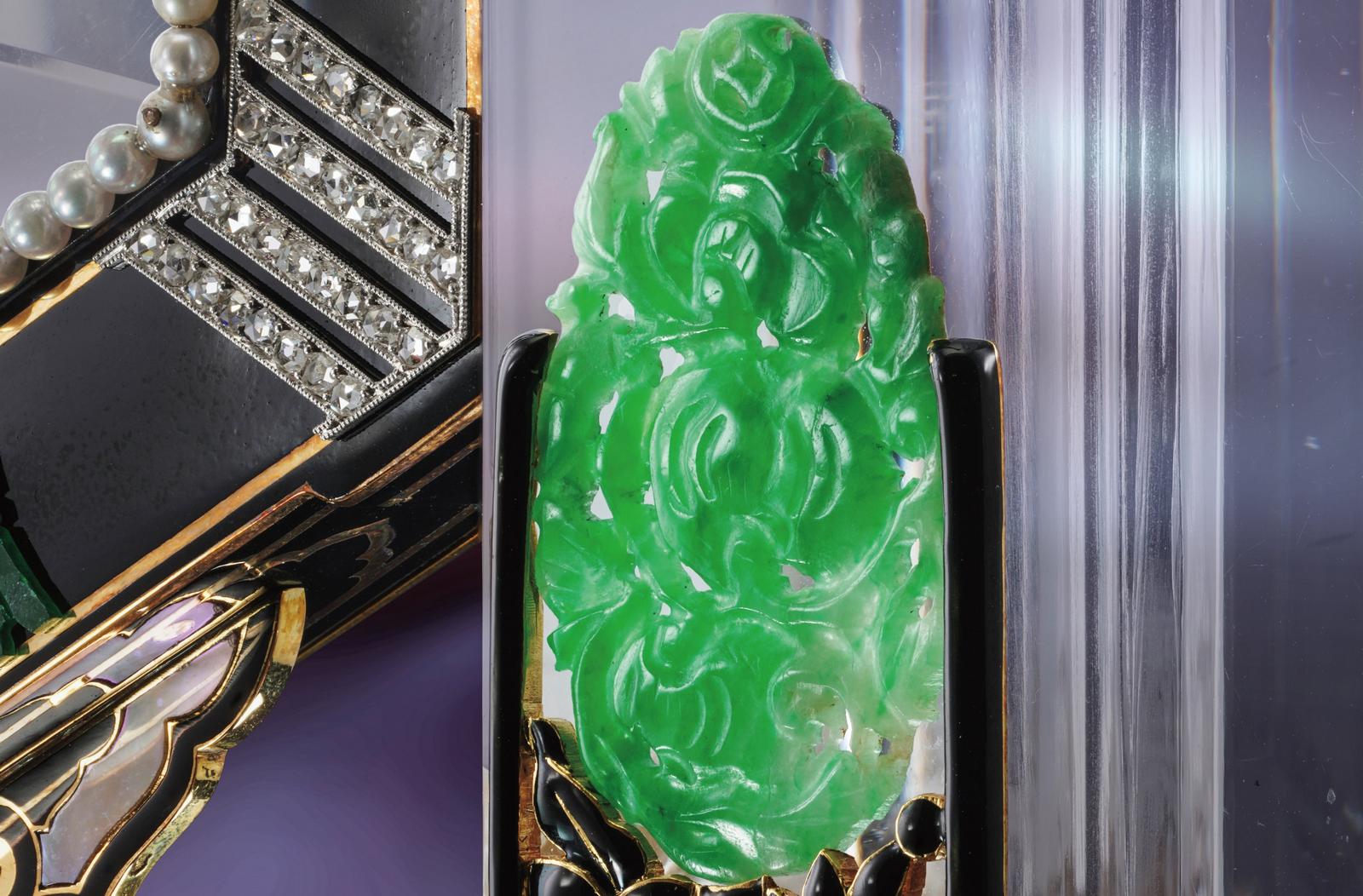
It doesn’t take a design genius to notice that the Cartier Portico Mystery Clock No. 4 has Asian influence. In fact, designer Charles Jacqueau packed the Portico No. 4 with several Chinese elements, from the materials used to the overall design. The frame of the clock is inspired by a Chinese temple. The bases of the columns feature Oriental-inspired black enamel motifs, while above lie two jade trees. Two columns, two trees, and a consistent symmetry are also an ode to the deep-rooted symbolism of pairs in Chinese culture.
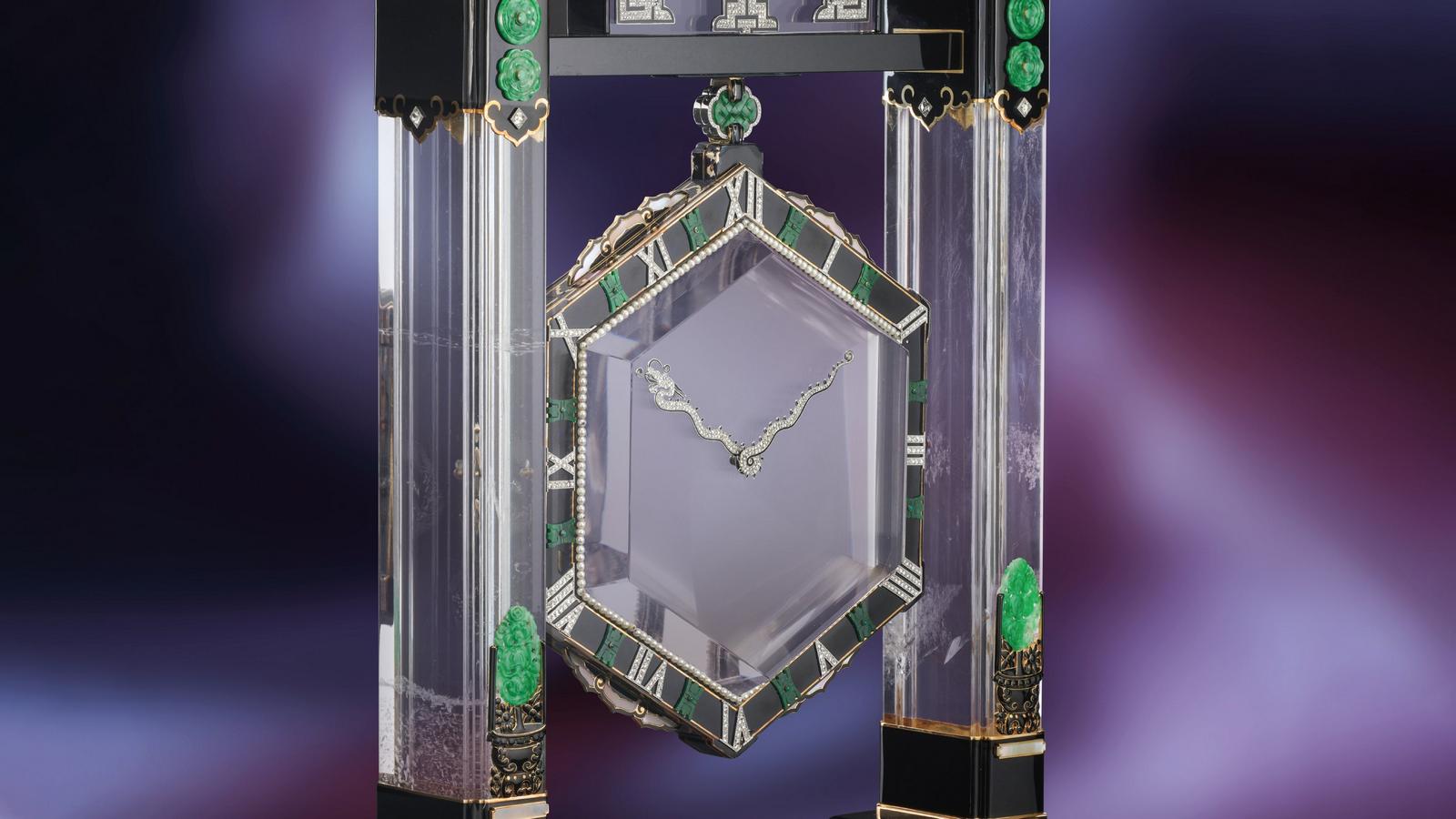
The Materials Used
While some Cartier creations can sometimes feature all the colors of the rainbow, the Portico Mystery Clock No. 4 displays a restrained palette. It uses jade, enamel, diamonds, onyx, mother-of-pearl, rock crystal, and an enamel screen with jade decoration. This screen is fixed and holds the cynosure of the creation: the six-sided, carved rock crystal “mystery” dial.

The dial is enhanced with pavé-set, rose-cut diamond hands in the form of a dragon. The bezel is defined using onyx, helping the diamond-set Roman numerals and jade decoration to shine. The inside of the bezel is further embellished with a row of seed pearls, akin to a silver lining.
How the Mystery Unfolds
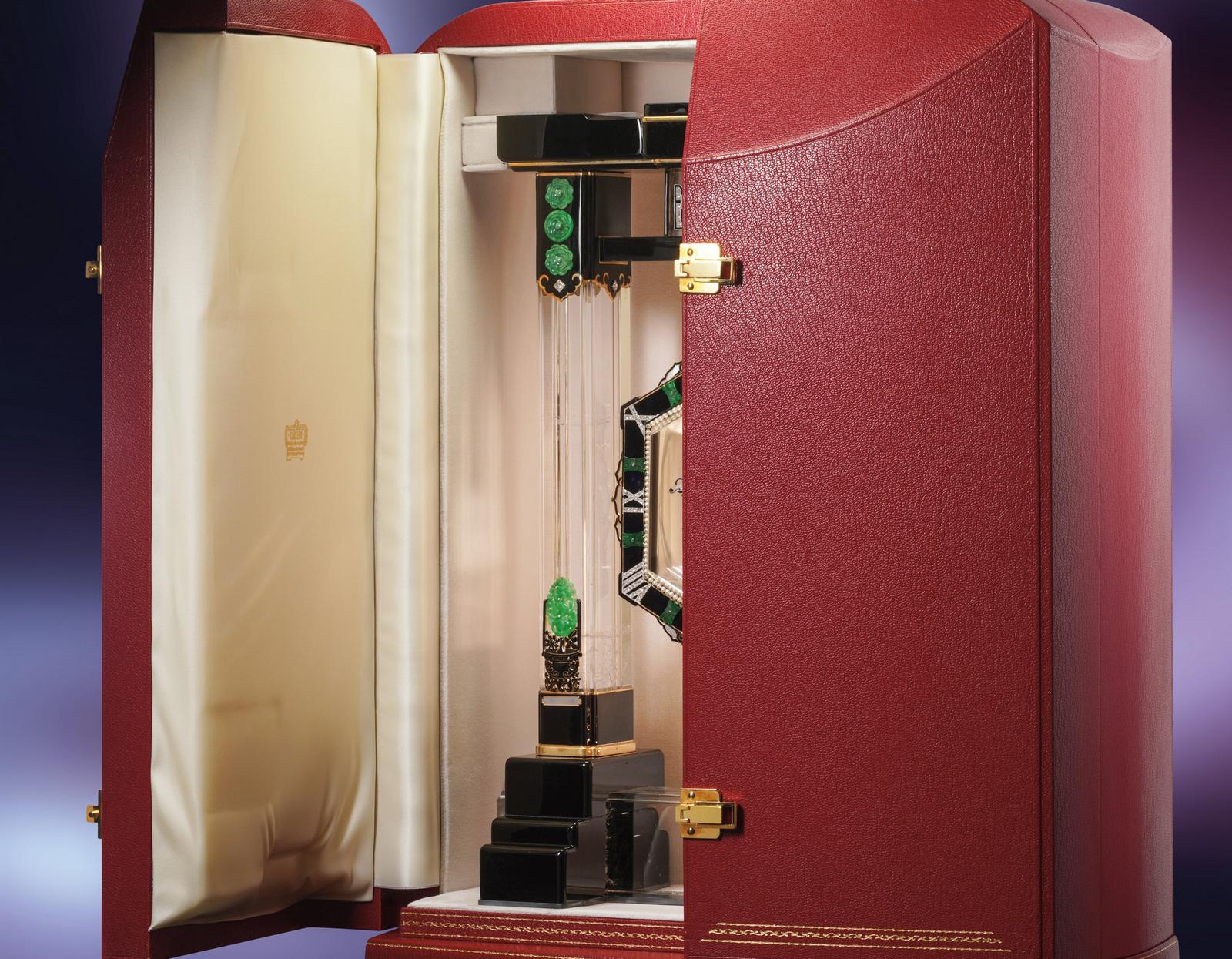
What meets the eye is reality; what Cartier conceals is pure, stunning creativity. In the Mystery Clock No. 4, the movement is hidden above the suspended dial, inside the upper architectural structure. Meanwhile, the hands are attached to transparent discs with teeth around their outer edges. Concealed gears rotate the discs, which carry the hands with them.
Thanks to the ornamental nature of the clock, the driving components don’t meet the eye, giving the illusion that the hands have no connection to a mechanism, while the movement powers it all from the apex. It is said the Portico series involved Fourrier’s hardstone work, Coüet’s movements and concealed mechanisms, and Cartier’s jewelry work, all taking up to a year to complete the masterpiece.
(All images courtesy Phillips Auctions)