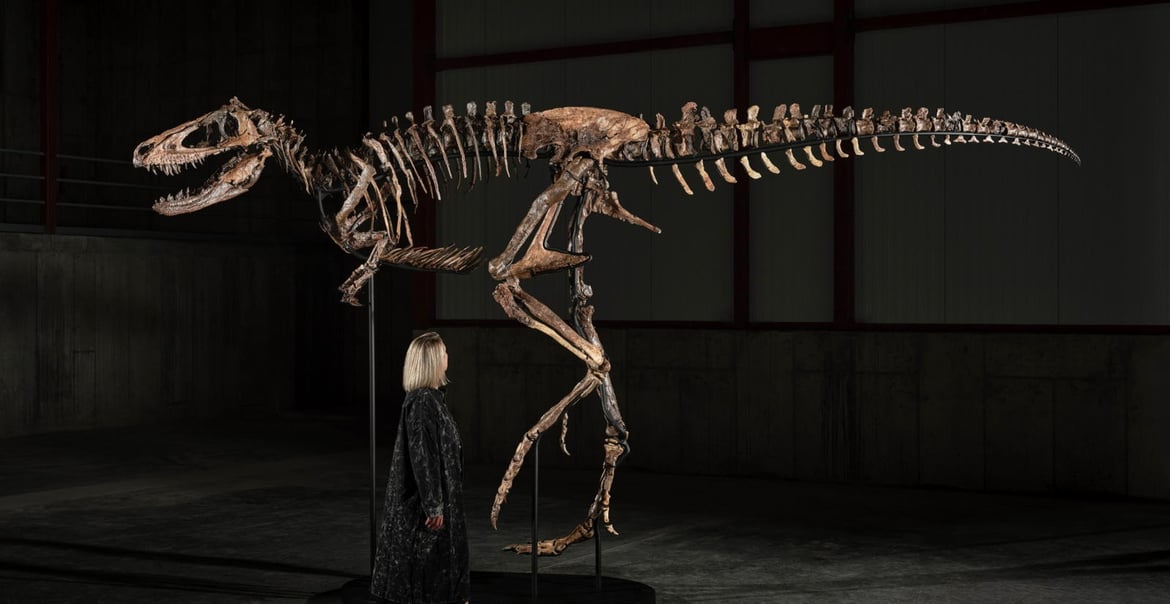
In a world of multi-million dollar Hermès Birkins, why not buy a dinosaur? Good thing Jodi the Nanotyrannus, a nearly 20-foot-long prehistoric marvel, is waiting with a $9 million price tag. Originally discovered in 2019 by rancher Jodi Pierson on her land in Montana, this youthful predator was previously known as “Chomper.” Back then, it was marketed as a juvenile Tyrannosaurus rex and carried a hefty $20 million asking price. Today, Jodi has undergone a complete rebranding, stepping up as the very first Nanotyrannus to ever go to auction. It is one of only three such fossils known to exist, and easily the most complete of the lot. The skeleton stands roughly 6.5 feet tall, measures 19.6 feet long, and is 55 percent complete with a virtually complete skull containing 35 teeth, all four claws, a complete pelvis, a thighbone, and a collarbone.
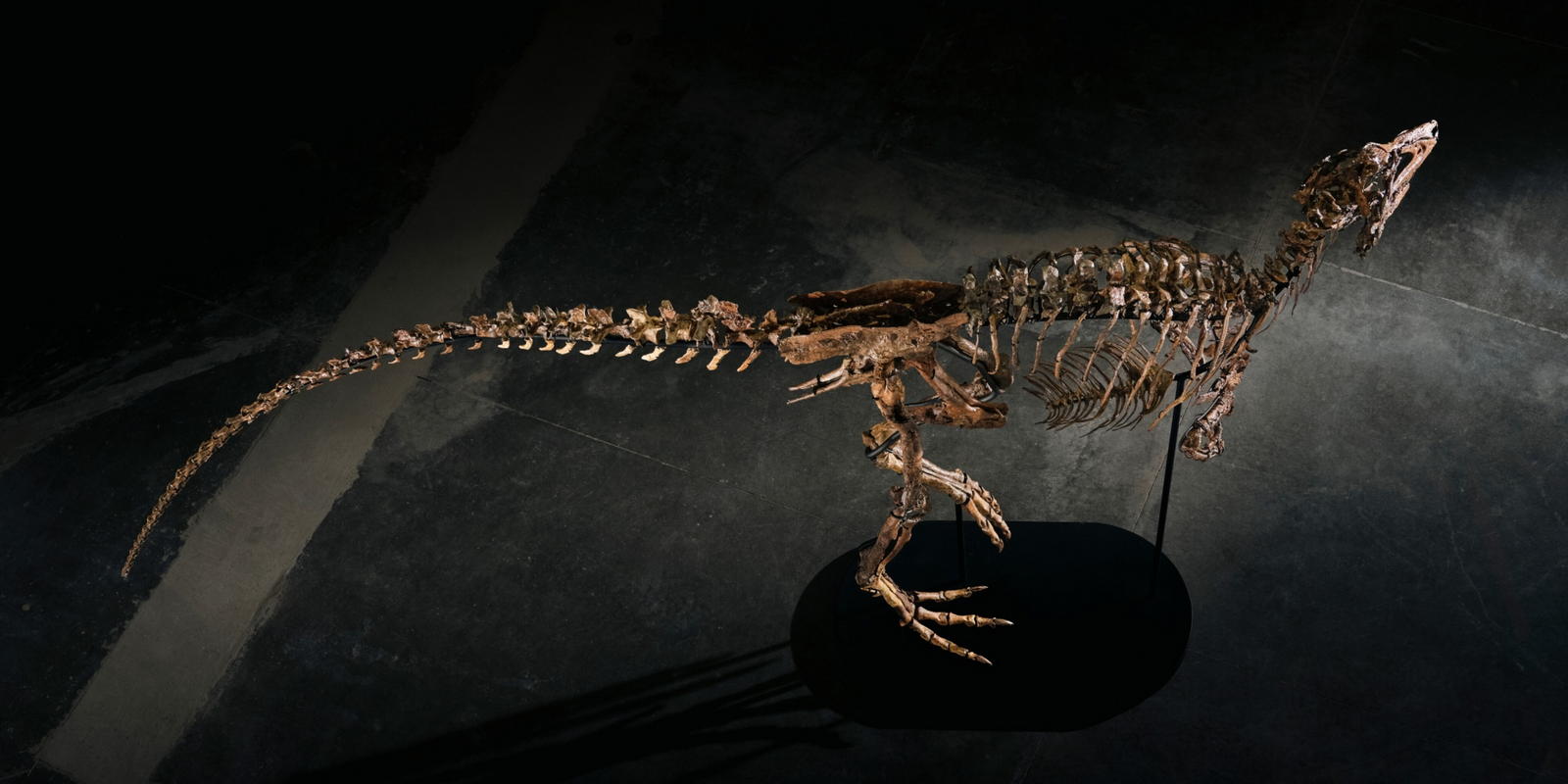
Jodi’s $9 million estimate is quite a bit less than the record-breaking sale price of “Gus,” a 67-million-year-old Tyrannosaurus rex skeleton that sold at Sotheby’s earlier this year. Before the live sale on October 27, Jodi will be on view for two weeks at Sotheby’s galleries in the Breuer Building starting on October 13.
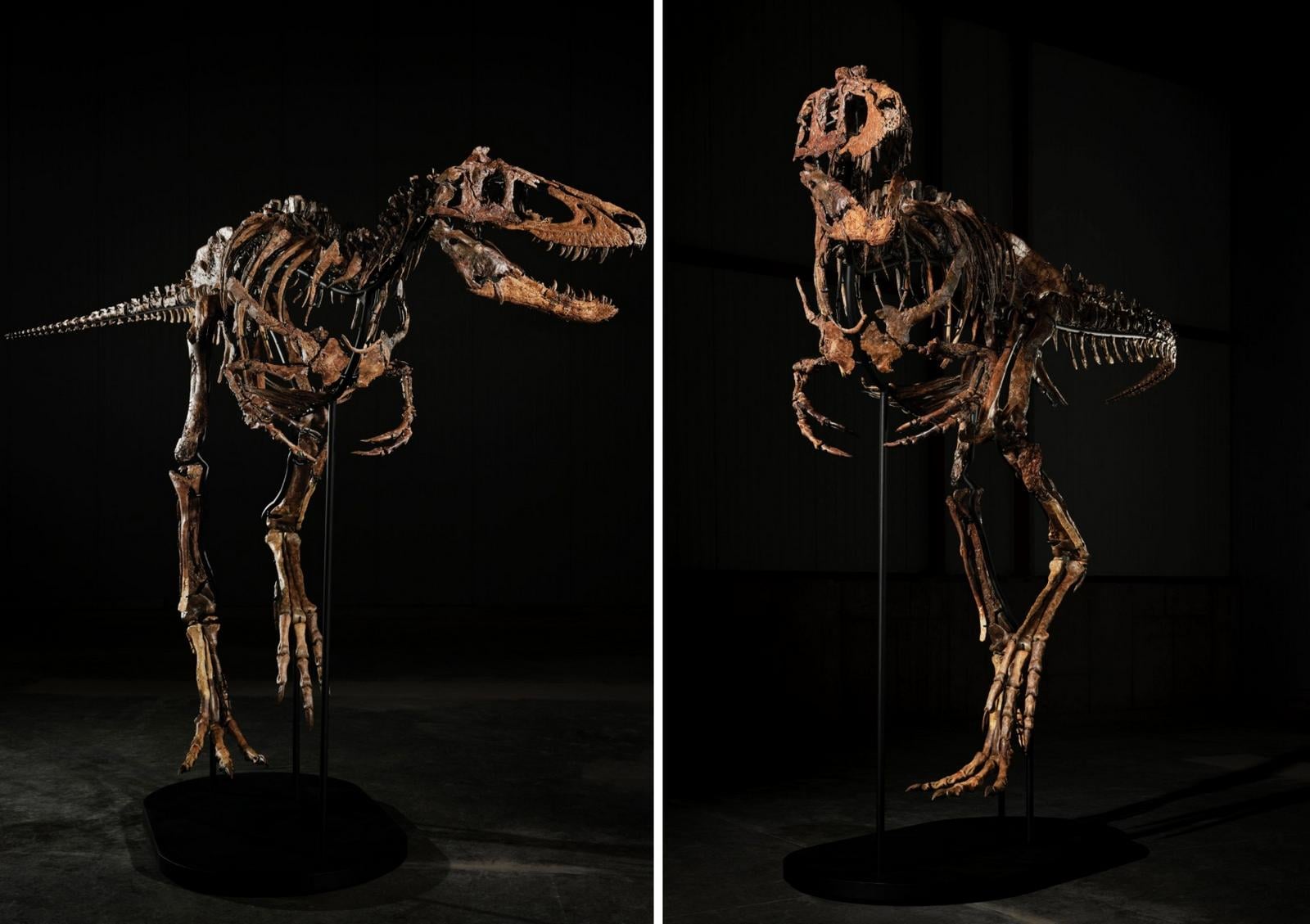
While the auction will certainly bring in the moolah, there is a massive paleontological win hidden here. A landmark 2025 study by paleontologists Lindsay Zanno and James Napoli, who analyzed over 200 fossils, proved that Nanotyrannus is a valid, distinct genus rather than an adolescent T. rex. It gave Jodi a separate individual identity which, even though it carries a lower estimate, has opened entirely new doors for science.
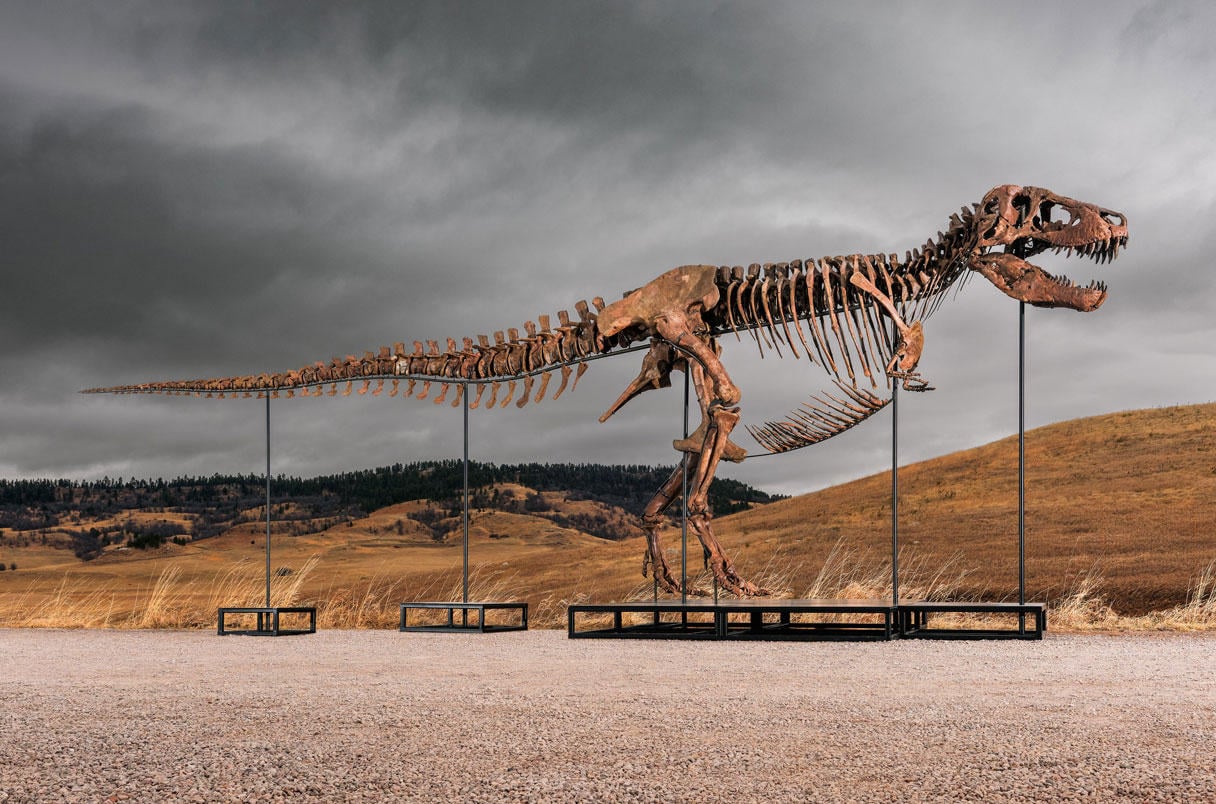
Gus, the most expensive dinosaur ever sold-
It all started during a casual walk when a South Dakota rancher followed his gut and stumbled upon dinosaur teeth on his land. That chance find went on to become a historic record-breaker at a Sotheby’s New York auction, where a 67-million-year-old Tyrannosaurus rex skeleton nicknamed “Gus” sold for a staggering $50.1 million (including fees) to become the most valuable dinosaur fossil in history.

Measuring nearly 38 feet long, Gus is one of the largest and most complete T. rex skeletons ever discovered, boasting an exceptionally preserved skull, powerful jaws, two intact feet, and a rare wishbone. Interestingly, Gus was so massive that the fully restored skeleton had to be mounted on a custom-built support frame inside a local pickleball court, making it one of the very few buildings in the area large enough to house its colossal frame.