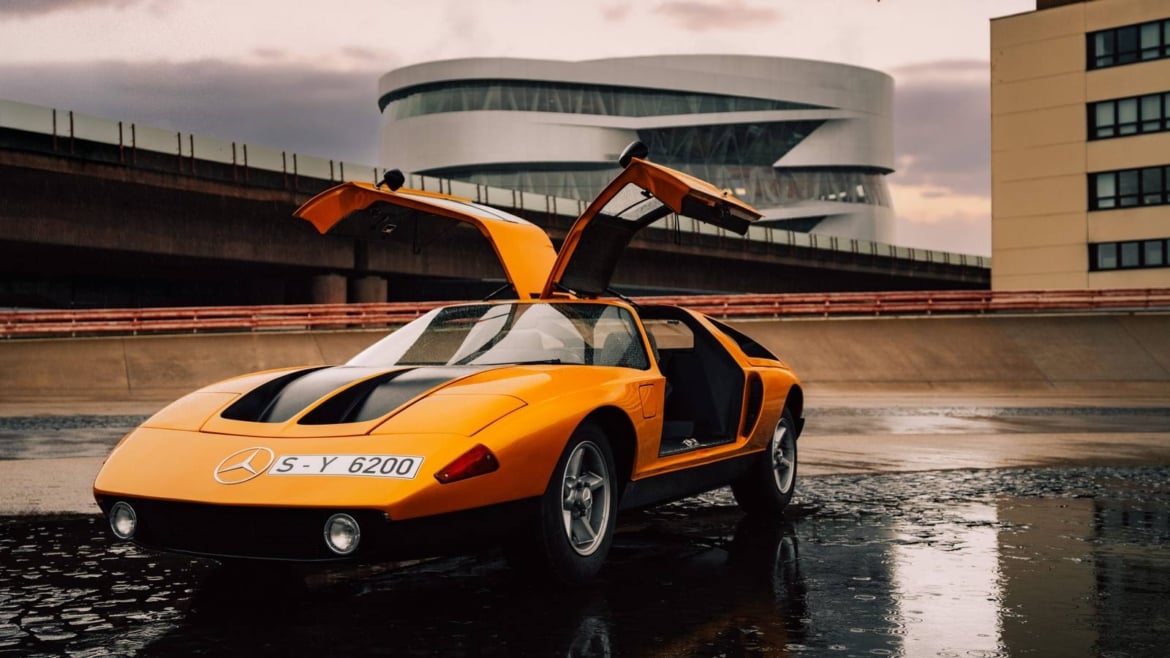
Mercedes-Benz has spent over five decades politely turning away people waving blank cheques for its only rotary-engined sports car, or so the legend goes. Mercedes built just 17 C 111 prototypes, and none ever made it into private hands. That changes on February 3, 2027, when RM Sotheby’s sells a 1970 C 111-II at the Louvre’s Salles du Carrousel. Staging the sale at the Louvre, alongside Retromobile Paris, is hardly subtle. Mercedes is giving an experimental machine the sort of setting usually reserved for priceless works of art.
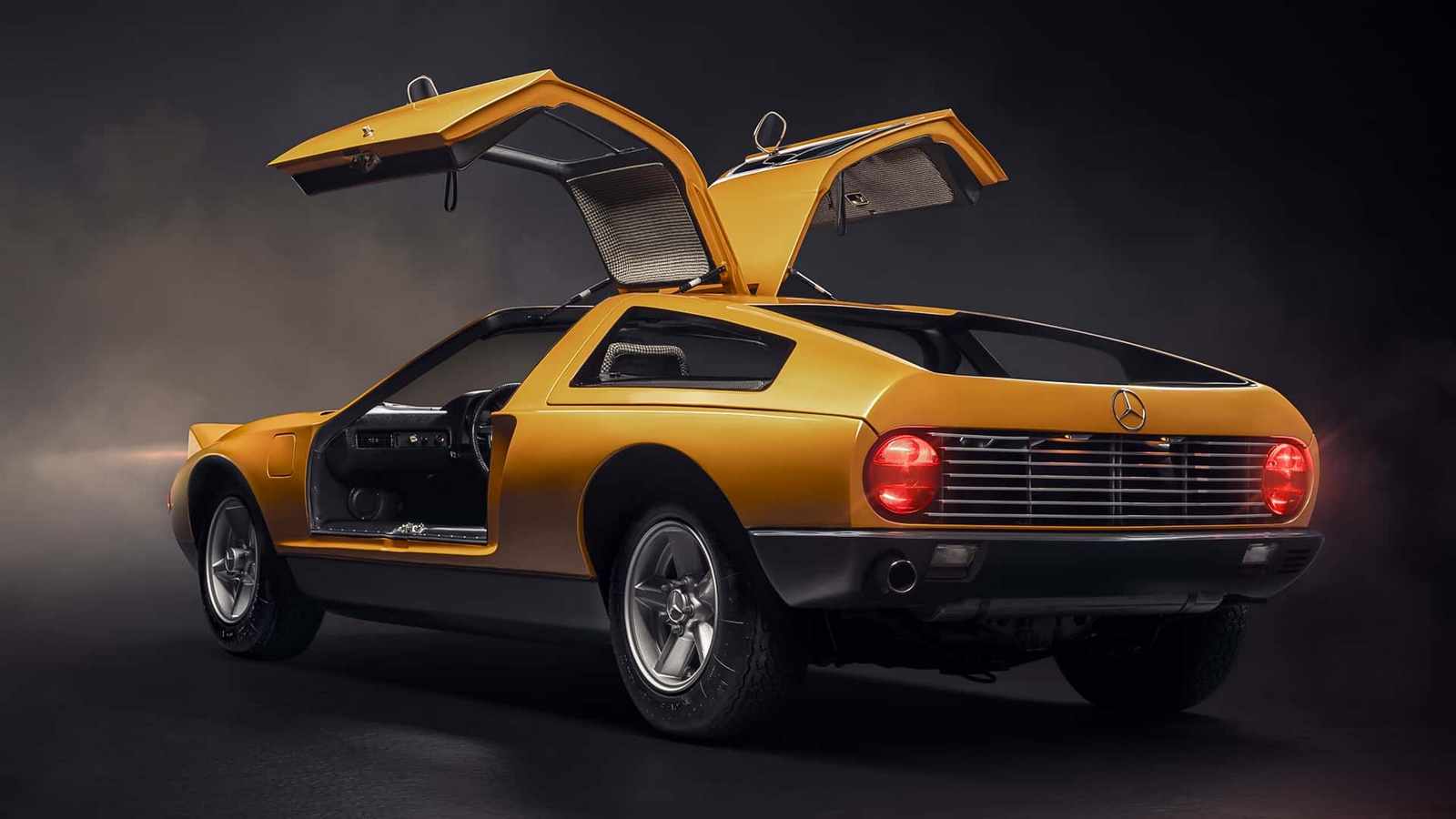
The car is Car 33, the third C 111-II ever built. Behind the seats sits a 2.4-liter four-rotor Wankel rotary engine making 345 hp, good for 186 mph and 0 to 62 mph in 4.8 seconds. Mercedes rates that displacement as equal to a 4.8-liter piston engine, which is how something so compact managed those kinds of numbers in 1970. At just 2,734 lb, it also weighs less than most hot hatches sold today.
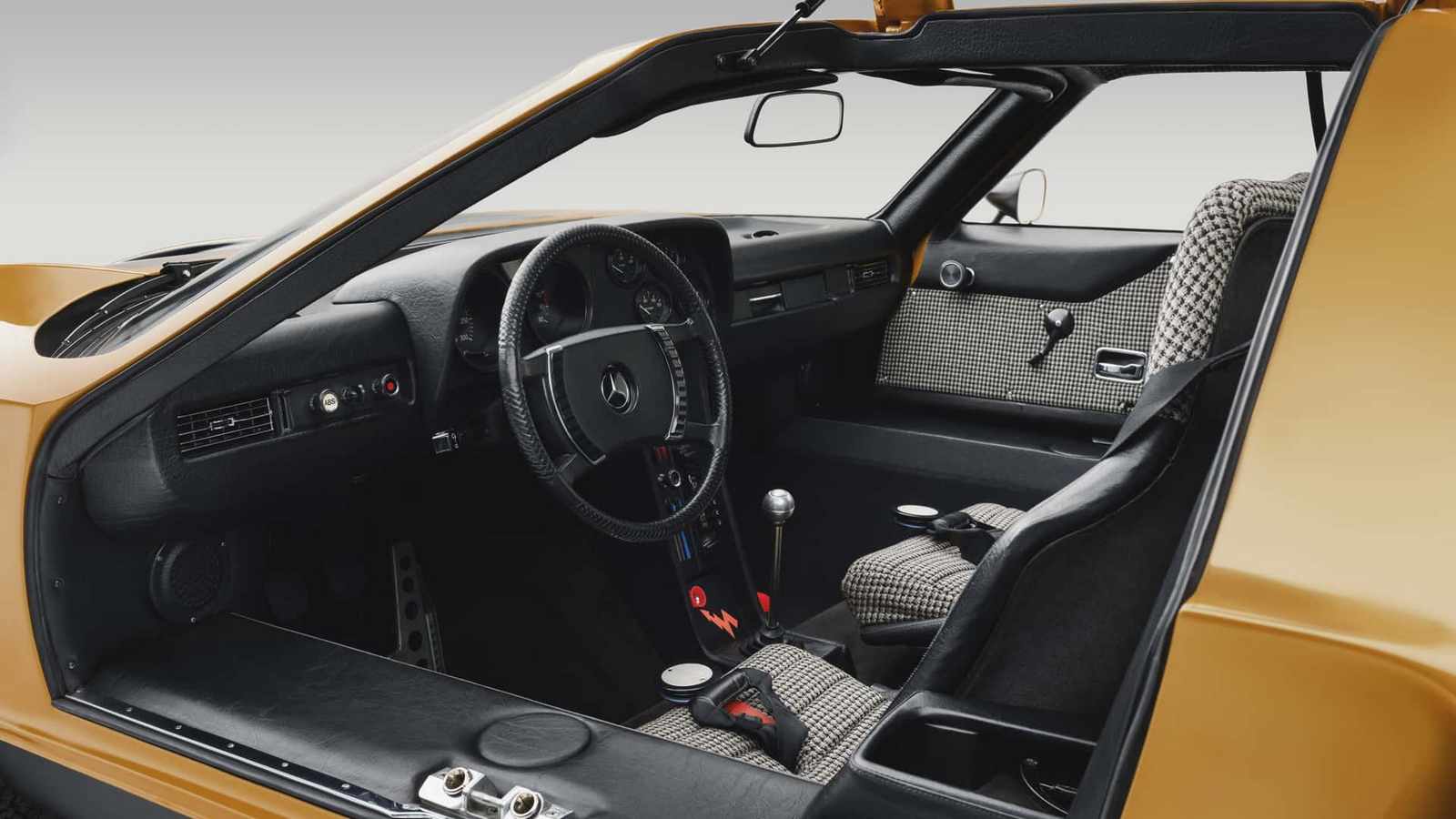
Car 33 worked in the test fleet, helped trial early ABS, lapped Hockenheim, and turned up in the first German Playboy in 1972. Conductor Herbert von Karajan even drove Car 33, adding another unexpected name to its already remarkable history. After years on display in Stuttgart, it was restored in 2024 with its original patina left alone and a fire extinguisher added. The odometer reads 15,391 miles, which averages out to roughly 275 a year.
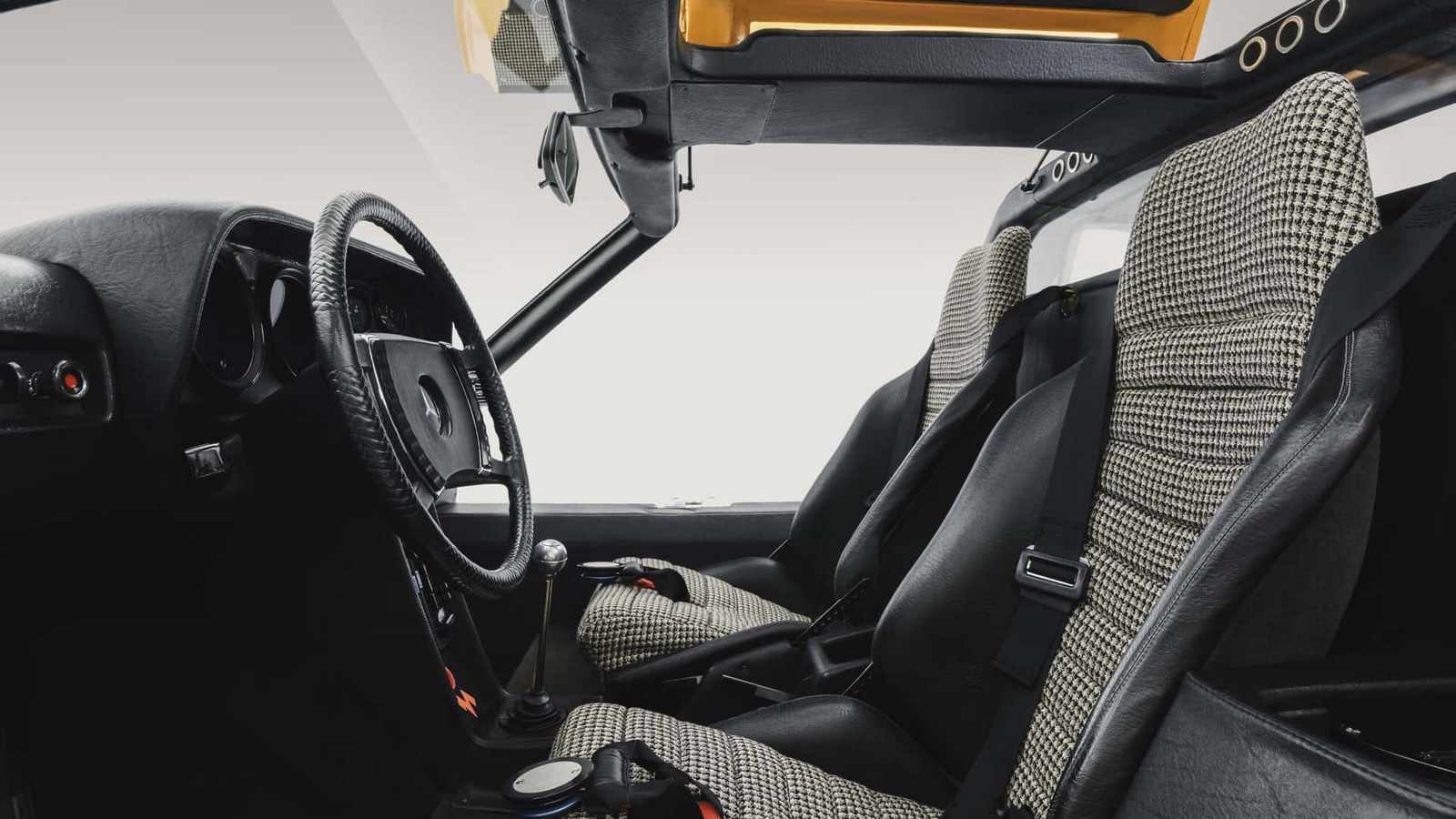
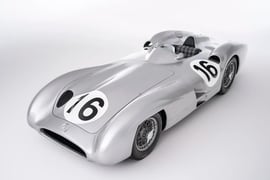
RM Sotheby‘s expects the C 111 to command more than €25 million, or roughly $27.5 million, putting it among the most expensive Mercedes-Benz cars ever offered at auction. The Uhlenhaut record looks safe, since the 300 SLR Uhlenhaut Coupe fetched $156 million in 2022, while the W 196 R Streamliner made $59 million in 2025. Mercedes has also contractually promised not to sell another C 111 for at least 25 years, making this a genuinely once-in-a-generation opportunity.
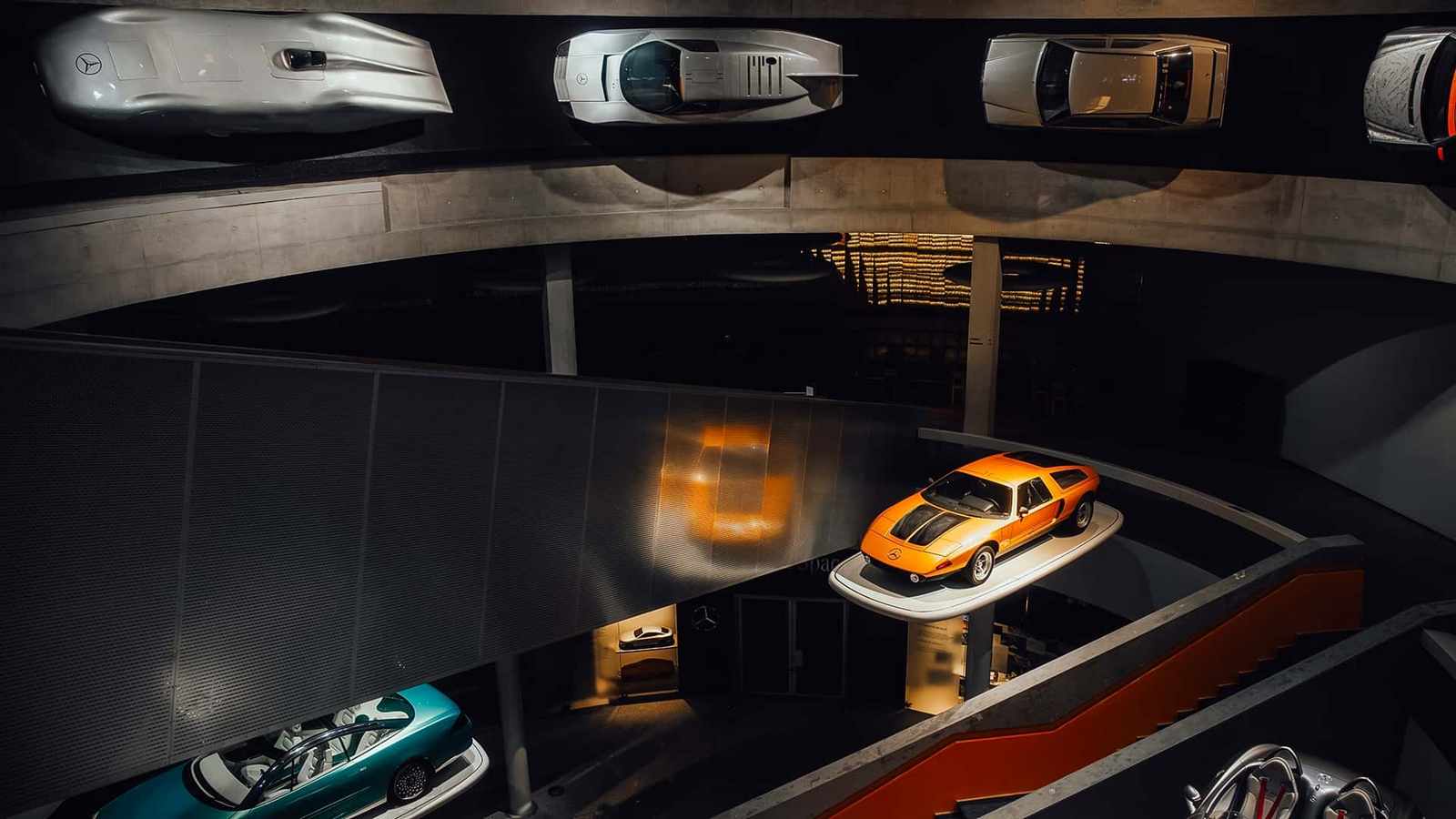
The proceeds will fund Mercedes-Benz Museum 2.0, including a digital twin developed with The Classic Car Trust and its Roarington platform. It’s an unusual way to finance the museum’s future: selling one of its most extraordinary pieces of automotive history to make the entire collection accessible to a worldwide audience.
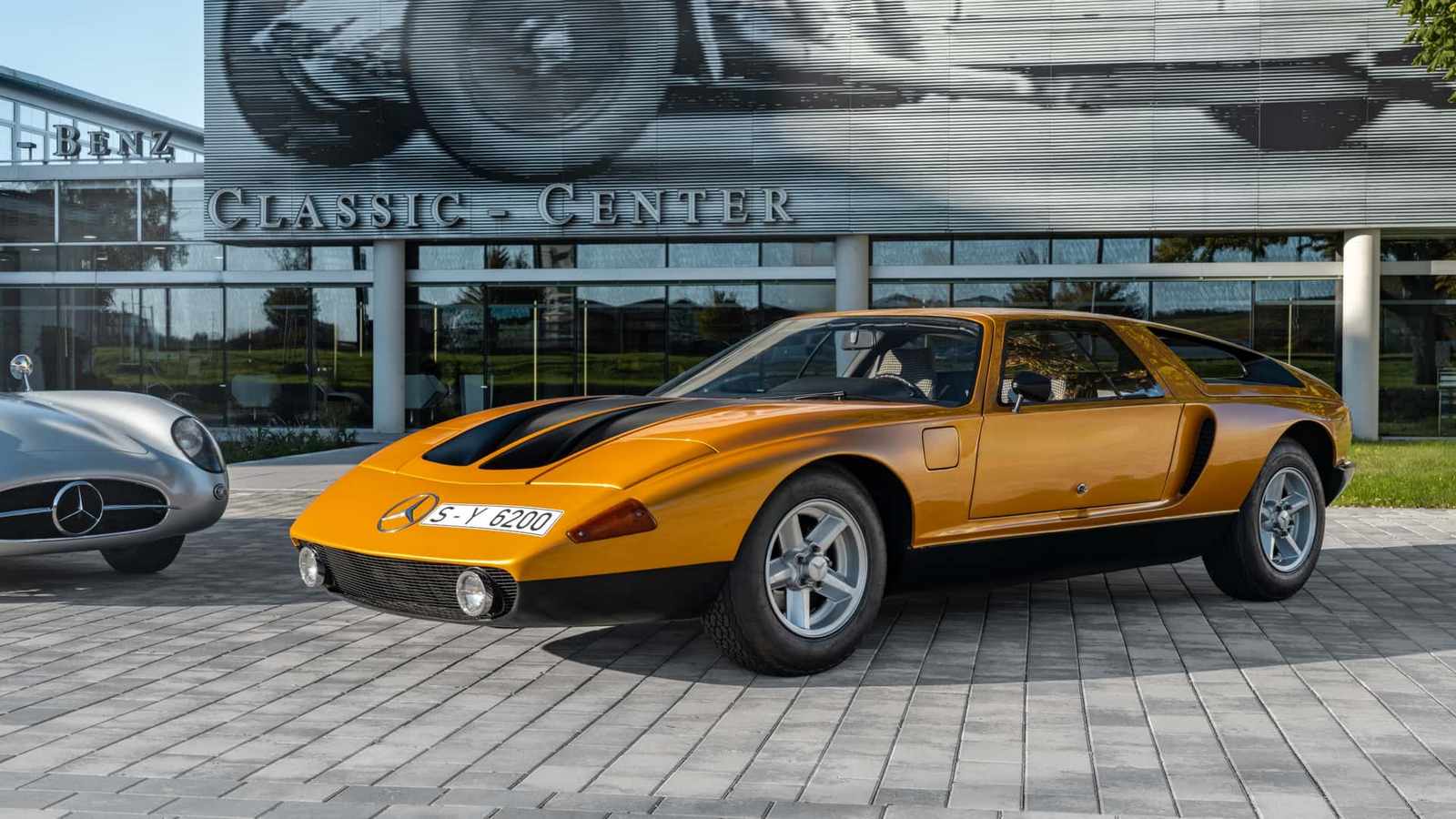
The C 111 was supposed to show the world what Mercedes-Benz could build when it abandoned convention. It never became a production car, but more than five decades later, it may finally get the one thing its creators never intended: a private owner willing to pay a fortune for it.