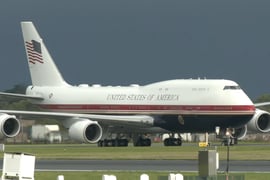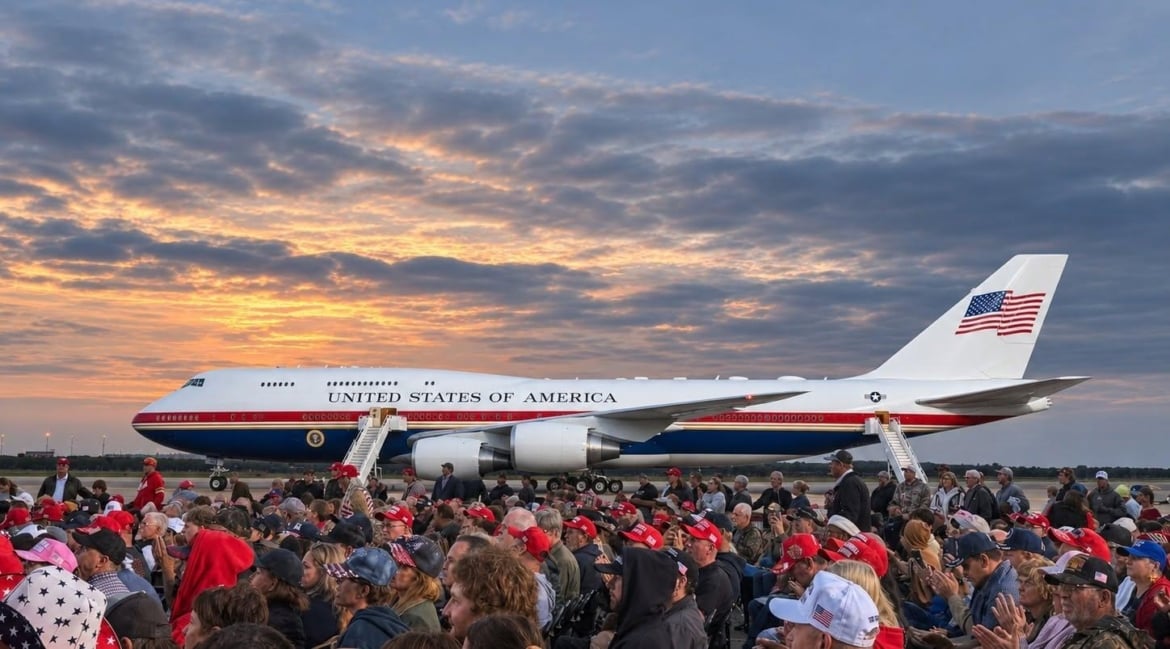
A presidential aircraft can make even an airport hangar look surprisingly small, and that is precisely what happened when the Qatar-donated Boeing 747 arrived at Salina Regional Airport in Kansas. The enormous aircraft, which is currently serving as the United States’ Bridge Air Force One, was simply too big to fit through the doors of Hangar 509, the building used to host the President of the United States during his recent visit. While the hangar accommodated thousands of visitors, the distinctive four-engine aircraft had to remain outside, offering a rather striking demonstration of just how enormous a Boeing 747 really is.
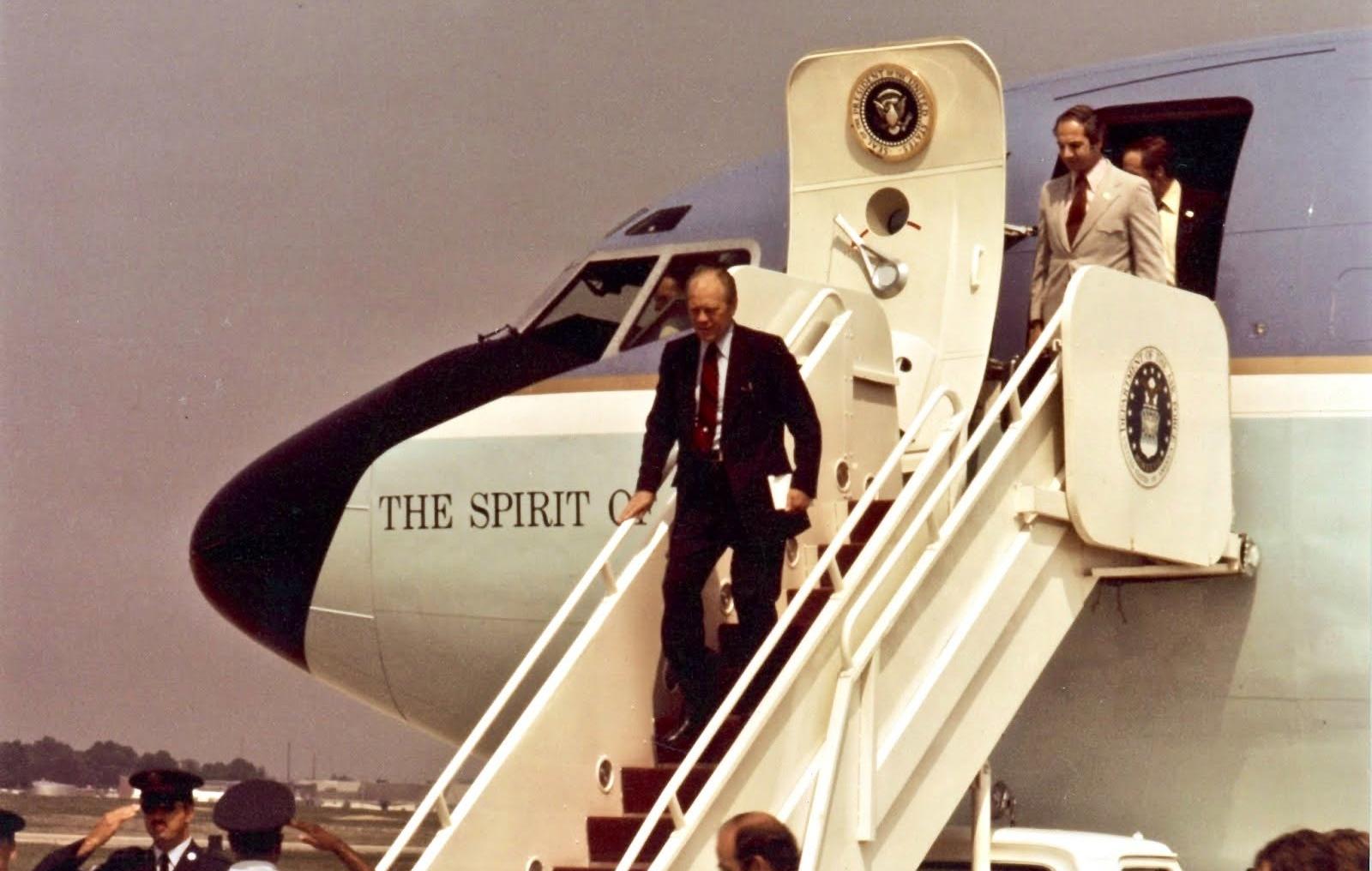
The airport has an interesting presidential connection that goes back half a century, when Gerald Ford became the last sitting US president to visit Salina, according to Citizen Journal. Ford arrived aboard SAM 26000, a Boeing VC-137C derived from the Boeing 707, making the two presidential visits separated by approximately 50 years particularly interesting from an aviation perspective. However, the aircraft accompanying the latest presidential visit belonged to an entirely different generation of aviation, with a wingspan so large that it could not pass through the doors of the very hangar hosting the event.
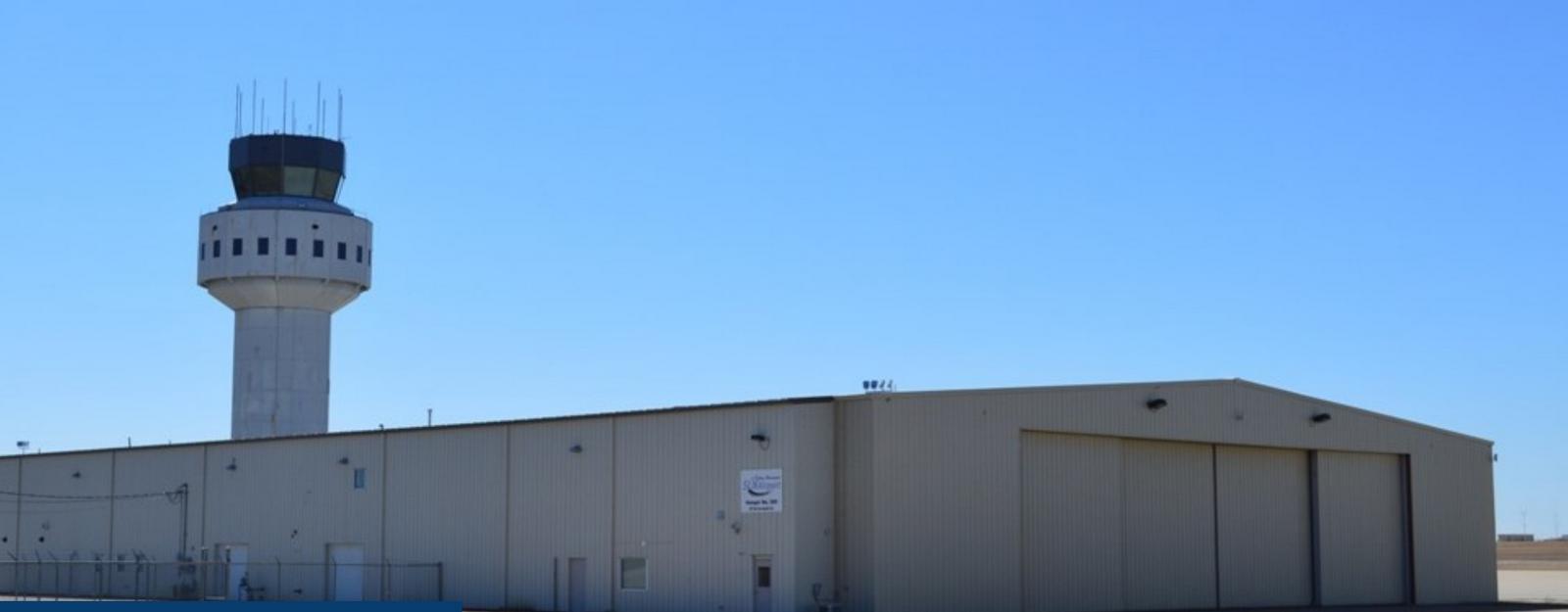
A hangar built for aircraft, but not this aircraft
Hangar 509 is located at Salina Regional Airport and is an established aviation facility designed primarily for aircraft maintenance, repair, and overhaul operations. According to the airport’s published specifications, the building offers 45,532 square feet of combined hangar, office, and shop space, with the hangar floor accounting for 27,672 square feet. Its doors measure approximately 116 feet across, an opening that would be sufficient for many conventional aircraft but nowhere near large enough for a Boeing 747-8. The Qatar-donated aircraft has an impressive wingspan of approximately 224 feet, which means it is almost twice as wide as the hangar’s entrance. Even with the aircraft positioned perfectly, there would simply be no way to manoeuvre it through the opening without a considerable difference in dimensions.
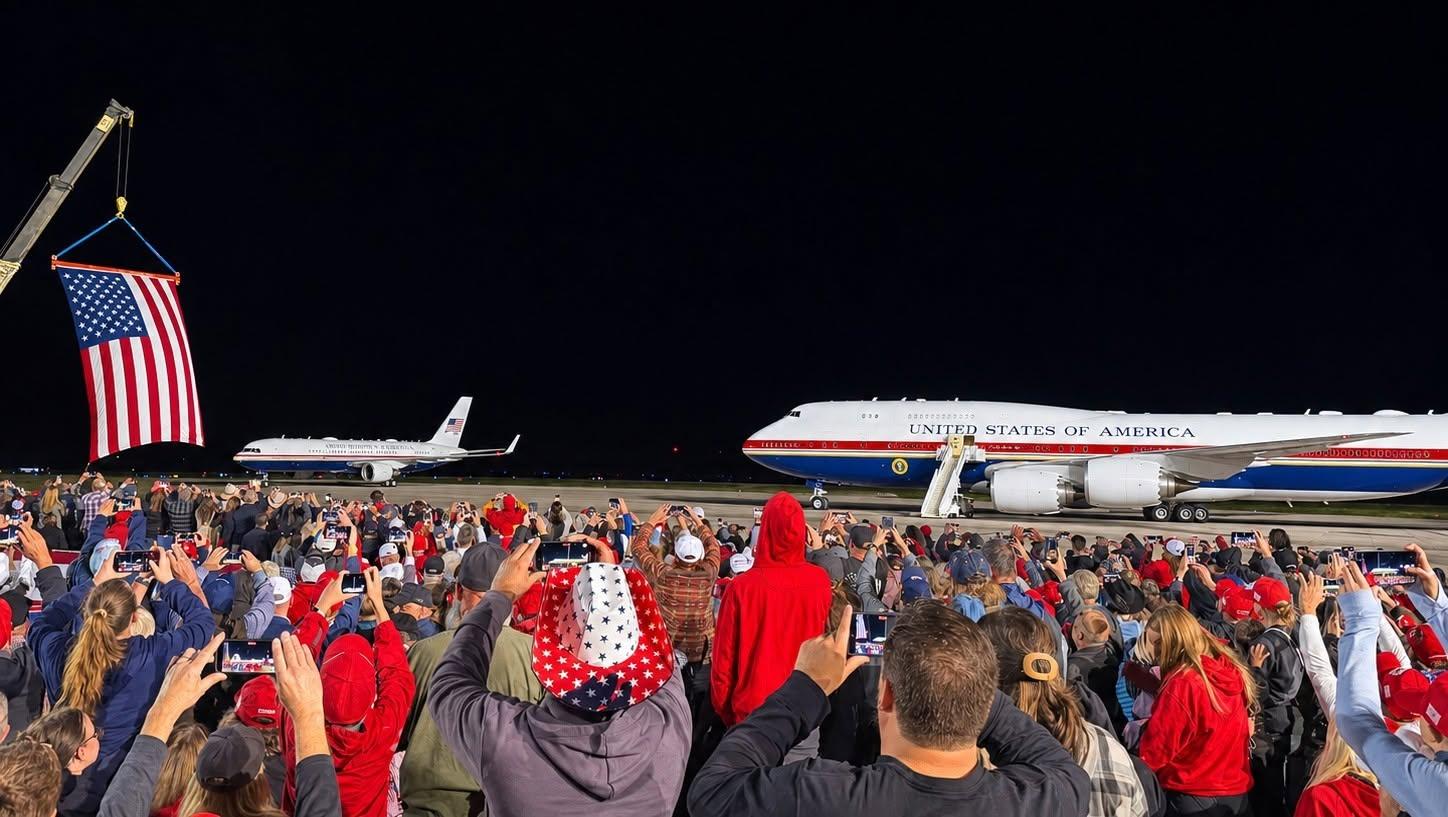
The building was nevertheless capable of accommodating a substantial gathering, with Citizen Journal reporting estimates of approximately 2,500 people inside and another 1,500 watching the proceedings on a screen outside. These figures were attendance estimates rather than the hangar’s officially certified capacity, but they offer an idea of the scale of the event. The aircraft, meanwhile, remained outside at the airport, where its enormous proportions could be appreciated without any attempt to squeeze it into a building that was never designed to accommodate something quite so large.
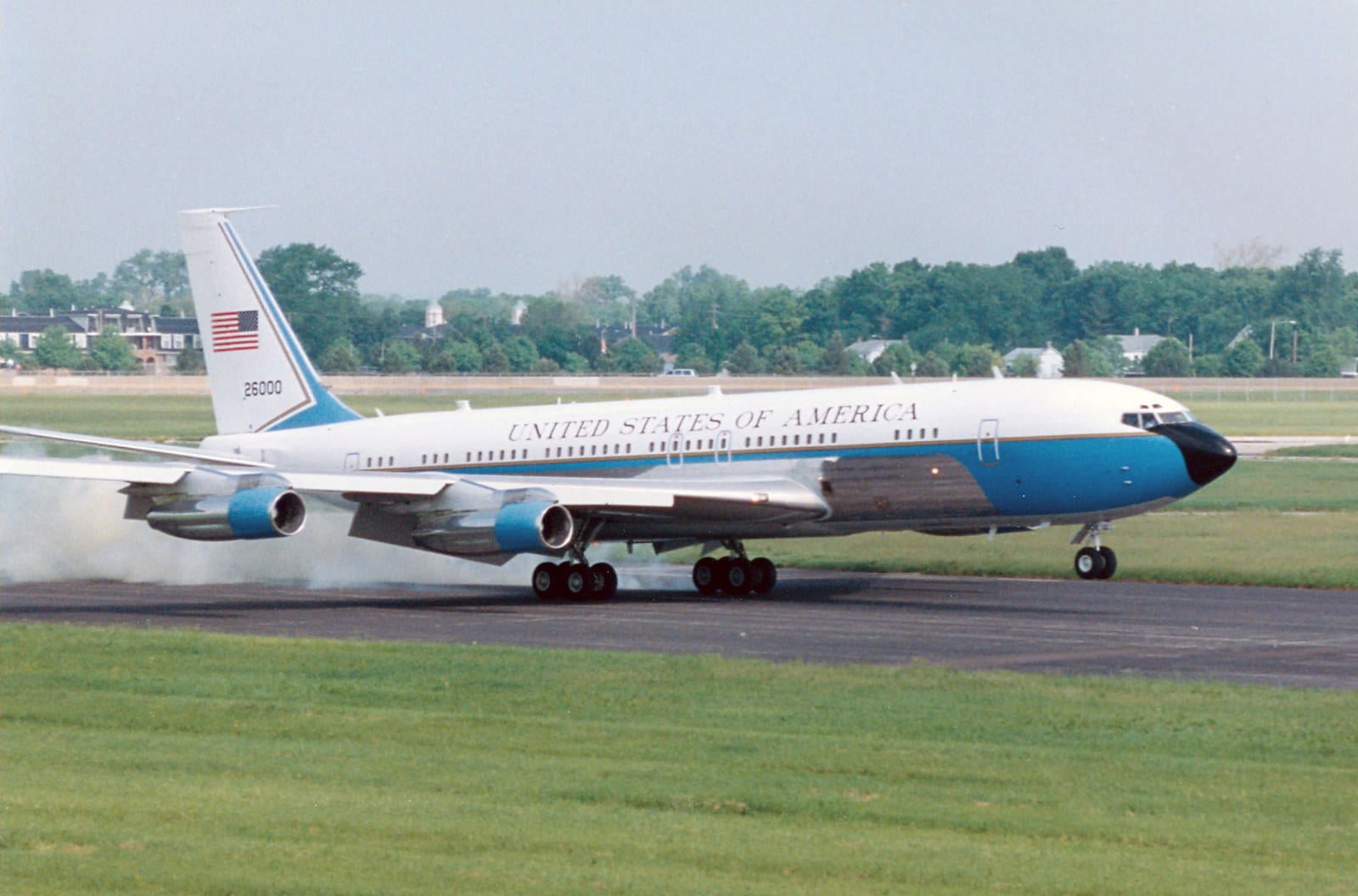
The presidential aircraft that made history before the 747
The previous presidential visit to Salina involved an aircraft with a rather remarkable place in American aviation history. Gerald Ford arrived aboard SAM 26000, a Boeing VC-137C developed from the Boeing 707 and one of the most historically significant aircraft ever associated with the US presidency. The aircraft had previously carried President John F. Kennedy to Dallas before his assassination and was also where Lyndon B. Johnson took the presidential oath of office following Kennedy’s passing. It subsequently served several American presidents and is now preserved at the National Museum of the US Air Force in Ohio.
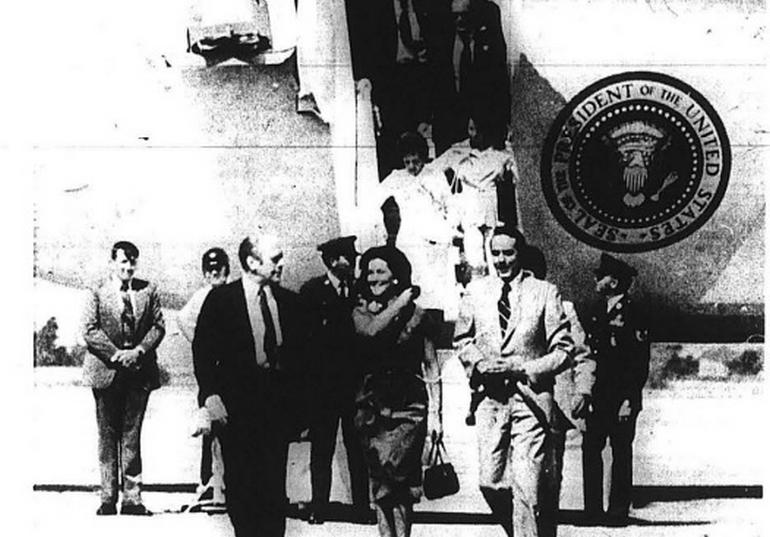
Ford’s visit also attracted considerable attention, with contemporary coverage by the Salina Journal reporting that approximately 5,000 to 6,000 people gathered at the airport to welcome him and Bob Dole. Ford later travelled from Salina to Russell by helicopter before returning to the airport and continuing his journey to Colorado. There is no verified evidence that he entered Hangar 509 during that visit, so the historical connection is to the airport itself rather than the building.
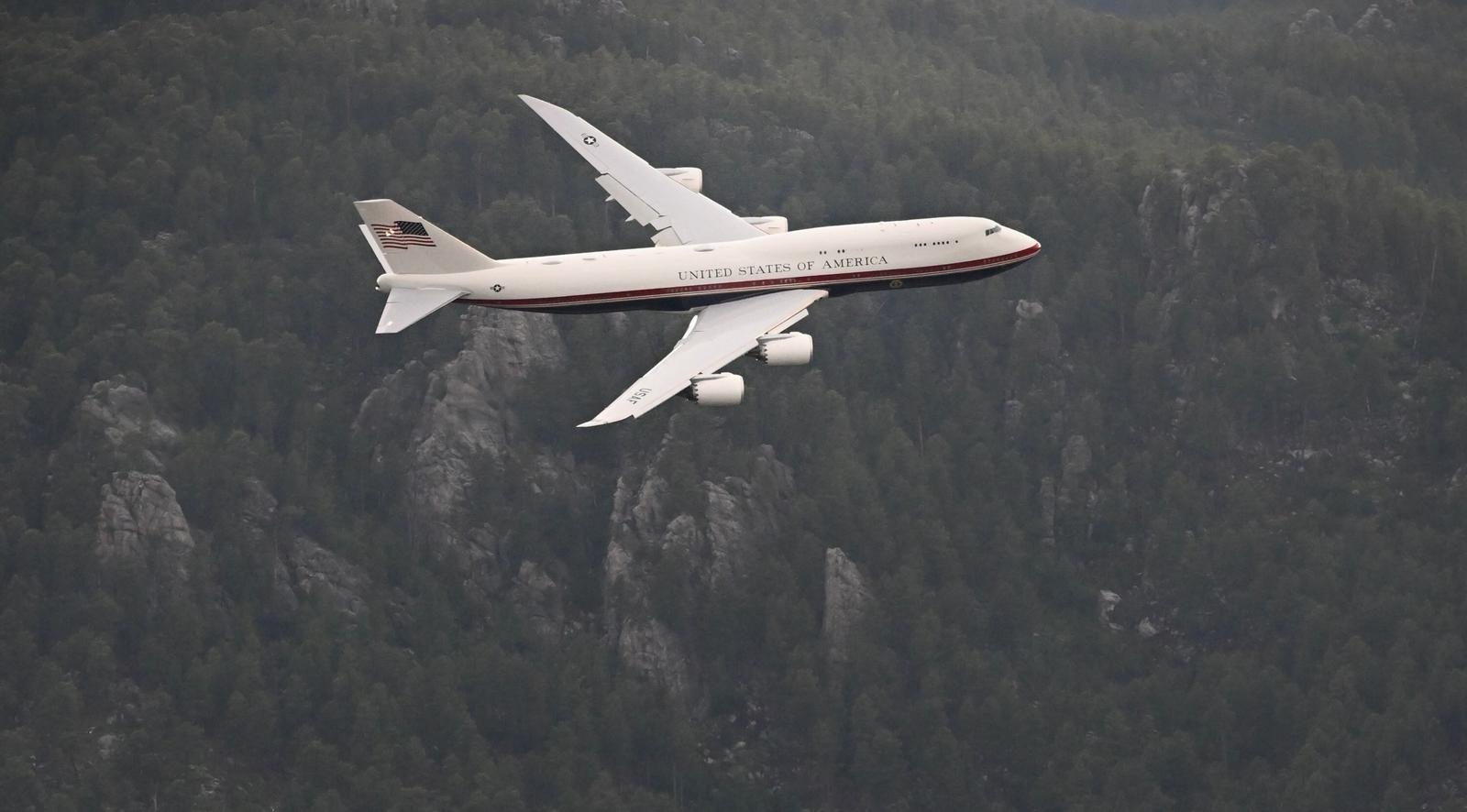
The latest presidential arrival brought a very different aircraft to the same airport, one whose sheer dimensions made it impossible to fit inside the hangar used for the occasion. Already serving as the Bridge Air Force One while the next-generation presidential aircraft are being prepared, the Qatar-donated Boeing 747 has a temporary but important role in American presidential aviation. Its appearance in Kansas has also provided an amusing reminder that even buildings designed around aircraft sometimes have their limits.