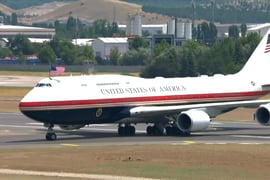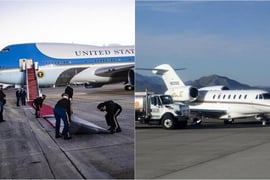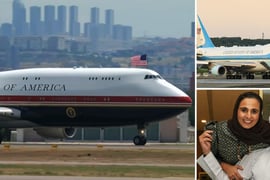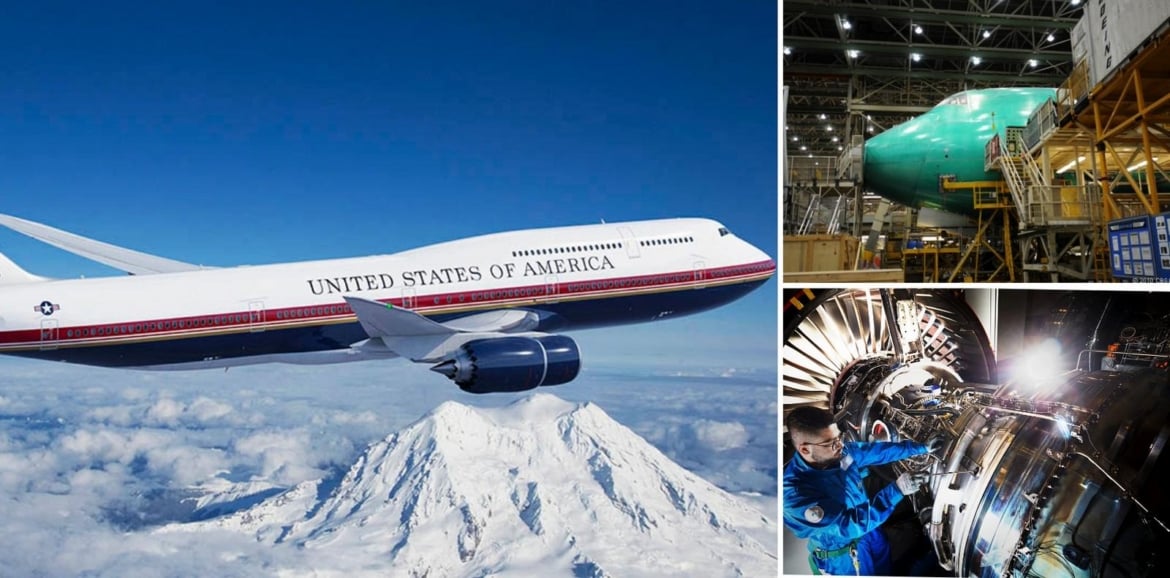
The long-delayed replacement for the Air Force One fleet has picked up another hefty bill, this time for the parts that will keep the future presidential jets flying. The US Air Force is paying Boeing up to $75 million to build an initial stockpile of replacement components for the two VC-25B aircraft, helping ensure that a failed bespoke part does not ground the presidential fleet once the new jets finally enter service. The award comes after repeated delays to the program, with the current delivery deadline pushed to 2028.

Boeing’s troubled VC-25B program has already run years behind its original schedule, but the company says there is finally a major milestone ahead. The first test flights of the modified aircraft are expected to begin next year, putting the program on a path toward the latest 2028 delivery target. Until then, however, the Air Force is continuing to spend heavily not just on the aircraft themselves, but also on the specialized infrastructure and parts needed to keep them operational.

Why the future Air Force One fleet needs so many spares
As reported by the Springfield News-Sun, the latest contract modification has a maximum value of $75 million, although the Air Force initially obligated $30 million. It raises the cumulative face value of Boeing’s VC-25B contract from about $4.42 billion to $4.49 billion, highlighting just how expensive the presidential aircraft program has become.

The Pentagon has not disclosed exactly which components are included in the latest order. It describes them simply as initial spare parts for the two fully mission-capable VC-25Bs. Given how heavily modified the aircraft are, the inventory could cover everything from electrical and auxiliary-power equipment to military avionics, secure communications, environmental systems and specialized mechanical components. The Air Force has not confirmed which of those systems are represented in this particular package.

components for the future VC-25Bs, ensuring a failed part does not leave a presidential aircraft grounded. (U.S. Air Force photo/Senior Airman Perry Aston)
The logic behind the purchase is straightforward. Air Force One cannot be treated like an ordinary commercial airliner that can wait weeks for a replacement component to arrive. There will be only two permanent VC-25Bs, meaning the failure of a critical part on one aircraft could immediately remove half of the presidential fleet from service. The problem is compounded by the aircraft’s bespoke nature. The VC-25B is based on the Boeing 747-8, but it incorporates highly specialized communications, electrical, avionics, defensive and other systems that are not simply pulled from a commercial airline inventory. Some components can also take more than a year to manufacture.

Boeing’s 747 production line is another reason for building the stockpile now. The company ended 747 production in 2023, so there is no longer an active production line from which many components can simply be sourced. For the Air Force, keeping critical parts on hand is therefore a form of insurance against potentially lengthy manufacturing and certification delays.

It also reduces the risk of cannibalization, where maintainers could otherwise have to remove a working component from one VC-25B to return the other aircraft to service. Sensitive equipment can add another layer of complexity because replacement components may require specialized manufacturing, inspection, software loading and testing before they can be installed.

The spare-parts bill has been building for years
The latest $75 million award is far from the first major purchase of VC-25B spares. The Air Force awarded $158.3 million in September 2021 for the first phase of long-lead initial spares, followed by up to $69.05 million in August 2024. In May 2026, another package worth up to $125 million was announced, followed by the latest $75 million award in August. Together, those publicly announced modifications have maximum face values of roughly $427.35 million. That is close to one-tenth of the latest $4.49 billion cumulative Boeing contract value, although the maximum contract ceilings should not be confused with the amounts actually obligated and spent.

The Air Force has also taken another unusual step to support the delayed program. It acquired two former Lufthansa Boeing 747-8 passenger jets for $400 million. These jumbo jets are not intended to become the primary presidential transports. Instead, they are expected to provide a training platform and a valuable source of spare parts for the delayed VC-25B program, with one aircraft being placed into an organic parts pool.

The approach underlines the unusual logistical challenge facing the next generation of Air Force One. With only two highly customized aircraft eventually carrying the presidential mission, there is little room for an ordinary airline-style approach to maintenance. For the Air Force, the latest $75 million purchase is therefore less about adding anything glamorous to the new jets and more about making sure they do not sit on the ground when something inevitably goes wrong. After years of delays and billions of dollars invested in the program, having the right replacement part ready could prove just as important as getting the aircraft into the sky in the first place.