When it comes to world leaders, those who reside in the iconic White House have always taken precedence. And when it comes to royals, the name that often comes to mind is the visionary Crown Prince of Saudi Arabia, Mohammed bin Salman, or MBS as he is colloquially known. Two very famous names, two towering personalities, and two extraordinary residences that frame their public lives. The White House has, after all, been the residence of many great leaders since 1800 and is regarded as one of the most important buildings in the world.

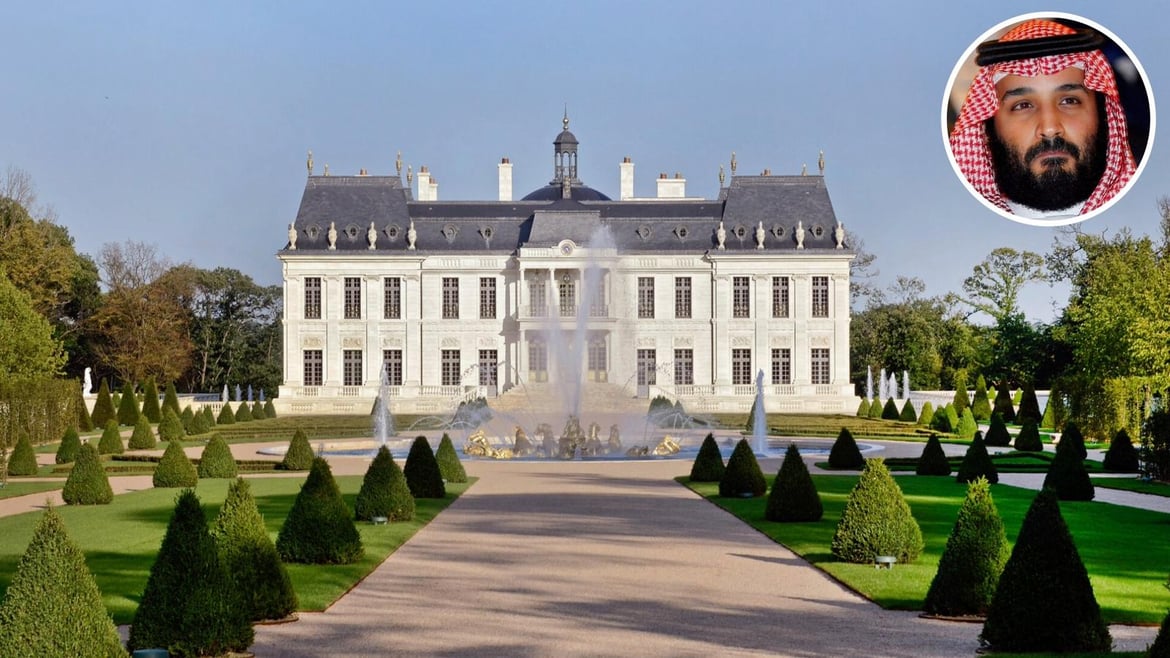
It is also famously described as “the people’s house,” open to public tours and presented as a home that belongs to Americans rather than to any single president. Across the Atlantic, MBS’s Château Louis XIV in Louveciennes, his holiday home rather than his primary residence, purchased in 2015 for more than 300 million dollars, is an exceedingly extravagant estate in its own right and was widely described at the time as the most expensive home in the world.

It is interesting to imagine what went through the Saudi royal’s mind during his visit to the White House. There is no denying the legacy, history and stature of America’s most famous address. Yet, purely in architectural and real estate terms, MBS also happens to own a private holiday château that quietly rivals it. His French château is nearly White House sized inside and sits on roughly triple the land. Although recently built, MBS’s refuge in France is often described as the only new château of its kind in a century, constructed between 2008 and 2011.

The White House, on the other hand, has been renovated regularly over the centuries and now boasts 132 rooms, 35 bathrooms and 28 fireplaces. Its interiors are almost museum like, mixing American Federal, French Empire and later historical styles, and carefully curated so the building doubles as a living museum of American history. MBS’s space of relaxation exudes his refined taste with a hyper-luxury pastiche of the Louis XIV era, set within an expansive 23-hectare park explicitly designed according to André Le Nôtre’s rules for Versailles. The level of opulence is unthinkable, with nightclub-level amenities, an underwater meditation room and gold-leaf fountains that can be turned on and choreographed from an iPhone. It shows that there is more than a hint of modernity for a prince from a kingdom steeped in tradition.

And while the dignified “people’s house” in the United States does feature a movie theatre, bowling alley, pool, beauty salon and physician’s office, in addition to the State Dining Room, East Room and the Blue, Red and Green Rooms, it is still a far cry from this fantasy palace with its nightclub and wine cellar for around 3,000 bottles. One French publication even reported that this flamboyant haven features a bedroom where sturgeon and koi swim in an aquarium ceiling above the bed.

The most incredible feature of the otherworldly princely residence, which many first discovered through celebrity gossip rather than architecture journals, was revealed to a wider audience by reality-star-turned-billionaire Kim Kardashian. The star posed in the glass-domed underwater salon, complete with cozy seating, which is built into the moat with fish swimming above, when she visited with Balmain’s Olivier Rousteing while scouting the château as a possible wedding venue for Kanye West.

On paper, a residence of about 55,000 square feet on roughly 18 acres of land can seem modest next to this royal estate. Still, for most world leaders, a night under the chandeliers of the White House is the pinnacle.

For MBS, it was a recent warm up, one that matches the grandeur of his unapologetically lavish holiday home while displaying the power of, well, power. And yet, as one departing president put it, it remains “the greatest home in the world.”

Inside Saudi Crown Prince MBS’s Riyadh palace-
Saudi royalty Mohammed bin Salman lives and works at Riyadh’s Al-Yamamah Palace, the kingdom’s primary royal court and the main setting for official receptions and meetings with foreign dignitaries. While American leaders conduct business in the White House, this ambitious crown prince operates from a complex that is widely reported to span around 4 million square feet, roughly seventy-three times the size of the White House. Compared with the American historic building’s 132 rooms, this mammoth palace is often said to accommodate more than 1,000 rooms.
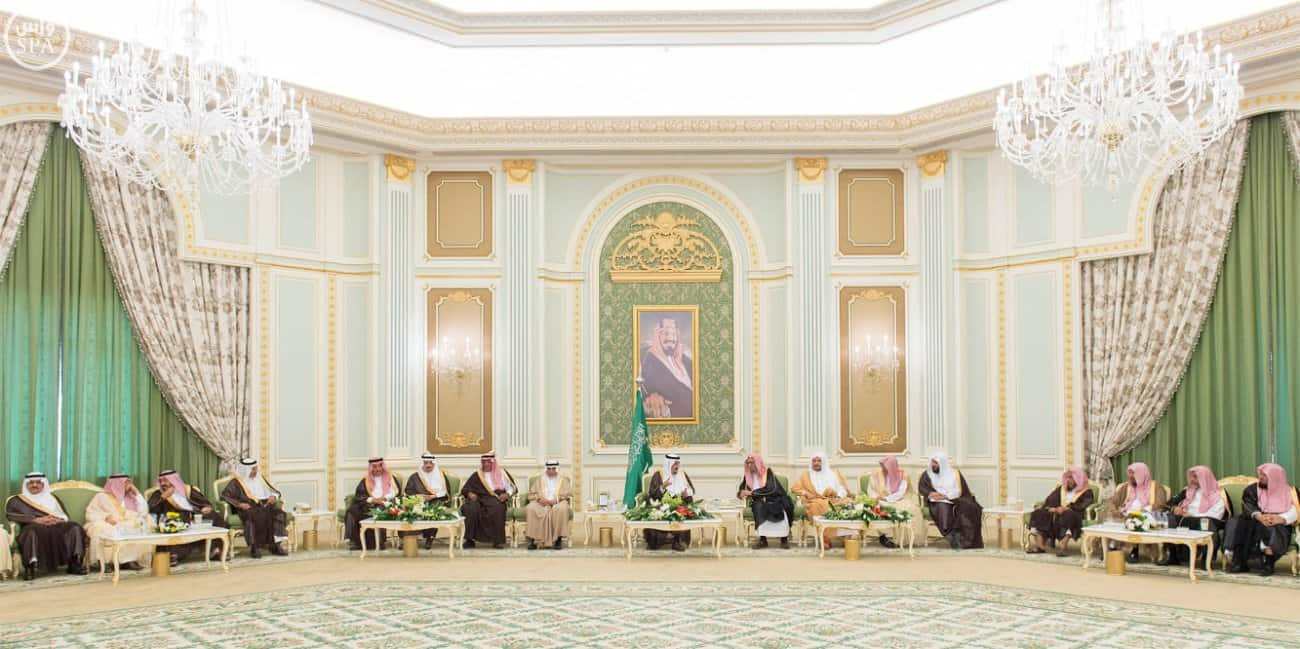
Inside, it is a celebration of tradition, with a formal royal court that showcases Najdi-influenced aesthetics, Saudi geometric patterns, carved paneling and chandelier-lit grandeur typical of royal majlis settings. It is fair to say that not just the White House but almost any other official building or parliament would struggle to match the sheer scale and opulence of this mind-boggling palace.