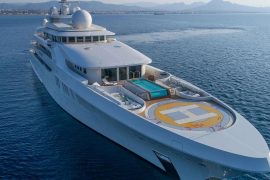
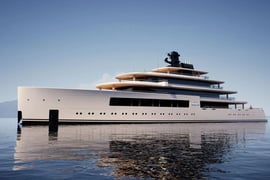
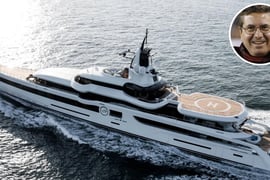
For generations, the ultimate symbol of superyacht luxury has been polished teak glowing under Mediterranean sunlight. Owners spent fortunes sourcing it, crews spent endless hours maintaining it, and shipyards treated it almost like a sacred material. Gabe Newell looked at that entire tradition and decided he wanted none of it on his 364-foot superyacht Leviathan.

Instead of wrapping the decks of his Oceanco flagship in tropical hardwood, the Valve billionaire co-founder chose a dull-looking synthetic surface developed specifically for the yacht in the Netherlands. The material lacks the glossy warmth and old-world glamour associated with traditional superyachts, yet that was precisely the point. Leviathan was designed to reject some of the most deeply rooted habits in yachting, replacing visual nostalgia with efficiency, durability, and comfort.

The decision says a great deal about both Newell and the yacht itself. Leviathan is not a floating monument to tradition. It is a highly engineered machine built around systems thinking, crew productivity, and operational practicality. Even its name feels less like that of a billionaire toy and more like a deep-sea research platform from a science fiction film.

The anti-teak superyacht
Oceanco and Dutch flooring specialist Bolidt reportedly worked together from the earliest design stages to create a completely bespoke synthetic decking system for Leviathan. This was not an off-the-shelf imitation teak wrap pretending to look traditional. The deck received its own custom compound, color tones, and thermal engineering package, including specially formulated cool pigments designed to keep the surface comfortable under extreme heat.

That thermal detail is surprisingly important. Real teak has long been defended because it remains relatively cool under direct sunlight compared to many synthetic materials. Leviathan’s designers approached that limitation like an engineering problem rather than an unavoidable compromise. Oceanco says the deck compound was specifically developed to improve heat dissipation, while Bolidt focused heavily on reducing heat absorption so guests could comfortably walk barefoot even in harsh Mediterranean conditions.

Speaking about the project, Bolidt CEO Rudi den Hertog described Leviathan as “everything but traditional,” adding that the company worked closely with Oceanco to create a surface that blended durability, comfort, and design freedom instead of simply recreating conventional teak aesthetics. That quote perfectly captures the philosophy behind the yacht. Leviathan was never trying to preserve old yachting rituals. It was trying to engineer around them.

The synthetic material also requires dramatically less upkeep than traditional teak. On a conventional megayacht, maintaining wooden decks becomes a permanent industrial process involving washing, sanding, sealing, stain removal, and eventual replacement. Over time, crews can spend staggering amounts of labor simply preserving cosmetic finishes. Newell wanted to eliminate that cycle.

Oceanco says Leviathan was designed around a crew-centric philosophy where maintenance demands were reduced so staff could focus more on guest experience rather than endless polishing rituals. That thinking extends beyond the decks. The yacht also uses bead-blasted stainless steel railings, synthetic handrails, and an off-white exterior finish specifically chosen because they require less maintenance and show wear less aggressively. In other words, the no-teak decision was not an aesthetic rebellion. It was operational logic.

A floating statement about the future of luxury
Leviathan already stands apart from most modern superyachts. The vessel reportedly features a basketball court, wellness spaces, gaming areas, scientific facilities, expansive outdoor lounges, and interiors designed around tactile but durable materials rather than fragile decorative excess. The yacht feels less like a traditional palace at sea and more like a privately owned exploration platform designed by someone obsessed with optimization.

The teak issue also carries uncomfortable geopolitical baggage that makes Leviathan’s material choice even more interesting. Burmese teak has faced years of scrutiny over deforestation concerns, sanctions issues, illegal logging allegations, and supply chain controversies tied to Myanmar. Environmental watchdogs have repeatedly warned that sourcing certified Myanmar teak is effectively impossible under current conditions. Leviathan quietly sidesteps that entire controversy.

Calling the synthetic deck fully “green” would probably go too far because the material remains resin-based and industrially manufactured. Still, the environmental case becomes much easier to defend when compared to harvesting tropical hardwood from politically sensitive supply chains while simultaneously requiring constant chemical-heavy maintenance.
The irony is that Leviathan’s deck may end up becoming one of the yacht’s most influential features despite looking intentionally understated. In an industry obsessed with polish, shine, and tradition, Gabe Newell built a flagship that deliberately avoids one of yachting’s oldest status symbols.
And now that Newell has acquired Oceanco itself, the synthetic deck on Leviathan may end up looking less like a one-off experiment and more like the opening chapter of a very different future for superyacht design.