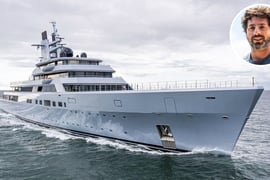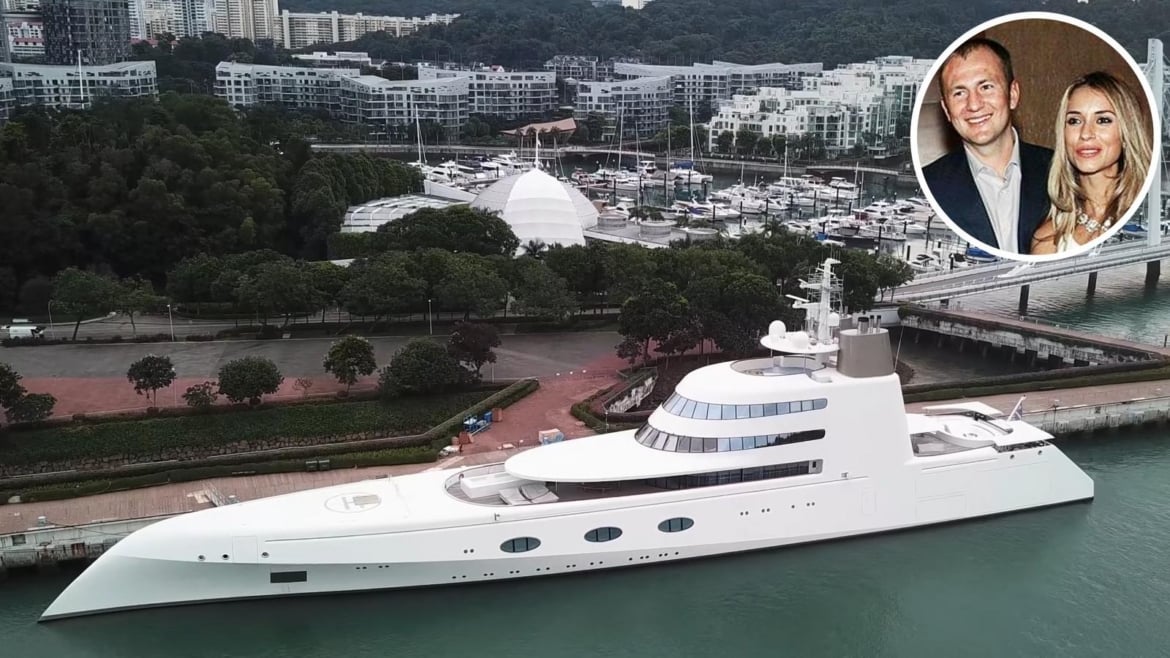
When Soviet-born billionaire Andrey Melnichenko’s futuristic Motor Yacht A was delivered in 2008, most people would have expected its first major voyage to be a glamorous Mediterranean playground. Instead, the Philippe Starck-designed vessel headed in the opposite direction. Its earliest reported mission was not about entertaining guests or cruising iconic coastlines, but about transporting some of the world’s most valuable works of art.

Shortly after leaving the German shipyard where it was built, the 390-foot (119-meter) superyacht sailed north to Kristiansand, Norway. According to reports by Norwegian media, three Claude Monet paintings were flown into the city aboard a private jet, each accompanied by its own security guard. The artworks were reportedly packed in individual crates before being transferred onto Motor Yacht A under heavy security, suggesting the Norwegian port had been carefully chosen as the meeting point between aircraft, security personnel, priceless art, and the newly delivered yacht.

The priceless cargo that transformed Motor Yacht A
The identities of the three paintings have never been officially confirmed, but one is widely believed to have been Claude Monet’s 1919 masterpiece Le bassin aux nymphéas. The painting had been sold by Christie’s in London on June 24, 2008, only days before the reported transfer in Norway.
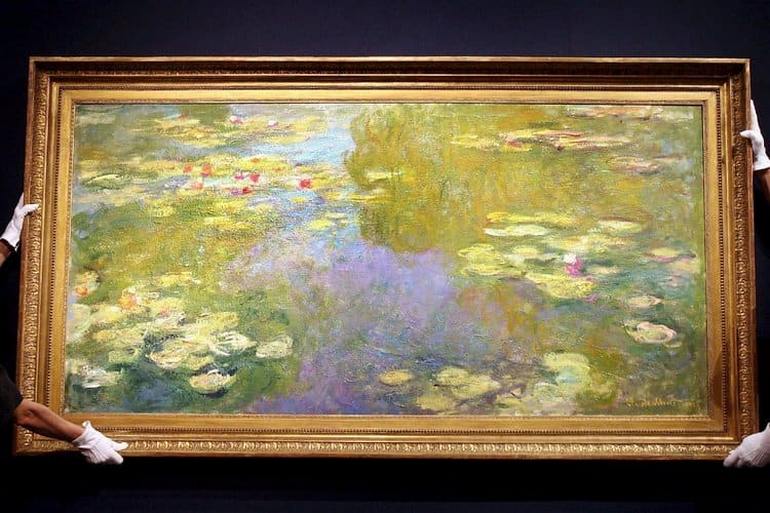
Its sale made headlines around the art world. Estimated at between £18 million and £24 million, the painting eventually fetched £40.92 million (roughly $80.45 million at the time), around 70% above the high estimate. It set a new world auction record for Monet and became the most expensive artwork Christie’s had ever sold in Europe. Although the buyer remained anonymous during the auction, later art-market reporting identified Melnichenko as the buyer.

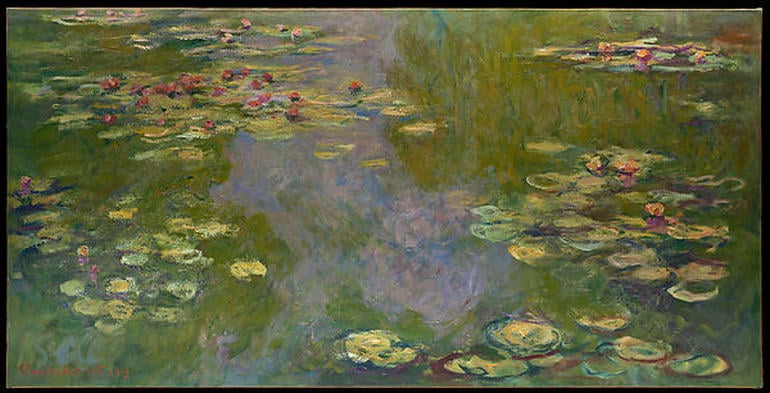
The painting itself is no ordinary Monet. Measuring more than 6.5 feet across, it belongs to the artist’s celebrated late Water Lilies period, when landscapes dissolved into reflections, color, and atmosphere, helping pave the way for twentieth-century abstraction. It was one of only four large Water Lilies canvases Monet signed and released in 1919, while a closely related work eventually entered the Metropolitan Museum of Art. Before the Christie’s sale, the painting had spent more than 35 years out of public view in the collection of American industrialist and architecture patron J. Irwin Miller and his wife, Xenia.
The reported acquisition was remarkable for another reason. At approximately $80.45 million, the painting alone represented nearly 27 percent of Motor Yacht A’s frequently reported $300 million construction cost, making it one of the most valuable objects ever believed to have been installed aboard a private yacht.

Why Norway made sense
Kristiansand appears to have offered more than a convenient harbor. Located close to northern Germany, where Motor Yacht A was constructed, the Norwegian port also sits outside the European Union’s customs and VAT territory. In later years, other German-built superyachts reportedly made brief delivery or handover calls there for similar customs-related reasons, making it a logical location for a complex operation involving private aviation, high-value artworks, and a newly delivered yacht.

Housing museum-grade art aboard a superyacht also presents challenges far beyond interior decoration. Paintings of this caliber must be protected from vibration, salt-laden air, fluctuations in temperature and humidity, ultraviolet exposure, and potential damage during refits. They also require dedicated insurance separate from the yacht itself, continuous climate monitoring, detailed cataloging, specialized mounting systems, and strict security procedures. Every international border crossing can introduce additional customs considerations, especially if the artwork and the yacht are owned by different legal entities.

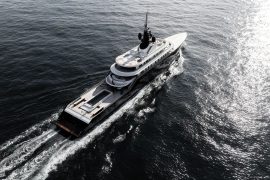
Motor Yacht A remains one of the world’s most recognizable private vessels thanks to its radical design, which resembles a stealth warship more than a conventional superyacht. Commissioned by Russian billionaire Andrey Melnichenko, the vessel has attracted global attention since its launch for both its appearance and its engineering. Last month, the yacht crossed the Strait of Hormuz after departing Dubai, marking a significant movement after spending several years effectively stuck in the UAE. Meanwhile, Melnichenko’s other famous vessel, the 468-foot Sailing Yacht A, remains in Trieste, Italy, where it has been impounded by local authorities for the past four years.

Nearly two decades after its delivery, Motor Yacht A’s first reported mission remains one of the most unusual in yachting history. Rather than champagne receptions or Mediterranean anchorages, its maiden voyage appears to have revolved around quietly bringing three priceless Monet paintings aboard, turning a newly built superyacht into a floating home for museum-quality art from the very beginning.