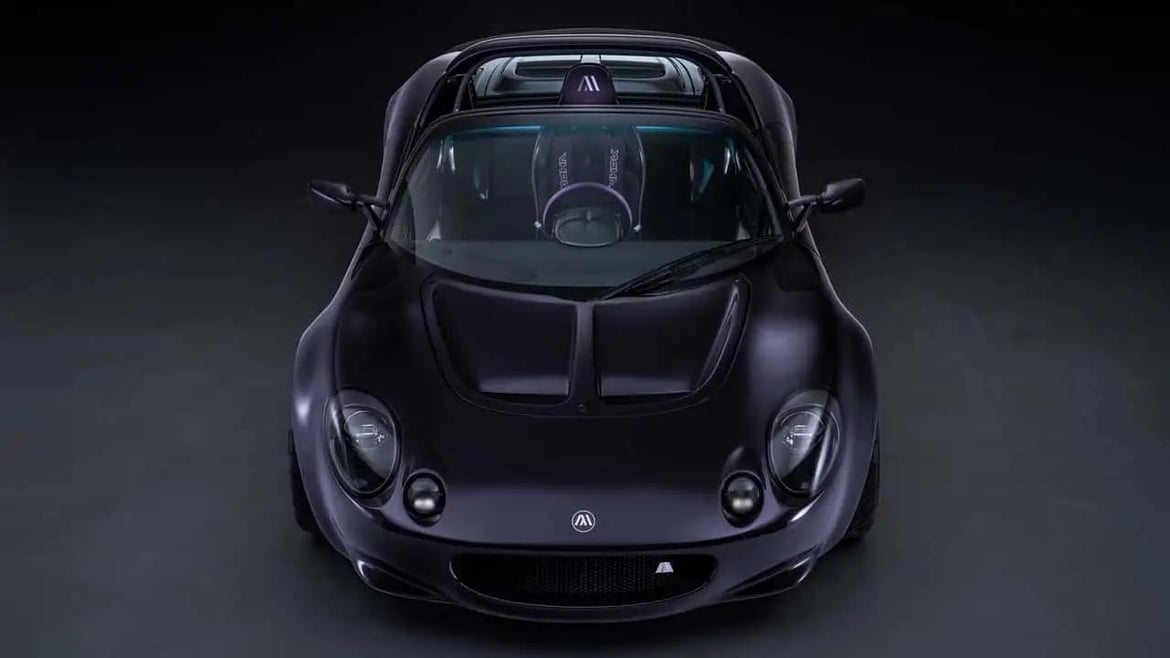
There’s a particular kind of madness that only British boutique sports car makers seem capable of — taking a small, lightweight roadster and making it lighter still. The Analogue Automotive VHPK is the purest expression of that, and they’ve only gone and also cut the original car’s seating in half, and kept the original engine in, just for good measure. The small Sussex-based outfit has spent years tweaking Series 1 Lotus Elises, and has just delivered its first customer VHPK. It costs roughly $472,500 before tax, and only 35 will ever exist. For context, a scruffy Elise S1 donor car can be had for around $27,000. So yes, someone just paid seventeen times the price of the original for what is, underneath, very much still an original.

It’s the joke that people will make. But that also proves they’re missing the point. The VHPK strips the Elise back to its bonded aluminium tub, then rebuilds everything else around one radical idea: put the driver dead centre, McLaren F1 style, and throw away the passenger seat entirely. The inspiration comes from the single-seat Elises that raced in the Autobytel Lotus Championship in the early 2000s.

Full carbon fiber bodywork replaces the original fiberglass, there’s a carbon ceramic brake package, and the whole thing weighs under 1,325 pounds wet. That’s lighter than a stock Elise S1, which itself was considered a featherweight when it launched thirty years ago at Frankfurt, tipping the scales at around 1,540 pounds.

Power comes not from some borrowed supercar engine but from the humble Rover K-Series, bored out from 1.8 to 1.9-liters and rebuilt with billet and forged internals. It now produces around 250 hp, more than double what the original entry-level Elise made, and good for a power-to-weight figure north of 400 hp per tonne. That’s the kind of number that belongs exclusively to proper single-seater race cars, not road cars with number plates.

Founder Steffen Dobke has called the VHPK “superior in every way” to a new S1 Elise, which is a big claim until you remember Lotus stopped making them in 2021 and never really made a proper successor. In that vacuum, a firm willing to re-engineer the pedal box, steering column and bulkhead just to move the seat six inches sideways starts to look less eccentric and more inevitable.

If you’re still thinking, is it worth it? That’s entirely the wrong question. Nobody buying one of 35 hand-numbered, single-seat Elises is doing the math against just buying a used one. They’re buying into the obsession, built to order, one car at a time, in a shed in Britain. And that is a valuable, if a little mad, currency all on its own.