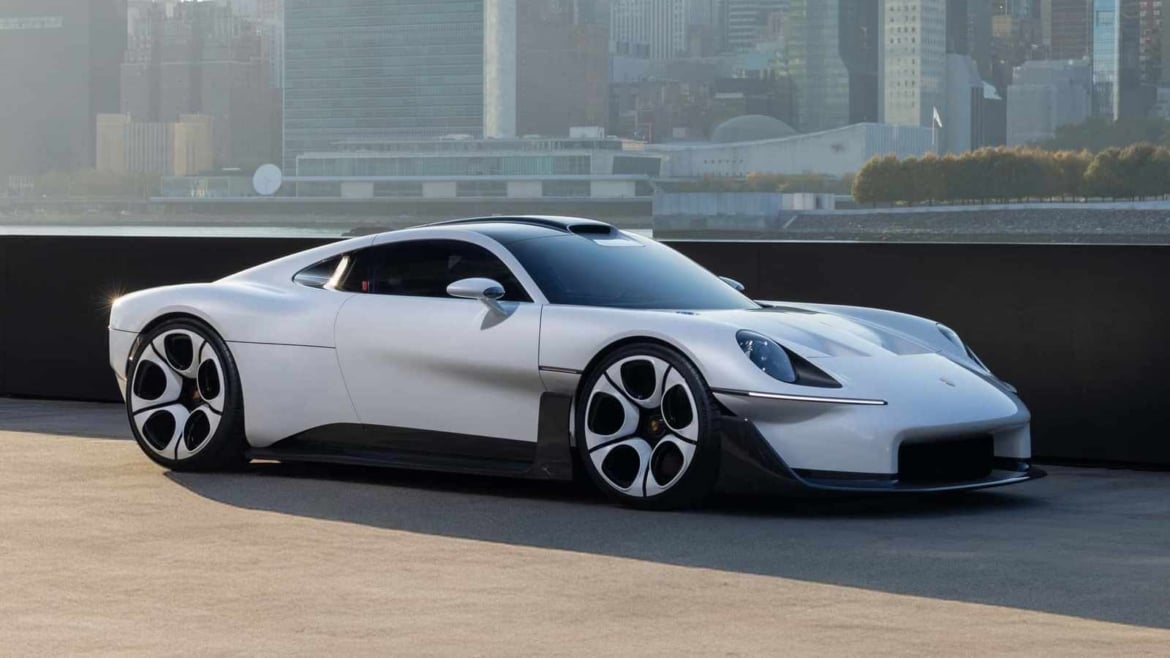
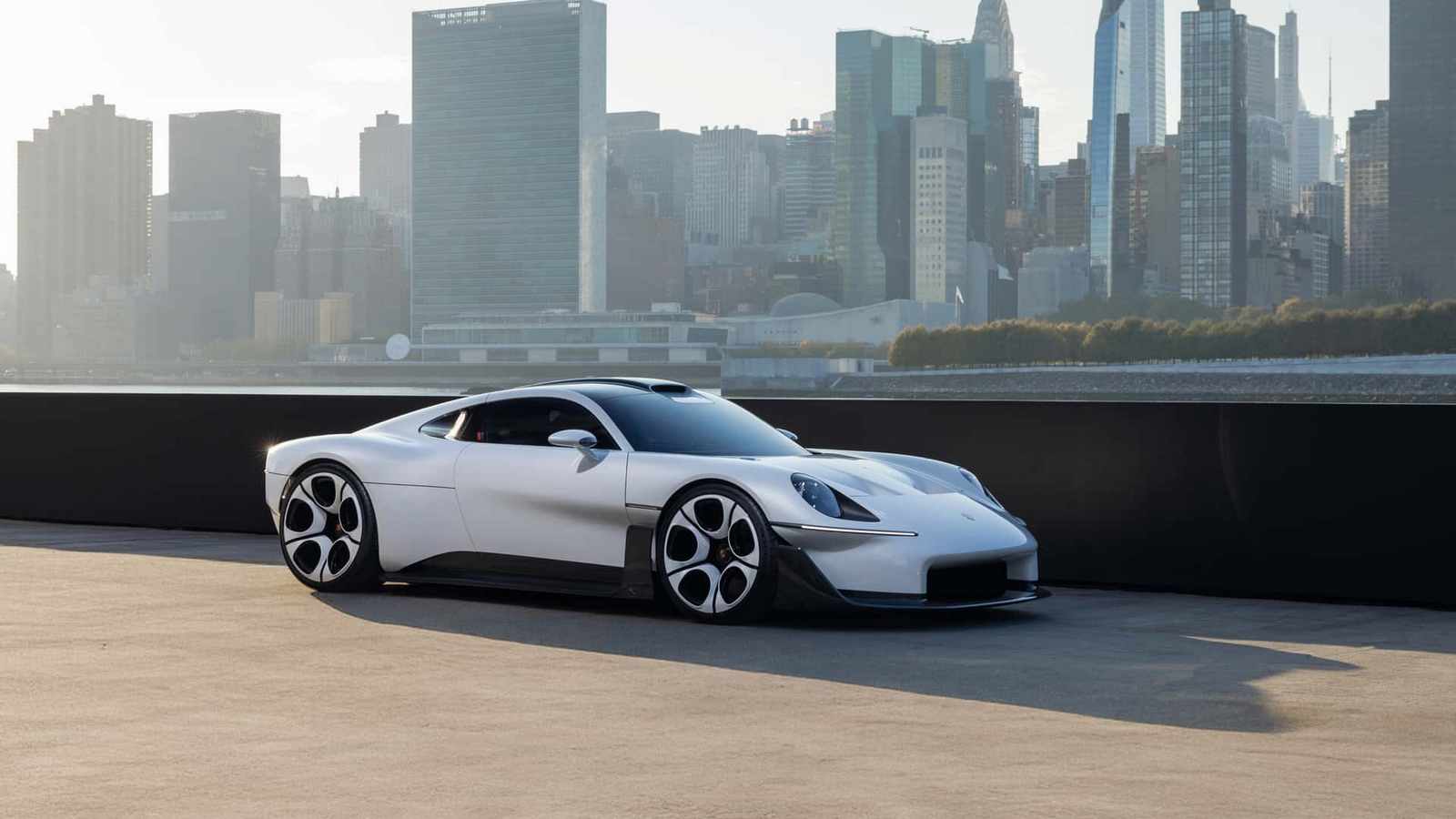
Porsche just showed its clearest sign yet that it wants a car ranking higher than the 911, a move that might irk the legendary automaker’s most ardent and vocal fans. The Mission S, a mid-engined concept revealed in New York, previews a new model family. The most noteworthy detail from the reveal is that the model is meant to stay in the lineup for good and not show up as another limited edition for a handful of collectors. We still don’t know the production car’s name, powertrain, price, or launch date. But the direction is obvious.
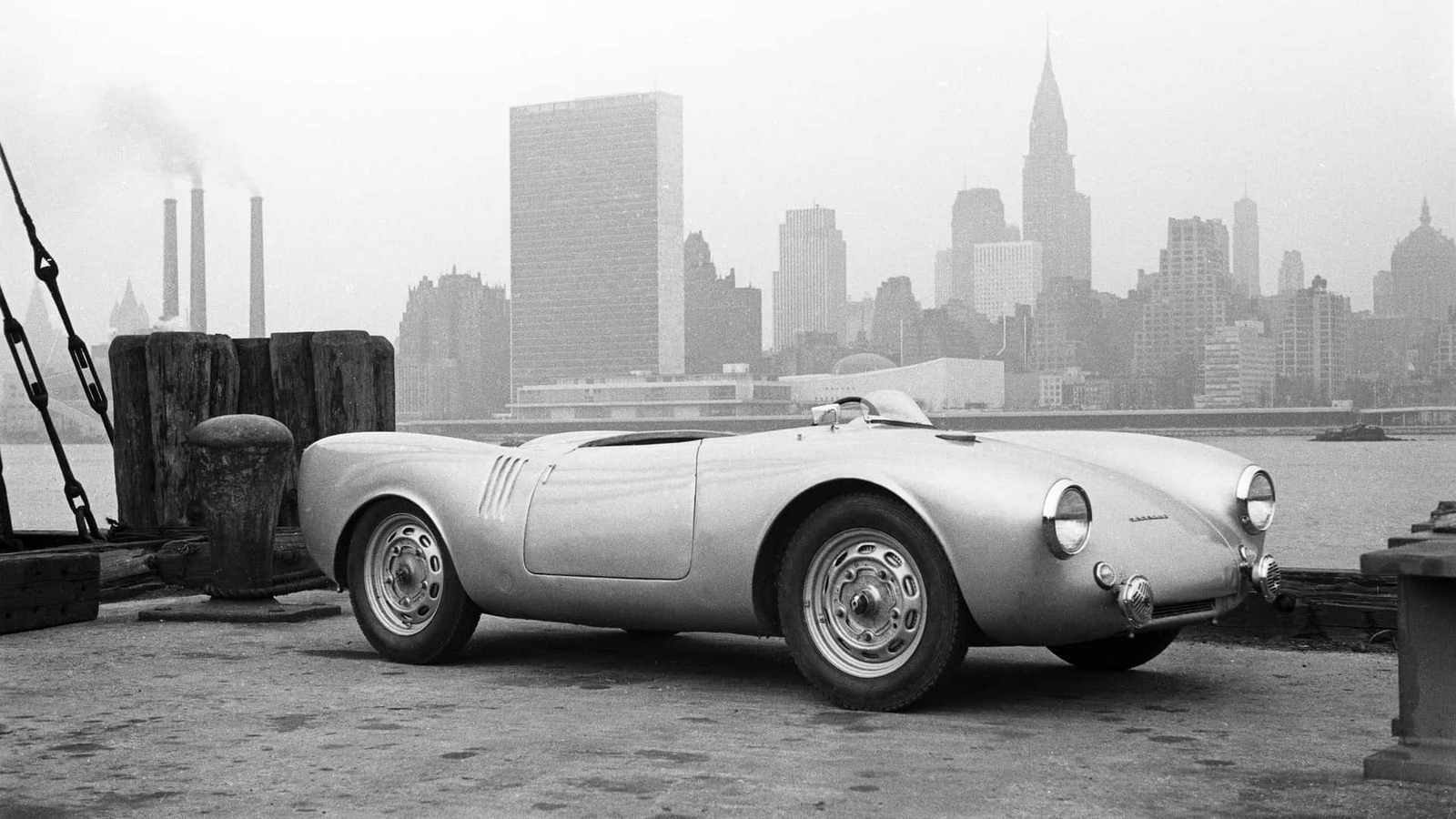
Interestingly, the venue was no accident. Porsche went back to a pier in Queens, where the mid-engined 550 Spyder was photographed back in 1953. The marque counts the 550 as its first super sports car, and it helped build Porsche’s name in the US. Unveiling the Mission S concept there after seven decades ties past to future quite beautifully. Porsche also skipped the Paris Motor Show, which ran the same week, so nobody else was competing for attention. The pier even nods to Max Hoffman, the US importer whose dealings with Ferry Porsche helped grow American sales from 32 cars in 1951 to 283 the next year.
Plenty of familiarity
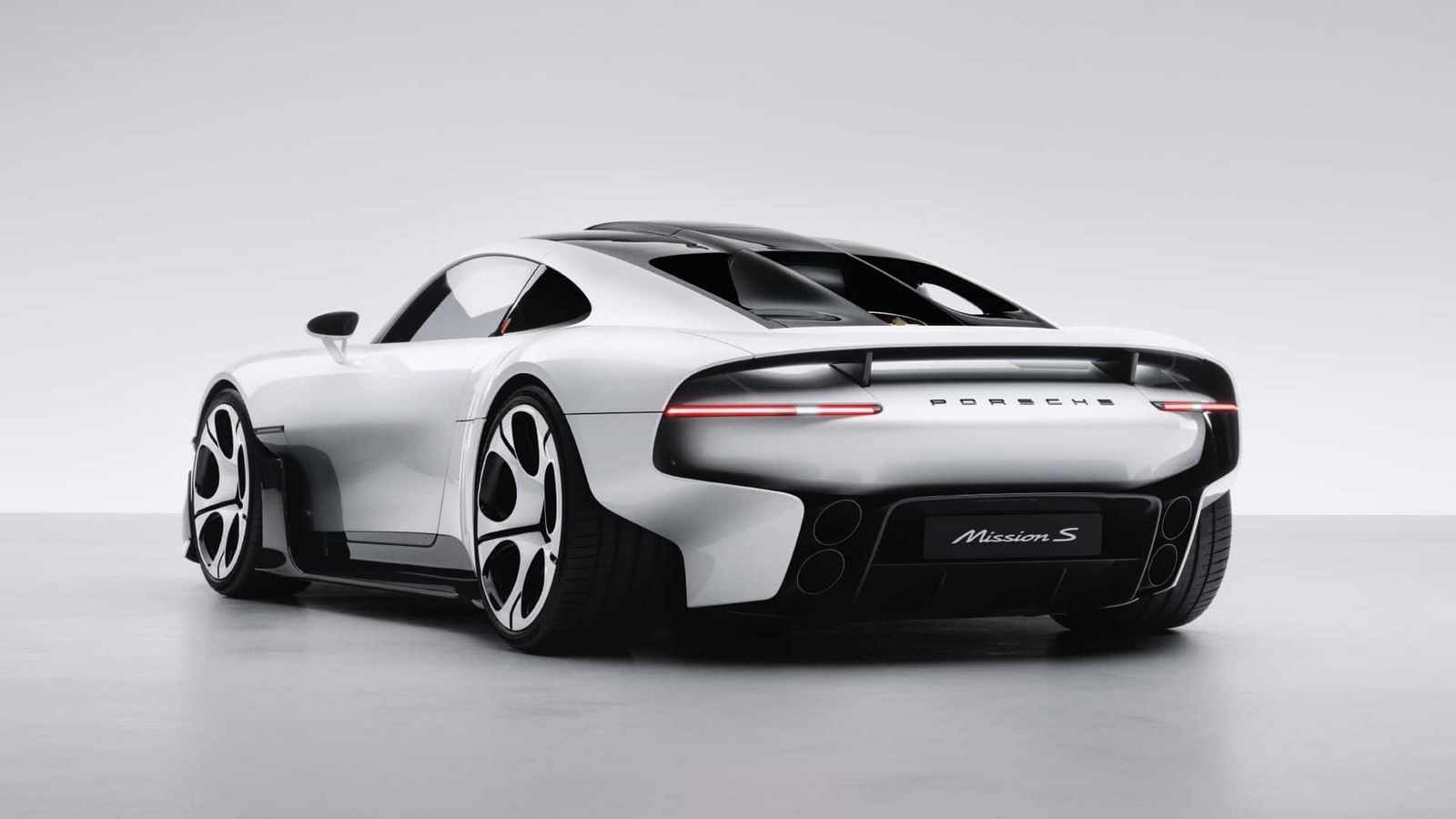
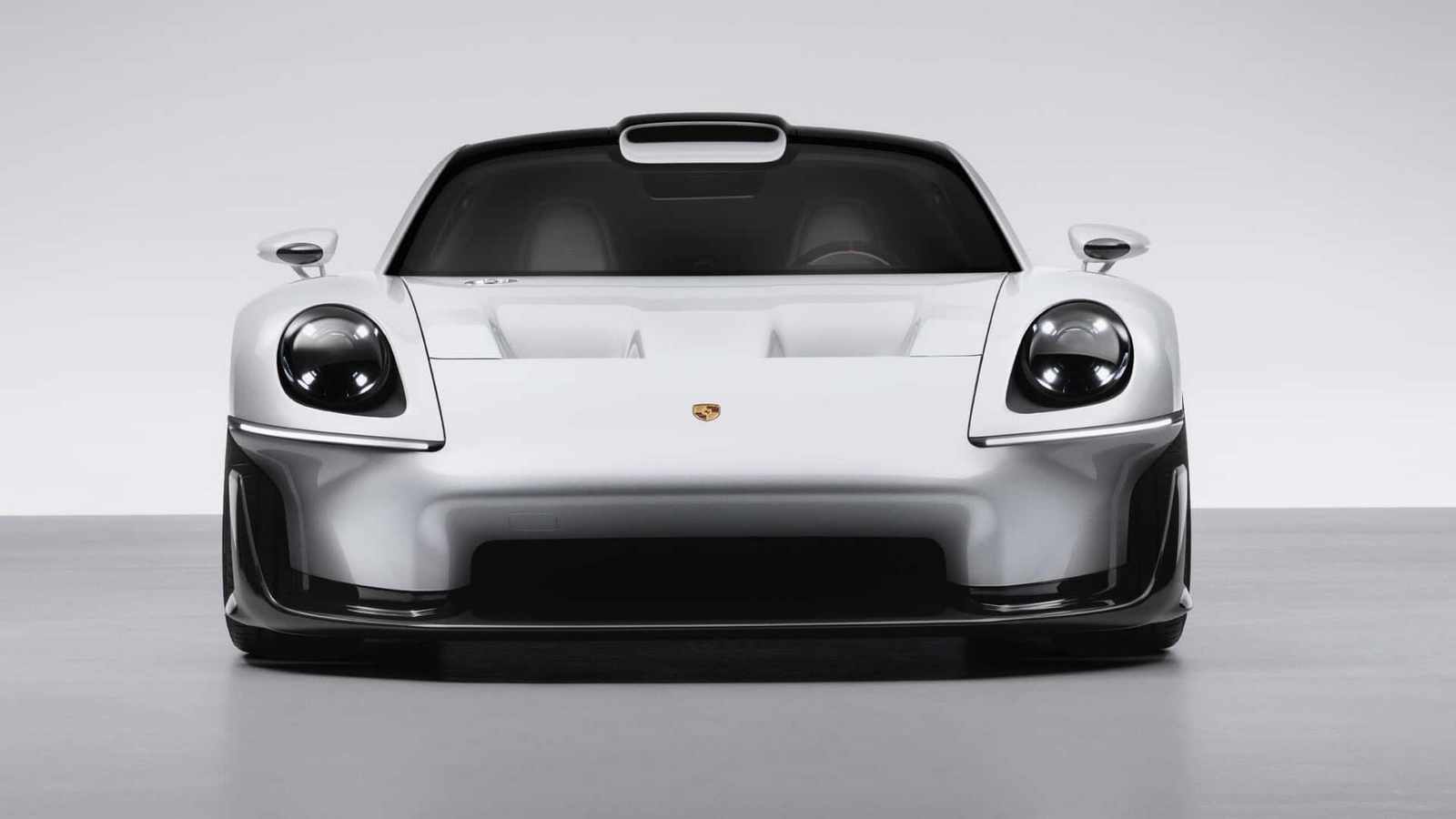
Rather than taking styling cues from any single classic, the Mission S borrows from a whole family tree. Round headlights and raised front fenders come from the 911. The roofline flowing beneath the rear wing is a nod to the 959, while the flat nose draws on the 911 GT1. The rear follows the GT1’s car-in-car idea, with a roof scoop and mirrors to match, while the tapering front end has a hint of the Carrera GT. A big horizontal cooling fan over the engine bay nods to the 917, and the wheels reinterpret the 928’s telephone-dial look. The paint comes in Firn White Metallic, Light Red Metallic, and Black Chrome, with a Special Black interior, all pulled from old racing liveries.
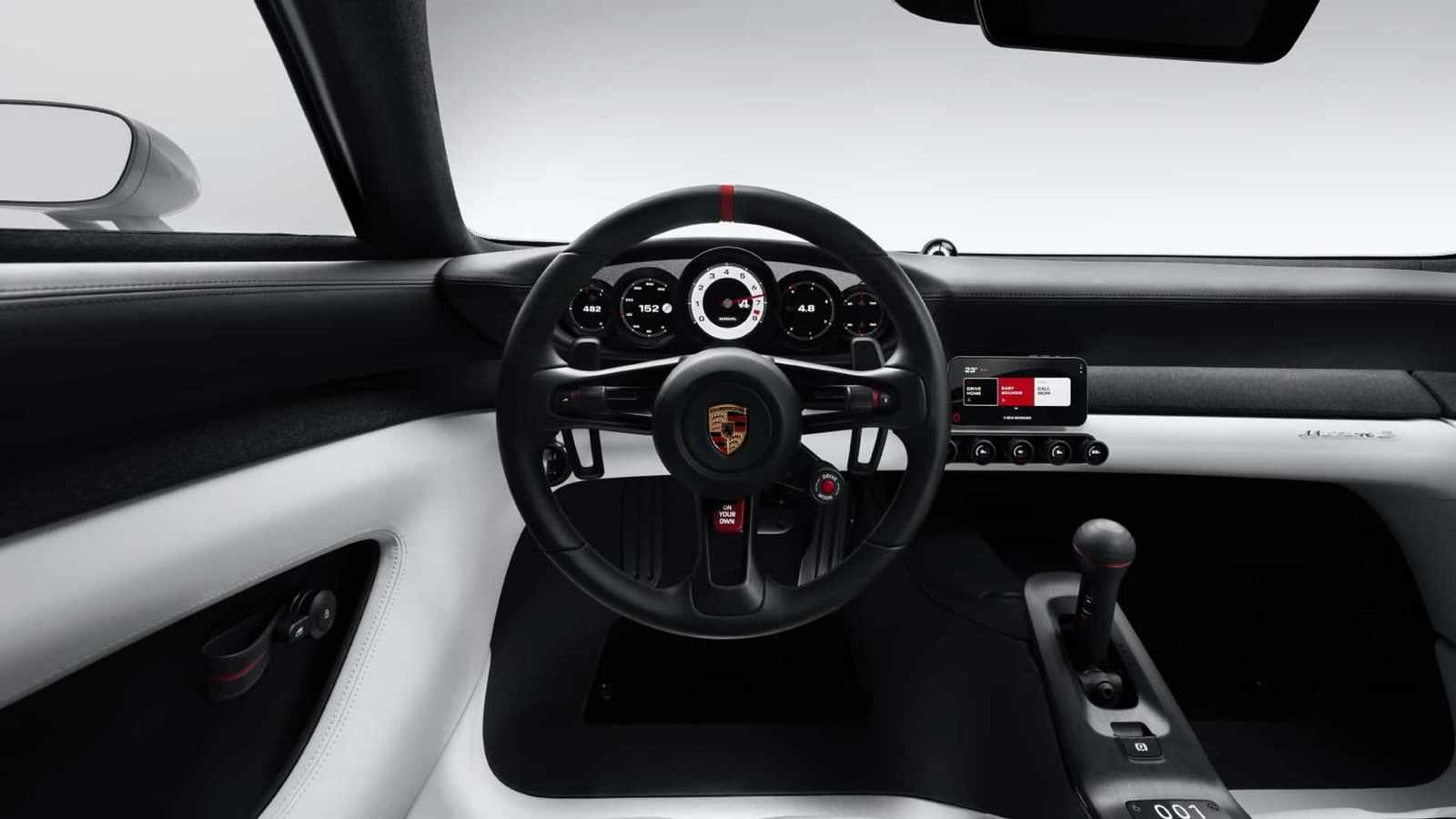
On the inside, the 550 Spyder and 356 set the mood. The dashboard and door lines sweep along so you feel like you’re sitting low in the car. The five round gauge housings physically shift position depending on the drive mode, which is real mechanical movement rather than a screen trick. The central tachometer keeps an analogue look. A red button on the steering wheel, labeled “On your own,” turns off the driver aids, and the seats build the five-point harness buckle into the center bolster.
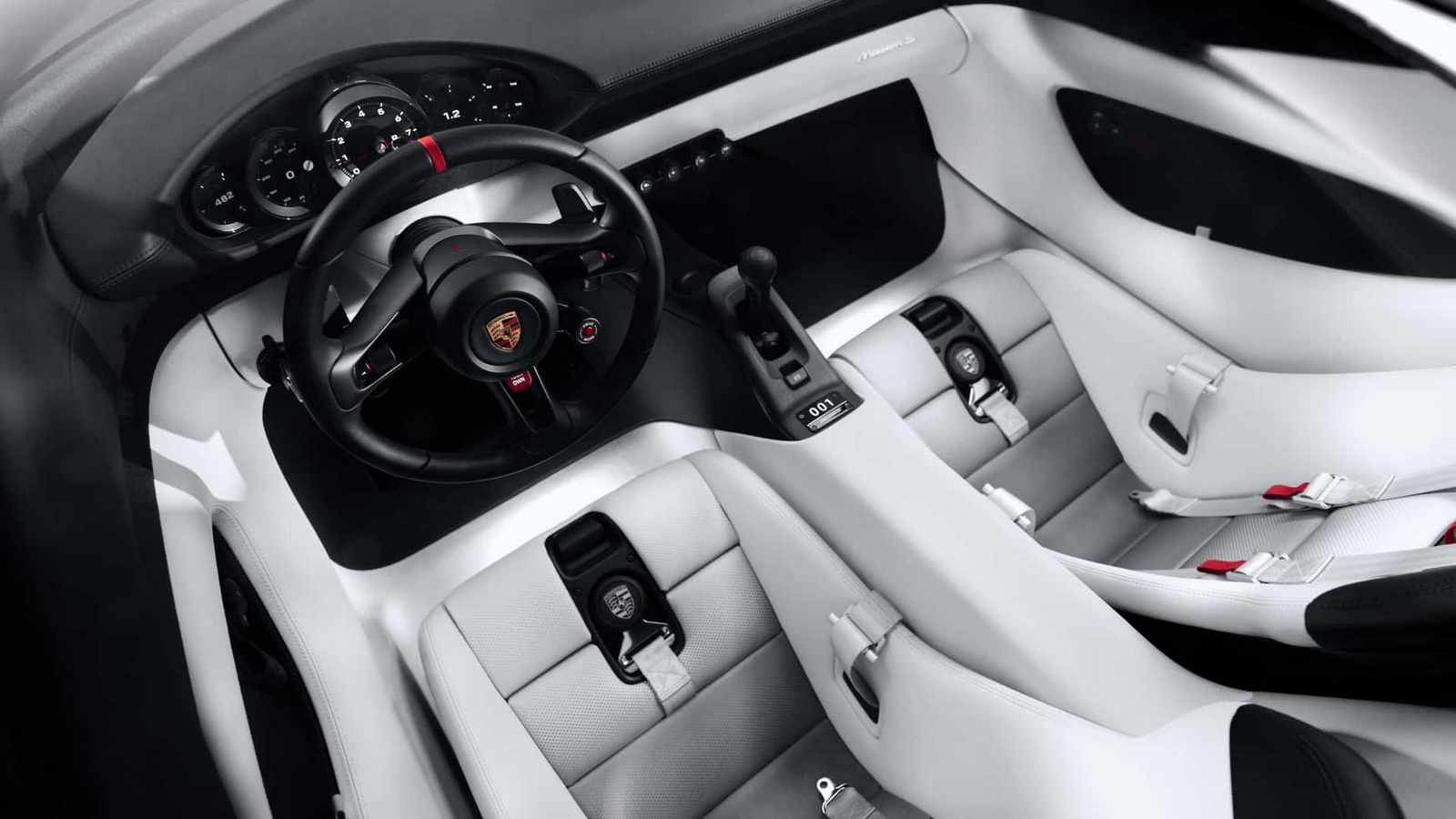
The strangest choice is the lack of a central touchscreen. Instead, there’s a retractable MagSafe-compatible phone holder, so your iPhone effectively becomes the navigation and info display. That’s a bold move for a car some people expect to cost around €500,000 (about $560,000), though that price tag is just a guess for now.
So, is it a flat-eight?
Porsche hasn’t commented on what’s under the hood, but the concept has people talking about a flat-eight, an engine the company has experimented with several times and never put into series production. Back in 1969, it built two 914/8 prototypes around the 908’s racing V8-style flat-eight, one linked to Ferdinand Piëch and the other given to Ferry Porsche for his 60th birthday. More recently, Porsche reportedly tested a 5.0-liter twin-turbo flat-eight in a Cayman-based development car, making roughly 750 horsepower and spinning to 9,000 rpm, before canning it. However, the cooling fan fuels the rumors, but it doesn’t prove anything. What Porsche has confirmed is that the new mid-engined platform will support combustion, hybrid, and plug-in-hybrid power. A fully electric version is off the table for this family.
The money angle
More importantly, there’s a business story here too. Porsche’s Sportwagenschmiede ’35 strategy aims to lift the average price of its 10,000 priciest vehicles from about €270,000 to €330,000 (roughly $300,000 to $370,000) by 2030, according to Handelsblatt. That’s roughly 22%, and it applies only to the top tier, not the whole range. A permanent car above the 911 gives Porsche a way to chase richer buyers without leaning only on numbered hypercars like the 918 Spyder. Whether the production version delivers the performance and exclusivity of a true flagship is still an open question. What Porsche wants, though, is hard to miss: a lasting place in the supercar world, without losing the mechanical feel, the history, and the driver focus that built its reputation.