A generation ago, this aircraft embodied the outer limits of state luxury and aviation ambition. Today, it sits on Controller.com with an asking price of $15 million, described in the plain language of aircraft brokerage as a 1995 Boeing 747-SP. Once valued at close to $200 million, with $70 million spent on its interior alone, it now trades for less than the price of a new long-range business jet. Few listings illustrate the depreciation of airborne prestige quite as starkly.
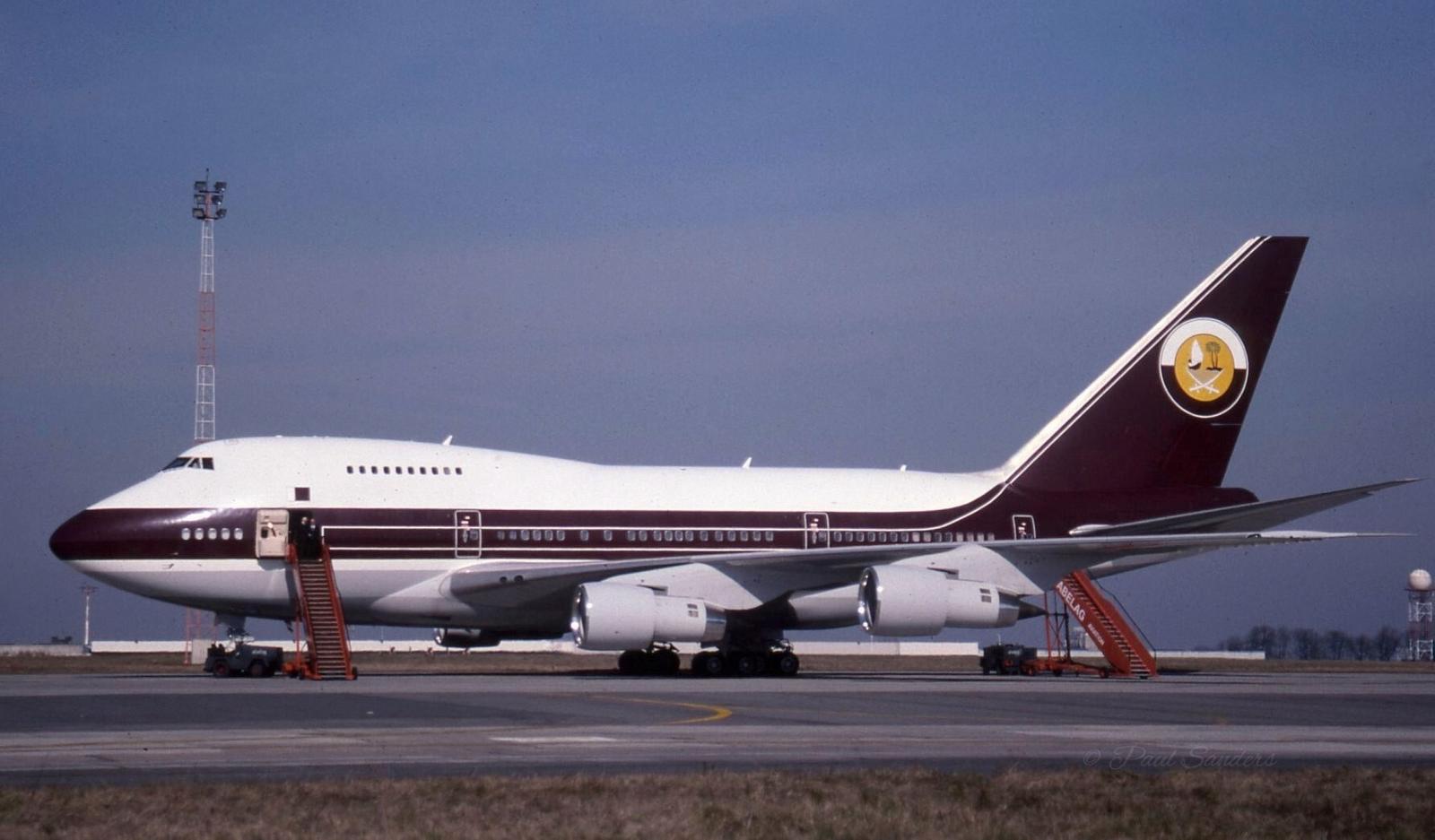
On paper, the offering is more serious than its price suggests. The aircraft is listed as operational and ferry-capable rather than destined for dismantling. Buyers are offered the option of delivery fresh from a C-check and paint, or in current condition, with two spare engines and a large inventory of parts included. With roughly 68,700 flight hours, the airframe remains well within the extended structural limits of the 747 family, which were designed for nearly double that figure. This is not a worn-out relic, but a maintained asset still positioned for use.

Its identity as a 747-SP remains central to its appeal. Developed as a shortened, high-performance variant, the SP was engineered to fly higher and faster than standard jumbos, cruising near Mach 0.86 and reaching service ceilings around 45,000 feet. In its prime, it represented the fastest and most prestigious form of subsonic long-haul travel available to governments and elites. The seller’s comparison to Gulfstream G650 performance is not entirely misplaced in cruise terms, even if the comparison collapses when scale and operating costs are considered.

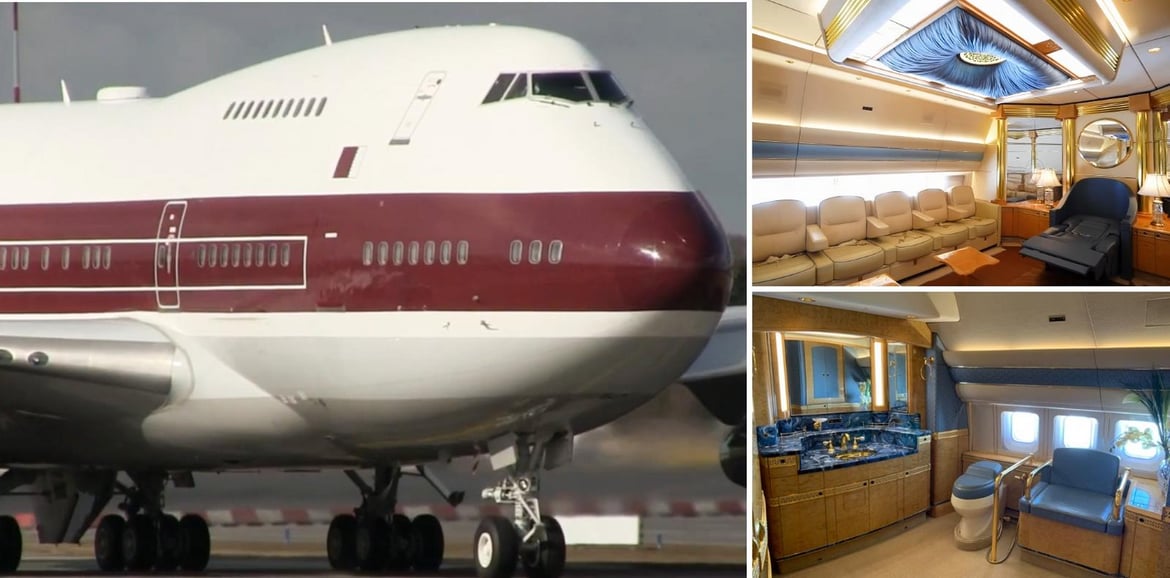
Converted into a VVIP configuration around 1995, the aircraft entered service with Qatar Amiri Flight by 1997. For roughly two decades, it carried members of the Qatari royal family and senior officials under Bermuda registrations VR-BAT and VP-BAT, a structure commonly used to preserve regulatory flexibility. Spotter records place it frequently at major European hubs, typically unbranded or minimally marked, reflecting the fleet’s preference for discreet movement.

The interior reflects the aesthetic logic of mid-1990s Gulf luxury, where visual restraint was rarely part of the brief. Designed for roughly 80 to 85 passengers, the cabin is arranged as a sequence of private spaces rather than seating rows.

A master bedroom with en-suite shower, multiple lounge areas, dining rooms, conference spaces, and staff sections define the layout. High-gloss wood, cream leather, and gold-toned fittings dominate, creating an environment closer to a flying residence than a converted airliner.

Technically, the aircraft has been kept current enough to remain relevant. The listing references upgraded avionics, a secure internal camera system, modern communications, onboard Wi-Fi, and multiple galleys. These features place it closer in functionality to a contemporary widebody business jet than to a retired commercial platform. FAA records reinforce this positioning, showing registration under CSDS Asset Management LLC from August 2025 with validity through 2032, suggesting that ownership has maintained regulatory readiness for a serious transaction.

Fragments of its operational past still circulate among aviation enthusiasts. One Reddit user recollects the aircraft at Raleigh-Durham in the early 2000s, with speculation linking the visits to royal family education or medical travel. Whether accurate or not, such stories underline its former role as a discreet conduit between private lives and geopolitical power.
Renowned aviation blogger Sam Chui was lucky enough to fly solo on this jet and experience all the luxuries for himself.
Its current valuation reflects more than age. It reflects the collapse of the ultra-large VIP transport category itself, replaced by smaller, more efficient, and politically neutral long-range jets. Operating a four-engine jumbo as a private aircraft in 2026 is an act of deliberate extravagance, viable only for governments or individuals unconcerned with optics or operating economics.
Note – The Cessna Citation XLS Gen2 jet sells for $15 million+