There have been faster military aircraft and spacecraft capable of circling the planet in a fraction of the time, but no passenger airliner has ever matched what an Air France Concorde accomplished in August 1995. More than three decades later, the supersonic journey remains the fastest circumnavigation by a passenger aircraft, a record that still stands and a reminder of an era when crossing continents at twice the speed of sound was not just possible, but glamorous.

The record-setting flight was far from an exclusive gathering of wealthy Concorde regulars. Sponsored by Coors Light, the special charter carried 48 sweepstakes winners selected from more than 34,000 entries, alongside crew members, company executives, and a handful of invited guests, per a report by the Washington Post. One winner had never flown on an airplane before, while another traveled with a teddy bear she photographed at every stop. What began as a promotional campaign quickly evolved into one of commercial aviation’s most remarkable achievements.

A beer promotion that rewrote aviation history
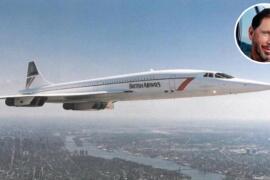
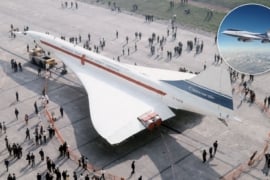
Operating as Air France Flight AF 1995 aboard Concorde F-BTSD, the aircraft departed New York’s John F. Kennedy International Airport at 11:49 a.m. on August 15, 1995. Organized by Don Pevsner’s Concorde Spirit Tours and sponsored by Coors Light, the eastbound journey included six refueling stops in Toulouse, Dubai, Bangkok, Andersen Air Force Base in Guam, Honolulu, and Acapulco before returning to New York the following evening.

When the aircraft touched down on JFK’s Runway 13R at 7:16:59 p.m. on August 16, it had completed the 25,252-mile journey in just 31 hours, 27 minutes, and 49 seconds. Captains Michel Dupont and Claude Hetru had not only broken Concorde’s own westbound record of 32 hours, 49 minutes, and 3 seconds, established in 1992, but also surpassed the standing eastbound record of 36 hours, 8 minutes, and 34 seconds set by a Gulfstream IV in 1988. Guinness World Records continues to recognize the achievement as the fastest circumnavigation by a passenger aircraft, while it also remains the fastest non-orbital journey around the globe.

Behind the headline time was a remarkable logistical exercise. Concorde spent only 22 hours, 39 minutes, and 21 seconds in the air, averaging 1,114 mph, while nearly 28% of the official elapsed time was consumed on the ground. Every refueling stop, catering operation, baggage transfer, and passenger movement had to be carefully choreographed because saving minutes on the tarmac proved almost as valuable as maintaining Mach 2 in the sky.

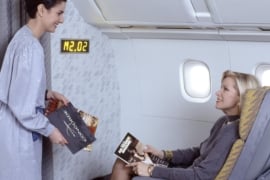
The journey began in classic Concorde fashion with lobster, steak, salmon, caviar, wine, and plenty of beer. Shortly after takeoff, passengers watched the cabin display creep from Mach 0.98 to Mach 1 before erupting in cheers as the aircraft accelerated beyond the speed of sound. The excitement continued in Toulouse, where hundreds of spectators gathered near Concorde’s birthplace to welcome the record attempt.

One of the trip’s defining moments arrived over Saudi Arabia. After uncertainty surrounding regional airspace permissions, the crew unexpectedly received authorization to remain supersonic across populated areas rather than slowing to subsonic speed. The decision allowed Concorde to reach Dubai roughly 40 minutes ahead of schedule, helping preserve the record attempt. Before passengers disembarked, however, the aircraft’s temporary Coors Light logos were discreetly covered in keeping with local sensitivities toward alcohol advertising.

Unlike the aircraft’s later blue Pepsi paint scheme, which imposed operational speed restrictions because of increased heat absorption, the removable Coors decals left Concorde’s heat-reflective white finish untouched, allowing sustained Mach 2 performance throughout the record run.

As the aircraft chased daylight eastward, passengers witnessed three sunrises while Concorde climbed as high as about 59,000 feet, where outside temperatures dropped to around minus 70 degrees Celsius. Pilots even climbed above a line of towering thunderstorms after departing Bangkok to avoid the risk of lightning damaging the aircraft. Yet the glamour gradually gave way to fatigue. Passengers queued for the airplane’s three lavatories at Guam because no shower facilities were available, Honolulu was delayed by mechanical and ground-handling issues that forced the crew to depart without a planned meal, and by Acapulco the hungry travelers enthusiastically attacked the airport buffet while a mariachi band played.


The final 2-hour-and-42-minute flight back to New York became the loudest celebration of the trip. When Concorde landed with history secured, cheers inside the narrow cabin reportedly drowned out the sound of the landing gear touching the runway. The greatest luxury at the end was no longer caviar or champagne, but the promise of a hot shower and a proper bed. More than 30 years later, the Coors Light Concorde remains a remarkable example of how meticulous planning, supersonic engineering, and a beer promotion combined to produce one of aviation’s most enduring world records.