A diving trip off Kauai’s south shore in December 2023 turned into an unforgettable story of loss, resilience, and honesty. Gregory Greer, a visiting diver from Falls Church, Virginia, had taken his trusted 2002 Rolex Datejust on a nitrox dive. At some point during the descent, the watch slipped off his wrist and vanished into the depths. Fellow divers scoured the area and even conducted extra search dives, but the Rolex was gone. For Greer, it was not just the loss of an expensive timepiece but of something tied deeply to his identity as a diver. “It was a bond among all the divers. They have to find this,” he later reflected.

Greer is no novice. He began diving in 1981 and describes it as part of his personal folklore. “Everybody has their own folklore… scuba divers, that’s their folklore,” he said, putting the loss in terms only a fellow diver could fully appreciate. In the days after, he reported the missing Rolex to the police and even offered a $2,000 reward. But as the months passed, hope faded, and the watch became another story woven into the ocean’s mysteries.

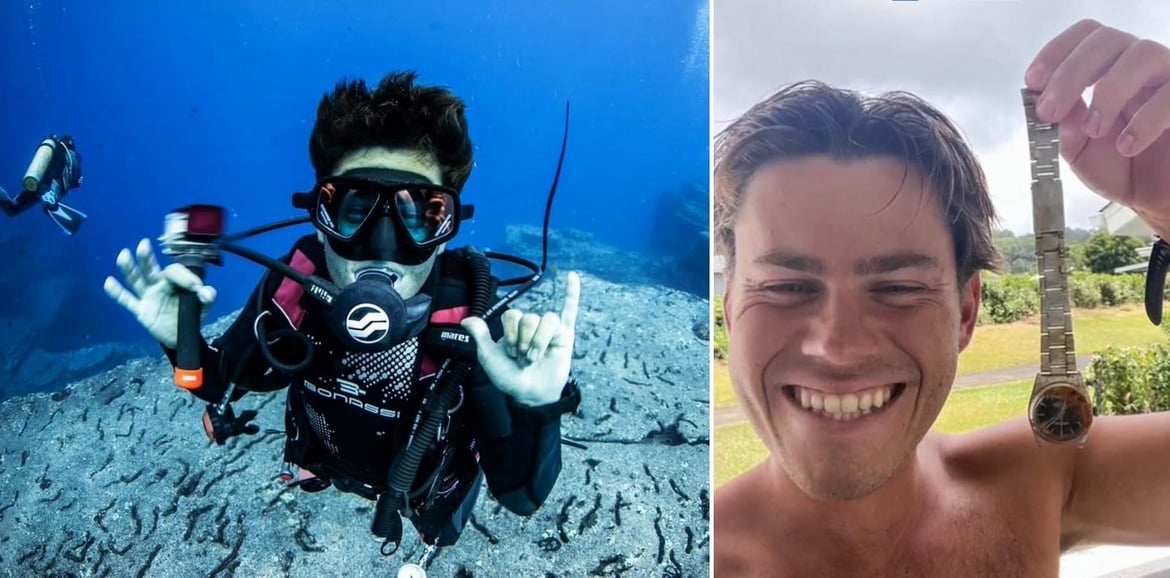
Nearly 20 months later, in late August 2025, serendipity intervened. Kauai dive instructor Logan Barnard was guiding a group when he noticed something glinting from the reef near a busy mooring buoy. He swam over, picked up the object, and immediately recognized what it was. “I picked it up and saw the little crown symbol on the band and was like, what?!” he recalled with a grin. Word spread quickly among Kauai’s small, tight-knit diving community. Everyone seemed to know about the long-lost Rolex, and before long, the connection to Greer was confirmed.

Greer happened to be in the Bahamas on another trip when the message reached him. A simple text — “we found your Rolex” — was enough to spark excitement across continents. The watch had survived nearly two years of saltwater submersion. The crystal was cracked, and the movement almost certainly flooded, but the case and bracelet were still intact, as reported by Hawaiinewsnow. This is a testament to the materials Rolex uses, particularly Oystersteel (904L), which resists corrosion better than most stainless steels.

For Greer, the watch’s return was about far more than metal and mechanics. “It shows honesty, integrity, and the spirit of Hawaii,” he said, grateful that Barnard had chosen not to accept the reward. Instead, Barnard simply mailed the Rolex back. His perspective was straightforward. “If I can brighten his day by getting this watch back to him, that’s priority.”

Once back in Virginia, the Datejust will require a complete overhaul. A Rolex service typically involves disassembling the movement, ultrasonic cleaning, replacing gaskets, installing a new crystal, lubrication, timing adjustments, and waterproof testing. In the U.S., this can cost $800 to $1,200 or more, depending on damage. Severe corrosion can push the bill higher, but the watch will return looking nearly new and backed by a service warranty.

Stories like this are not uncommon. Rolex watches have a history of resurfacing after long stints in oceans and lakes. In Australia, surfer Matt Cuddihy famously found a Submariner buried in the sand that still ran after a cleanup. While Greer’s Datejust will need more than a rinse, its recovery highlights the resilience of these watches and the enduring appeal of Rolex’s engineering.

What began as a personal loss evolved into a tale of community, chance, and honesty. A watch that spent nearly two years on the ocean floor now carries an even richer story, one that proves that some treasures are measured less by value and more by the spirit surrounding their return.