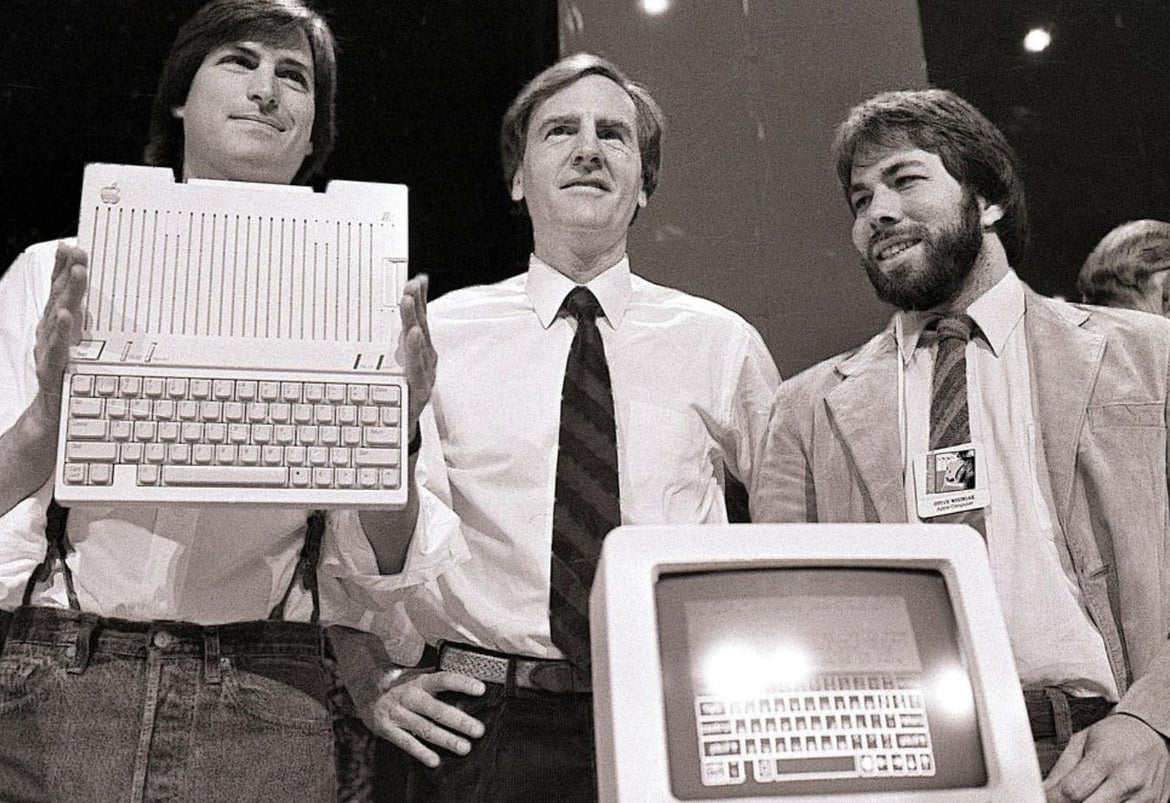
Christie’s is preparing to auction what might be the most consequential piece of paper in Silicon Valley history. Come January 23, 2026, the original Apple Computer Company partnership agreement and its dissolution amendment will go under the hammer at Rockefeller Center in New York. These are the legal documents that formally created Apple in California on April 1, 1976, as a general partnership between Steve Jobs, Steve Wozniak, and Ronald Wayne. The auction falls within a special sale titled We the People: America at 250, curated around formative American documents, artworks, and objects in the lead up to the United States’ 250th anniversary. Among handwritten constitutions and Revolutionary material sits the three-page contract that launched the most valuable tech brand on earth.

Christie’s has placed a pre-auction valuation of $2 million to $4 million on the set, a figure that would likely make it the most expensive Apple collectible ever sold. Even the surviving Apple 1 computers, Steve Jobs personal ephemera, and sealed first-generation iPhones would sit behind it in the record books. The documents are being marketed alongside a heavily annotated draft of the United States Constitution once owned by founding father Rufus King, estimated at $3 million to $5 million, a pairing that invites a bold comparison. One is a nation’s blueprint. The other is a kind of corporate constitution for a company that would reshape computing, music, phones, and culture itself.

Ronald Wayne sits at the heart of the story. Twenty years older than Jobs and Wozniak, he was already a seasoned Atari engineer, the adult in the room brought in to handle administration and to draft the paperwork itself. Wayne also drew Apple’s first logo, an intricate scene of Isaac Newton beneath an apple tree. Yet his caution shaped his fate.

Wayne had once run a slot machine manufacturing business that collapsed and left him in years of debt. Under a general partnership, each founder was personally liable if creditors arrived, and Wayne owned a house, a car, and savings, all at risk. When The Byte Shop placed Apple’s first big order, Jobs borrowed to fulfill it, but rumors of slow payment circulated. Wayne believed Apple would succeed but feared the bumps on the road, later saying he did not want to become the richest man in the cemetery.

His exit is now the bitter irony inside this auction. Separate from the document sale itself, Wayne received $800 for his 10% share, which is less than the price of an iPhone. It was followed by $1500 more to relinquish future claim. He later sold his own signed copy of the contract for about $500 in the 1990s. That very paperwork went on to sell at Sotheby’s in 2011 for $1.5 million.

Now, this set is expected to reach $4 million. If Wayne had kept his equity, estimates put its value today between $300 billion and $400 billion. What remains is a contract that recorded a beginning so small it almost slipped through the cracks, now returning as a relic of what might have been.