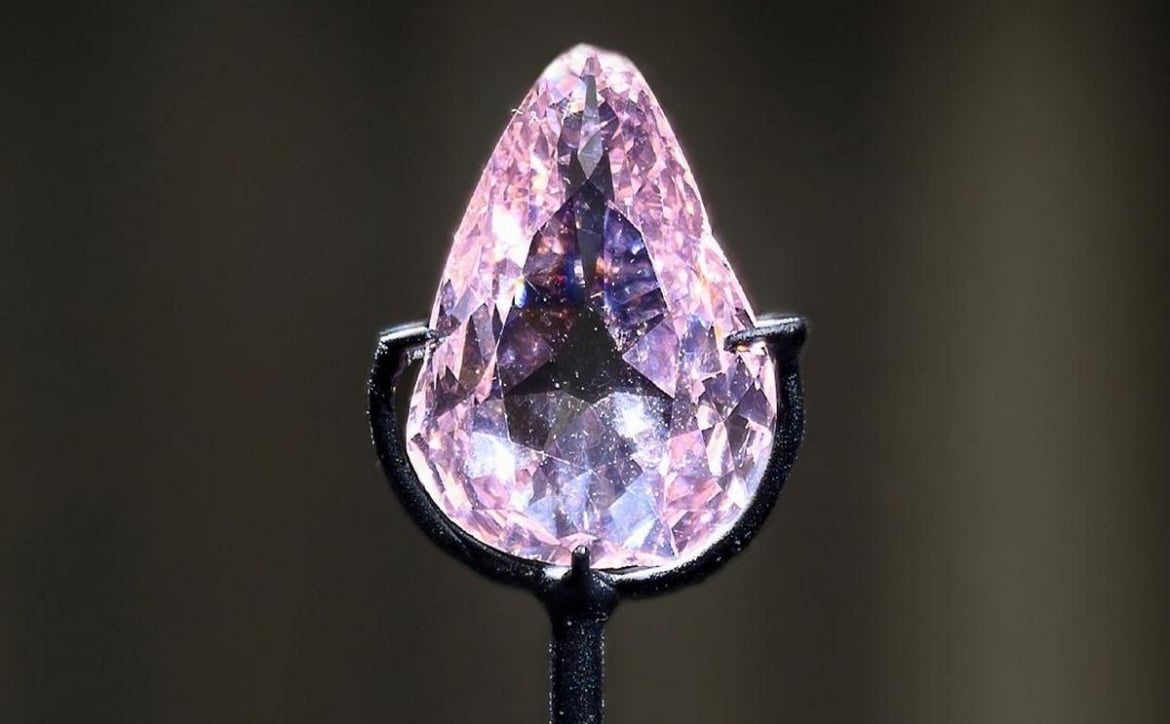
In an ordinary tale, the diamond goes from mine to diamond cutter, to jeweller, to ring, to wearer. But this rare pink diamond, the Grand Condé, going on display in France for the first time since it was stolen almost 100 years ago, is anything but ordinary. In part, it is owing to the fact that this is a 9.01-carat, pear-shaped, naturally pink gemstone belonging to the historic collections of the Château de Chantilly.

But it is also special owing to its story, involving a spectacular robbery, an almost comically unfortunate hiding place, and a return to public view a century later. The Type IIa diamond, having survived the French Revolution, was stolen, and later hidden inside an apple, from the Château de Chantilly in October 1926. It will once again be on display in the Condé Museum at the Château de Chantilly until January 3 2027. What makes this diamond stand out in an already small group of exceptional natural pink diamonds is listed in detail below.

The rarity-
The Grand Condé is a Type IIa diamond, which instantly tells us it is a chemically pure, naturally occurring diamond. Less than 2% of gem-quality diamonds qualify to fall under this bracket. In addition, the cut of the Grand Condé, an irregular pear shape, features 77 facets, divided into 32 on its crown and 45 on its pavilion. It is incredible that after all these years its physicality remains unchanged, finally allowing gem and jewellery enthusiasts a dekko.

The story
The rare pink diamond is believed to date back to the days of King Louis XIV, who is said to have presented the gemstone to his illustrious relative, Louis II de Bourbon, Prince of Condé, in recognition of his military victories. As the over 9-carat diamond was mounted on the head of the prince’s walking cane, it got its name, the Grand Condé. The gem was eventually passed down to Queen Marie-Amélie, wife of King Louis-Philippe I, and mounted as a jewelled pin.
The theft-
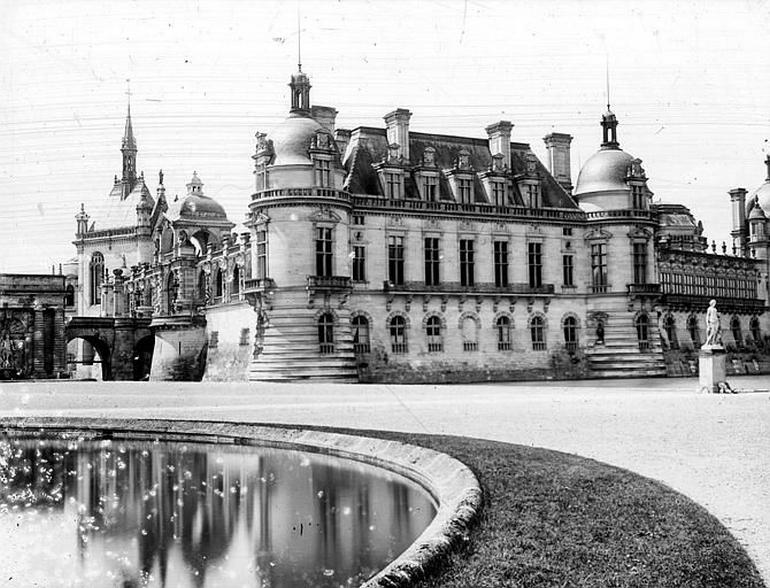
It was said to be the work of two former aviators, cousins Léon-Émile Kauffer and Émile Souter. Far from seasoned thieves, they didn’t even have their own equipment and actually acquired ladders from a nearby construction site. They sneaked into the castle’s treasure tower with no harnesses, and broke through its windows and wooden protections. These amateurs managed to get away with almost 75 pieces. In all this, the guards on duty didn’t even hear the smashing of the glass, making it an exceptionally lucky day to be an amateur thief or two.
The aftermath-
No ordinary loot, the treasure first had to be made unidentifiable. The robbers enlisted an elderly Parisian jewellery dealer, Maria Schill, to get rid of everything that made their stash recognisable. Then came the next stage involving dismantling, melting the gold, and the subsequent sale of loose gemstones. Almost 75.25 carats of dismantled gemstones were sold for just 30,000 francs, reported CNN. Unfortunately, with little respect for the significance of the stolen objects, the thieves’ disposed of the objects into the River Seine once everything of value was stripped away.
What survived with Kauffer was the large pink diamond that no jeweller was willing to touch, and its charm that was difficult to hide. It was hidden inside an apple on the night it was stolen. The apple was discovered in Kauffer’s possessions in his room at the Hôtel Métropole on Boulevard de Strasbourg in Paris. With his continued absence, the hotel had his possessions collected and inventoried, including the diamond-containing apple. All it took was a bite into it, not to find poison as in Snow White, but the very thing that would spell Kauffer’s doom. The discovery led investigators to the thief, who was promptly arrested. The burglars were sentenced to ten years in jail. Le Petit Parisien placed the value of the Grand Condé above one million francs, equivalent to more than approximately $32,400 at the average exchange rate in 1926.
Now 100 years later, the priceless Grand Condé will finally be unveiled at the exhibition, not its replica, that visitors had to make do with while the real diamond remained securely tucked away. The Le Diamant rose exhibition will be staged at the Musée Condé with L’ÉCOLE, School of Jewelry Arts, supported by Van Cleef & Arpels.