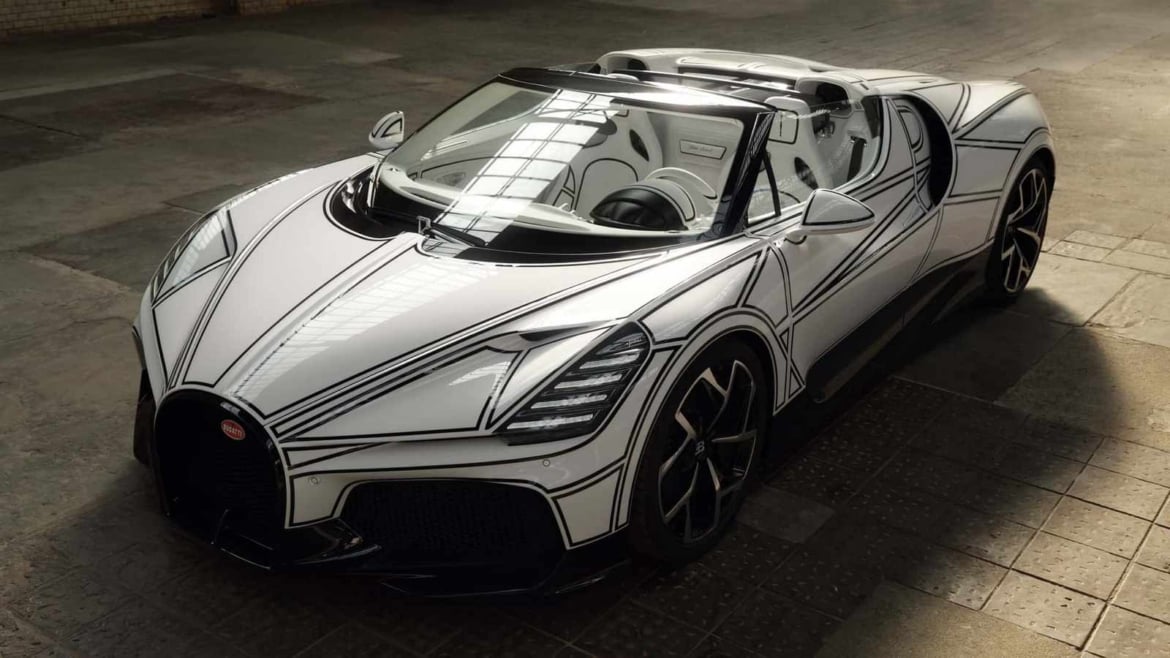
Bugatti has a habit of turning its farewells into spectacles, and the W16 Mistral Blanc Éternel is proof the marque isn’t done milking drama out of its signature engine just yet. This is the last roadgoing car to carry that glorious quad-turbo, 8.0-litre 16-cylinder motor, and rather than send it off quietly, Bugatti handed the job to a 260-year-old porcelain house from Berlin. Königliche Porzellan-Manufaktur, or KPM, first worked with Bugatti back in 2011 on the Veyron “L’Or Blanc,” a one-off finished in white and blue with ceramic detailing scattered through the cabin. Fifteen years later, the two are back at it, this time wrapping a Mistral roadster in fired clay and a fair bit of audacity.
Bugatti and KPM aren’t reviving some one-off nostalgia trip with Blanc Éternel, they’re picking up a thread that runs through the Wei Long dragon car and four KPM Edition Vitesses, making this the fifth-odd chapter of a genuinely sustained partnership, fittingly unveiled 15 years to the day after L’Or Blanc, and configured in Bugatti’s new Berlin studio rather than Molsheim, right in KPM’s backyard.
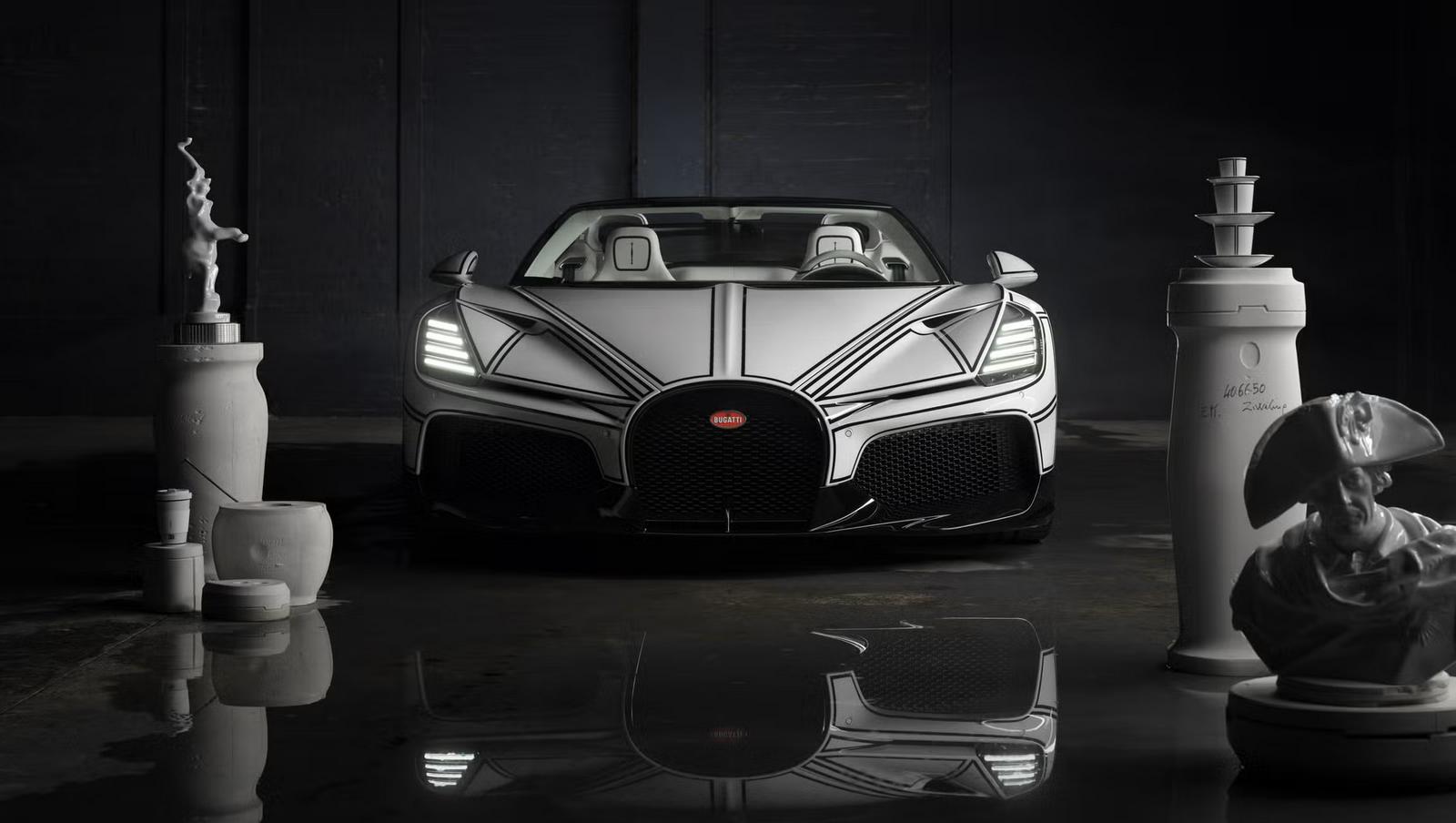
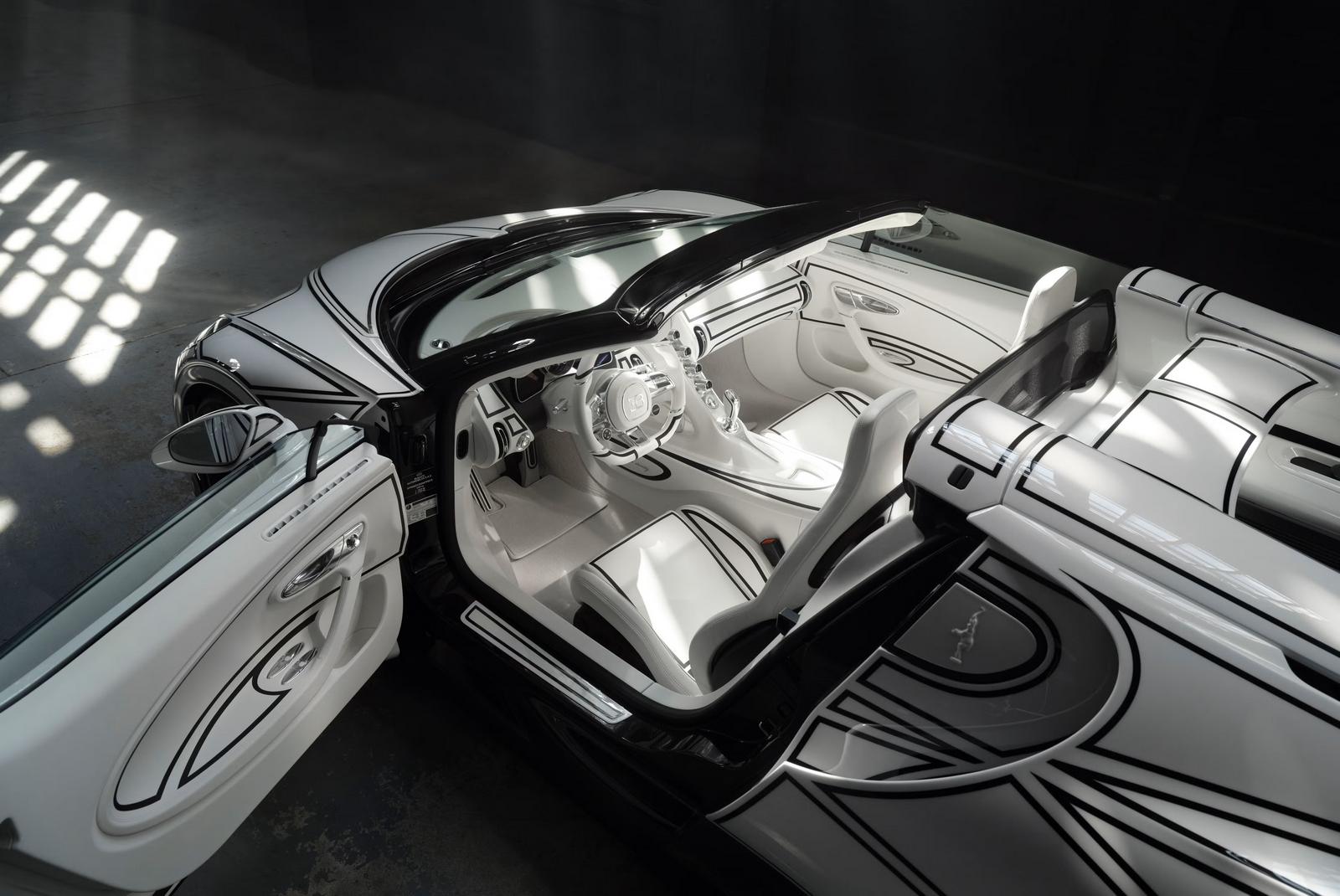
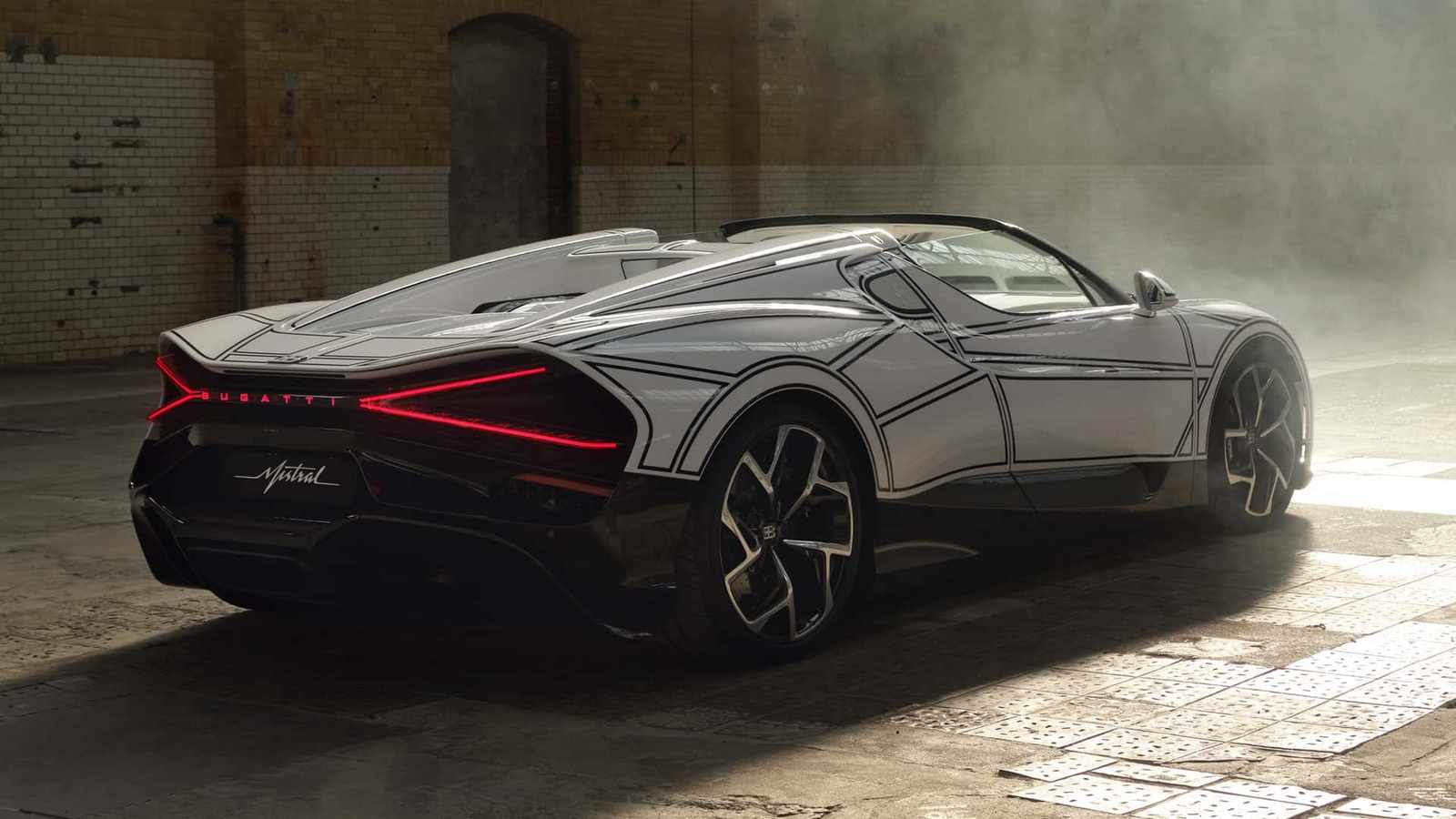
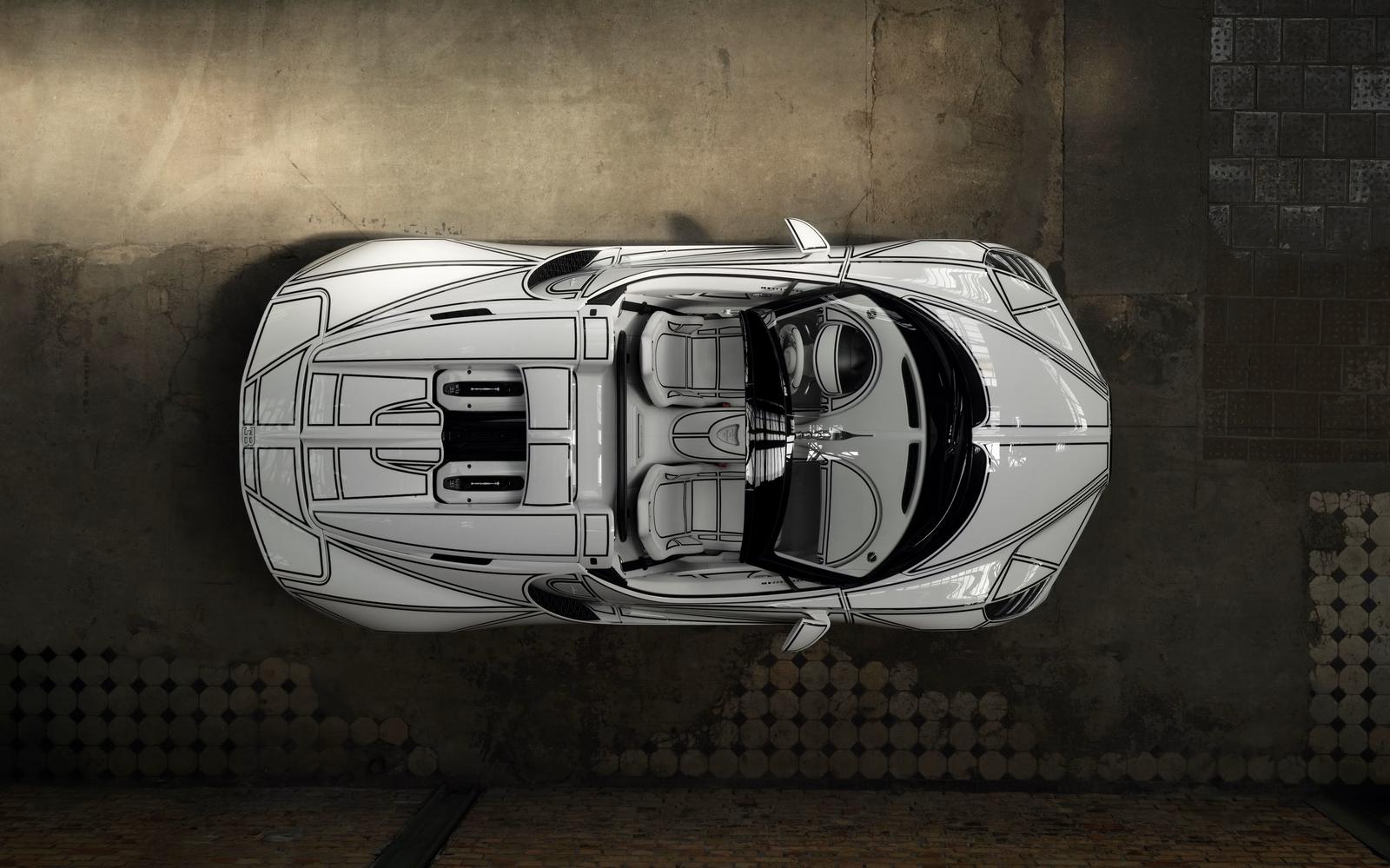
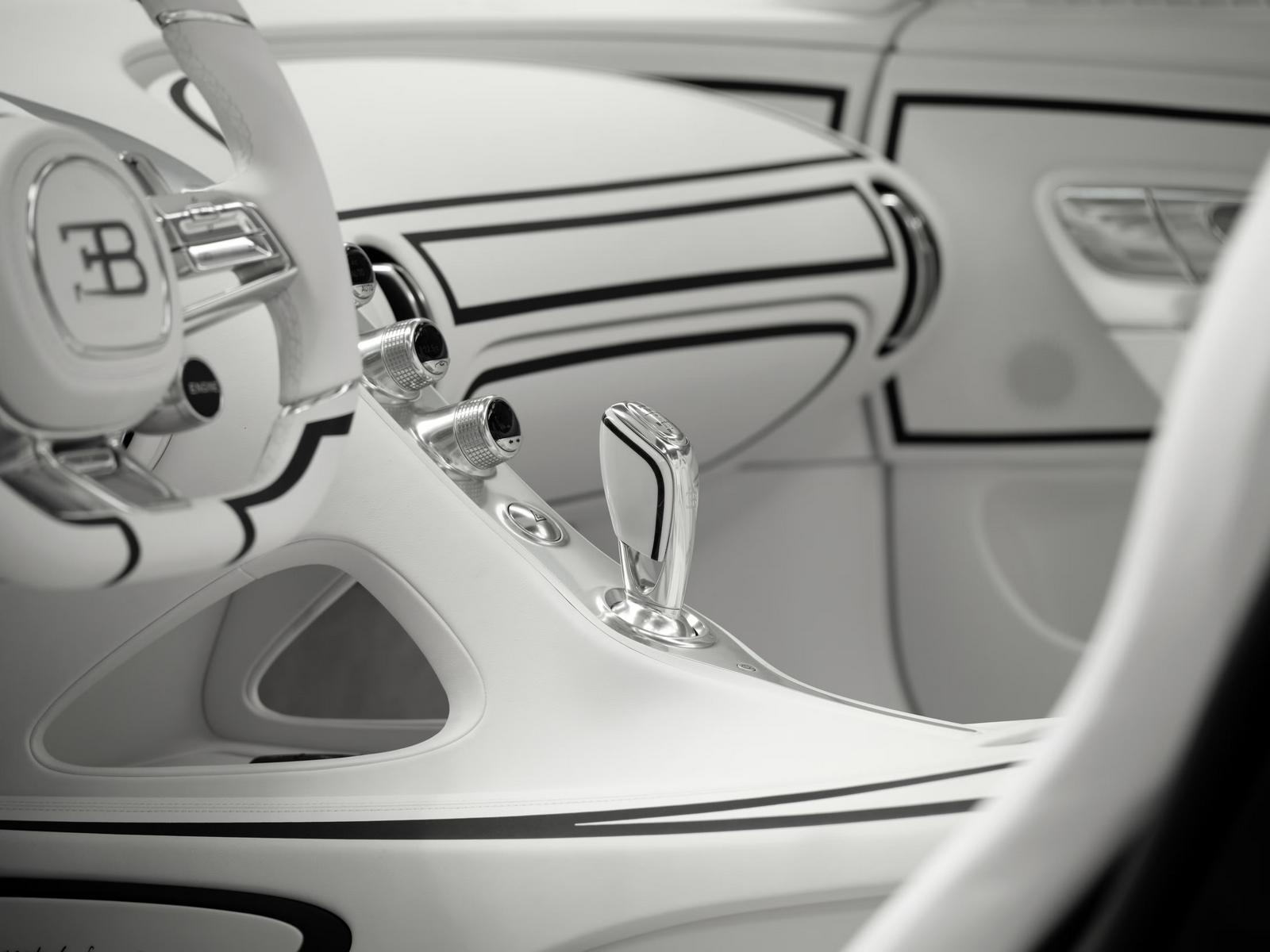
The theme here isn’t decorative so much as diagnostic. Modern Bugattis are sculpted entirely on computer, built from a mesh of mathematically pure surfaces called NURBS, a term normally buried deep in a CAD engineer’s hard drive and never meant for public consumption. Blanc Éternel drags that hidden geometry out into daylight. Every seam and patch line from the digital model has been traced onto the body in black, laid over stark white paint, so the car essentially wears its own blueprint. It looks a little like a very expensive coloring book page, just now for ages 50 and up, going by the expected profile of the clientele for such a commission.
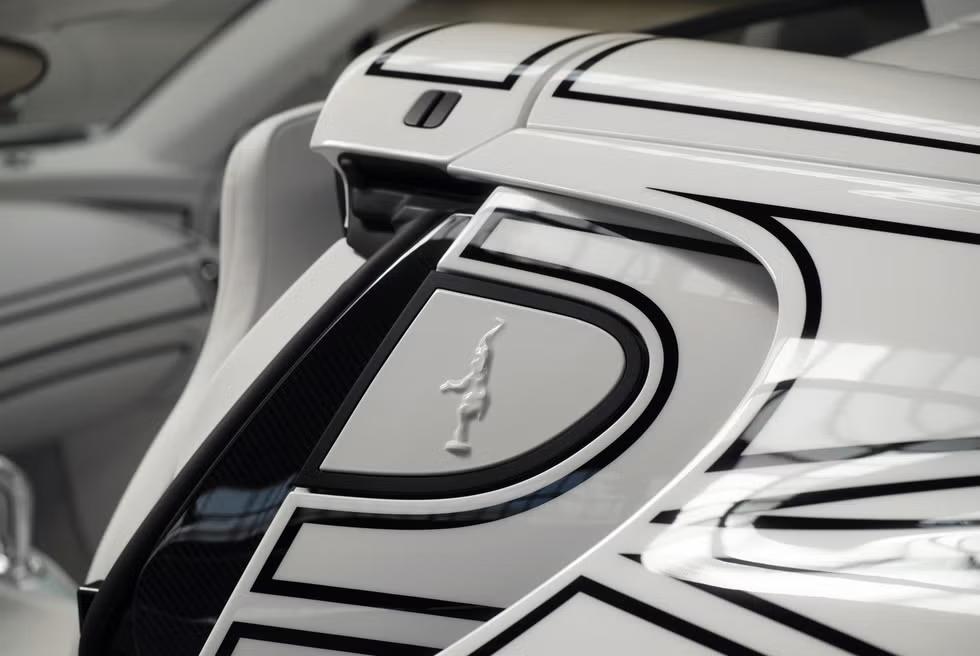
The irony, of course, is that this celebration of software was executed entirely by hand. Painters taped, sanded, and re-taped the body to get those lines razor straight, no computer involved. Porcelain pieces show up on the EB badges, the fuel cap, even inlays on the engine cover, along with cabin trim on the gear selector, speaker grilles, and armrests.
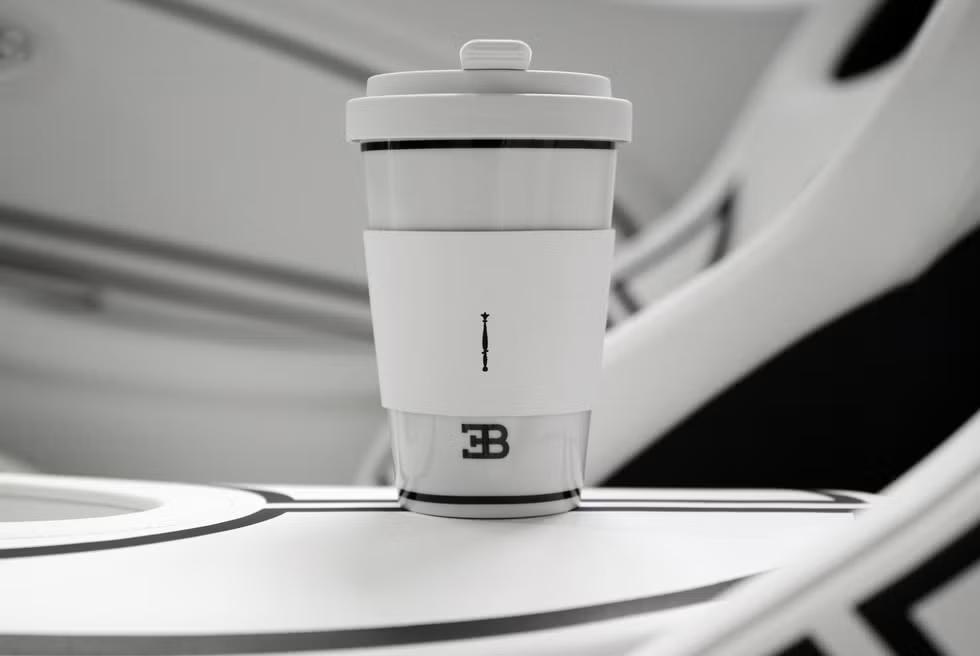
Firing porcelain that shrinks unpredictably and then fitting it to a car with panel gaps measured in fractions of a millimetre sounds like a recipe for a very expensive pile of shards, but apparently they pulled it off. Underneath all the ceramics and CAD nostalgia sits the same numbers that make Mistral owners grin uncontrollably: 1,578 hp, a 2.4-second sprint to 62 mph, and a 273 mph top speed. It’s one car for one buyer who wants to bow out in style, rather than fade away.