BYD has decided that building electric cars capable of embarrassing established luxury brands is no longer enough. With its latest flagship, the Chinese automaker appears to have set its sights on a rather more exclusive club, one traditionally occupied by Rolls-Royce, Bentley and Mercedes-Maybach. Meet the Yangwang Altior, a gigantic all-electric luxury sedan that combines Rolls-Royce-esque styling, rear-hinged coach doors, an extraordinarily lavish four-seat cabin and enough technology to make a private jet feel slightly under-equipped. Unveiled globally in Abu Dhabi, the Altior represents an ambitious attempt by BYD’s ultra-luxury Yangwang division to redefine what a Chinese flagship automobile can look like.
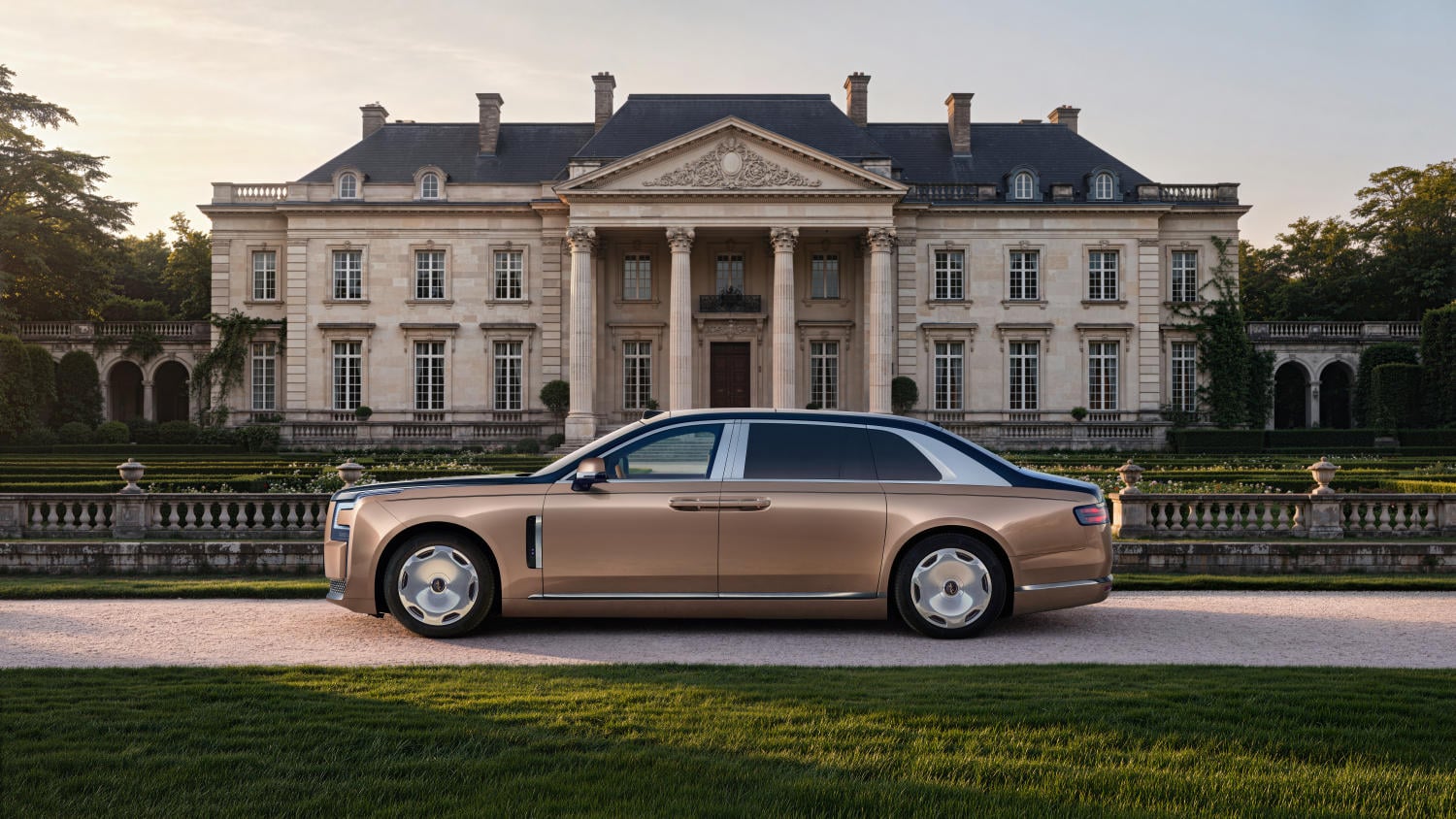
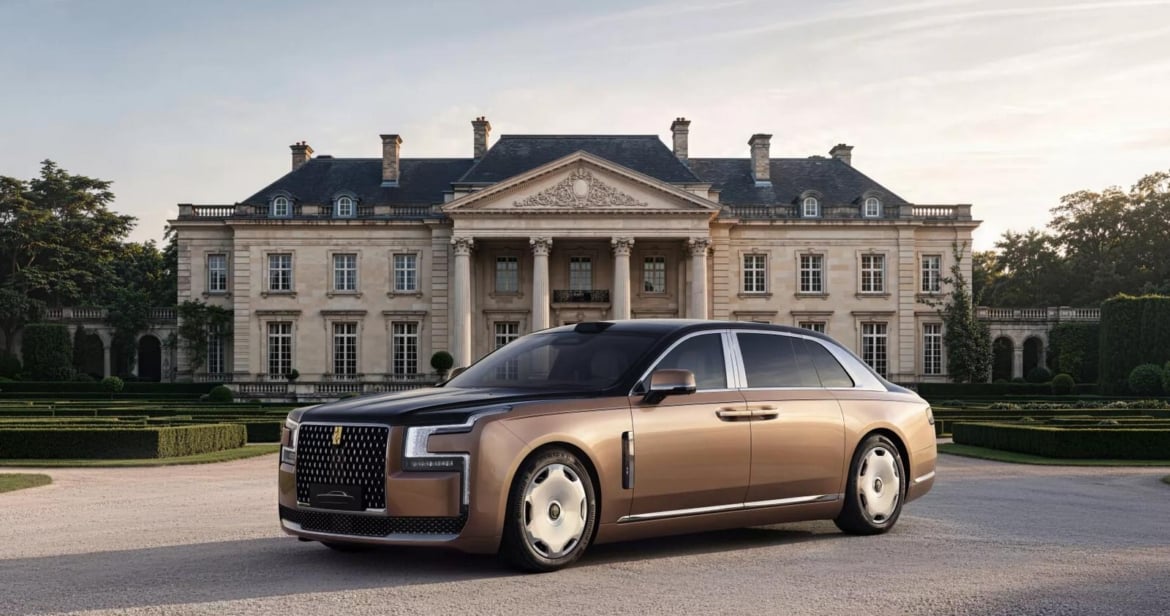
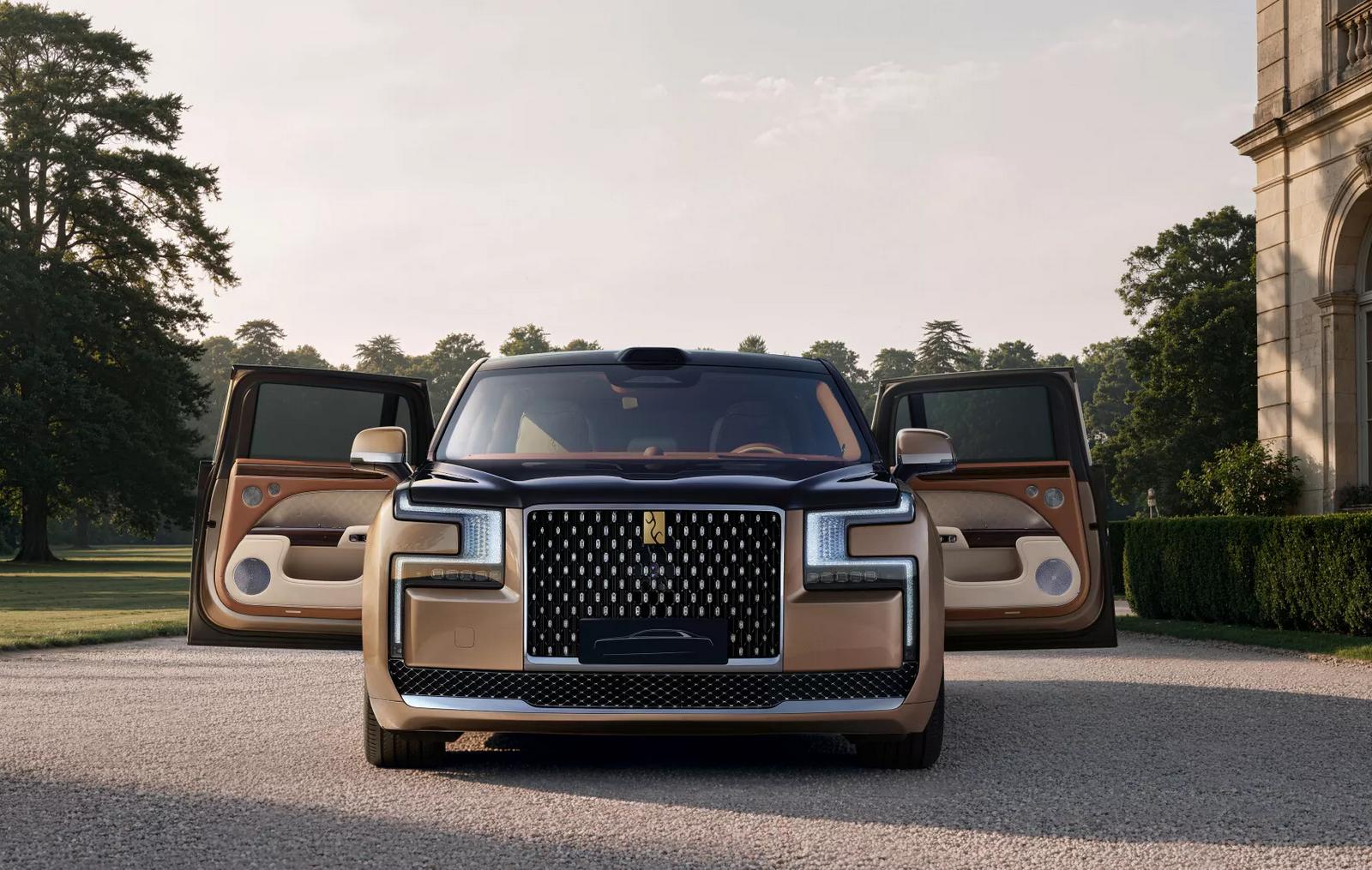
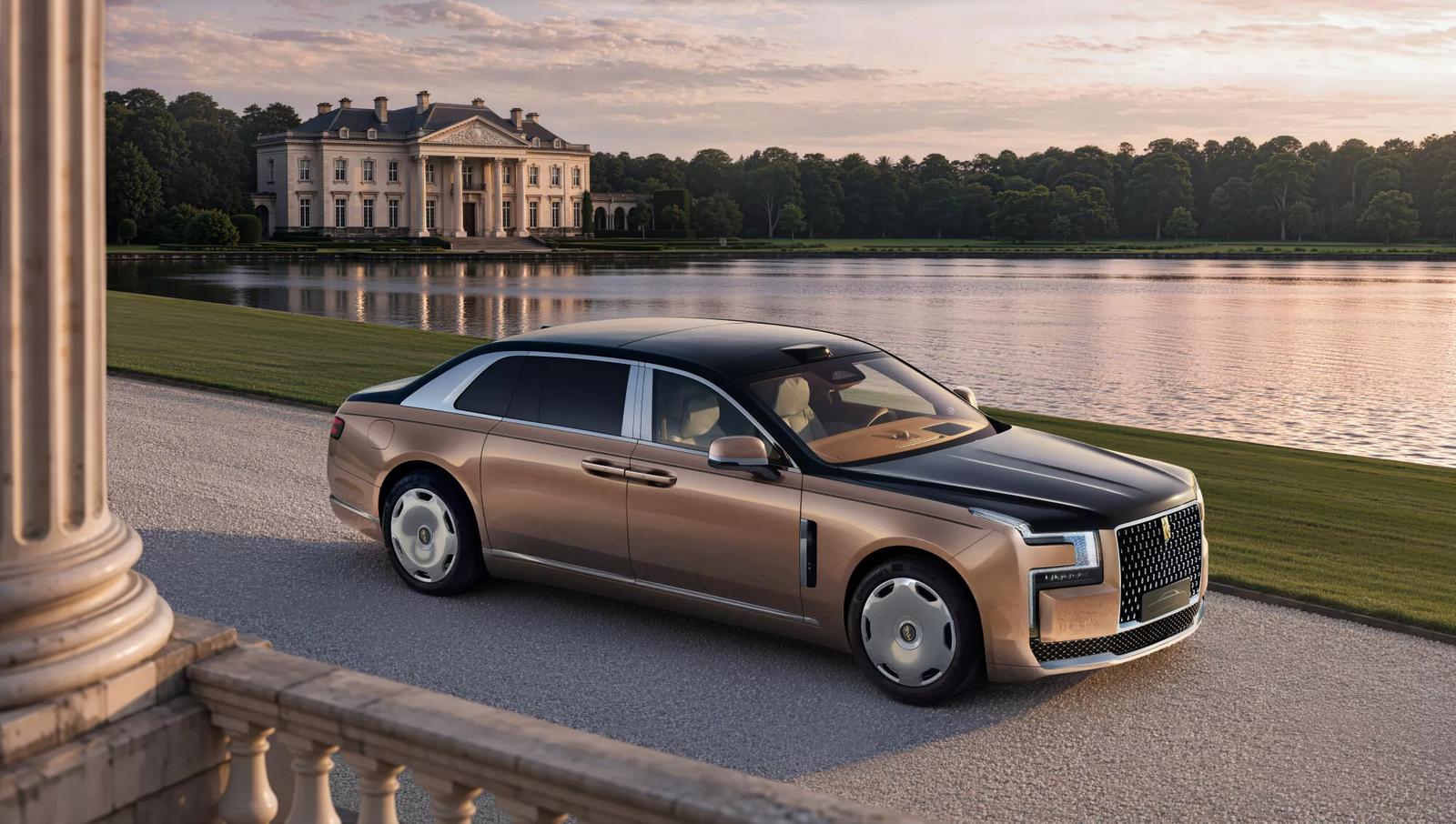
Known as the Dingyao in China, with Altior derived from the Latin word for higher, the new sedan has been three years in the making. Measuring 5.6 meters long, 2.03 meters wide and 1.59 meters tall, it sits on an enormous 3.5-meter wheelbase. Its imposing proportions, upright front end, elaborate grille and unmistakably Rolls-Royce-inspired silhouette make its intentions rather difficult to misunderstand. However, BYD has attempted to give the design a distinctly Chinese identity, drawing inspiration from the traditional ding, an ancient ceremonial bronze vessel associated with strength, dignity and harmony.
A Rolls-Royce-inspired exterior with plenty of theatrical touches
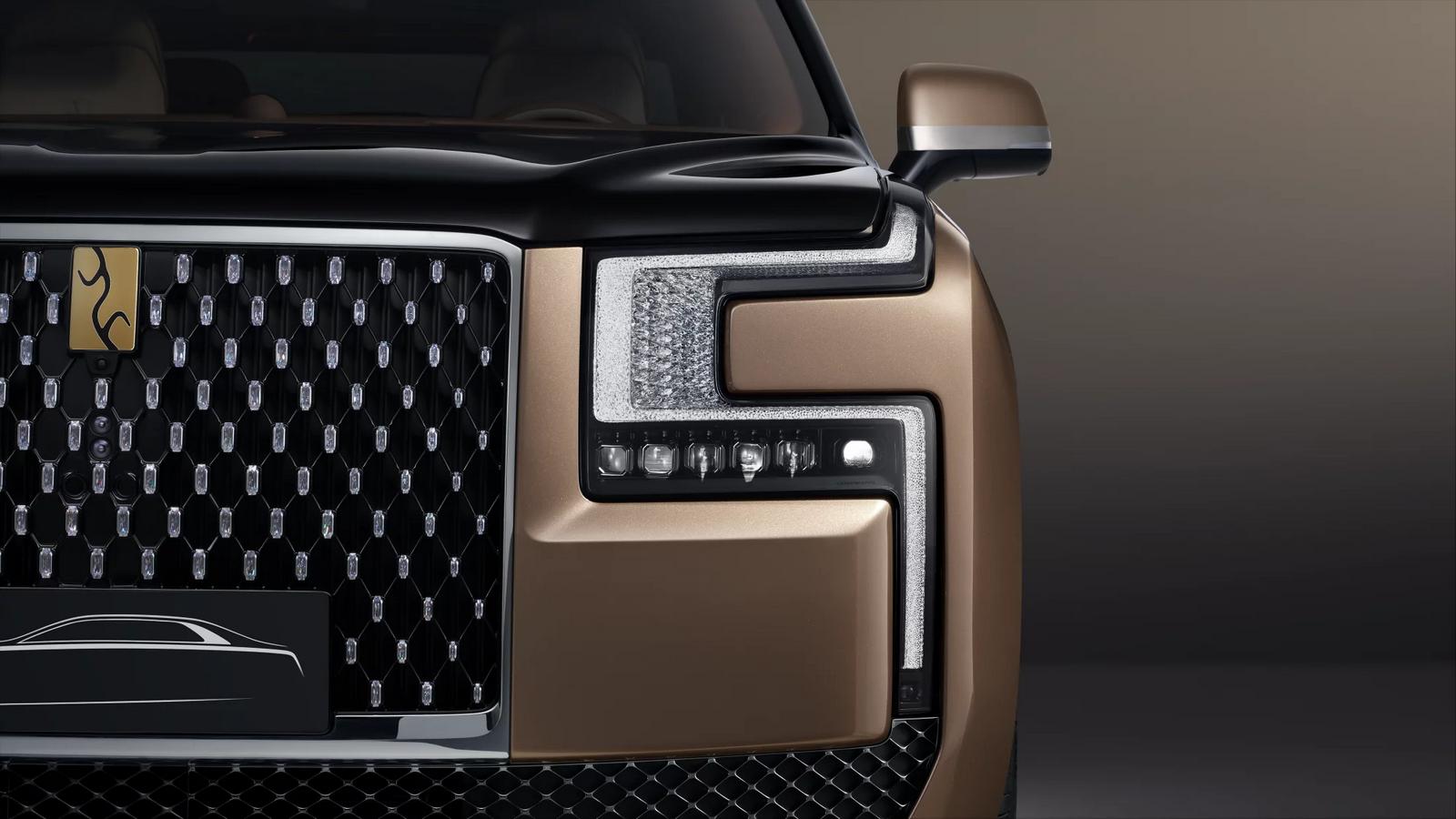
The Altior’s front end is dominated by an elaborate grille featuring 137 gemstone-cut elements, accompanied by an emblem reportedly crafted from 24-karat gold. Its lighting system incorporates 12 elements that illuminate sequentially from the outside toward the center when the owner approaches, creating a rather elaborate welcome ceremony. The body also features a hand-painted dual coachline stretching 4.8 meters along its sides, while three different 21-inch wheel designs and a selection of bespoke finishes add to its imposing presence.
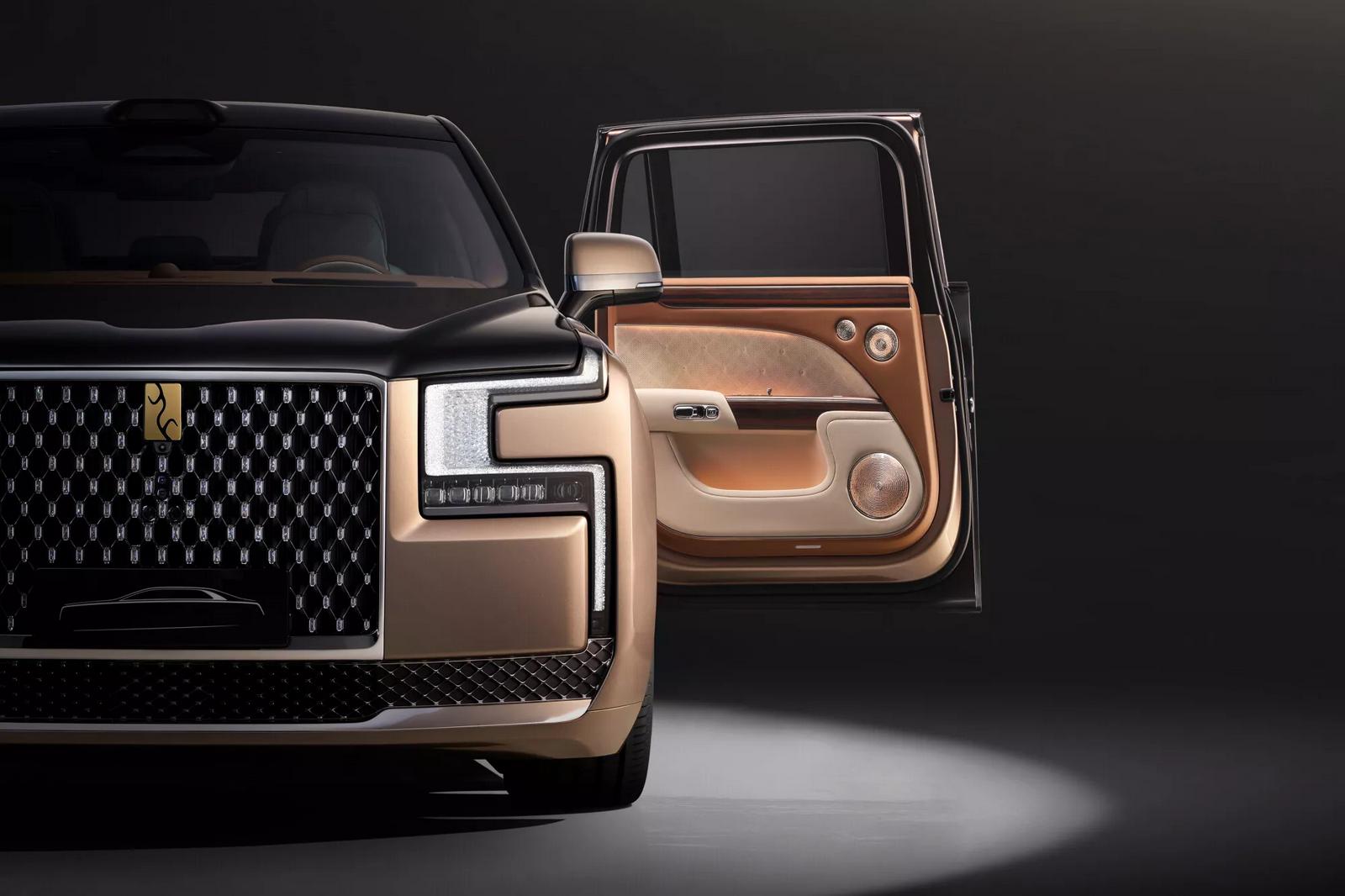
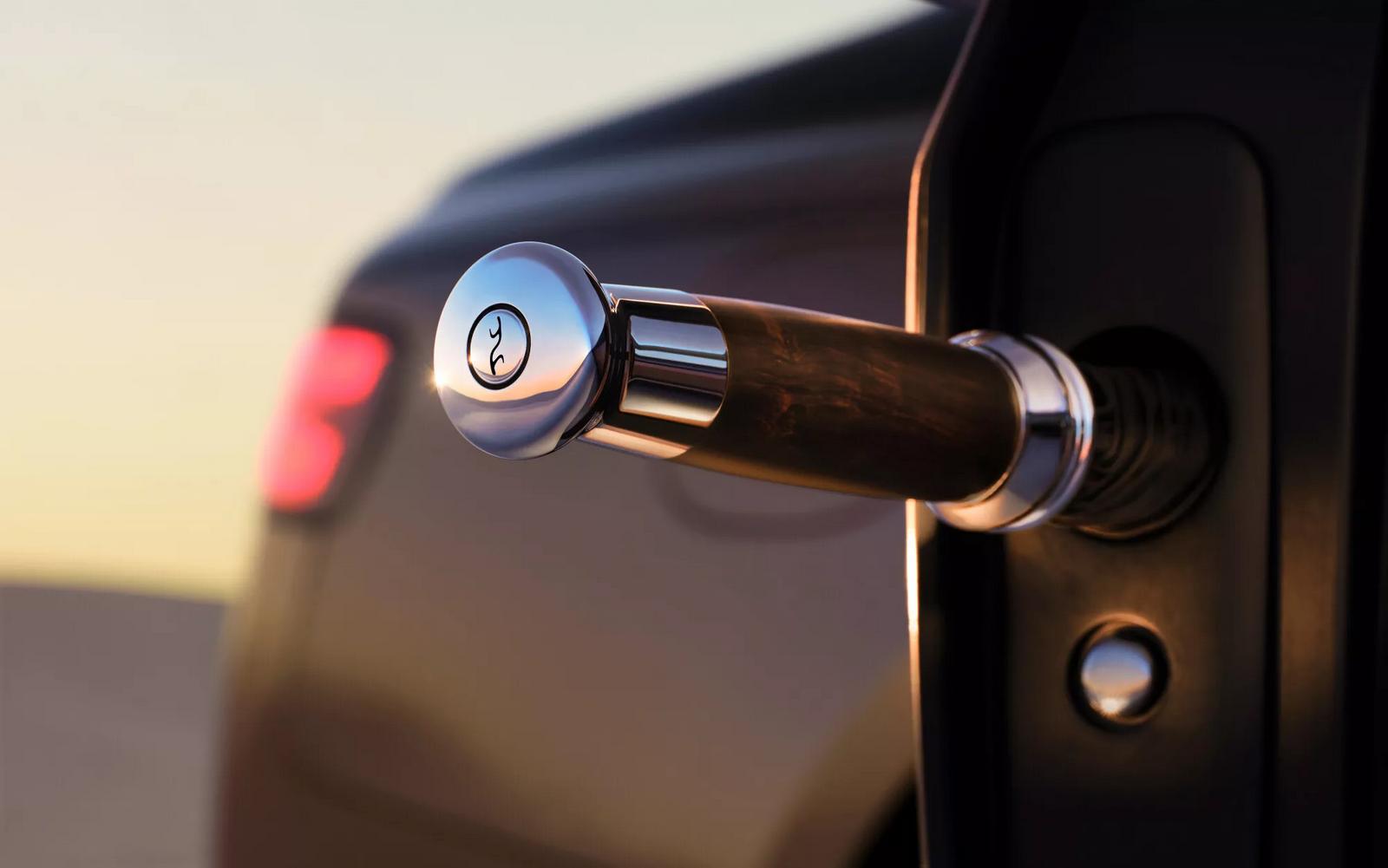
Perhaps the most obvious Rolls-Royce reference comes from its rear-hinged coach doors, which open to 90 degrees at the back, while the conventional front doors swing open to 80 degrees. BYD has even integrated bespoke umbrellas into the doors, drawing inspiration from the Hall of Prayer for Good Harvests at Beijing’s Temple of Heaven.
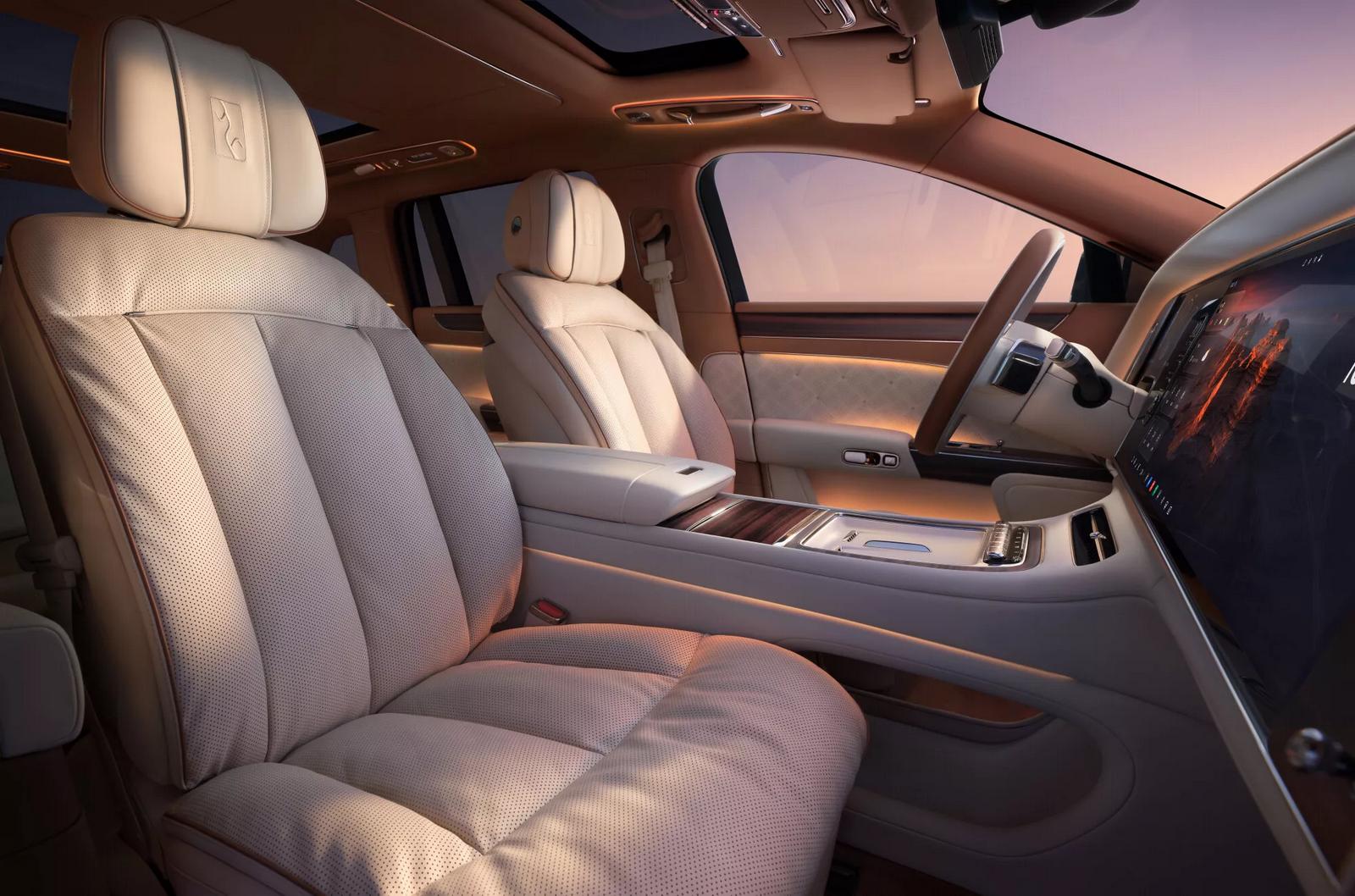
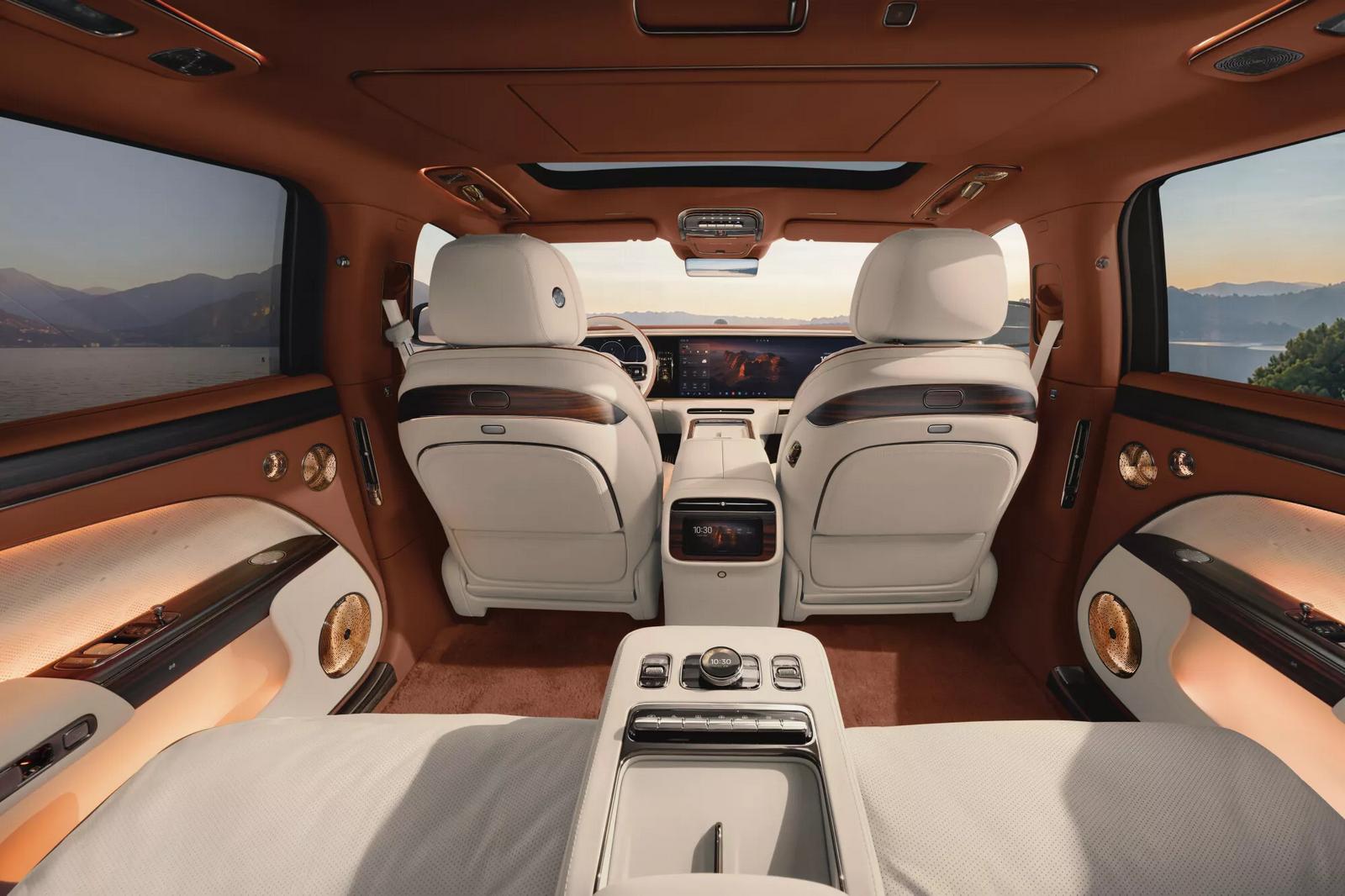
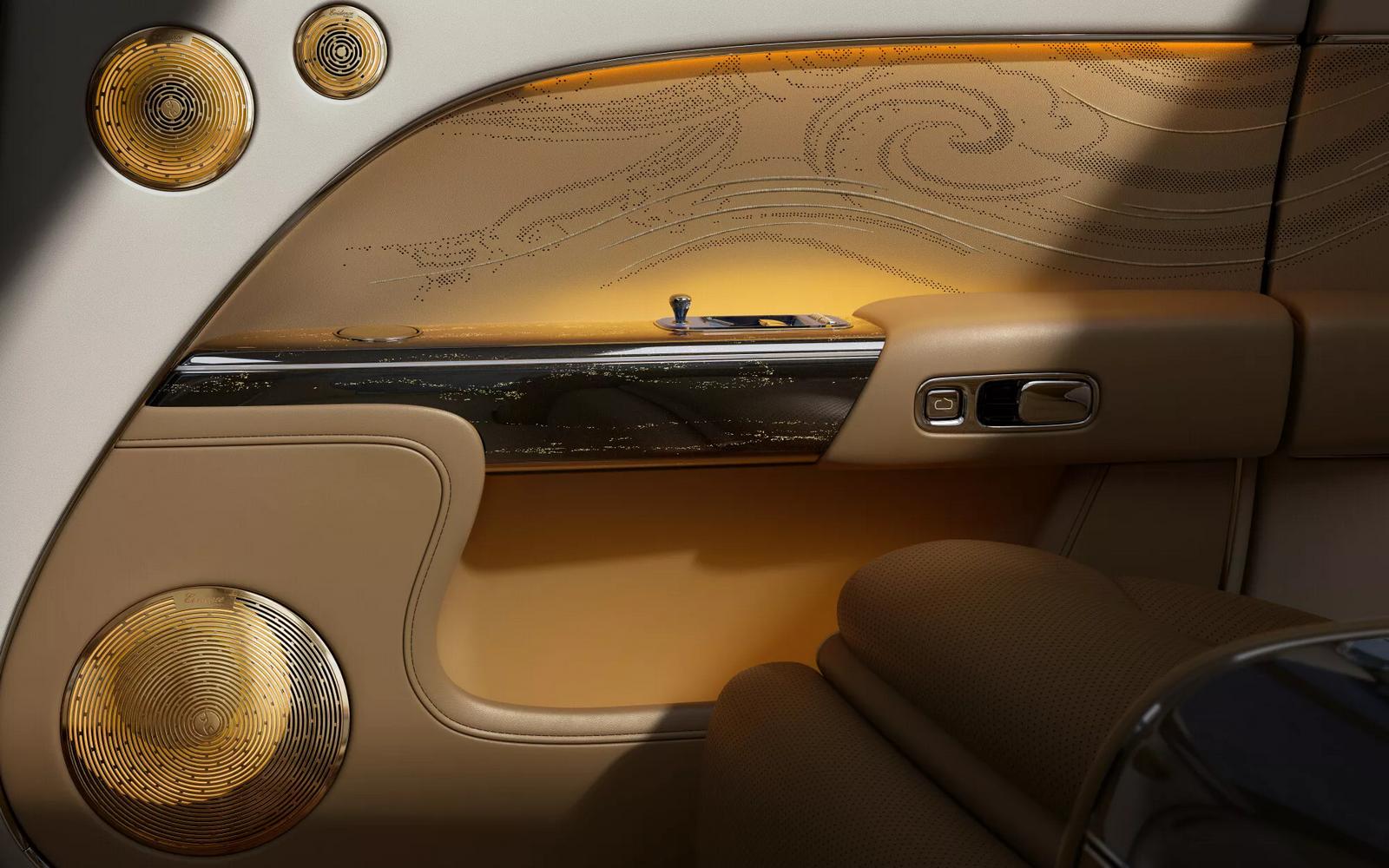
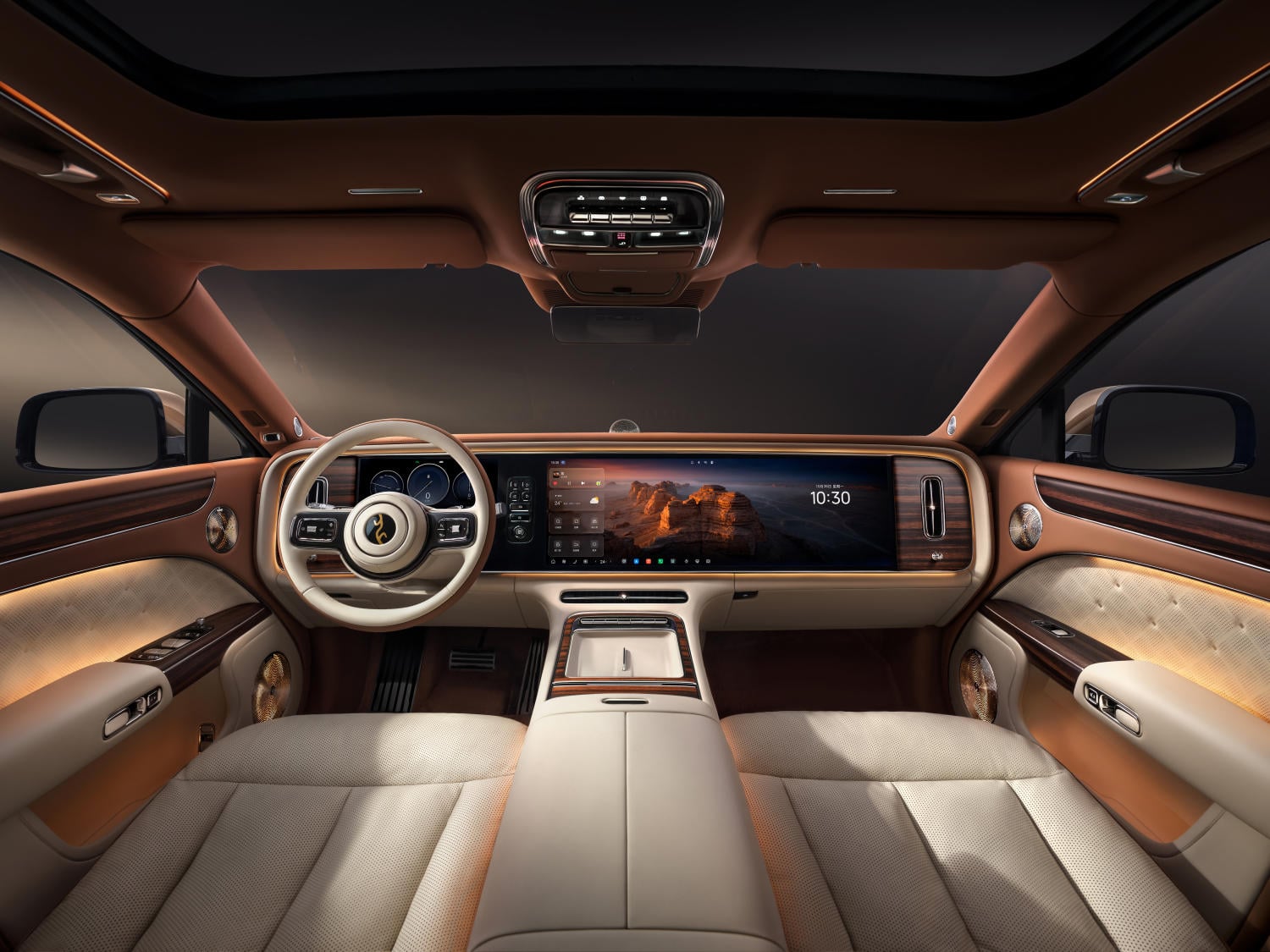
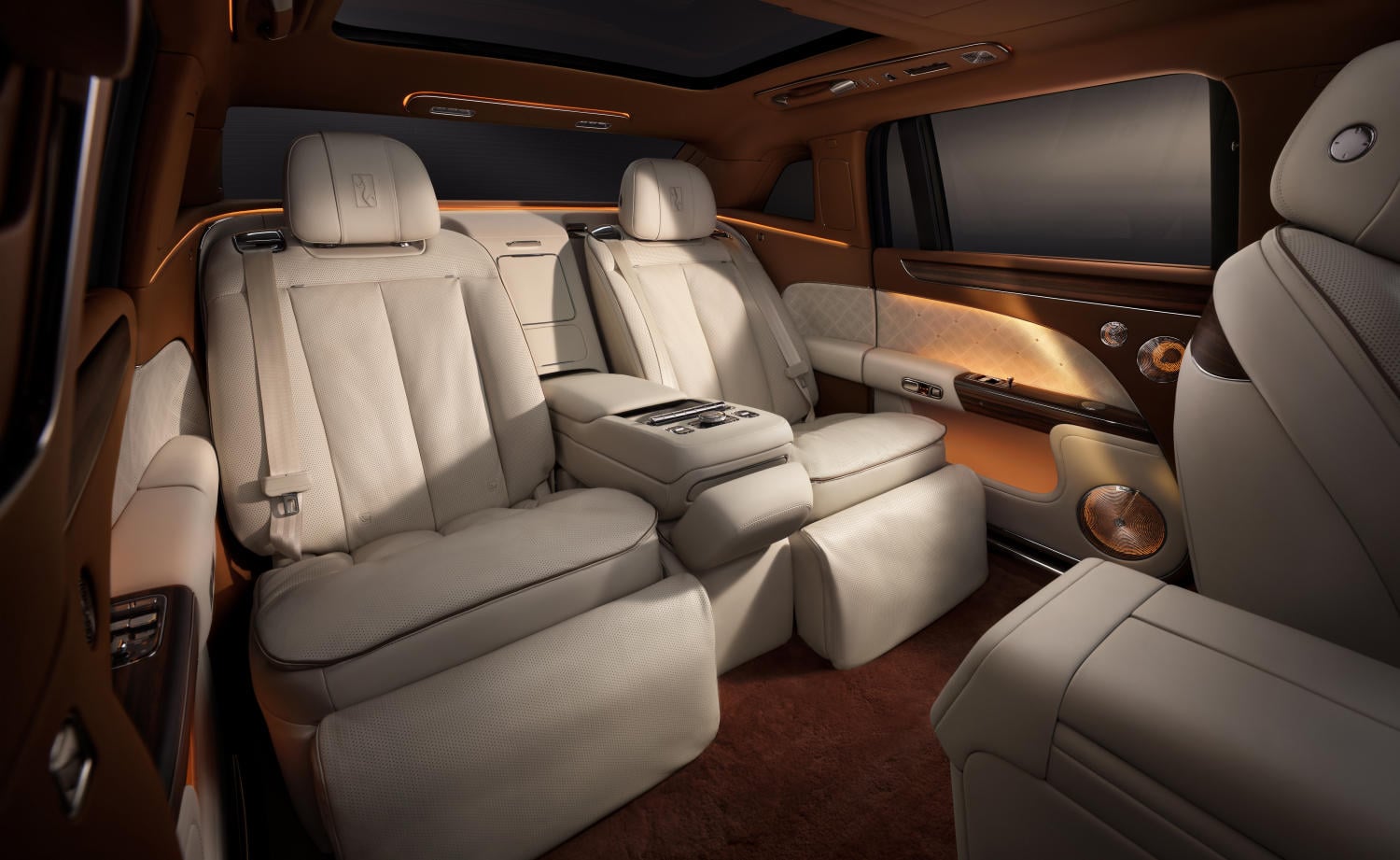
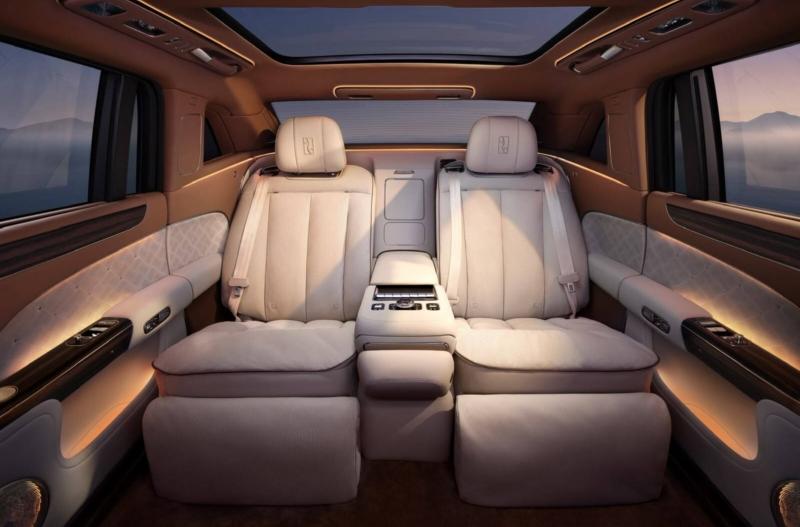
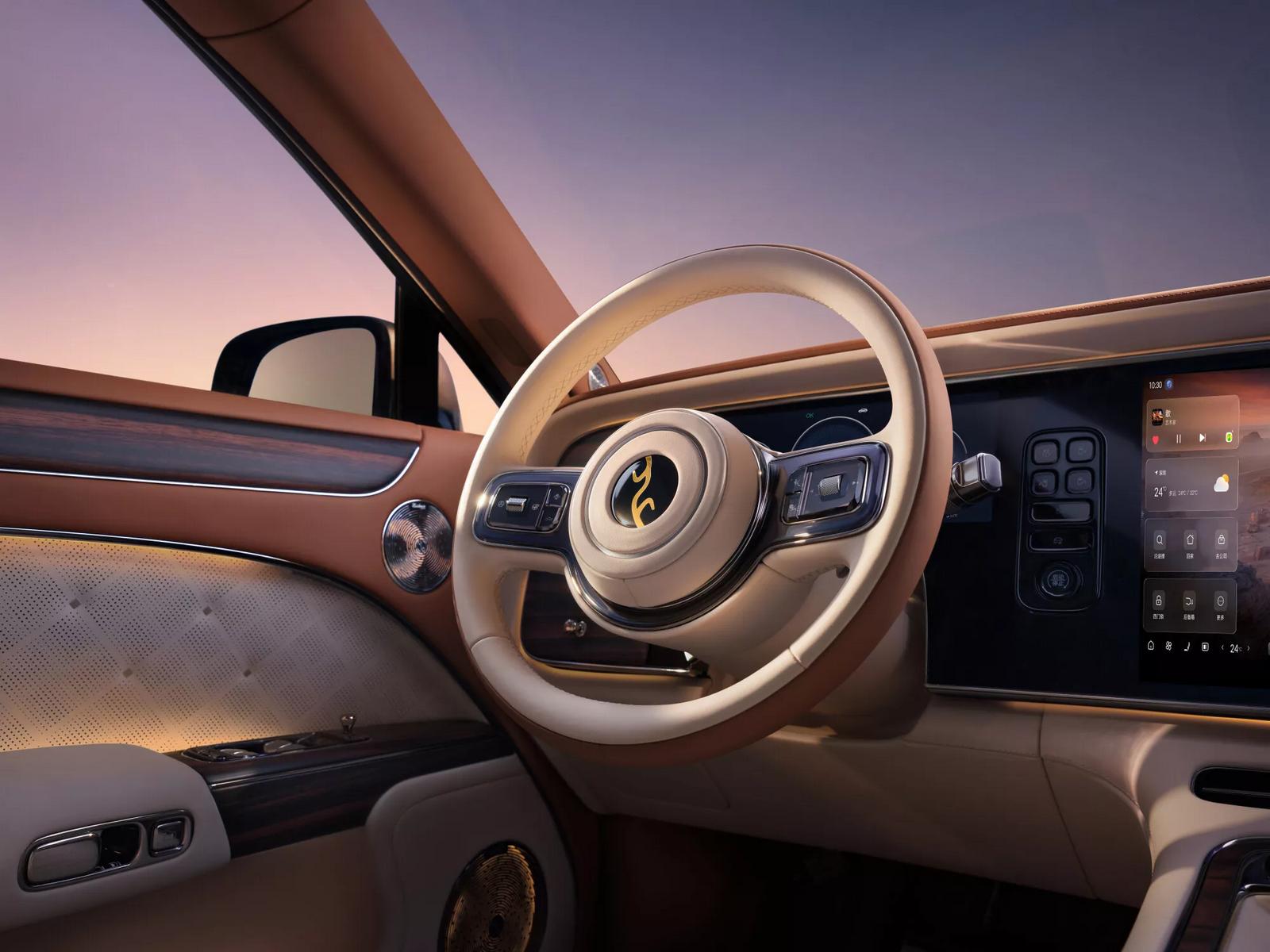
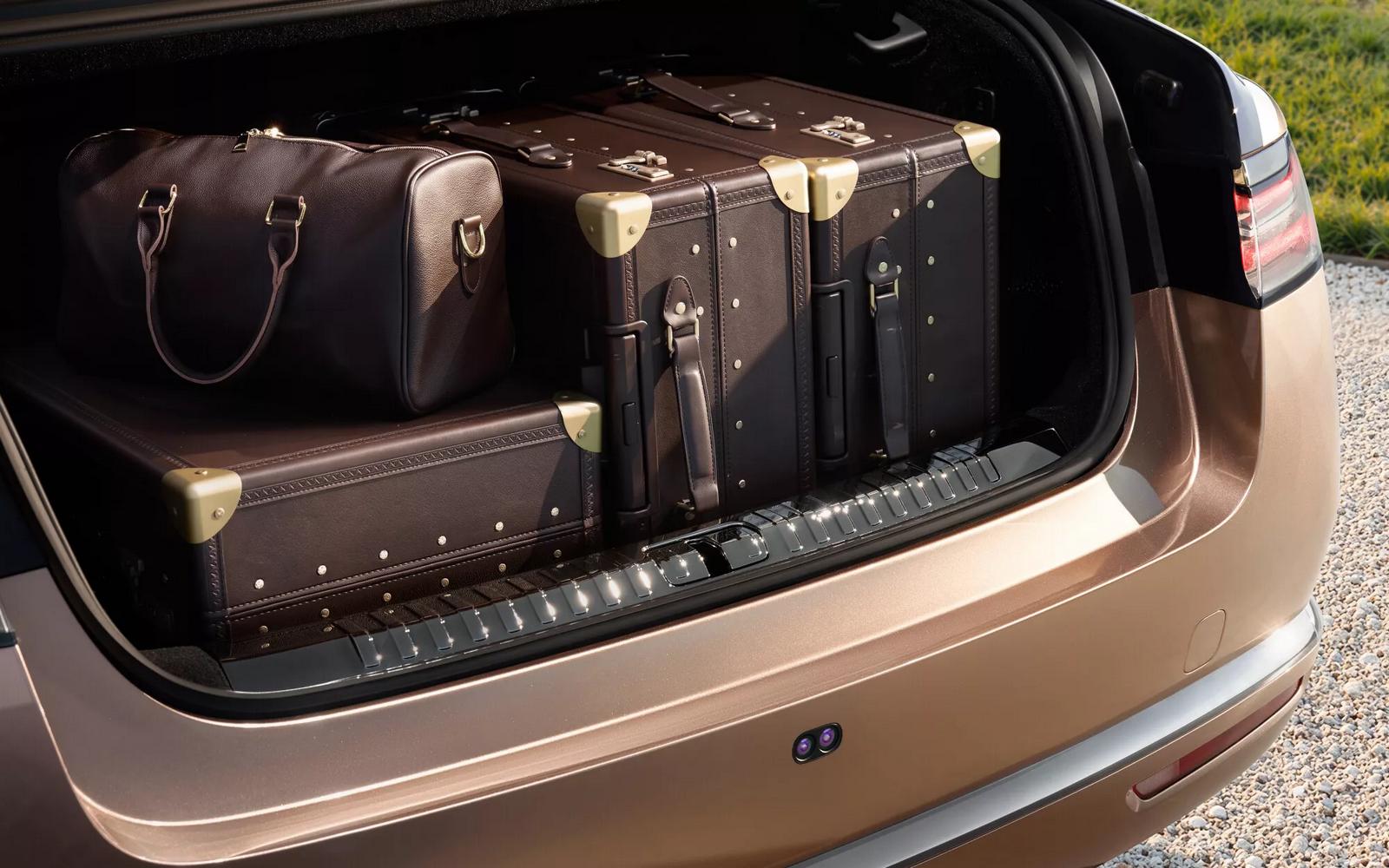
The cabin continues the extravagant approach, although BYD has concentrated particularly heavily on rear-passenger comfort. Rather than accommodating five occupants, the Altior is configured as a four-seat limousine, with aviation-inspired zero-gravity rear seats, mechanical massage systems and a one-touch relaxation mode that adjusts the seating position, leg rests, lighting, sound and fragrance. Passengers also receive a powered 21.4-inch overhead entertainment screen, a business table, two refrigerators and a 39-speaker Dynaudio Platinum Evidence sound system. The interior combines full-grain semi-aniline leather, natural wood, Suzhou embroidery and decorative elements made using yellow Hetian jade, while the luggage compartment offers 532 liters of storage.
Four electric motors and a 1,000-kilometer range
Underneath its imposing bodywork, the Altior uses BYD’s e⁴ platform, featuring four independently controlled electric motors that deliver power to each wheel. The system can adjust torque distribution more than 100 times per second, enabling sophisticated traction control, tank turns, and even crab-walking capabilities. BYD has also equipped the sedan with its latest DiSus fully active suspension system, which uses cameras to anticipate road imperfections and adjust the suspension in real time. One particularly unusual feature is an emergency flotation system designed to help the vehicle remain supported if it accidentally enters water.
Power output and acceleration figures have not yet been disclosed, but the battery specifications are considerably more revealing. The Altior uses BYD’s second-generation Blade Battery and promises more than 1,000 kilometers (621 miles) of driving range on China’s CLTC testing cycle. Its 1,000-volt electrical architecture supports BYD’s Flash Charging technology, with reports suggesting that charging from 10 to 70 percent could take approximately five minutes when connected to compatible high-power infrastructure. Driver assistance comes courtesy of Yangwang’s God’s Eye A system, supported by LiDAR and BYD’s in-house computing technology.
A Chinese luxury statement with a seven-figure price tag
The Yangwang Altior will be offered in Executive and Bespoke editions, with the latter allowing customers to explore more elaborate combinations of materials, colors and finishes. Its first special version, called Shanhe Dingyun, features a brown-and-gold exterior and a jade-inspired interior. This limited edition carries a reported pre-sale price of 2.08 million yuan, approximately $311,500, with a 300,000-yuan deposit.
Whether the Altior can genuinely challenge the established luxury hierarchy remains to be seen, particularly as BYD has yet to disclose its complete powertrain specifications or customer delivery schedule. Nevertheless, the car makes one thing abundantly clear. China is no longer content with building electric alternatives to European luxury sedans and is increasingly interested in competing on the same extravagant terms as the world’s most prestigious automotive marques.
Note – According to figures released by both automakers, BYD sold about 2.26 million fully electric vehicles worldwide in 2025, surpassing Tesla’s 1.64 million deliveries.