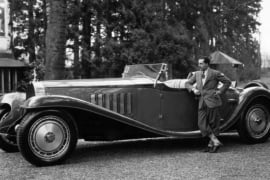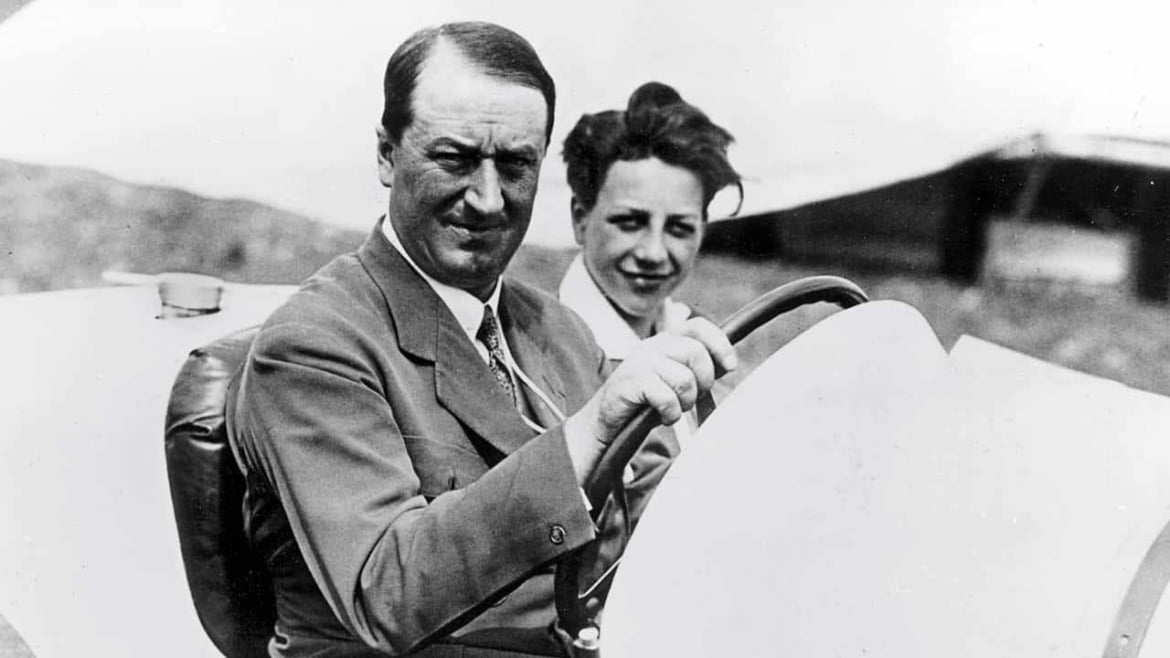
At the height of his success in Molsheim, Ettore Bugatti was building some of the most advanced and jaw-dropping cars in Europe. He was also, quietly and stubbornly, engineering things beyond the world of automobiles just because he felt the existing solutions didn’t meet his standards. Be it creating his own pasta machine or deciding to make harnesses in-house after Hermès failed to meet his demands, Ettore Bugatti lived as a man unwilling to accept anything less than perfection. This level of eccentricity and obsession with detail once made the mad genius design the most complex chicken coup in all of France.

Bugatti adored fresh pasta and insisted that it be prepared regularly by his Italian chef at his estate near Château Saint-Jean. Fresh pasta required fresh eggs, and eggs depended on local farmers. One day, he went to purchase them himself and returned irritated. The price had gone up again. For most people, this would have been a minor inconvenience absorbed without a second thought. For Bugatti, it was an unacceptable surrender of control.
He refused to be at the mercy of fluctuating market prices for something as essential to his table as eggs. The solution he devised was not negotiation or compromise. It was a reinvention.

The day breakfast became an engineering problem
Rather than tolerate higher prices, Bugatti decided he would produce his own supply. On the grounds of his Molsheim estate, which functioned as both industrial headquarters and private domain, he established a small chicken operation. At its center stood a bespoke henhouse mounted on wheels.

The mobility was the henhouse’s defining feature. This was not a simple rural coop assembled for convenience. It was a designed object conceived with a purpose. Mounted on a chassis-like base, it could be rolled across different sections of the estate to capture better grass and sun. By repositioning the structure, the hens would benefit from fresh grazing while the land beneath recovered naturally.

The thinking was practical yet unmistakably Bugatti. He approached agriculture the same way he approached automobile design. Systems had to be optimized. Variables had to be controlled. Even the placement of chickens became a question of engineering logic. No technical drawings of the coop survive, yet the recurring historical detail remains the same. The wheels were essential to the design. The henhouse was mobile, adaptable, and deliberate. It was less a shed and more a mechanism.

The most expensive eggs in Alsace
Ironically, the economics were flawed. The cost of constructing the mobile coop, maintaining the hens, and managing the small operation meant that each egg effectively cost more than if he had continued purchasing them in town. Bugatti understood this perfectly. Financial efficiency was never the objective. What he gained instead was freshness and independence. He eliminated dependence on suppliers and ensured that every egg served at his table met his standard. In his world, control justified the expense.

The chicken coop also reveals a broader pattern in his life. When a pasta machine broke and a replacement would take weeks to arrive, he drafted his own improved version and had it built by his factory mechanics. When suitable basil was unavailable locally, he commissioned a custom steel-framed greenhouse with specialized ventilation so he could grow it himself. He even designed his own cutlery, engraved with his initials, because conventional pieces did not meet his expectations for ergonomics or elegance.

Seen in isolation, the mobile coop appears eccentric. Placed within the context of his character, it becomes entirely logical. Ettore Bugatti was not merely a car manufacturer. He was an innovator who applied the same intensity of thought to a racing chassis as to a henhouse. He refused compromise in matters large or small.
In the end, the story is not really about eggs. It is about a man who would rather engineer an entire micro-farm than accept a modest increase in price. For Bugatti, perfection and autonomy were inseparable. Even breakfast had to be designed.