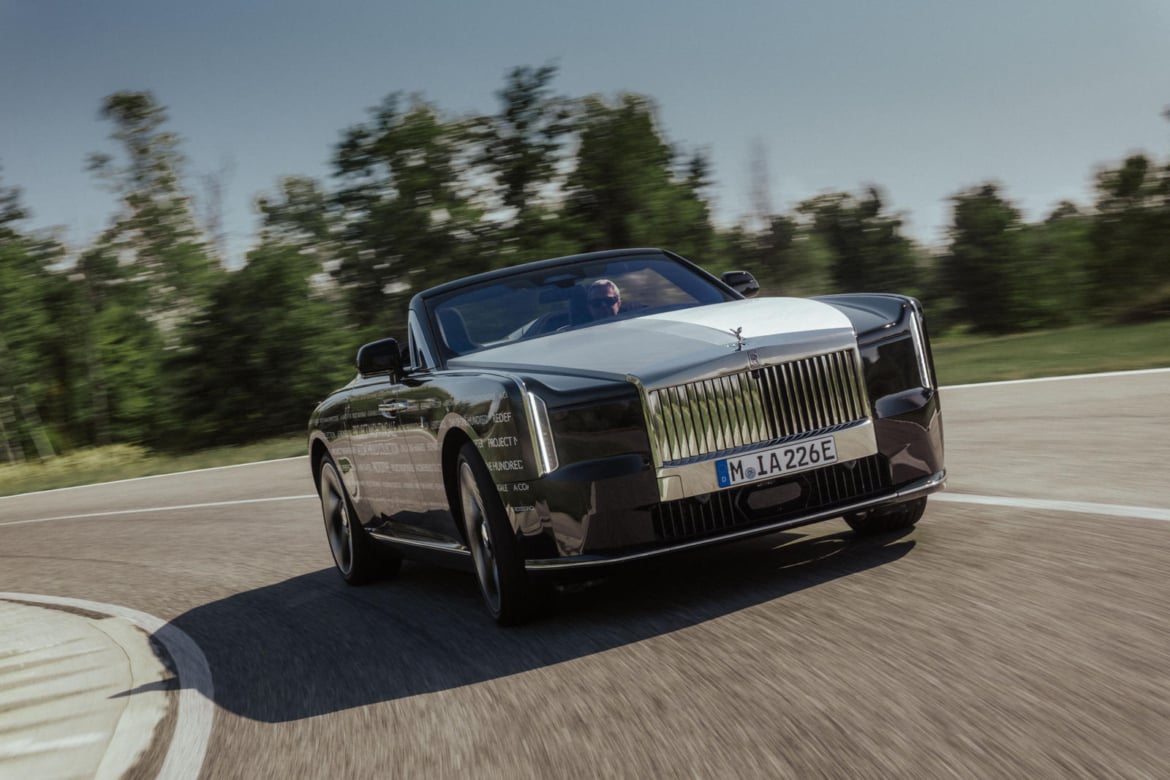
Rolls-Royce has built plenty of cars designed to cross continents in extraordinary comfort, but Project Nightingale is about to take that idea to another level. The British marque is building just 100 examples of this fully electric, two-seat convertible, and it has now begun testing them in environments that stretch from the sub-zero conditions of the Arctic Circle to the boiling deserts of the Arabian Peninsula. At 5.76 meters, the open-top luxury EV is almost as lengthy as the Phantom, yet its enormous body accommodates only two people. Before customer deliveries begin in 2028, Rolls-Royce will subject the cars to 350 collective weeks of testing to make sure this unusually extravagant machine can deliver its promise wherever its owners choose to drive.
The journey has already started in Southern Europe, although Rolls-Royce has not revealed the precise location of the prototypes. From there, the testing program will venture into dramatically different conditions, including Mediterranean corniches, Arctic environments and the Arabian Peninsula, with the cars climbing to altitudes of up to 2,750 meters. At another stage, the prototypes will be taken to a private high-speed facility and pushed to 155 mph. The choice of Southern Europe is also a nod to Rolls-Royce history, since Sir Henry Royce and his engineers once used roads around the French Riviera for demanding speed and durability testing. More than a century later, Project Nightingale is following a remarkably similar philosophy, although the machine being tested could hardly be more different.
The quietest details are getting the hardest testing
The car has already spent more than 1,430 hours undergoing aerodynamic modeling, digital simulation, and wind tunnel testing, but computer models can only go so far. Now the engineers have to find out what happens when the sleek electric convertible is actually moving through the air at speed. At up to 155 mph, they will examine its aerodynamics while working to make wind noise inside the cabin almost imperceptible. That is particularly important here because Nightingale’s electric powertrain removes much of the mechanical noise that would normally mask small sounds from airflow, seals, fabrics and moving components.

Rolls-Royce has even developed a patented fully electric wind deflector specifically for the car. Rather than simply keeping hair from being blown around, the system is designed to stop high-pressure air behind the vehicle from curling forward into the cabin, reducing turbulence around the occupants and helping retain warmth when the roof is lowered in colder weather. The roof itself is an equally elaborate piece of engineering, combining cashmere, fabric and high-performance composites for sound insulation. It will face 10 separate tests covering its fabric, mechanism and performance at temperatures reaching 80°C (76°F), with the extreme conditions intended to reflect the year-round use Rolls-Royce expects from its clients.

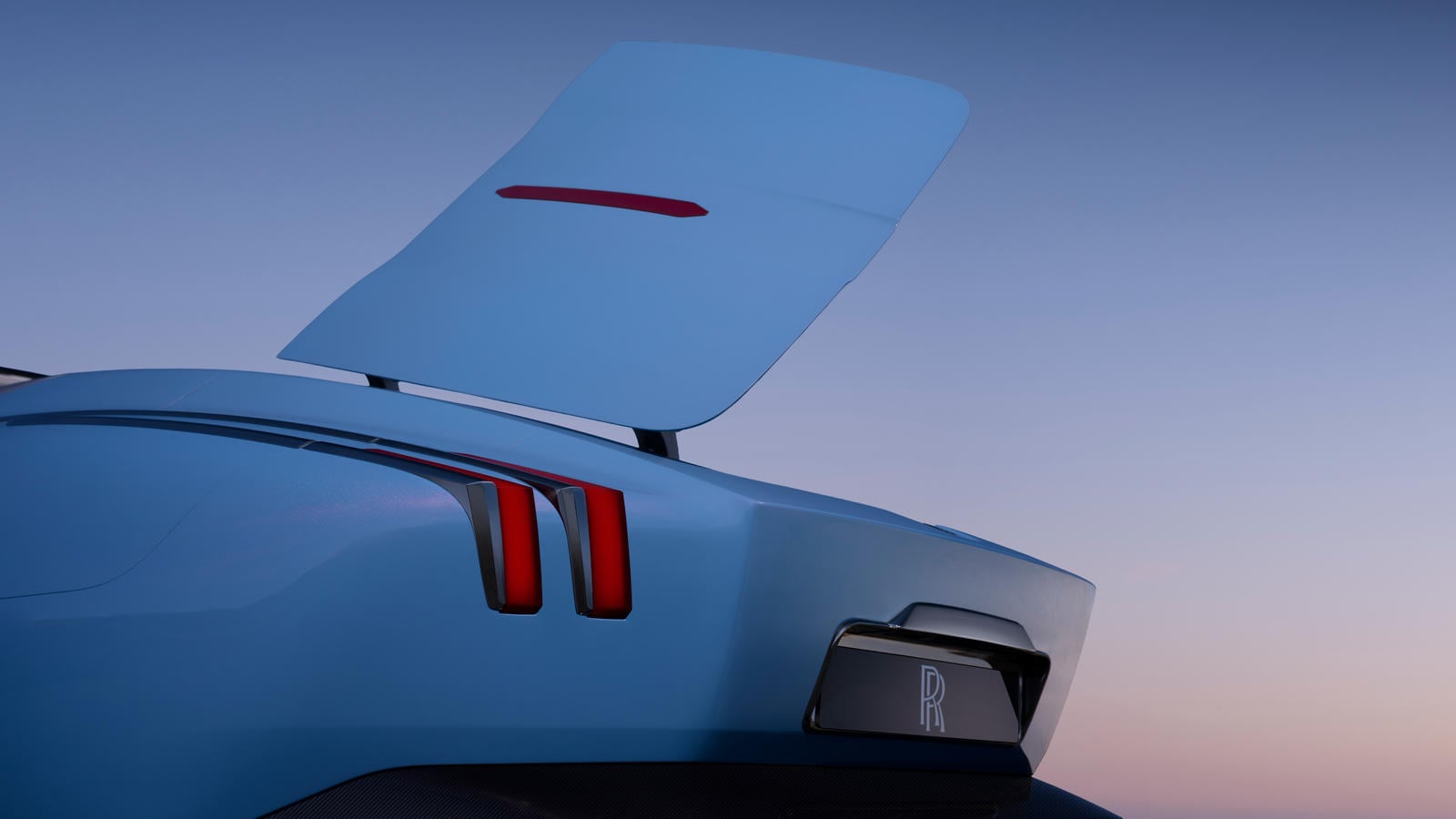
Then there is the Piano Boot, a feature that sounds almost theatrical because it is. Opening sideways on a cantilever, the boot has been designed to turn an everyday action into another carefully choreographed Rolls-Royce moment. Engineers will open and close it as many as 15,000 times, checking not just whether it continues to work but whether the movement remains effortless and the closing sound retains the intended character. At one cycle a day, that testing figure would represent more than four decades of use, giving some meaning to Rolls-Royce’s description of “generational effortlessness.”

A giant electric roadster with nowhere to hide
The testing becomes even more interesting when the scale and proportions of Nightingale are considered. This is effectively a Phantom-sized roadster with a monumental hood, a deeply enclosed two-seat cockpit and a long, tapering tail, yet it carries fewer occupants than many ordinary sports cars. Its design draws from late Art Deco and Streamline Moderne, with a nearly one-meter-wide grille, 24 deeply mounted grille vanes and enormous 24-inch wheels inspired by yacht propellers. The rear incorporates the Aero Afterdeck, a single-piece carbon-fiber element developed to provide high-speed stability without the visual clutter of a conventional spoiler.

It is also the first model in Rolls-Royce’s new Coachbuild Collection, placing it between the marque’s regular production cars and singular commissions such as Boat Tail and Droptail. That makes the project more complicated than simply creating an outrageous one-off because Rolls-Royce has to translate extreme coachbuilding into a collection of 100 individually commissioned cars without making them feel mass-produced. The car’s electric architecture helps shape that ambition, allowing cleaner front and rear surfaces without the packaging demands of a combustion engine and exhaust system. Rolls-Royce has not yet disclosed final figures for power, battery capacity, range, acceleration or charging performance.

Perhaps the most fascinating part of Nightingale is what happens when the roof comes down and the engine falls silent. After designers noticed birdsong with unusual clarity during an early prototype drive, Rolls-Royce studied nightingale recordings and translated their sound patterns into the Starlight Breeze interior, which features 10,500 illuminated stars in three sizes. All 100 examples have already been spoken for, and they are being engineered to travel from hot deserts to Arctic roads and high-altitude routes while retaining the marque’s signature serenity, with even the sound of the Piano Boot closing after 15,000 cycles receiving scrutiny. For Rolls-Royce, the challenge is not simply building 100 extravagant electric convertibles, but ensuring each one remains unmistakably Rolls-Royce wherever its owner takes it.