The private aviation world has a new disruptor, and it doesn’t have windows. Texas-based Otto Aerospace’s Phantom 3500, backed by a substantial 300-aircraft order from Flexjet, is betting that passengers will trade their porthole views for panoramic digital screens and fuel savings that could make flying private more affordable than business class.

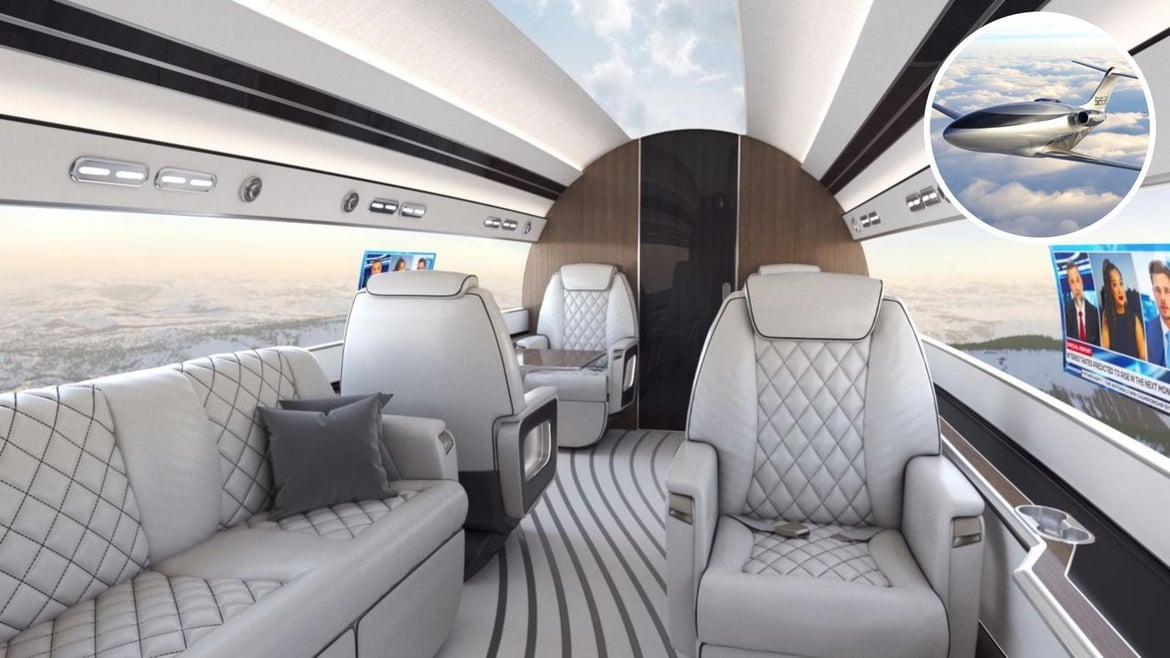
At first glance, the idea sounds like science fiction. A business jet with no traditional windows, its fuselage wrapped in smooth composite skin, cameras feeding live footage to six-foot-wide displays lining the cabin walls. CEO Paul Touw calls the experience “surreal,” promising passengers can “look at the entire world around you,” including the curvature of Earth at cruise altitude.

The company has branded this setup “SuperNatural Vision,” and while it might take some convincing for travelers used to pressing their noses against Gulfstream glass, there’s serious engineering behind the spectacle.

The real story is efficiency. According to the WSJ, Otto claims the Phantom 3500 will burn 60% less fuel than comparable midsize jets. That’s not a modest improvement, it’s a generational leap. The secret lies in laminar flow aerodynamics. Without window cutouts interrupting the fuselage, air slides smoothly over the carbon-fiber skin. Add smaller engines made possible by reduced fuel needs, and Otto argues it can deliver 3,200 to 3,500 nautical miles of range, 590 mph cruise speeds, and access to short runways, all at a target list price of $19.5 million. That undercuts super-midsize incumbents and threatens high-end light jets on total ownership costs.

Flexjet’s massive order, one of the largest firm commitments in business aviation history, signals this isn’t just vaporware. The Ohio-based fractional ownership giant, fresh off an $800 million capital raise led by L Catterton, is positioning the Phantom 3500 as a core platform for its fleet. Chairman Kenn Ricci frames the bet as “introducing tomorrow’s standards,” and with 300 aircraft on order, Flexjet is clearly banking that tomorrow arrives soon.

The timeline is aggressive but not fantasy. Otto has unveiled a full-scale mockup, first flight is targeted for 2027, and deliveries should begin around 2030. Manufacturing will happen at a one-million-square-foot smart factory at Jacksonville’s Cecil Airport, backed by $515 million in state incentives. The supply chain reads like a who’s who of aerospace: Leonardo for composites, Williams International for engines, Garmin for avionics, Mecaer for landing gear. Leadership includes former Boeing Chairman Dennis Muilenburg and former Secretary of State Mike Pompeo on the board, lending heavyweight credibility to what could otherwise appear to be startup moonshot territory.

Regulations won’t block the concept either. FAA Part 25 certification doesn’t mandate passenger windows, though emergency exits need viewing capability. Otto will install small traditional windows at exits and build redundancy into the camera system. The company is also pushing a climate narrative, designing the aircraft to fly at altitudes where contrails are less likely and using Williams engines compatible with 100 percent sustainable aviation fuel. Otto claims a 90% carbon dioxide reduction with SAF and up to 97% total warming impact reduction when contrail avoidance is factored in.

Can a windowless jet really compete with Gulfstream’s legacy? If Otto delivers on its efficiency promises and Flexjet’s passengers embrace digital panoramas over traditional portholes, the answer might surprise the establishment. At minimum, the Phantom 3500 has already done what few startups manage: it has secured a launch customer willing to bet billions on a radically different vision of flight.