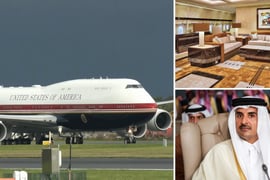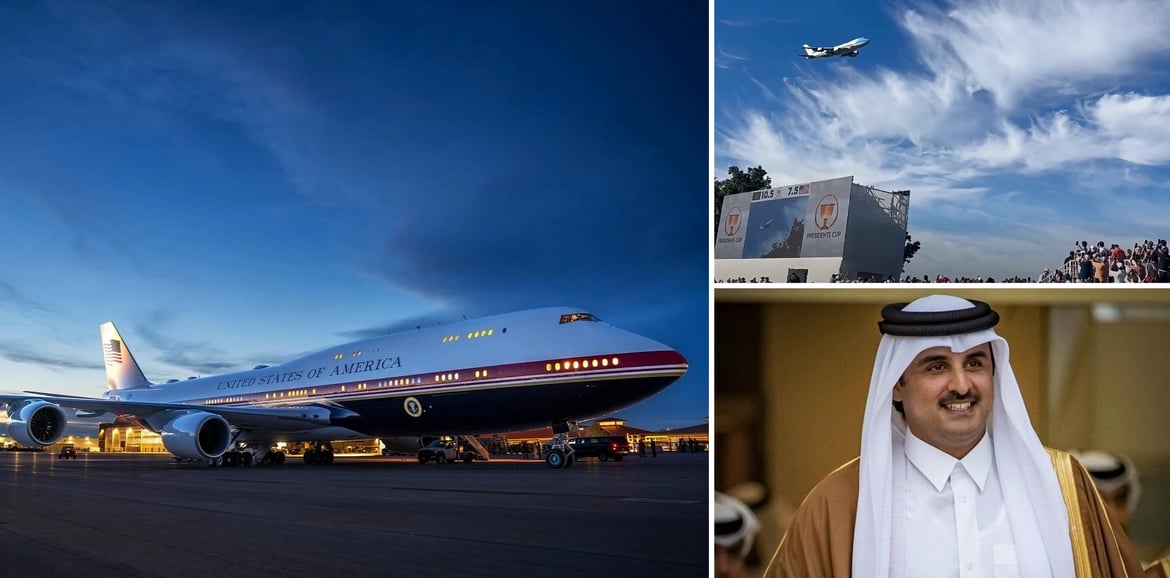
For the first time since the Qatar-donated 747-8 entered presidential service as the Bridge Air Force One, the US president has traveled aboard one of the older Air Force One aircraft. The change became apparent over the weekend when a decades-old VC-25A carried the president on consecutive domestic trips to Tennessee and Illinois, replacing the newer aircraft that had handled presidential travel since July 1. The timing is particularly notable because the Bridge Air Force One is scheduled to leave presidential service temporarily in October for a substantial upgrade program. There has been no official announcement that the aircraft has already entered that work, leaving open the possibility that its absence is simply part of normal presidential fleet rotation.

The older aircraft made its presence especially visible in Chicago on September 27, when it flew over Medinah Country Club as the president traveled to the Presidents Cup. Spectators gathered for the golf tournament cheered as the aircraft passed overhead, prompting the event announcer to say, “Ladies and gentlemen, Air Force One,” over the public-address system, as reported by NBC Chicago. The flyby came hours before the president was scheduled to appear at the tournament’s closing ceremony, with gates having opened at 8 AM and additional security measures already in place around the course. The aircraft seen above Medinah was the traditional blue-and-white VC-25A rather than the distinctive red, white, navy and gold 747-8 donated by Qatar.

The return of the original Air Force One
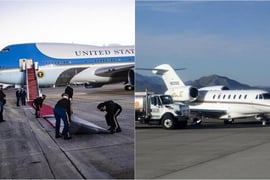
The switch had already become apparent a day earlier in Tennessee, where an official US Air National Guard photograph identified the presidential aircraft as a VC-25A. The aircraft arrived at McGhee Tyson Air National Guard Base in Alcoa on September 26 after performing a low pass over Neyland Stadium while Tennessee and Texas players were warming up for their game.
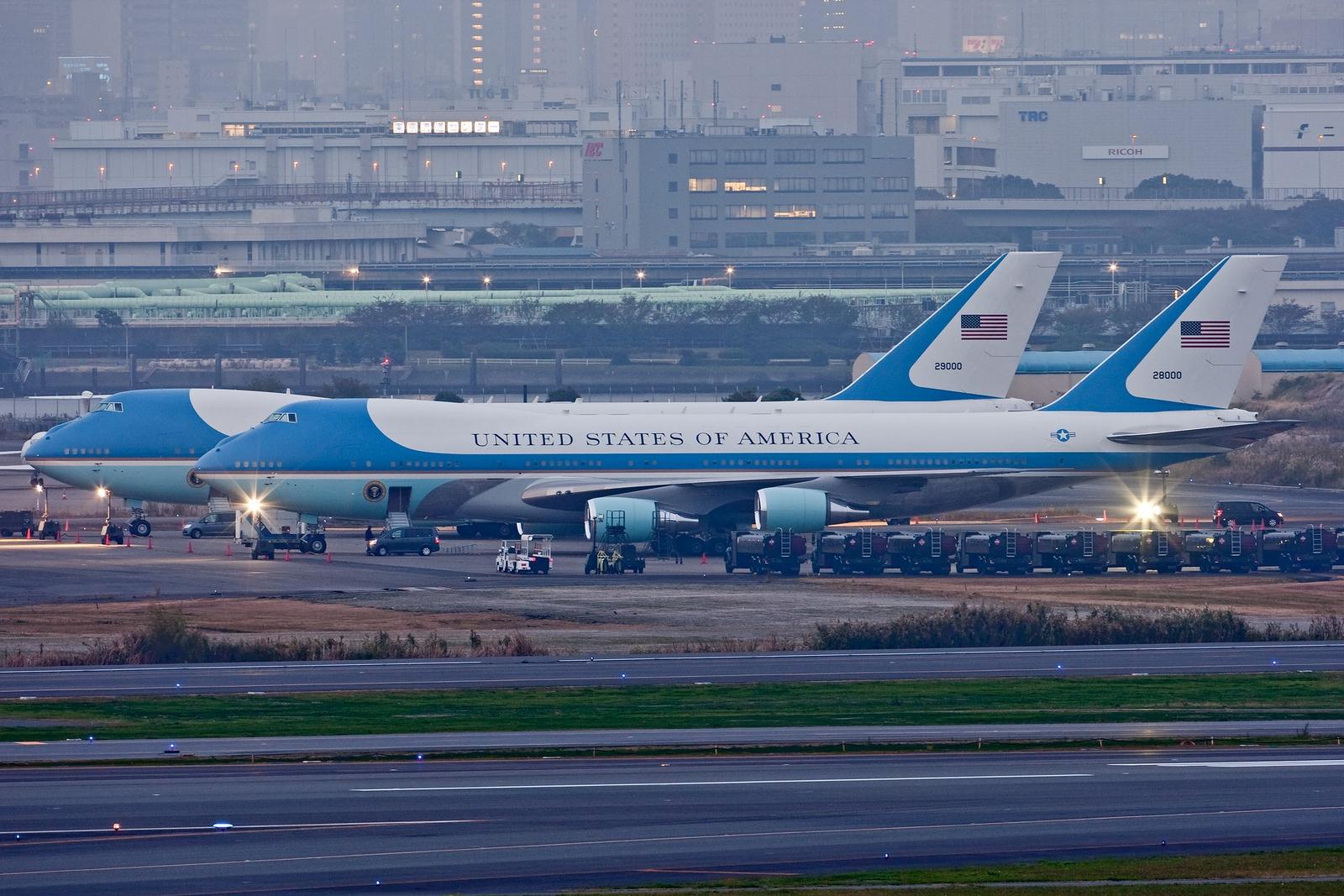
The airport is roughly 12 miles south of central Knoxville, making the stadium flyby a natural part of the aircraft’s arrival sequence before the president continued to the stadium. The Tennessee Air National Guard also documented the president descending from the VC-25A after landing, providing an unusually clear confirmation of which presidential aircraft was being used.
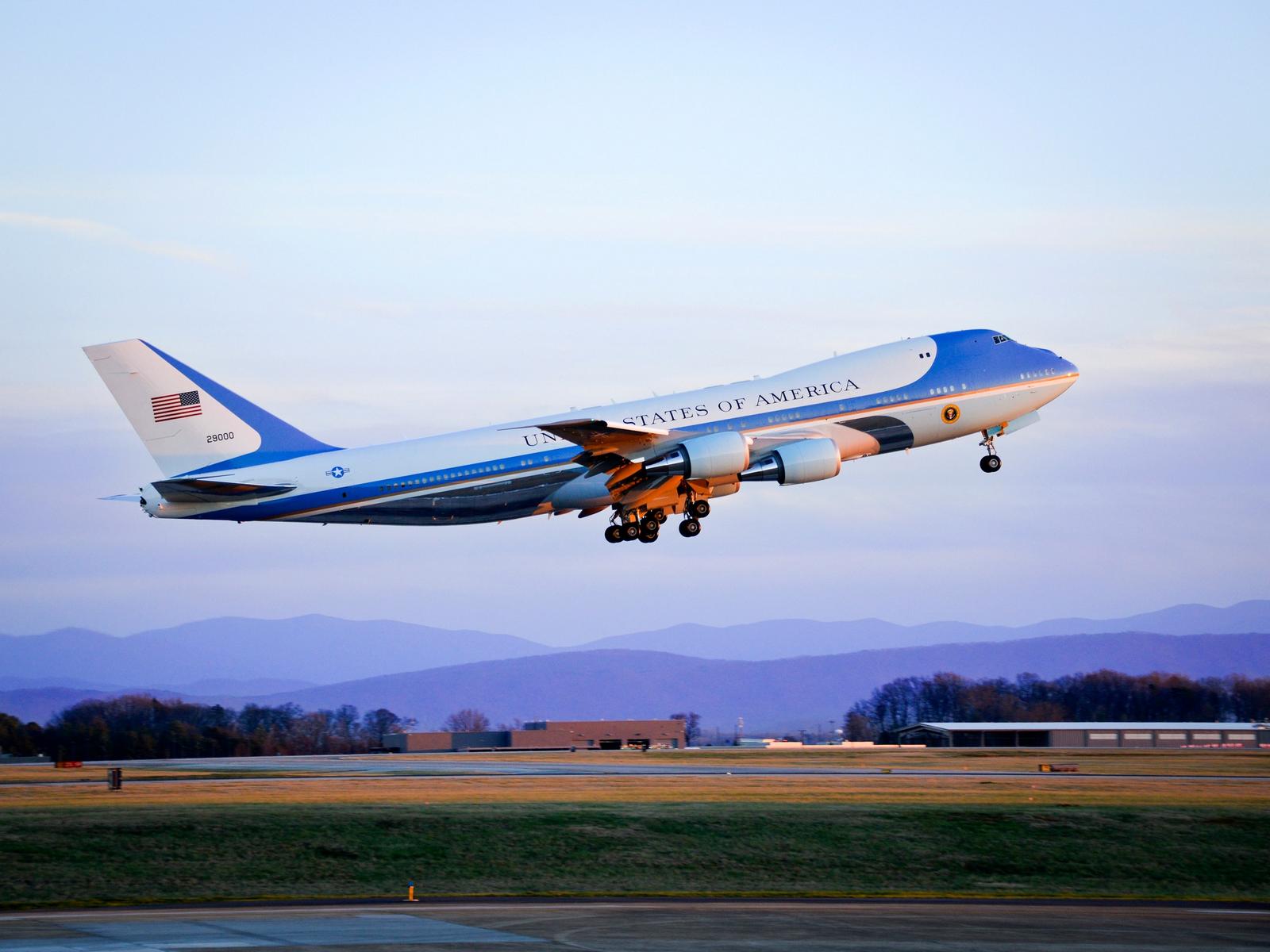
The Tennessee mission therefore marked the first confirmed presidential flight aboard a VC-25A since the Bridge aircraft entered operational use in July, rather than simply involving one of the older aircraft as a supporting member of the presidential airlift package. The following day’s Chicago trip then produced a second consecutive mission using the same generation of presidential aircraft, making the change more conspicuous than an isolated fleet substitution would have been. There is nothing in the available reporting indicating a mechanical problem, aborted flight, or other operational incident involving the Bridge Air Force One. The aircraft’s selection could still reflect routine fleet management, mission requirements, or advance positioning rather than any specific problem with the newer jet.
The Qatar-donated aircraft had itself been used for the president’s Ireland trip earlier in September, shortly after an emergency slide unexpectedly deployed while the aircraft was preparing for another departure from Joint Base Andrews. Military personnel accidentally triggered the inflatable slide shortly before boarding, briefly delaying the flight while the equipment was inspected and removed, after which the 747-8 continued operating. The aircraft subsequently remained the centerpiece of the presidential fleet before the latest sequence of flights shifted attention back to the legacy Air Force One jets.

A 60-day upgrade window is approaching
The US president recently said the Bridge Air Force One would be sent away in October for approximately 60 days of additional upgrades and enhancements. He described the objective as making the aircraft effectively “maxed out,” including the ability to operate in a wider range of environments, although that phrase is not a formal aviation certification term. The government has not released an itemized work package, so specific defensive systems that may be installed or modified remain undisclosed. The available information points toward additional survivability and self-protection capabilities, but it would be premature to identify a particular infrared countermeasure system, jammer or chaff-and-flare installation as confirmed equipment.

A 60-day period could accommodate a substantial package of engineering and testing rather than simply routine maintenance. Work could involve routing new power, cooling and data connections, installing sensors or other defensive equipment, integrating those systems with mission computers and cockpit interfaces, checking electromagnetic compatibility and conducting ground and flight tests.

The aircraft already has a sophisticated presidential communications suite, which means the work does not necessarily involve rebuilding its entire command-and-control architecture from scratch. A concentrated upgrade program would instead be more consistent with adding or refining specific capabilities that could not be incorporated during the accelerated conversion that brought the aircraft into presidential service.

For now, however, there is no official confirmation that the Qatar-donated 747-8 has already entered its planned refit. What is established is that the president has suddenly returned to the legacy VC-25A, with one aircraft handling two highly visible domestic missions and flybys on consecutive days just before the announced October upgrade window.

That makes the aircraft’s absence from recent presidential flights noteworthy without establishing a direct connection to the upcoming work. Whether the Bridge aircraft is simply being rotated out of active duty or has quietly begun preparations for its 60-day overhaul is therefore still an unanswered question