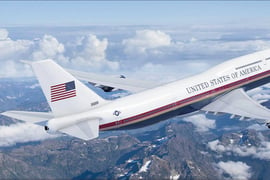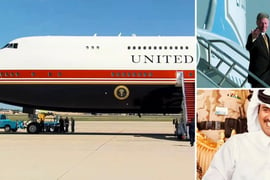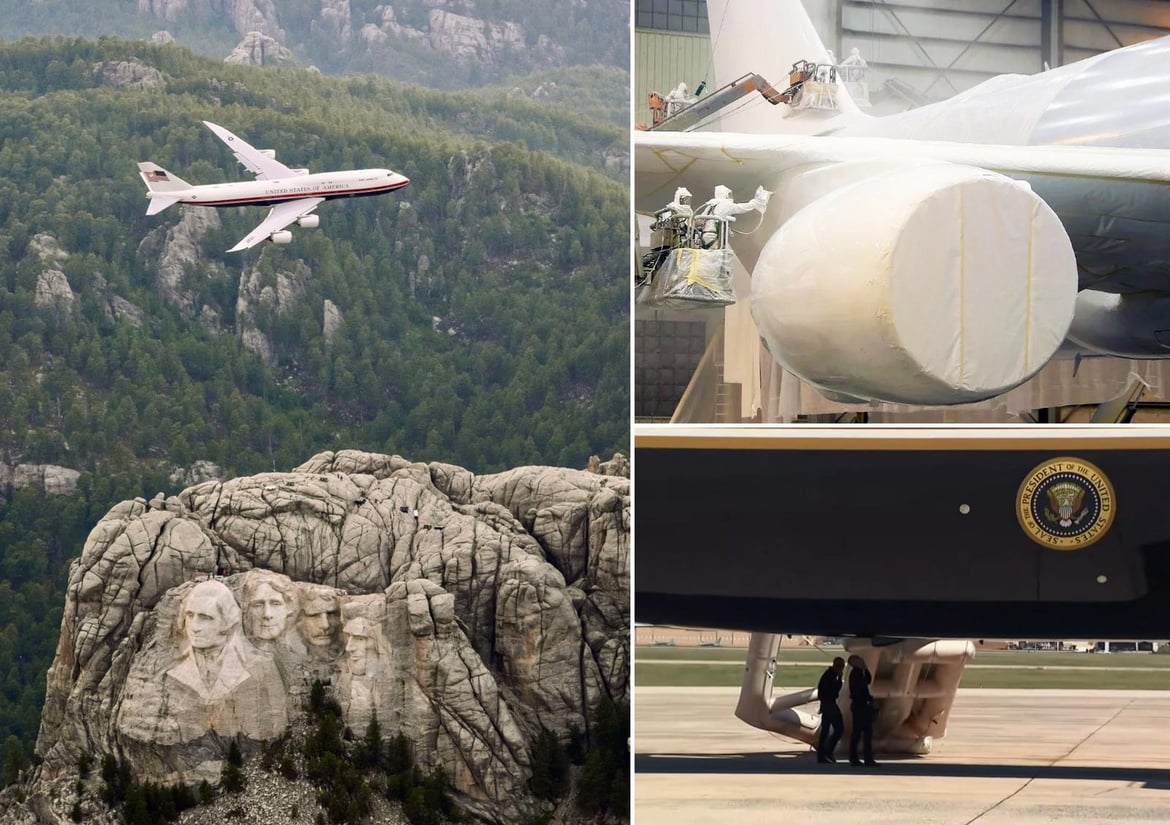
The Qatar-donated Boeing 747-8 that entered service as the Bridge Air Force One on July 1 is already preparing for another major spell away from the presidential fleet. Barely 90 days after beginning operational duties, the aircraft is expected to be taken out of service for an extensive round of additional upgrades that could keep it grounded for a while. The unusually short interval between its debut and the planned refit highlights just how quickly the aircraft was prepared for presidential operations in the first place. It also means the 747 will spend a significant portion of its first months in service moving between operational duty and further modification.
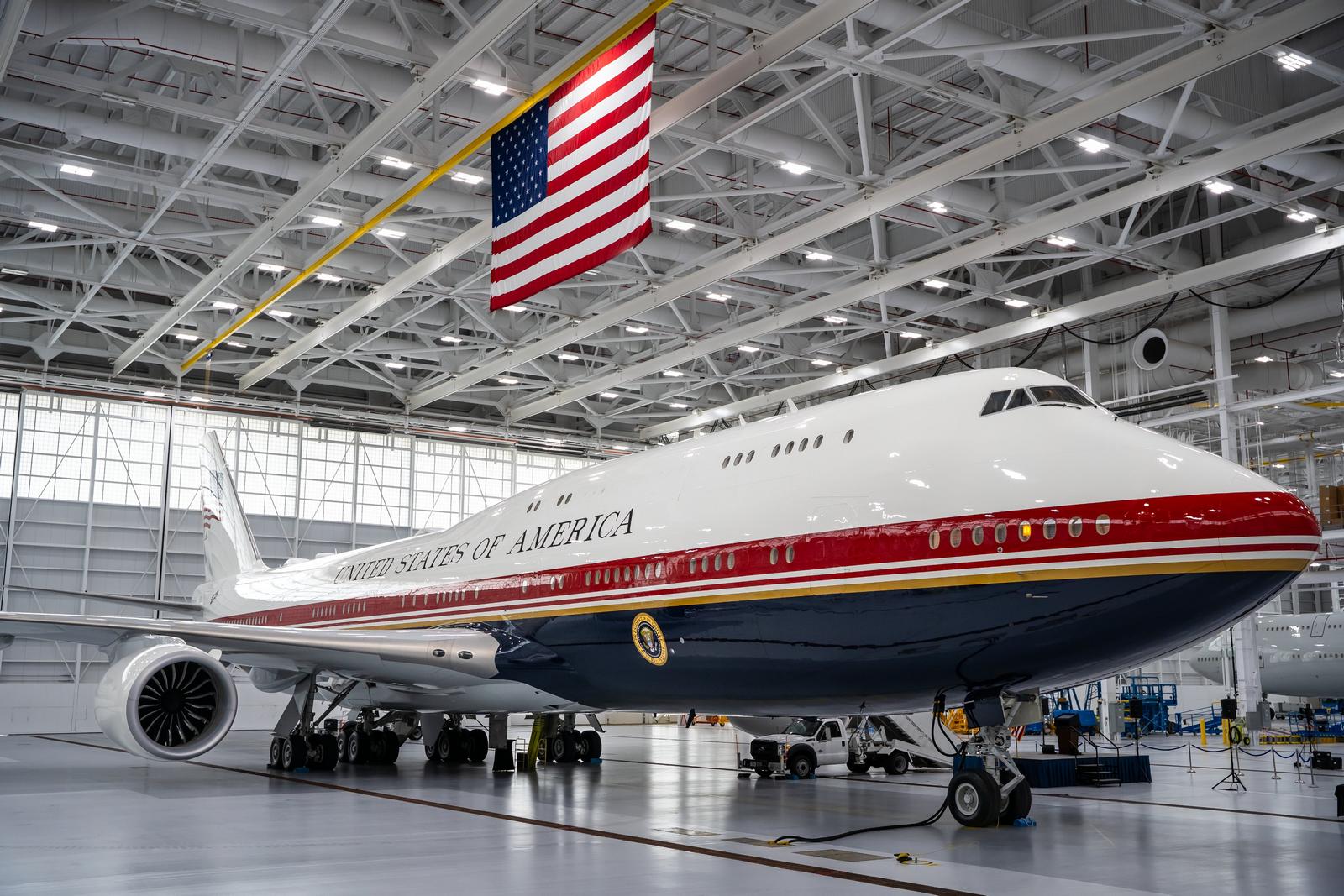
Speaking to the press in the Oval Office recently, the president said the aircraft would be sent away in October to be “maxed out,” explaining that the process would take about 60 days. He also stated that the upgrades will allow it to operate in a wider range of environments. The announcement provides a more precise timeline than the one given when additional upgrades were first disclosed in July, when the work was expected to take roughly a month and was described as a fall project. The latest schedule points to a substantially longer period of work than initially anticipated. With the work beginning in early October, the aircraft could remain unavailable until around the end of November, while a later start could push its return toward December.
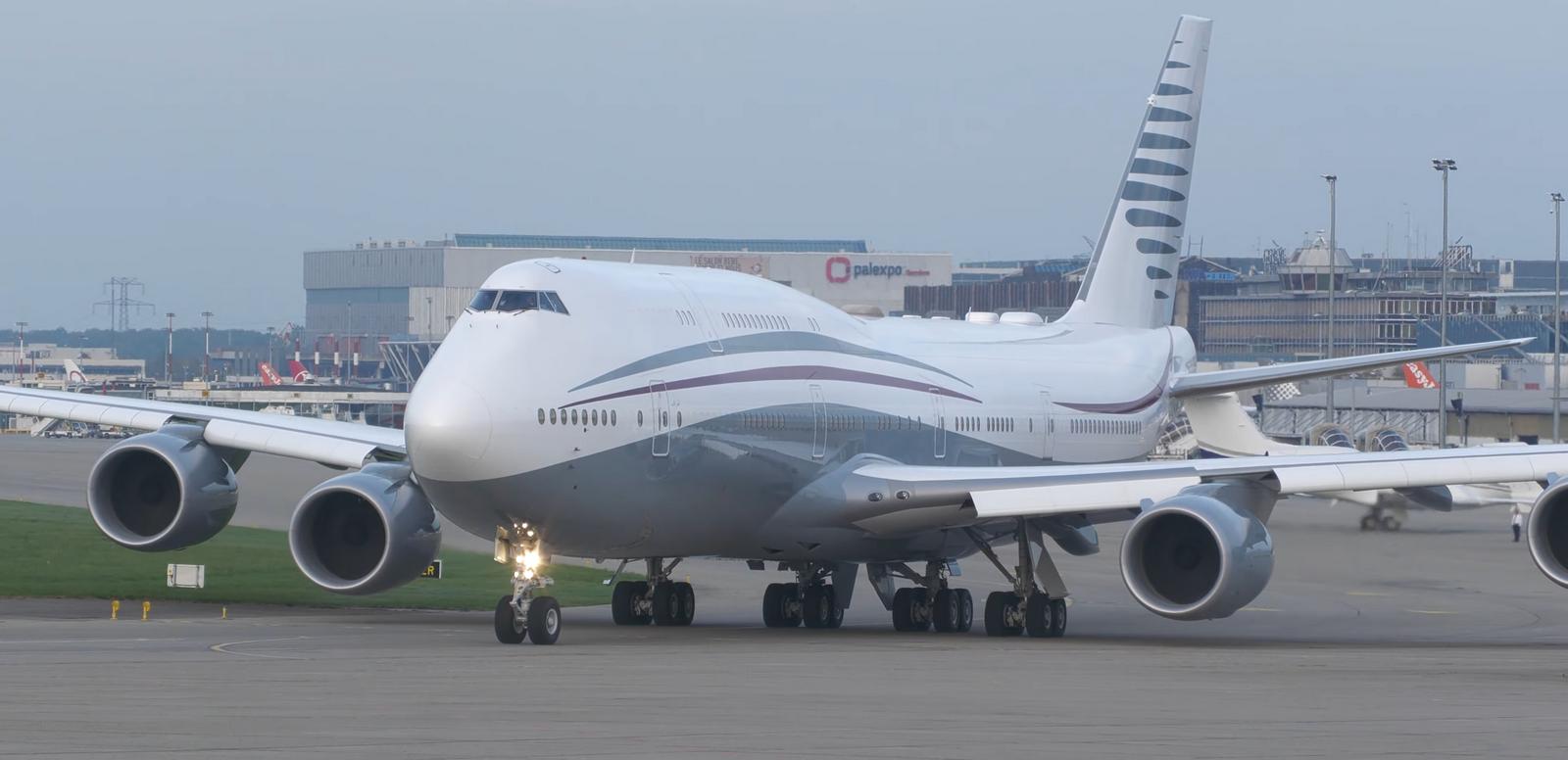
From rapid conversion to another major refit
The Bridge aircraft has already undergone an unusually rapid transformation. L3Harris led the initial conversion, turning the former Qatar 747-8 into a presidential aircraft through approximately 10 months of round-the-clock work involving aircraft missionization, presidential communications and other specialized systems. The company has continued to support the aircraft after its entry into service, making it the most obvious candidate for additional work, although there is no official confirmation that L3Harris will handle the October refit. Boeing could also provide engineering and structural support where required, as it did during the original conversion.
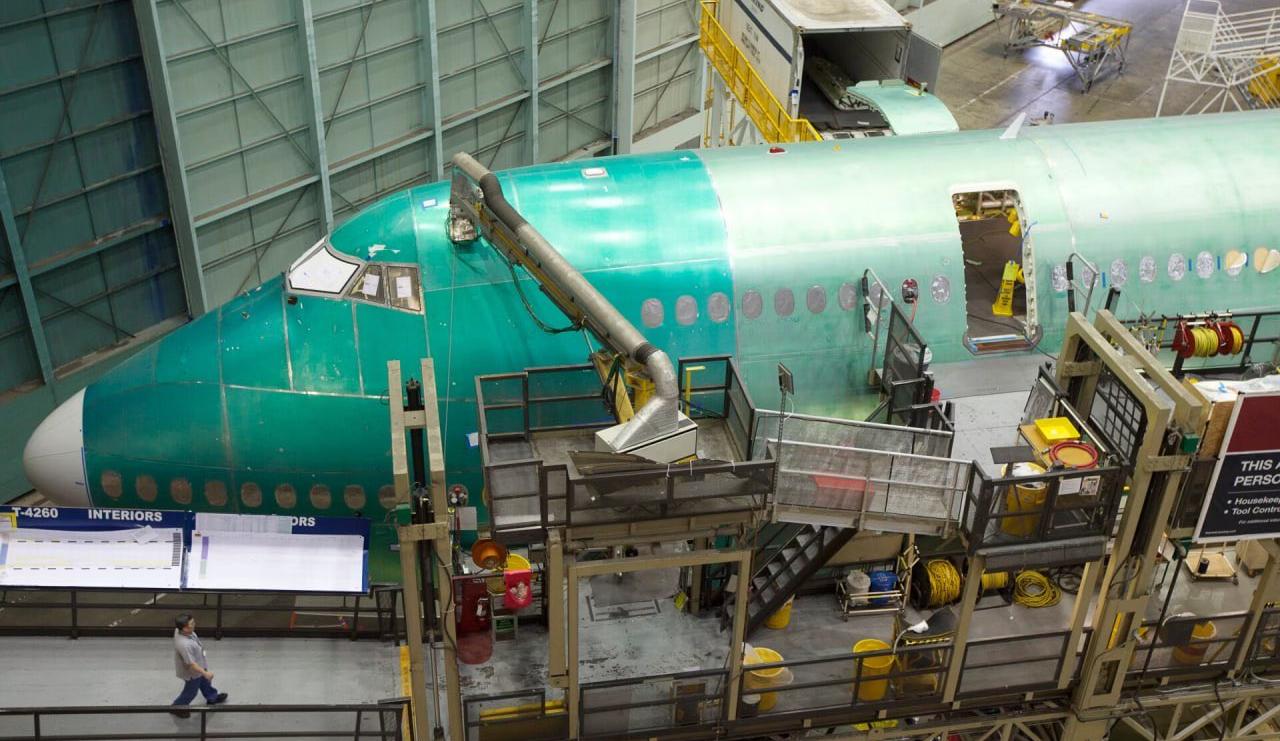
The exact equipment planned for the second phase remains undisclosed, but the available information points toward additional aircraft self-protection and situational-awareness systems. Possible additions could include sensors that detect approaching hazards, infrared countermeasure equipment, associated processors and cockpit warning interfaces, along with additional electronic equipment and software integration. Some communications redundancy or other mission-system improvements could also be incorporated, although communications are not expected to be the central focus because the aircraft already entered service with a presidential communications suite. The individual systems cannot be confirmed publicly, making it important not to assume that any particular commercially available system has been selected.
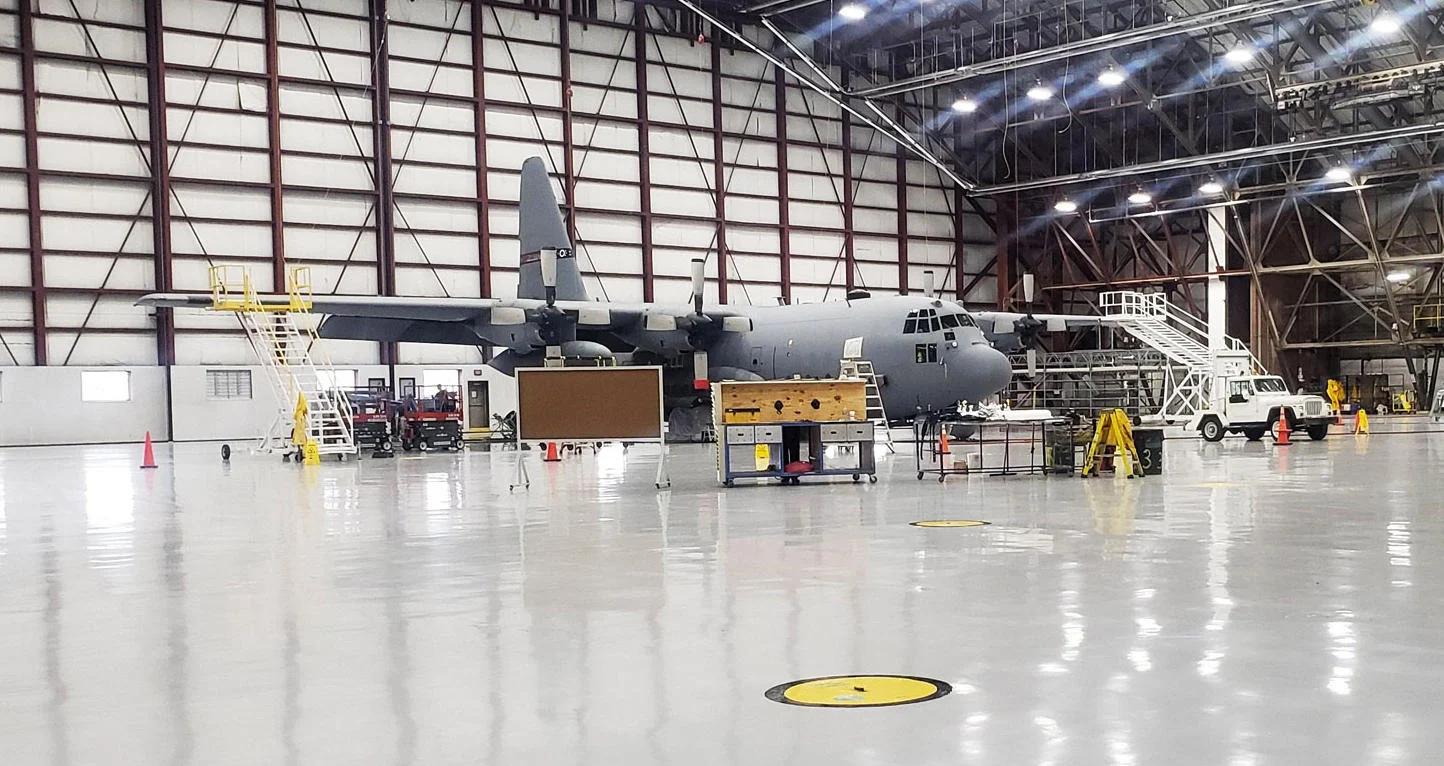
There is also no confirmed destination for the work, either. Municipal Airport–Majors Field in Texas is the strongest possibility because much of the original modification, systems integration and flight testing took place there, while Waco is another plausible location because the aircraft went there for its new paint scheme and L3Harris maintains wide-body modification capabilities there. Joint Base Andrews has presidential-airlift maintenance infrastructure, but there is no public indication that the complete refit will be performed there. A future ferry flight to Greenville or Waco would provide the clearest public indication of where the work is taking place.

A busy first 90 days
The aircraft has already accumulated a surprisingly eventful first few months in service. In September, the president used the 747 for his visit to Ireland, where the aircraft landed in Dublin before later making a low-altitude pass near Doonbeg as the presidential party traveled through the country. The journey demonstrated that the Bridge aircraft was being used for international presidential travel even as preparations for its next major modification were taking shape. It followed the aircraft’s earlier operational flights across the United States and its debut as the primary presidential aircraft in July, with its visit to Turkey.
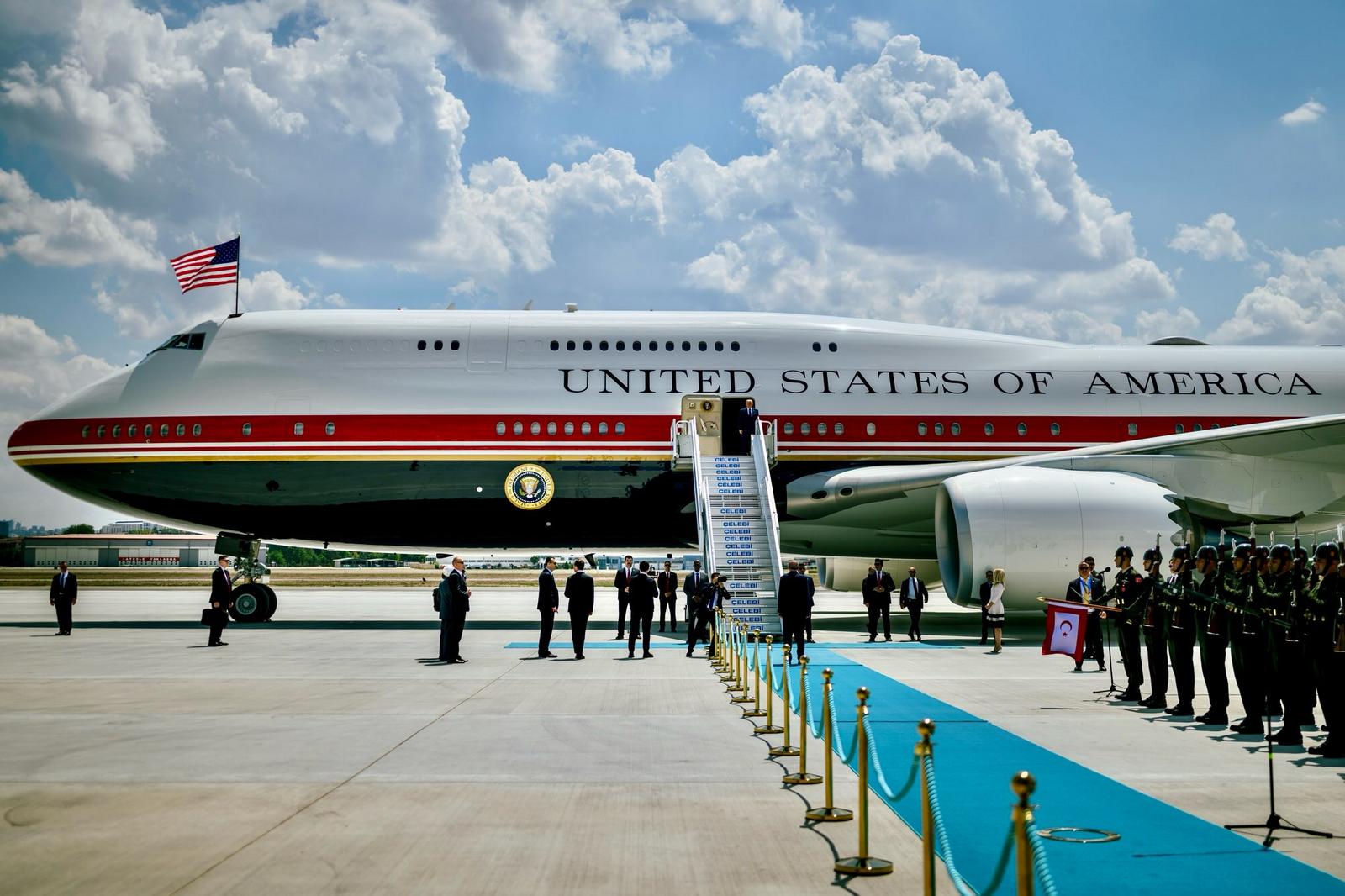
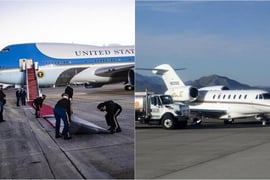
There was also a brief operational hiccup shortly before one of its September departures from Joint Base Andrews. An inflatable emergency evacuation slide accidentally deployed from one of the aircraft’s doors while preparations were underway, temporarily delaying boarding before the slide was removed and the aircraft subsequently departed. A person briefed on the incident said that military personnel had accidentally triggered the slide, while the aircraft continued its scheduled flight afterward.
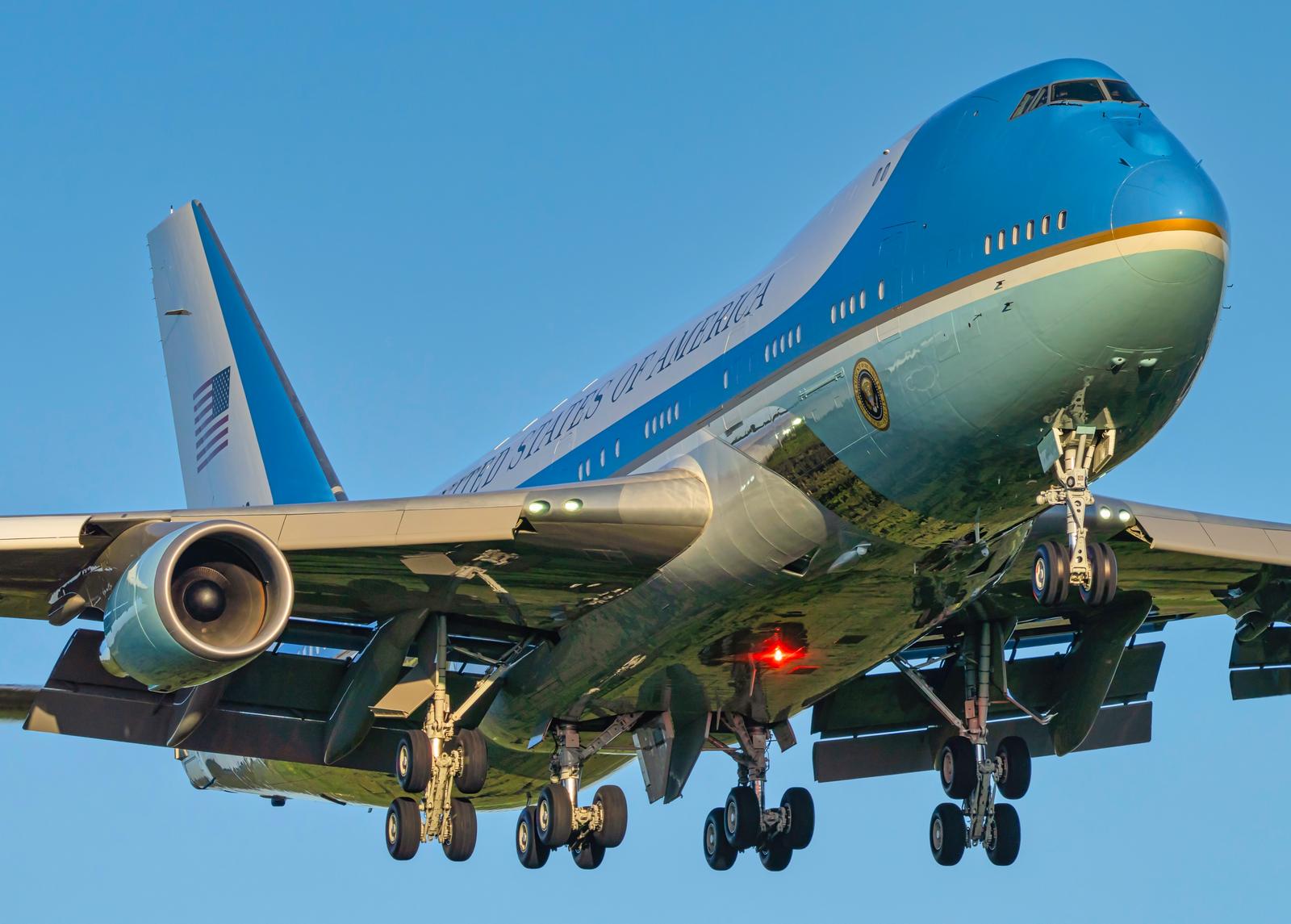
While the Bridge Air Force One is taken off the service, the pair of VC-25A jets will take care of the presidential duties. For an aircraft that only entered presidential service on July 1, another two-month absence so soon afterward is a significant development. Yet it also illustrates the unusual nature of the Bridge program, which was designed to put a modified 747-8 into service quickly while the permanent presidential aircraft program continues separately. The October refit will therefore be less about starting over and more about taking an already operational aircraft through another concentrated stage of development.