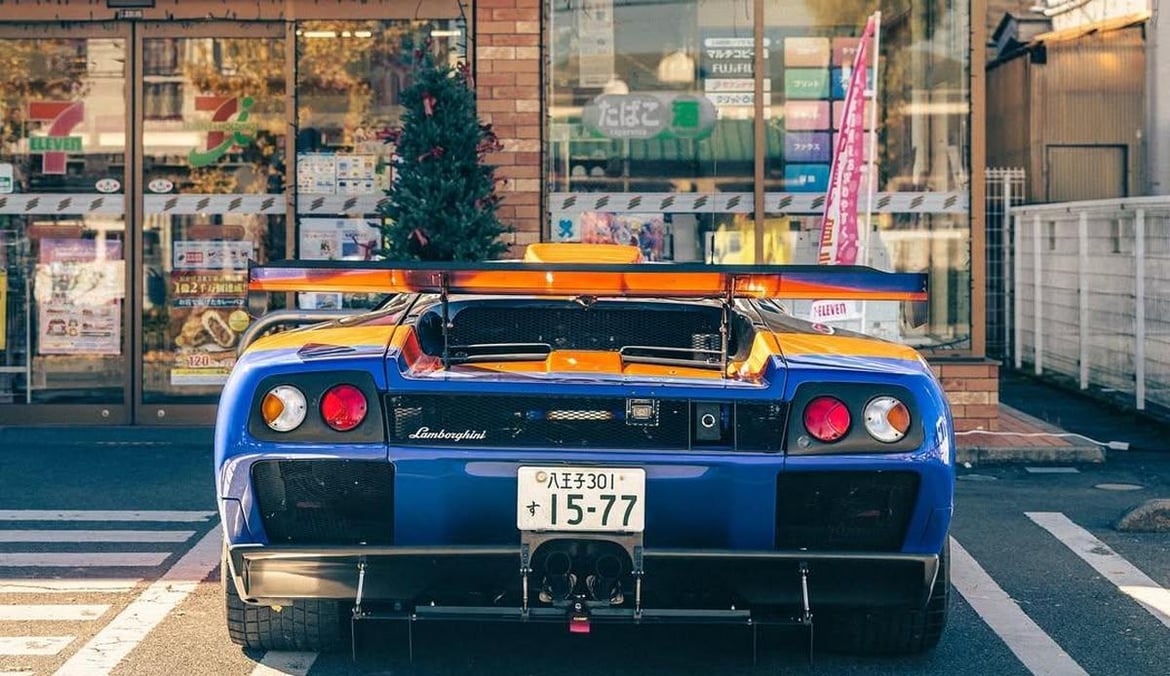
When Syuichi Kinoshita’s friend spent nearly three years tracking down a Lamborghini Diablo GT2, the dream quickly turned into a nightmare. The rare Lamborghini arrived in terrible condition, and the scale of work required proved overwhelming. Instead of walking away, Kinoshita made an even more ambitious decision to not only restore the Reiter Engineering-built competition car but also make it road legal in Japan. The process would consume ten years of his life.

Only two Lamborghini Diablo GT2 models were prepared by Reiter Engineering for competition use in the FIA GT Championship. These weren’t modified road cars playing dress up as racers. They were purpose-built racing machines featuring extensively modified 6.0-liter V12 engines producing nearly 600 horsepower, sequential Holinger gearboxes, and full carbon fiber bodywork, including aggressive GT2-specific aerodynamic components. The competition career proved brief, with entries at Nogaro and Spa Francorchamps before the program ended.

Finding replacement parts for a vehicle with such limited production numbers borders on impossible. Kinoshita faced months waiting for custom-fabricated components, as many original pieces simply don’t exist. Those that do surface command astronomical prices as collectors compete for scraps of automotive history.

The transformation from track weapon to street-legal supercar required thoughtful modifications. Racing fuel cells in Kevlar cases expire after several years and cost a fortune to replace, so Kinoshita fabricated an aluminum tank instead. He added a front lift system because the original ride height made climbing high driveways impossible. Multiple exhaust mufflers and a valved exhaust keep the naturally-aspirated V12 quiet at low speeds, saving his neighbors from the fury of an unrestricted racing exhaust.

Despite these “compromises” for comfort, this Diablo GT2 isn’t exactly a Toyota Camry when it comes to driving it on the street. The steering rack designed for race tracks makes navigating tight Japanese streets an exercise in patience, requiring multiple attempts. Heat management consists of a token 12V fan fighting against a race-tuned engine.

Rather than hide his masterpiece, Kinoshita regularly drives the GT2 to Lamborghini owner events. His dream for 2025? Taking this restored race car back to the track where it belongs. This build is a testament to the fact that a vision for something unique goes way further than writing a cheque for the latest hypercar, even if that vision doesn’t include air conditioning.