
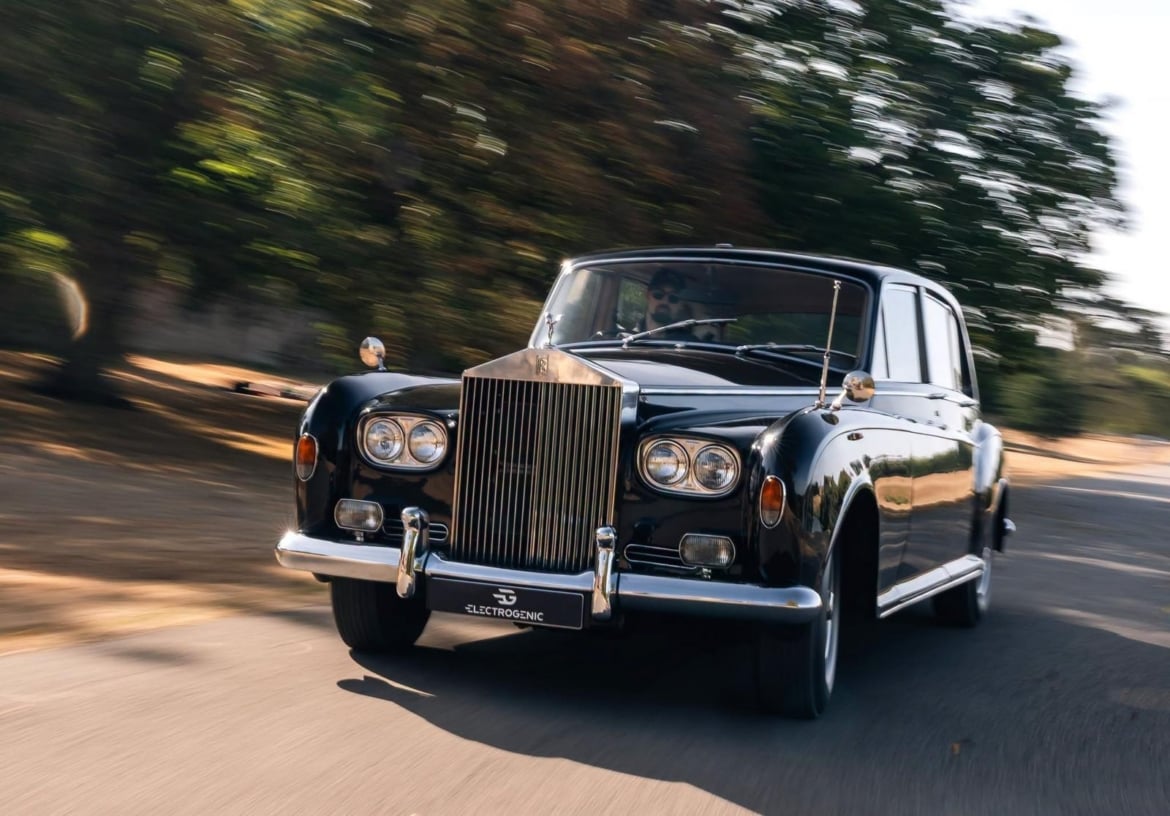
A 1973 Rolls-Royce Phantom VI is not the sort of car most people would expect to find with an electric motor under its hood, but that is exactly what has happened to one of the City of London’s official ceremonial limousines. The historic Rolls-Royce was converted to a battery-electric vehicle by British specialist Electrogenic, giving a nearly 20-foot-long piece of automotive heritage a thoroughly modern powertrain without stripping away the character that made it special. The project was commissioned during the mayoralty of Alderwoman Dame Susan Langley DBE, the 697th Lord Mayor of the City of London, and forms part of the Corporation’s wider effort to make its operations net zero by 2027.

The Phantom VI is one of just 374 examples built, making the decision to preserve rather than replace it particularly significant, as pointed out by the EV Report. The City of London Corporation had spent roughly five years exploring how to modernize its Mayoral Ceremonial Fleet, including the possibility of selling its existing cars and buying replacements or extensively repairing and refurbishing its three Rolls-Royces. It ultimately decided that keeping the historic vehicles and bringing them into the modern era offered the most sustainable and cost-effective solution. Electrogenic was then tasked with giving the 1973 Phantom a new lease on life while being careful not to compromise its original craftsmanship.

A modern powertrain under a classic hood
The original powertrain has been replaced by a 120-kW electric motor producing 229 lb-ft of torque, with power delivered through a single-speed direct-drive transmission. A 62-kWh battery pack sits beneath the Phantom’s sweeping hood and provides a real-world range of between 100 and 120 miles, according to Electrogenic. The car can also use 100-kW CCS DC fast charging, which should make it possible to replenish the battery between ceremonial appearances and official engagements. Because there is considerable space beneath the long hood, Electrogenic says the battery capacity could eventually be doubled if the car requires greater range.

The conversion has also been tailored specifically to the unusual demands of a ceremonial limousine. Its original automatic column shifter now handles forward, neutral and reverse, while Electrogenic’s vehicle control software provides Normal and Ceremonial driving modes. Normal mode is configured for urban use with regenerative braking that enables one-pedal driving, while Ceremonial mode reduces power and torque and softens the throttle response so the Phantom can move at the slow, dignified pace expected during civic processions and state occasions.
Keeping the heritage intact
Electrogenic has taken an unusually sympathetic approach to the conversion. The company says nothing has been cut, drilled or welded on the original car, making the entire electric conversion reversible. A small screen showing EV information is tucked discreetly inside the glovebox, while modern heating has been added for the rear cabin to improve comfort during winter duties without overwhelming the traditional interior.

For Electrogenic CEO Steve Drummond, the electric powertrain actually reinforces what made the Phantom VI remarkable in the first place. The company describes the result as whisper-quiet, effortless to drive, and free from tailpipe emissions, qualities that suit a ceremonial limousine remarkably well. Langley similarly sees the project as an example of how historic assets can be preserved without preventing them from evolving. The electrified Phantom VI is now being presented as a meeting point between the City’s past and its ambitions for a cleaner future, and it will be on display at Salon Privé at Blenheim Palace from September 2 through 6, 2026.