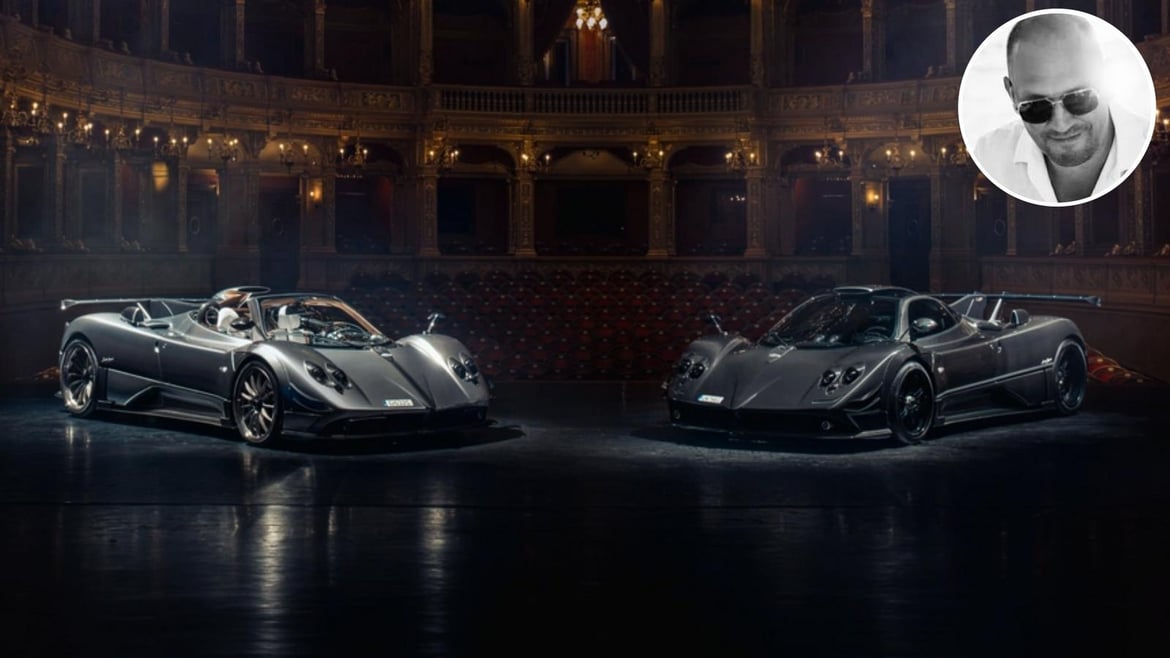
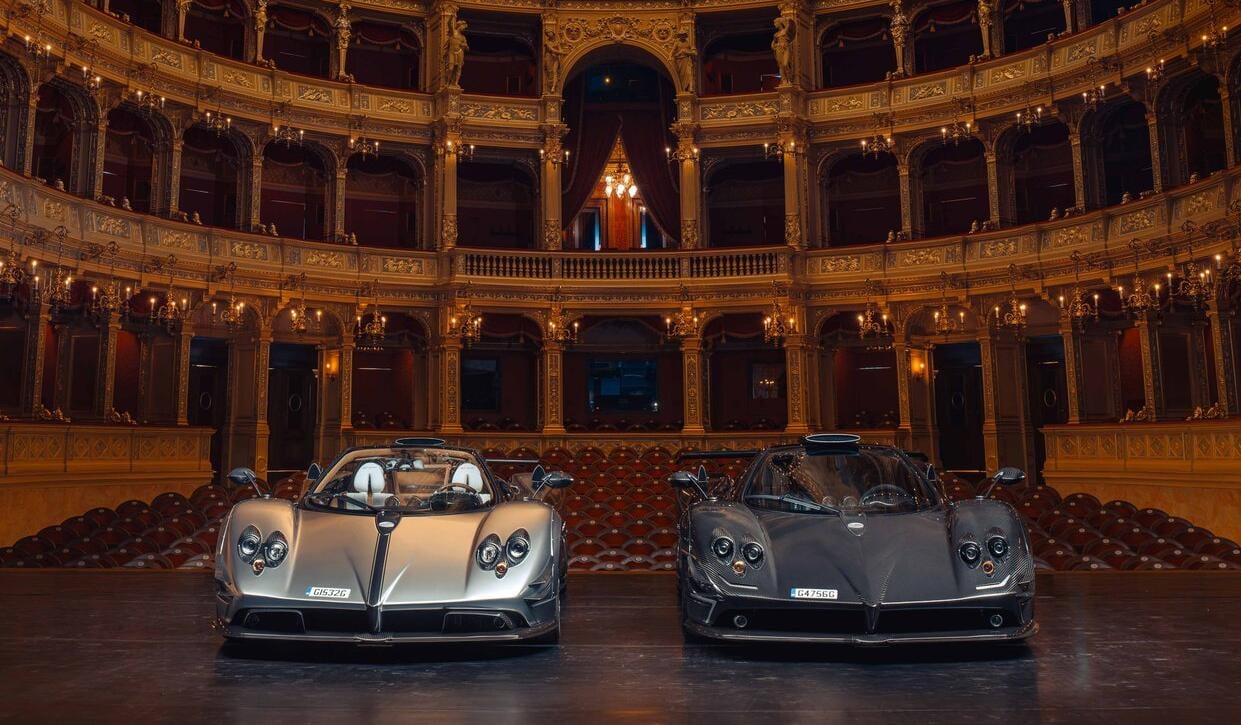
For a brief moment earlier this month, the stage of Budapest’s Hungarian State Opera House became an unlikely setting for two of Pagani’s most extraordinary creations. Photographer Mark Riccioni captured the carbon-fiber Zonda 760 RS and the Liquid Silver Zonda 760 Roadster beneath the ornate interior of the 19th-century theater, creating images that place contemporary hypercar design against one of Europe’s most celebrated opera houses. The photographs were taken during a controlled photo shoot, with the auditorium empty and no documented concert, exhibition, or audience involved, according to Top Gear. This created one of the most stunning backdrops for Horacio Pagani’s jaw-dropping automotive artwork.
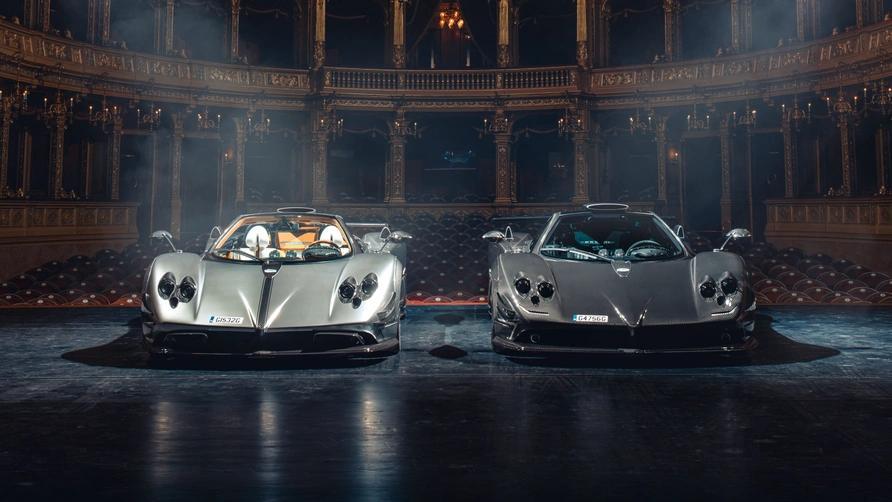
The cars themselves represent the beginning and end of Pagani’s 760 sequence, making their pairing considerably more significant than an extravagant photo opportunity. The bare-carbon Zonda 760 RS, chassis #76120, was built in 2012 as the first of the five core 760 cars and was conceived as a road-legal interpretation of the track-focused Zonda R. Internally nicknamed “The Beast,” it combines a naturally aspirated 7.3-liter AMG-derived V12 producing 760 horsepower with a seven-speed sequential transmission, while its competition-inspired bodywork features a central shark fin, a Cinque-derived roof scoop and an enormous rear wing. The final car, the Zonda 760 Roadster, arrived a decade later with an entirely different character, pairing the same 760-horsepower V12 with a gated six-speed manual transmission and an open cockpit.
Behind this extraordinary pair of Paganis is Oleg Egorov, the founder and owner of TopCar Design, the luxury automotive customization company he established in 2004 with a group of enthusiasts. Over the following two decades, TopCar developed into an international tuning operation working across marques including Mercedes-Benz, Lamborghini, Porsche, McLaren, Bentley, BMW and MINI, with dealer representation in more than 40 countries. Egorov has also maintained a particularly deep connection with Pagani, with his private collection described as including some of the marque’s rarest creations. His involvement extends beyond simply commissioning cars, with TopCar stating that he personally supervises every design produced by the company.
The 760 Roadster illustrates just how far that approach can go. Its metallic appearance comes from Pagani’s difficult-to-produce Liquid Silver paint, while its specification brings together an exposed-carbon stripe, HP Barchetta wheels, a rear fin revived from an abandoned Zonda 750 proposal and a rear wing derived from the Zonda Cinque. Inside, Pagani retrimmed the cabin in tan and off-white leather, polished aluminum and clear-coated oak, with the Liquid Silver finish continuing down the center tunnel. It is an unusually personal interpretation of a car that was already built as a one-off, and it helps explain why the Zonda can occupy the same visual territory as fine jewelry, haute horology or commissioned art.

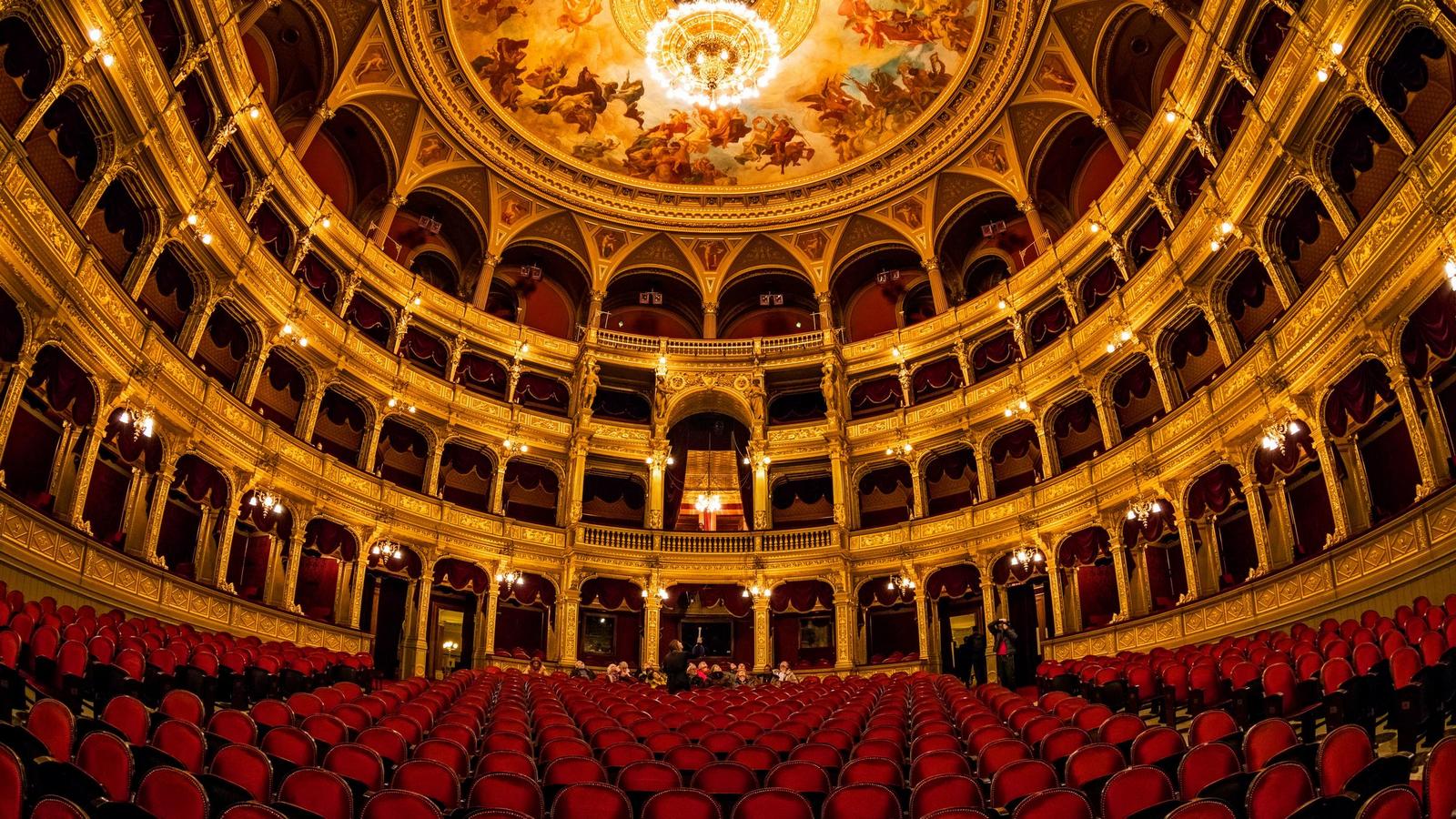
Together, the two cars bring 24 cylinders, 14.58 liters, and 1,520 horsepower onto a stage designed for music, but there is no evidence that either engine was started or revved during the shoot. What is documented is the visual statement. The cars faced the horseshoe-shaped auditorium beneath Károly Lotz’s monumental The Apotheosis of Music, inside a building designed by Miklós Ybl that opened in 1884 and underwent a major restoration completed in 2022. The Opera House itself received a European Heritage Award from Europa Nostra in April 2026, only months before Riccioni photographed the Paganis there.
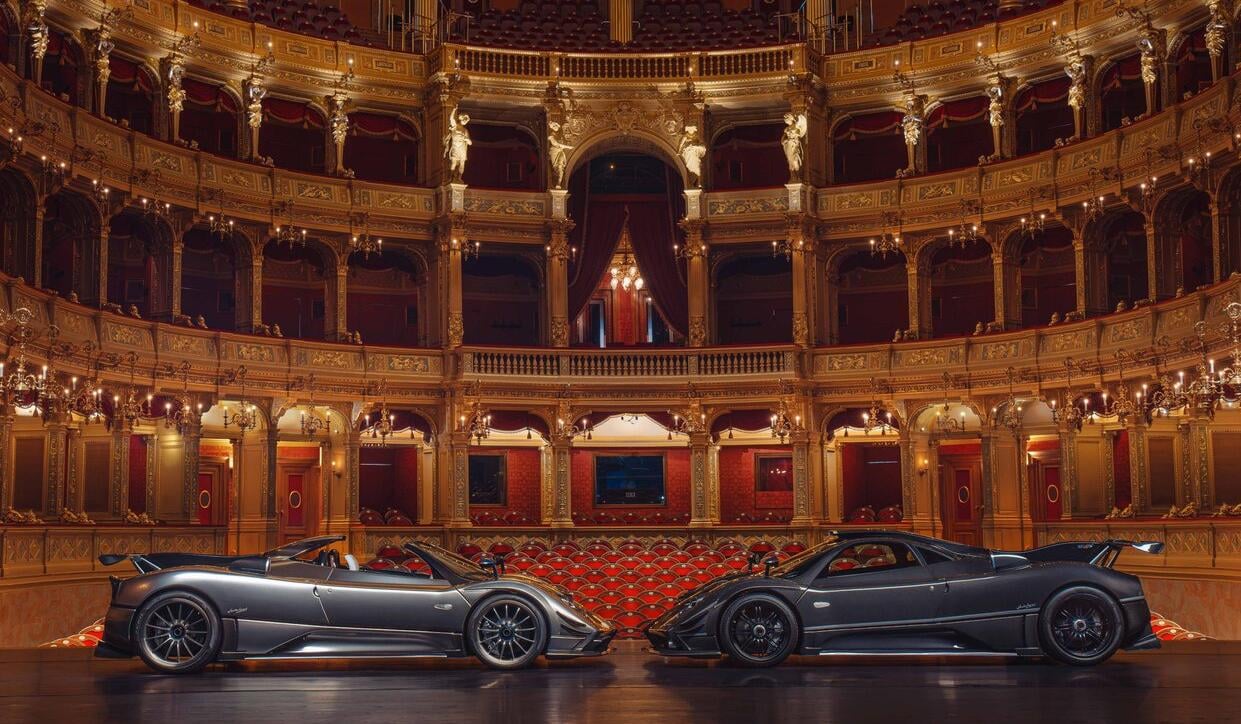
The result is less about speed than craftsmanship, heritage and access. Egorov’s two Zondas represent the first and final chapters of a ten-year Pagani design sequence, while the opera house represents another form of painstaking artistry separated from them by more than a century. Placing them together does not turn the theater into a racetrack or the cars into musical instruments. Instead, it creates a striking meeting point between automotive sculpture and architectural grandeur, where two of the rarest Paganis ever made become temporary pieces of the stage itself.