More than six decades after Concorde’s engines first ran, an American aerospace startup has achieved a milestone that brings the United States closer to developing its own supersonic passenger aircraft. Boom Supersonic, founded by entrepreneur Blake Scholl, successfully fired the prototype core of its Symphony engine recently at the Colorado Air and Space Port in Watkins, east of Denver. Unlike Concorde, which emerged from a government-backed collaboration between Britain and France, Boom is attempting to develop its aircraft and propulsion system as an independent company, without the enormous national budgets that supported the earlier supersonic program. The achievement is particularly significant because the company has moved beyond testing individual engine components and has demonstrated that its central propulsion hardware can operate together.

According to Aviation Week, the prototype, named Sprint Core, ignited on its second attempt despite the engineering team’s initial assessment that its chances of success were below 50%. The core reached 6,500 rpm during the deliberately brief test, with approximately 2,000 sensors monitoring the complete installation and more than 1,000 fitted directly to the core. Engineers kept the initial run short to collect operating data before attempting more demanding conditions, making this a significant engineering milestone rather than a demonstration of the complete engine’s thrust or flight performance.

An American supersonic ambition returns after 55 years
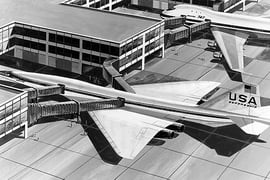
The United States has attempted to develop a supersonic passenger aircraft before, most notably through Boeing’s 2707 program during the 1960s. Conceived as an American competitor to Concorde, the ambitious project received government backing and was intended to establish the country as a leader in commercial supersonic aviation. However, escalating development costs, environmental concerns, and political opposition eventually caught up with the program, and Congress rejected further funding in 1971. The cancellation effectively ended America’s first major attempt to challenge the Anglo-French supersonic aircraft.
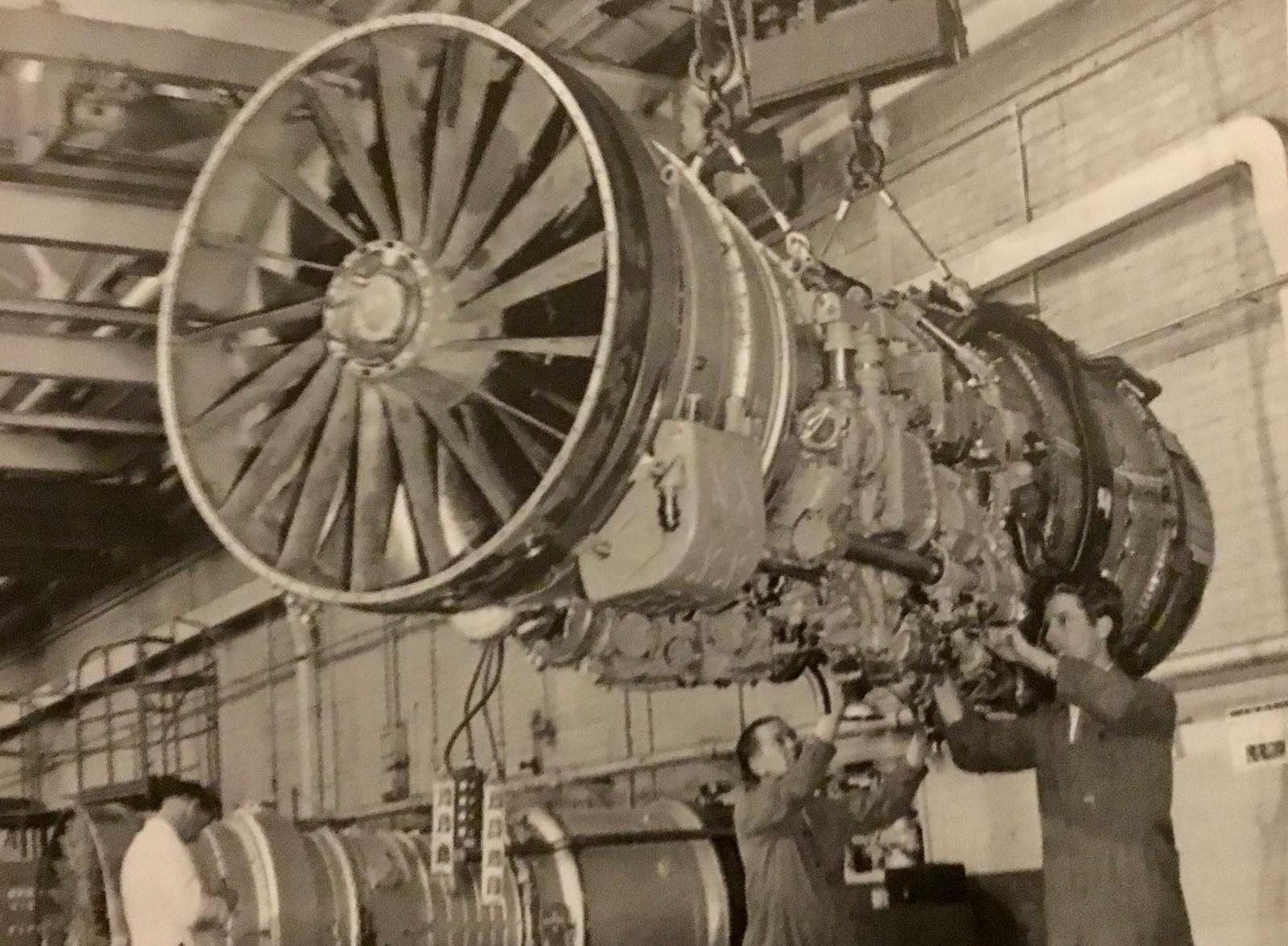
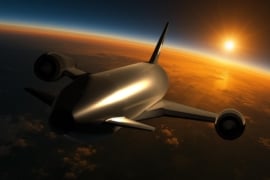
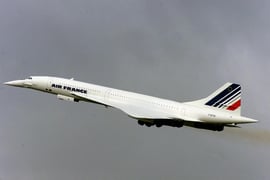
The contrast with Boom Supersonic is considerable, particularly because the company is attempting to accomplish something that previously required the combined industrial and financial resources of two major European nations. Concorde entered commercial service in 1976, but its retirement in 2003 left supersonic passenger travel without a successor. Scholl’s fascination with the aircraft goes back to seeing it in a museum, where he recalled telling TIME, “This is the most amazing airliner ever made. Why is it in a museum?” His company is now attempting to turn that sentiment into an aircraft called Overture, designed to fly at Mach 1.7 with 60 to 80 passengers and a projected range of 4,250 nautical miles.


The engine that brings the ambition closer
Sprint Core is the foundation of Symphony, Boom’s proposed medium-bypass turbofan designed to produce approximately 40,000 pounds of thrust. Its architecture consists of a six-stage high-pressure compressor and a single-stage high-pressure turbine, with a combustor positioned between them. In simple terms, the compressor squeezes incoming air, the combustor burns fuel, and the turbine extracts energy from the resulting hot gases to drive the compressor. Getting these three systems to function together is fundamental to developing a useful engine, although the November test did not establish Symphony’s final thrust, reliability, or flight performance.

Boom had already tested prototype ignition and combustion hardware in 2025, but the latest achievement represents a considerably more important step because the assembled core was operating under power. The company can now compare actual temperatures, pressures, vibration, and structural strain against its engineering predictions, using the findings to improve subsequent designs. The next phase involves progressively expanding the operating envelope before integrating the remaining components required for the complete engine.
From Colorado factories to America’s AI infrastructure
Interestingly, Symphony is not the only engine planned around this technology. Boom is also developing Superpower, a 42-megawatt natural-gas turbine designed to supply electricity to AI data centers, using the same underlying core architecture but a different low-pressure arrangement. The energy business is expected to reach integrated engine testing around mid-2027, with initial customer deliveries targeted for the same period. In December 2025, Boom announced a $300 million funding round and an order from AI infrastructure company Crusoe for 29 turbines, representing approximately 1.21 gigawatts of generating capacity. Its reported turbine backlog has already exceeded $1.25 billion, creating a potential source of revenue to support the considerably longer and more expensive process of developing and certifying Overture.

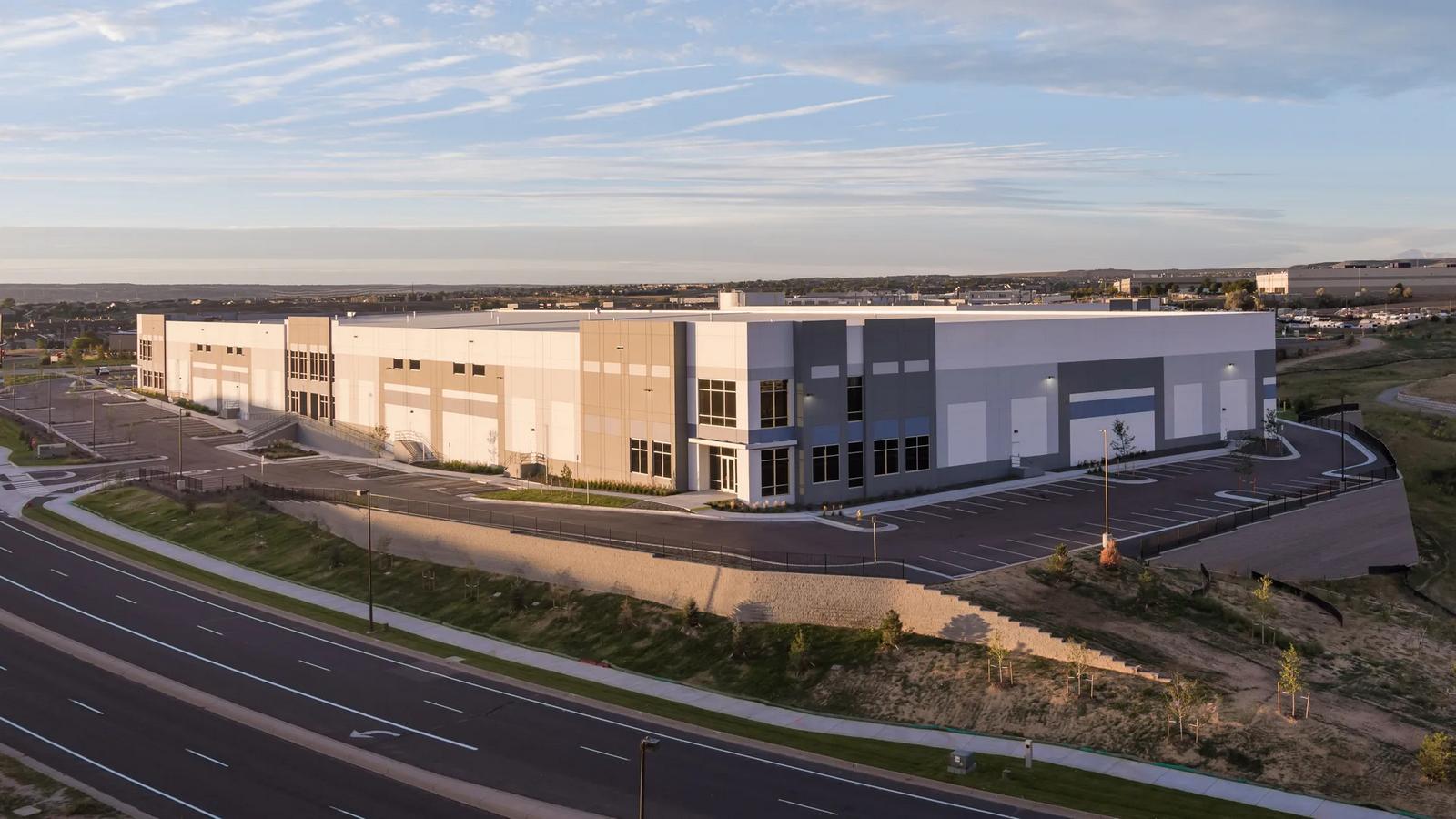
The manufacturing ambitions are equally important to the American achievement. Boom is investing approximately $150 million in a nearly 200,000-square-foot Superpower manufacturing campus in Centennial, Colorado, which could create up to 500 jobs. The company intends to manufacture components representing approximately 85% of each Superpower turbine’s mass at the facility and is developing an in-house foundry for specialized single-crystal turbine blades and vanes. Meanwhile, Overture’s planned assembly location is Greensboro, North Carolina, where Boom completed its factory building in June 2024. For a company that began with the ambition of bringing back supersonic passenger travel, successfully firing its first engine core is a remarkable step toward making that ambition real. America has not yet built its next Concorde, but this time the effort is being driven by a startup rather than a partnership between two governments.