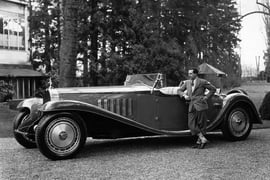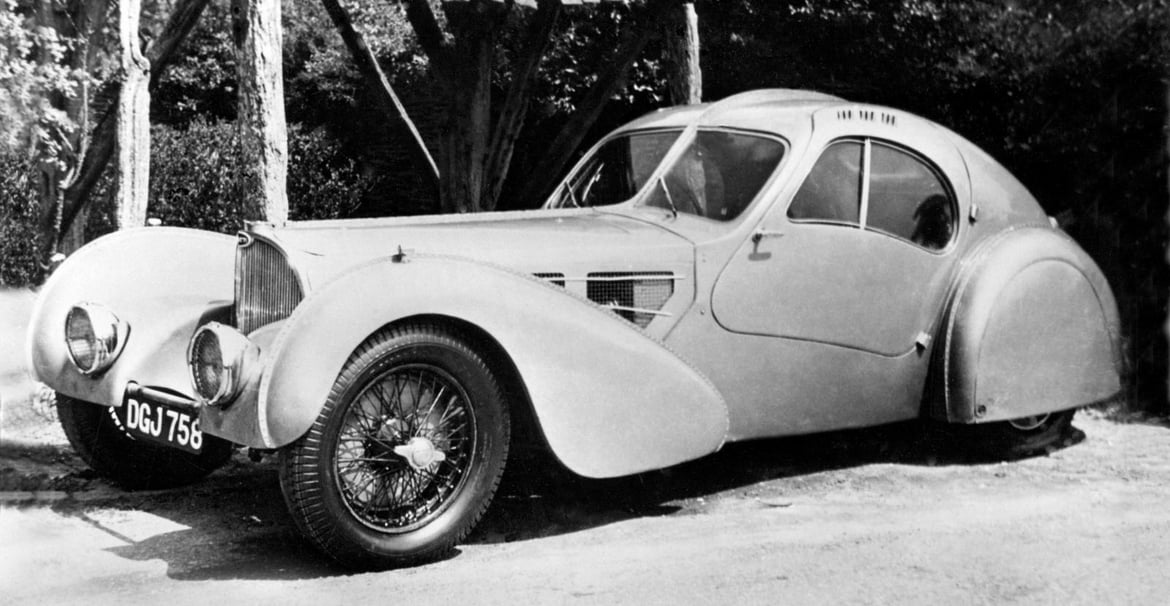
In 1936, a 27-year-old designer named Jean Bugatti created something extraordinary. Working from the family’s Bugatti factory in Molsheim, France, he built just four Type 57S Atlantic Coupes by hand. Each featured a distinctive raised spine running down the center, riveted panels, and bodywork that showed off curves way ahead of its time. Only four would ever exist.

The second car off the line became Jean Bugatti’s personal vehicle. Painted black, it earned the nickname “La voiture noire”, inspiring the world’s most expensive new car at one point. The car was displayed at motor shows, and Bugatti’s racing driver friends often borrowed it for demonstration runs.

Then in 1939, something happened that would lead to the world’s biggest unsolved automotive mystery. Jean was testing a Le Mans-winning racer near the factory when he swerved to avoid a cyclist. The car hit a tree, and Jean was perished instantly, at just 30 years old. His father Ettore Bugatti was devastated. The family’s automotive empire had lost its brightest spark. That same year, the black Atlantic Coupe disappeared. The theories surrounding its disappearance are endless.

Perhaps Ettore loaded it onto a train bound for the company’s Bordeaux factory to escape advancing forces. Maybe he told everyone it went to Bordeaux, but actually hid it somewhere secret. Others believe Jean had lent or given the car to racing driver Robert Benoist before his death. The geopolitical turmoil of the era complicated things further.

Soldiers had occupied the Molsheim factory and could have stolen the Atlantic Coupe. Some experts think it reached Bordeaux just before British bombers struck the facility, though verified damage reports suggest the factory largely survived. Another theory places the car on a secondary road west of Molsheim, driven there by Benoist and hidden away from prying eyes.

Today, three of the four Atlantics survive. One sits in the Mullin Museum. Another belongs to Ralph Lauren. The third was rebuilt after a tragic 1955 train collision that killed its owner. But number 57453 remains missing. If someone stumbles upon it tomorrow in a dusty barn or forgotten warehouse, they will have discovered the world’s most expensive barn find. Experts estimate it would sell for over $114 million. Until then, the mystery endures.